
A draft system for a bar needs to match your keg sizes, beer-line setup, and expected volume—not just fit the space. The options below range from compact kegerators for small bars to a can-powered dispenser that is better suited to occasional pours than regular service. Compare the keg capacity and tap details carefully, especially where the listing information is unclear.
| Product | Best for | Key details | Important caveat |
|---|---|---|---|
| VEVOR Single Tap Commercial Draft Beer Dispenser | Small bars with limited keg needs | Designed for a sixth keg; includes a CO₂ tank and D-system coupler | Title says single tap, but the description mentions a dual-tap tower |
| VEVOR Dual Tap Ball Lock Kegerator | Bars serving from ball-lock kegs | Dual taps; listing describes several keg configurations | Supplied listing data marks it unavailable |
| IDEALHOUSE Commercial Draft Beer Kegerator | Serving two beers from a compact unit | 152-liter interior, dual taps, and D-system setup | Check that its capacity and dimensions suit your keg and bar layout |
| RGWYGCG Canned Beer Draft Dispenser | Occasional pours from cans | Battery-powered can tap; no CO₂ cylinder required | Not a keg refrigerator or a practical main system for bar service |
Our Picks: Best Draft Beer Systems For Bars reviews
VEVOR Kegerator: A Compact Option for a Small Bar

This VEVOR kegerator is aimed at home bars and small commercial spaces that want a refrigerated keg and a ready-to-use draft setup in one appliance. The product description says it holds one sixth keg and can store a 5-pound CO₂ tank inside, which can keep the setup tidier than an external tank arrangement.
The listed temperature range is 32°F to 46°F, with a digital control, fan-forced circulation, and automatic defrost. The kit description also lists a D-system coupler and a dual-gauge, single-valve regulator. These details make it a potentially convenient choice for a bar serving a compatible keg, but they do not establish the system’s suitability for high-volume service.
There is an important listing inconsistency: the product title calls it a single-tap dispenser, while the description says it includes a dual-tap tower. Confirm the tap count and included hardware with the seller before ordering. The listed sixth-keg capacity is also limited compared with a full-size commercial setup.
Pros:
- Designed to hold a sixth keg and a 5-pound CO₂ tank internally
- Includes a D-system coupler and regulator in the described kit
- Digital temperature controls and fan-forced circulation
- Supports freestanding or built-in placement, according to the description
Cons:
- Tap count is inconsistent between the title and product description
- One sixth keg may be too little capacity for a busy bar
Verdict: Consider this VEVOR for a small bar that needs one compact keg setup, but verify the tap configuration before buying.
VEVOR Ball Lock Kegerator: Flexible Keg Options and Two Taps

This dual-tap VEVOR model is presented as a flexible option for ball-lock kegs, including Corny kegs. Its description lists room for two sixth kegs, two slim kegs, or three ball-lock kegs, as well as other configurations. The 5-pound CO₂ tank can be stored inside, and the unit is described as suitable for either freestanding or built-in use.
The temperature control range is unusually broad at 23°F to 82.4°F, according to the supplied product information. That makes it important to check the intended beer-serving temperature and operating instructions before putting the unit into service. The listed kit includes a dual-tap tower, dual-gauge dual-valve regulator, and ball-lock tap kit, so it is more specifically configured for ball-lock connections than the D-system models in this guide.
This could suit a small bar that already uses compatible ball-lock kegs and wants two taps. However, the supplied listing data marks the product unavailable. Check the listing for updated availability, and confirm the exact keg arrangement you plan to use before purchase.
Pros:
- Two taps for serving more than one beer
- Designed around ball-lock kegs, with several listed capacity configurations
- Includes a ball-lock tap kit and a dual-valve regulator, according to the description
- Can store the CO₂ tank inside the cabinet
Cons:
- Supplied listing data marks it unavailable
- Ball-lock fittings may not suit a bar’s existing keg connections
Verdict: This is the most ball-lock-focused choice here, but it only makes sense if you can source it and its fittings match your kegs.
IDEALHOUSE Dual-Tap Kegerator: Two Beer Choices in One Cabinet

The IDEALHOUSE is a dual-tap kegerator with a stated interior capacity of 152 liters, or 5.4 cubic feet. Its two taps are meant to let you serve two beers from the same unit. The product title identifies a D-system setup, and the description says the appliance can also be used as a beverage refrigerator for cans and bottles.
The listed weight is 67.4 pounds, and the description highlights a compact shape and a door with an imitation stainless-steel finish. Those details may help when choosing a spot in a smaller bar, but you should compare the unit’s dimensions with your available space and keg sizes. The supplied information does not specify which keg configurations fit inside, so do not assume that every full-size keg will fit.
Compared with the VEVOR sixth-keg model, this option emphasizes two taps and a larger stated interior. It may be the more useful arrangement when you want two beer choices, but the available details are less specific about keg compatibility and included dispensing hardware. Confirm both points before relying on it for service.
Pros:
- Dual taps allow two beer choices
- Stated 152-liter interior capacity
- Listed for D-system use
- Can also store cans, bottles, and other drinks
Cons:
- Product details do not specify which keg sizes fit
- Imitation stainless-steel finish is not described as stainless steel
Verdict: Choose the IDEALHOUSE if you want two taps and a multipurpose cooler, provided its cabinet dimensions and keg compatibility fit your needs.
RGWYGCG Can Dispenser: A Small Pouring Gadget, Not a Keg System
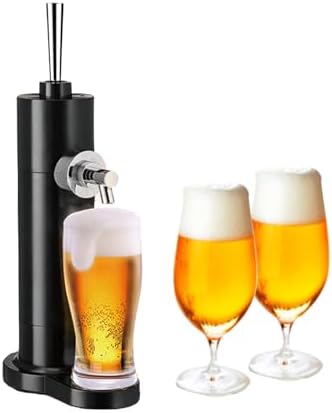
This battery-powered dispenser is designed to attach to canned beer, not to chill and serve a keg. The listing says it works with 330 ml, 440 ml, and 500 ml cans and uses two standard AA batteries, which are not included. It does not require a CO₂ cylinder; the product description attributes its foam effect to internal vibration technology.
That makes it a different kind of product from the kegerators above. It could be handy for occasional pours at a gathering or as a small accessory, but it does not provide refrigerated keg storage, multiple taps, or the capacity expected from a bar’s main draft system. The supplied listing data also marks it unavailable.
Pros:
- Made for canned beer rather than keg connections
- Does not require a separate CO₂ cylinder
- Small format can suit occasional or outdoor use
Cons:
- Not a kegerator and does not serve from a keg
- Requires two AA batteries, which are not included
Verdict: Treat this as a can-pouring accessory, not as a draft system for regular bar service.
How to Choose a Draft Beer System for Your Bar
Match the system to your expected keg volume
Think about how much draft beer you expect to serve and how often you can change kegs. A compact unit described for one sixth keg may work for a small bar with limited draft demand, while a two-tap system can offer more variety. Check the product’s stated capacity against the actual keg sizes you plan to use; a cabinet’s overall volume alone does not confirm that a particular keg will fit.
Check keg style and coupler compatibility
Keg fittings are not interchangeable by default. The VEVOR D-system models are presented for D-system kegs, while the other VEVOR model is described as a ball-lock setup. Before ordering, compare the coupler and connections listed for the system with the kegs you buy. If the fittings do not match, you may need compatible parts or a different dispenser.
Choose the right number of taps
A single tap keeps the setup simple, while two taps can let you offer two beers at once. More taps are only useful if the system can hold and cool the kegs you want to serve. The first VEVOR listing has conflicting tap information: its title says single tap, but its description mentions a dual-tap tower. Confirm exactly what is included before making a decision.
Review temperature controls and cooling details
Compare the stated temperature range with your serving needs, and look for clear controls that staff can use without guesswork. The listed systems describe digital temperature settings and fan-forced circulation, but the product details are not equally specific. Follow the unit’s instructions for temperature setup, and do not assume a broad temperature range means every setting is suitable for dispensing beer.
Measure the space and plan the CO₂ tank location
Measure the installation area, including room for the door, tower, ventilation, and any external tank. Some models describe internal and external CO₂ placement, while others mention storing the tank inside. Also check the unit’s listed dimensions and weight before placing it in a tight bar area. The product descriptions provided here do not include every measurement you may need.
Consider what comes in the kit
A complete setup may include a tower, regulator, coupler or ball-lock fittings, CO₂ tank, and gas lines. Check the listing for each part rather than assuming that a kegerator includes everything required to connect your keg. The included hardware should match both the system and the keg style you use.
Separate bar equipment from occasional-use gadgets
A can dispenser can make a canned beer pour differently, but it is not a replacement for a refrigerated keg system. For a bar that needs steady service, focus on a kegerator with confirmed keg capacity and compatible connections. A can tap is better viewed as an add-on for occasional use.
Frequently Asked Questions
What is the difference between a D-system and a ball-lock system?
They refer to different connection styles. The products in this guide identify either a D-system coupler or ball-lock fittings. Check the keg connection you use and make sure it matches the dispenser’s included hardware before ordering.
Can the VEVOR single-tap model serve two beers at once?
The supplied information is inconsistent. Its title calls it a single-tap dispenser, while its description says it includes a dual-tap tower. Confirm the tap count and included parts with the seller before buying.
Which option is best for a small bar?
That depends on your keg needs. The first VEVOR is described for one sixth keg and may suit a small setup if its tap configuration is confirmed. The IDEALHOUSE has two taps and a stated 152-liter interior, but its keg-size compatibility should be checked.
Does every kegerator in this guide include a CO₂ tank?
The two VEVOR descriptions mention a 5-pound CO₂ tank in the included kit. The IDEALHOUSE description provided here does not list a CO₂ tank, and the can dispenser does not require a CO₂ cylinder. Check the product listing to confirm what comes with the model you choose.
Can a can dispenser replace a commercial kegerator?
No. The RGWYGCG unit is designed for canned beer and does not provide keg storage or a multi-tap draft setup. It is better suited to occasional pours than routine bar service.
Can these kegerators be built into a bar?
The VEVOR descriptions mention freestanding and built-in installation options. Even so, check the installation instructions and required clearances before placing a unit in cabinetry. The IDEALHOUSE listing information provided here does not specify built-in installation.
Final Recommendation
For a small bar, start by matching keg style and capacity to the beer you plan to serve. The IDEALHOUSE stands out for its two taps and stated interior capacity, while the first VEVOR may suit a compact single-keg setup if you confirm its conflicting tap details. The ball-lock VEVOR is worth considering only if it becomes available and matches your fittings. Skip the canned-beer dispenser as a main bar system; it serves a different purpose.