
Hospital beds are designed to support people who spend long hours lying down, but the standard mattress often falls short when it comes to pressure relief. A good mattress topper can spread body weight more evenly, lower the risk of pressure sores, and make a bed more comfortable for someone who cannot easily shift position. The right choice depends on how much movement the person can manage, how sensitive they are to noise, and how much setup you are willing to handle. This guide compares five popular options, explains what each one does well, and shows you what to weigh before you buy.
Quick Comparison Table
| Product | Type | Standout Feature | Best For |
|---|---|---|---|
| Vive Alternating Air Pressure Mattress Pad | Alternating air | 130 air cells with a quiet pump rated at 22 dBA | Bedridden users who need active pressure relief |
| Lunderg Alternating Air Pressure Mattress Pad with Static Mode | Alternating air with foam layer | Static Mode and a removable comfort foam layer | Users who find pure air surfaces uncomfortable |
| KEKOY Alternating Air Pressure Mattress Pad | Alternating air | Five adjustable pressure levels and a pump rated below 28 dBA | Caregivers who want pressure control and FSA or HSA eligibility |
| MABOZOO Waterproof Bed Sore Mattress Topper | Wave-cut foam | No pump or power needed, with a waterproof cover | Users who want a simple, passive topper |
| Lumex Foam & Gel Mattress Topper for Hospital Beds | Foam and gel overlay | Three-layer build with a non-aqueous gel core | Users who need a no-pump, low-maintenance option |
Our Picks: Best Mattress Topper For Hospital Bed reviews
Vive Alternating Air Pressure Mattress Pad: Strong Pressure Relief for Long-Term Bed Use

The Vive pad is an alternating air mattress topper built around 130 heat-sealed air cells. A pump inflates and deflates these cells in a wave-like pattern, which shifts pressure away from one spot and onto another. The listing describes a cycle of about six minutes, and the pump is rated at 22 dBA, which makes it one of the quieter options in this group. For someone who spends most of the day and night in bed, that quiet operation can matter as much as the pressure relief itself.
The build is simple and sturdy. The pad uses a premium vinyl top that is waterproof and rated to support up to 300 pounds. Top and bottom flaps tuck between the mattress and the frame, which helps keep the pad from sliding during use. The air hoses are flexible, so they are less likely to kink or pull against the bed. Setup is straightforward compared with more complex systems, and the pad can go on top of an existing hospital bed mattress without much fuss.
In everyday use, owners often describe the pad as a dependable option for long stretches of bed rest. Many appreciate that the pump runs quietly enough that it does not wake a light sleeper in the same room. The main trade-off is the vinyl surface. Vinyl is easy to wipe clean and resists moisture well, but it generally feels cooler and less breathable than fabric. Some people find it firmer under the body, and it may not suit someone who is very sensitive to temperature changes. The pad also does not include a separate comfort layer, so the feel comes entirely from the air cells.
Compared with the other picks here, the Vive pad focuses on function over comfort extras. The Lunderg and KEKOY options add more ways to adjust the feel or the pressure, while the Vive offers a clean, well-known alternating system at a straightforward level of complexity. It is a practical choice for caregivers who want active pressure relief without a lot of extra features to manage.
Pros:
- Quiet pump rated at 22 dBA, which suits shared rooms and light sleepers
- 130 air cells for a wave-like pressure pattern across the body
- Waterproof vinyl surface that is easy to wipe clean
- Supports up to 300 pounds and includes a 1-year guarantee
Cons:
- Vinyl top can feel cooler and firmer than fabric-covered alternatives
- No separate comfort layer is included
Verdict: The Vive pad is a solid choice if you need reliable alternating pressure relief and value quiet operation. Choose it if your priority is function and easy cleanup. If the person you care for finds air surfaces uncomfortable, look at the Lunderg option first.
Lunderg Alternating Air Pressure Mattress Pad: Comfort-Focused Air Therapy with Static Mode

The Lunderg pad takes the same alternating air approach as the Vive but adds two features that change the day-to-day experience. The first is a comfort foam layer that snaps onto the top of the air pad. This layer softens the surface and makes it feel more like a regular mattress. The second is Static Mode, which keeps all 130 cells fully inflated so the surface stays still. This is useful when the person needs a break from movement, such as during a meal, a visit, or a period of deep rest.
Setup takes more effort than with a simpler pad. You unroll the pad, connect the hoses using the quick connector, plug in the pump, and inflate the pad, which the listing says takes about 20 minutes over three cycles. After that, you snap the foam layer in place and adjust the pressure with a knob, starting at Firm. The pump is rated at 23 dBA, which is still very quiet and only slightly louder than the Vive. The soft-to-firm control gives you room to fine-tune the feel for different body types, which is helpful when the person’s needs change over time.
Many owners appreciate the foam layer because it addresses one of the most common complaints about pressure pads, which is that they feel unfamiliar or uncomfortable. The foam makes it easier to rest for longer periods, and the static setting gives a stable surface when alternation is not needed. The trade-off is that the extra layer adds bulk and another part to keep track of. The pad also takes longer to set up and may require a bit more attention when you first install it. Caregivers who want a set-it-and-forget-it solution may find the added steps less appealing.
Among the choices here, the Lunderg is the most comfort-oriented alternating pad. The Vive is simpler and faster to install, while the KEKOY offers more pressure levels. If comfort is the main concern and you are willing to spend a few extra minutes getting it set up, the Lunderg is a strong option.
Pros:
- Comfort foam layer softens the surface and feels more familiar
- Static Mode keeps the surface stable when alternation is not needed
- Adjustable soft-to-firm pressure control
- Quick connector and support for up to 300 pounds
Cons:
- Setup takes longer, with about 20 minutes of inflation and an extra foam layer to snap in
Verdict: The Lunderg pad is a good match for anyone who wants alternating pressure relief without giving up comfort. It works especially well for people who sleep poorly on pure air surfaces. If you want the fastest setup and the simplest design, choose the Vive instead.
KEKOY Alternating Air Pressure Mattress Pad: Adjustable Pressure Levels for Daily Care
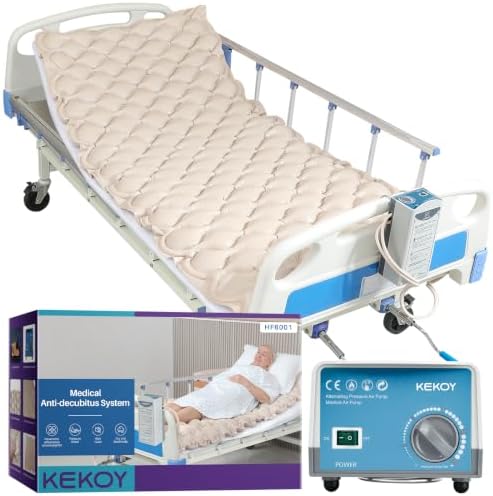
The KEKOY pad is another alternating air topper built around 130 air cells. Its main difference from the Vive and Lunderg is the pressure control. The listing describes five adjustable levels, from softer support at Level 1 to firmer support at Level 5. This gives you a wider range of settings to match body weight and personal preference. The pump is an aluminum unit that the listing rates below 28 dBA, and the pressure cycle runs about every 10 to 12 minutes. That slower cycle is a noticeable difference from the roughly six-minute cycle on the Vive.
The pad is waterproof, which helps protect the surface against spills, sweat, and moisture. This is a practical feature for daily care, since cleanup is often the most time-consuming part of looking after someone who spends long periods in bed. The listing also notes that the product is FSA and HSA eligible, which may help some buyers manage costs. Buyers should confirm eligibility with their own plan administrator, since rules vary.
In daily use, the appeal is in the flexibility. Caregivers often value being able to change the firmness without buying a second product. The slower cycle may feel gentler for some users, though it also means each pressure shift happens less often. Because the listing does not state a weight capacity, you should check the full product details before buying if the person you care for is heavier. The description also focuses heavily on prevention, so it is worth discussing the right product for your specific situation with a healthcare provider.
Compared with the Vive, the KEKOY offers more pressure settings and a quieter-rated pump, while the Vive offers a clearer, published weight rating and a faster cycle. Compared with the Lunderg, the KEKOY does not include a comfort foam layer or a static setting. It suits caregivers who want control over pressure and easy cleanup more than those who want a softer surface.
Pros:
- Five adjustable pressure levels for a more tailored feel
- Pump rated below 28 dBA for quiet nighttime operation
- Waterproof surface that simplifies daily cleanup
- Listed as FSA and HSA eligible
Cons:
- The listing does not state a weight capacity, so confirm fit before buying
Verdict: The KEKOY pad is a practical choice for caregivers who want adjustable pressure and easy-to-clean surfaces. Choose it if you value control over the pressure settings and may use FSA or HSA funds. Check the weight details first if the person you care for is on the heavier side.
MABOZOO Waterproof Bed Sore Mattress Topper: A Passive Foam Option with No Pump

The MABOZOO topper takes a completely different approach. Instead of air cells and a pump, it uses a wave-cut foam core. The cuts are made in one piece and are designed to spread weight across the body and create airflow through the surface. Because there is no motor, the topper runs silently and needs no electricity. The listing describes the cover as 100% oxford cloth with a waterproof design, and it says the surface can be wiped clean with a towel. The bottom has non-slip points to help the topper stay in place on the bed.
The topper measures about 78 by 36 by 1.7 inches, which the listing describes as a standard hospital bed size. The listing also states that the product is an FDA registered Class I medical device. Because it ships compressed in a bag, you will need to open the box and allow 24 to 48 hours for it to fully expand before use. That waiting period is easy to plan for, but it is worth knowing about if you need the bed ready right away.
Buyers who choose this type of topper often value its simplicity. There are no hoses, no pump settings, and no motor to maintain. In practice, that makes it a good fit for someone who can change position on their own, or for a person who needs a supportive surface but does not need active pressure cycling. The foam does not move or shift pressure the way an air system does, so it is generally better suited to lower levels of need. For someone who is fully immobile and at high risk, a powered system is usually the stronger option.
Compared with the air-based options here, the MABOZOO is the least complex but also the least active. It is a useful choice for those who want a simple, quiet, and waterproof layer on top of their current mattress, while the Vive, Lunderg, and KEKOY offer more active pressure management.
Pros:
- No pump, hoses, or electricity required, so it operates silently
- Waterproof oxford cloth cover that wipes clean easily
- Non-slip bottom helps keep the topper in place
- Standard hospital bed size with a stated FDA registration for the device
Cons:
- Does not provide alternating pressure movement, so it may not suit high-risk needs
- Requires 24 to 48 hours to fully expand after opening
Verdict: The MABOZOO topper is a simple, low-maintenance option for users who need a supportive, waterproof surface without a pump. It is best for people with moderate needs or those who can shift position on their own. If pressure relief needs to be active and continuous, choose one of the air-based pads instead.
Lumex Foam & Gel Mattress Topper: A Three-Layer Overlay for Hospital Beds

The Lumex topper is a passive pressure relief overlay with three layers. The top is a soft convoluted foam, the middle is a visco-elastic gel core, and the base is high-density foam. The gel layer is designed to spread weight evenly and ease pressure at high-risk areas such as the hips, heels, and shoulders. The gel is described as non-aqueous, which means it is meant to stay in place without pooling or moving around. The overlay measures 36 by 80 by 3 inches, which fits most standard and extended-length medical mattresses.
The cover is fluid-resistant and wipes clean, which makes it practical for clinical or home settings where spills and incontinence are part of daily care. Because there is no pump, there is nothing to plug in, no noise to manage, and no hoses to route. The trade-off is that the overlay does not change pressure over time. It relies on its materials to distribute weight, which means it works best for people who can shift position somewhat on their own or who have lower pressure-related risk.
The listing indicates that this product was not available at the time of research. Before you plan around it, check the current availability on Amazon. In terms of design, it is a sensible, well-built overlay from a brand that is familiar in medical equipment. The three-layer construction gives it a firmer, more supportive feel than a single slab of foam, which some users find more stable for sitting up or transferring.
Compared with the air-based options, the Lumex is the most traditional and least mechanical of the group. It does not offer the active pressure cycling of the Vive, Lunderg, or KEKOY pads. Compared with the MABOZOO, it adds a gel layer and a more structured build, which may make it a better fit for users who want a firmer and more layered support surface.
Pros:
- Three-layer design with a gel core for even weight distribution
- No pump, hoses, or electricity to manage
- Fluid-resistant cover that wipes clean easily
- Sized to fit most standard and extended-length medical mattresses
Cons:
- Listing was not showing as available at the time of research
Verdict: The Lumex overlay is a solid passive option for users who want gel-based support without a pump. It suits hospital, rehab, and home settings where low maintenance matters. Confirm availability first, and choose an air-based pad instead if the person you care for needs active pressure movement.
How to Choose the Right Mattress Topper for a Hospital Bed
Decide Between Active Air Pressure and Passive Support
The first decision is the type of pressure relief you need. Alternating air pads, such as the Vive, Lunderg, and KEKOY, use a pump to inflate and deflate cells in a pattern. This movement changes which areas of the body carry the most weight, so it is often the better choice for people who cannot shift position on their own. Passive toppers, such as the MABOZOO foam and the Lumex foam and gel overlay, rely on their materials to spread pressure. They do not move, so they work best for people with lower risk or those who can still reposition themselves. If you are unsure which category fits, a nurse or healthcare provider can help you assess the level of need.
Think About Noise and Nighttime Comfort
A pump can be a surprise source of disturbance, especially at night. All three alternating pads in this guide are rated for quiet operation, with the Vive at 22 dBA, the Lunderg at 23 dBA, and the KEKOY below 28 dBA according to the listings. These numbers are useful for comparison, but they are only part of the picture. The cycle timing matters too. A pad that cycles every six minutes creates more regular movement than one that cycles every 10 to 12 minutes. If the person you care for is a light sleeper, or if you share a room, consider both the noise level and how often the pad moves.
Check Weight Capacity and Bed Fit
Weight capacity affects both safety and performance. The Vive and Lunderg pads list support for up to 300 pounds. The KEKOY listing, as supplied, does not state a weight limit, so you should confirm this in the full product details before buying. For passive toppers, check the dimensions carefully. Most hospital beds use a standard size, but some are longer or wider. The MABOZOO measures about 78 by 36 inches, and the Lumex measures 36 by 80 inches. Compare these numbers with your bed frame and mattress, and make sure the topper will sit flat without bunching at the edges.
Look at Waterproofing and Cleaning Ease
Daily care often involves spills, sweat, and incontinence, so the cover material matters a great deal. The Vive uses a waterproof vinyl surface that is easy to wipe down. The KEKOY is also waterproof and designed for easy cleanup. The MABOZOO uses a waterproof oxford cloth cover that can be wiped with a towel, and the Lumex has a fluid-resistant cover. Vinyl is typically the easiest to clean and most resistant to fluids, but it can feel cooler and less breathable than fabric. If skin comfort is a concern, think about how the material will feel over long hours of use, not just how easy it is to wipe.
Consider Comfort Layers and the Feel of the Surface
Pressure relief only helps if the person can stay on the surface comfortably. Some air pads feel firm or unfamiliar, which can make it harder to rest. The Lunderg addresses this with a removable comfort foam layer and an adjustable soft-to-firm setting. The Lumex uses a soft foam top above its gel core, which gives it a layered feel. The Vive and KEKOY rely on air cells and pressure settings for comfort. If the person you care for is sensitive to firm surfaces or has trouble sleeping on air, prioritize a pad with a comfort layer or a more flexible pressure range.
Plan for Setup, Power, and Maintenance
Setup effort varies widely across these options. Passive toppers like the MABOZOO are ready to use after they expand, though the compressed packaging may need a day or more to reach full thickness. Alternating pads need a power outlet, hose connections, and a short inflation period. The Lunderg requires about 20 minutes of inflation, and it has a few more components to manage. Consider who will be doing the setup and how often the topper may need to be adjusted or moved. Simpler setups are easier to maintain over time, especially if multiple caregivers share the responsibility.
Confirm Warranty, Availability, and Medical Guidance
Finally, check the warranty and the product’s current availability before you commit. The Vive listing includes a 1-year guarantee, which gives buyers some protection against defects. The Lumex listing was not showing as available at the time of research, so confirm its status before planning a purchase. No topper replaces professional medical advice. If the person you care for already has pressure injuries or is at high risk, talk with a doctor, nurse, or wound care specialist to choose the right level of support and to make sure the topper fits into the overall care plan.
Frequently Asked Questions
Does a mattress topper for a hospital bed replace the need for repositioning?
No. A topper can help reduce pressure on vulnerable areas, but it does not replace regular repositioning. Many caregivers still change the person’s position on a schedule set by a healthcare provider. Alternating air pads can reduce how often manual turning is needed, but they work best as part of a complete care routine.
Are alternating air pads better than foam toppers?
It depends on the person’s needs. Alternating air pads add active movement, which can be helpful for people who cannot shift their weight. Foam toppers are simpler, quieter, and require no power. For someone with lower risk or better mobility, a foam topper may be enough. For someone who is fully immobile, an air system is often the more suitable choice.
Will an air mattress topper be noisy at night?
The pumps on the Vive, Lunderg, and KEKOY pads are rated as quiet, with listed levels of 22 dBA, 23 dBA, and below 28 dBA. Most owners find these pumps easy to live with. However, every person’s sensitivity to sound is different, so it is a good idea to listen to the pump in a store or ask about noise levels before deciding.
Can I use a mattress topper on any hospital bed?
Most toppers are designed for standard hospital bed sizes, but you should always check the measurements against your bed. Confirm the length, width, and thickness, and make sure the topper will not slide or bunch. Some alternating pads include flaps or straps that tuck between the mattress and frame to help keep them in place.
How long does it take to set up an alternating air pad?
Setup time varies by model. Some pads need only a few minutes to connect and start. The Lunderg, for example, takes about 20 minutes to fully inflate over three cycles, plus time to snap in the comfort foam and adjust the pressure. Plan to set aside extra time on the first day of use.
Is a waterproof topper important for daily care?
For most caregivers, yes. Spills, sweat, and incontinence are common, and a waterproof cover makes cleanup faster and helps protect the mattress underneath. Look for a surface that is easy to wipe and can handle regular cleaning. Vinyl and oxford cloth covers are common choices, and each has its own feel and breathability.
Should I check with a doctor before buying a mattress topper?
Yes, it is a good idea. A doctor, nurse, or wound care specialist can help you decide what level of pressure relief is needed. They can also recommend how often the person should be repositioned and whether an alternating or passive topper is more appropriate. This guide is meant to help you compare products, not to replace professional medical advice.
Final Recommendation
For most people who need active pressure relief, the Vive Alternating Air Pressure Mattress Pad is the most straightforward choice. It offers a quiet pump, a waterproof surface, a 300-pound weight rating, and a simple setup. If the person you care for finds air surfaces uncomfortable, the Lunderg is the better pick because its comfort foam layer and Static Mode make resting easier. The KEKOY is a strong option for caregivers who want adjustable pressure levels and easy cleanup, as long as you confirm the weight capacity before buying.
If the person you care for needs less active support or you want a simple, pump-free solution, the MABOZOO foam topper and the Lumex foam and gel overlay are worth considering. The Lumex was not showing as available at the time of research, so check its status before you plan around it. In every case, match the product to the person’s level of need, and talk with a healthcare provider when making a final decision.