Porcelain-enameled cast iron grates need a gentler touch than bare cast iron. A brush that is too abrasive can damage the coating, so a nonmetal brush designed for coated grates is often the safer starting point. Below, we compare five options—from nylon and brass brushes to bristle-free and wire designs—and explain what to consider before you scrub.
Quick Comparison
| Product | Brush type | Best for | Important note |
|---|---|---|---|
| Grillaholics Nylon Grill Brush for Porcelain Grates | Nylon | Gentle routine cleaning | Designed for use on cold grates |
| XUDAKAIXIN Nylon Grill Brush | Nylon with scraper | Regular cleanup with a separate scraper for tough grime | Keep the metal scraper away from the enamel |
| MEKER Bristle-Free Grill Brush | Steel-fiber pad | People seeking a replaceable-head design | Check your grill maker’s care instructions before using an abrasive pad |
| Grillaholics Brass Grill Brush | Brass bristles | Those who want a traditional bristle brush | The maker says it suits porcelain; inspect bristles and follow your grill’s guidance |
| GRILLART Wire + Helix Grill Brush | Wire and helix | Fast cleaning on compatible grates | Wire bristles call for extra caution and may not suit coated grates |
Our Picks: Best Grill Brush For Porcelain Enameled Cast Iron Grates reviews
Grillaholics Nylon Brush: A Gentle Pick for Porcelain Grates

This brush is made specifically for porcelain and chrome grates. Its nylon bristles avoid the metal-wire design of traditional brushes, and its three-part head is intended to cover more grate surface with each pass. That broad contact can make routine cleanup quicker than working with a narrow, single-head brush.
The main practical advantage is its focus on coated grates. The product is intended for cold-grate cleaning, which is an important detail: let the grill cool fully before using it rather than treating this as a hot-grate brush. Some owners find it useful for everyday debris on porcelain-coated cast iron, while baked-on sauce and other stubborn residue may take more effort.
Compared with the other picks, this is the most straightforward choice if protecting the enamel is your priority. It does not include a scraper for heavy buildup, so you may need to loosen stubborn residue with a method approved by your grill’s manufacturer.
Pros:
- Nylon bristles are designed for porcelain-coated grates.
- Three-part head covers more area per pass.
- Nonmetal design avoids loose wire bristles.
- Lightweight construction and a steel handle.
Cons:
- Designed for use on cold grates, not hot cleanup.
- May struggle with heavily baked-on residue.
Verdict: Choose this brush for gentle, regular cleaning of porcelain-enameled grates, especially if you are willing to let the grill cool before scrubbing.
XUDAKAIXIN Nylon Brush: A Scraper Option for Regular Cleanup

This tool pairs nylon bristles with a stainless steel scraper. The nylon side is the part to consider for routine care of porcelain-enameled cast iron. The scraper may help with stubborn buildup on suitable surfaces, but metal can scratch or chip enamel if it contacts the coating, so keep it off the grate surface unless your grill maker specifically approves that use.
The brush has a soft-yet-sturdy grip and a hanging ring for storage. Its maker describes the nylon bristles as heatproof and the three-part head as a faster-cleaning design. In everyday use, some owners find the brush firmer than expected and capable of lifting residue, though that does not make the metal scraper appropriate for coated grates.
It offers more versatility than the Grillaholics nylon-only brush, but that versatility requires care. If you want a simple tool with fewer chances of accidentally scraping the enamel, the dedicated porcelain brush is the easier choice. If you buy this one, use the nylon portion gently on cooled grates and reserve the scraper for surfaces where it is safe.
Pros:
- Nylon bristles provide a non-wire option for regular cleaning.
- Includes a separate scraper for compatible surfaces.
- Grip and hanging ring support handling and storage.
- Three-part brush head is designed to clean a wider area.
Cons:
- The metal scraper can damage enamel if used on the grate.
- The product’s broad cleaning claims do not replace careful, gentle technique.
Verdict: Consider it if you want nylon brushing plus a scraper for other grill surfaces, but choose the scraper-free Grillaholics brush for a simpler porcelain-focused tool.
MEKER Bristle-Free Brush: A Replaceable-Pad Design

Rather than bristles, the MEKER uses a flexible steel-fiber layer and cleaning cloth on a replaceable pad. The set includes five replacement heads, a built-in scraper, and a handle with a pad attachment. Its design may appeal if you prefer replacing scrub pads instead of using a conventional bristle brush.
There is an important fit question for porcelain-enameled cast iron: steel fiber is still an abrasive material, and the supplied information does not confirm that it is safe for this coating. The product describes use on cast iron and stainless steel, but that alone does not establish compatibility with enamel. Check your grill maker’s care instructions before using the pad, and avoid the scraper on the coated surface unless the maker approves it.
The product’s directions call for heating the grill, scraping residue, soaking the pad in cold water, and wiping the grill. For porcelain enamel, follow the grill manufacturer’s cleaning instructions instead; avoid sudden temperature changes or wet scrubbing on a hot grate unless those instructions specifically allow it. This is a less cautious choice for delicate coating than a nylon brush designed for porcelain.
Pros:
- Uses a replaceable cleaning pad rather than loose brush bristles.
- Includes five replacement pads.
- Built-in scraper can help on compatible surfaces.
- Designed to reach between square or round grill bars.
Cons:
- Steel-fiber construction may be too abrasive for porcelain enamel.
- Its included scraper and hot-cleaning directions call for extra caution on coated grates.
Verdict: This may suit people with compatible bare cast iron or stainless-steel grates, but it is not the first choice for porcelain-enameled cast iron without the grill maker’s approval.
Grillaholics Brass Brush: A Traditional Brush the Maker Says Suits Porcelain

This 18-inch brush uses brass bristles and a long handle. The maker describes brass as softer than steel and says the brush is suitable for porcelain and ceramic grates. That makes it a more relevant metal-bristle option for coated grates than a standard steel-wire brush, but it is still worth checking your grill manual before use and inspecting the brush for loose or damaged bristles.
The long handle gives you more reach, and the brush is designed for broad, fast cleaning. It may suit someone who prefers a traditional bristle brush and wants to tackle heavier residue. However, it is not as cautious a choice as a nylon brush specifically marketed for porcelain. For delicate or chipped enamel, a nonmetal brush is the safer starting point.
Compared with the Grillaholics nylon brush, this model offers a more traditional scrubbing feel and is intended for multiple grill types. The trade-off is that it uses bristles, so safe use depends on the brush condition and the care guidance for your grate.
Pros:
- Long handle helps keep your hands farther from the grate.
- Brass bristles are described by the maker as softer than steel.
- Maker lists porcelain and ceramic among compatible surfaces.
- Broad brush design is intended for efficient cleaning.
Cons:
- Still uses metal bristles, which need regular inspection.
- Less conservative for enamel than a dedicated nylon brush.
Verdict: Choose this if you prefer brass bristles and your grill maker permits them; opt for nylon if your main goal is minimizing abrasion and avoiding metal bristles.
GRILLART Wire and Helix Brush: Fast Cleaning with a Wire-Bristle Trade-Off
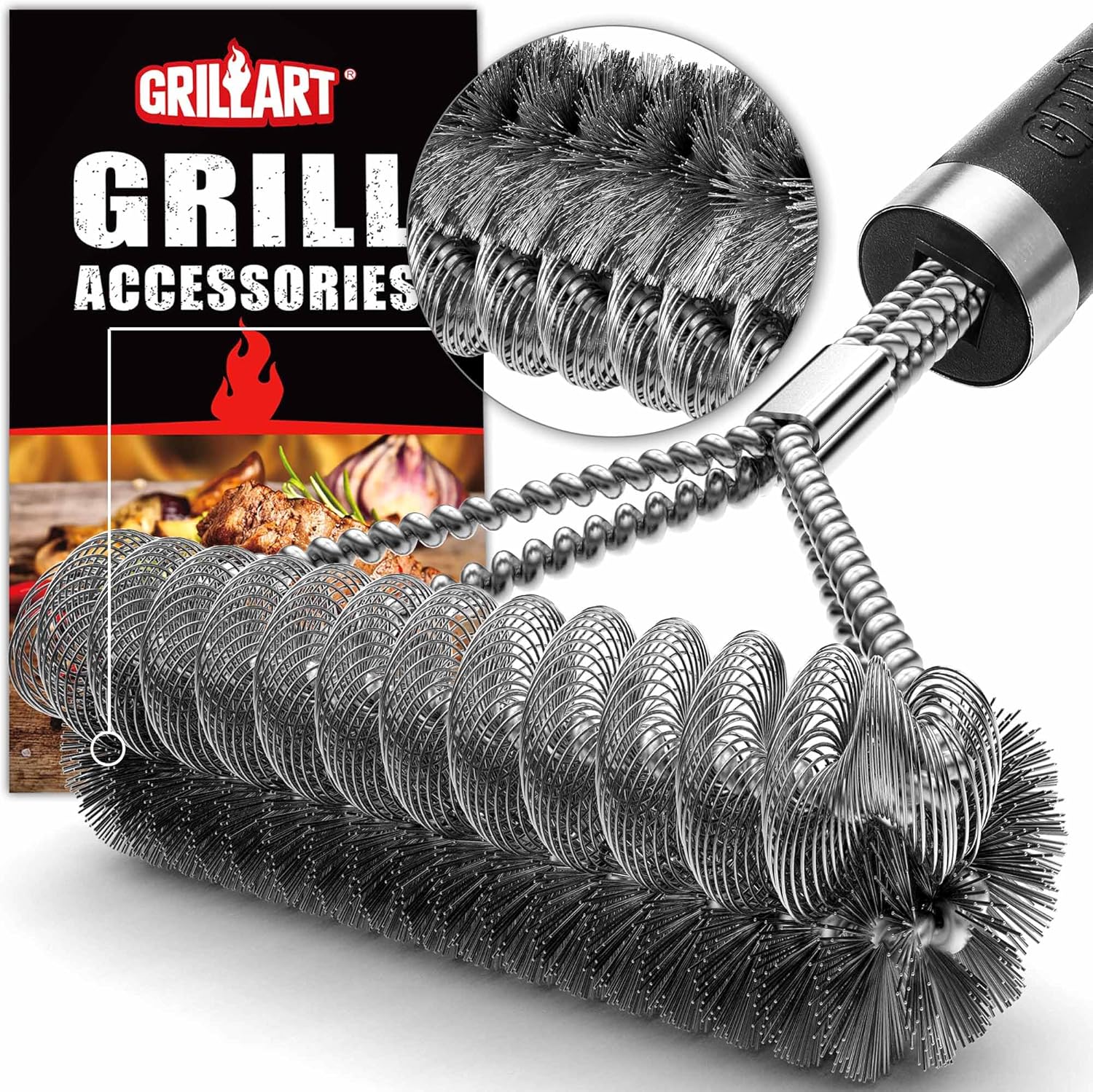
This 18-inch brush combines a wire-bristle side with a helix side. The maker presents the wire section as a way to remove stubborn residue and the helix section as a second pass over the grate. Its wide head is meant to cover a larger area, and the long handle provides reach.
For porcelain-enameled cast iron, the wire side is the main concern. Metal wire can scratch a coating, and loose bristles may create a safety risk if they remain on the grate or reach food. The helix section does not remove that concern if you use the wire side first. If you choose this model, follow your grill maker’s instructions, inspect the brush and grate carefully, and consider a nonmetal brush for routine enamel care.
Some owners find the brush effective and durable, while others have raised concerns about handle durability. That makes it a less certain choice than a simpler nylon brush for this particular grate type. Its combination design may be useful for other compatible surfaces, but it is not the most enamel-focused pick in this list.
Pros:
- Combines wire and helix cleaning surfaces.
- Wide head is designed to clean larger areas quickly.
- 18-inch handle offers reach and a non-slip grip.
- Lightweight design is easy to carry for outdoor cooking.
Cons:
- Wire bristles may scratch porcelain and require careful inspection.
- Some owners report handle durability concerns.
Verdict: This is not our preferred brush for porcelain-enameled grates; choose it only if your grill maker permits wire brushes and you are comfortable checking for loose bristles.
How to Choose a Grill Brush for Porcelain-Enameled Cast Iron Grates
Start with the grill maker’s care instructions
Porcelain enamel is a coating over the grate material, so a brush that might be fine for bare cast iron may not be right for an enameled grate. Check your grill manual for approved cleaning tools and methods. If the instructions rule out metal brushes or abrasive pads, follow that guidance even if a brush maker says its product works on porcelain.
Choose a brush material that suits the coating
A nylon brush designed for porcelain is a sensible place to start when you want to limit the risk of scratching. Brass bristles are softer than steel according to the maker of the Grillaholics brass brush, but they are still metal. Steel-fiber pads and steel wire deserve particular caution because abrasive contact can harm enamel. If you are unsure, choose the least abrasive option your grill maker allows.
Think about when you will clean
Some tools are meant for cold grates, while others are marketed for cleaning after heating the grill. Do not assume a brush is safe to use at any temperature just because it is described as heatproof. Follow both the brush directions and your grill’s instructions. The Grillaholics nylon brush in this guide is specified for cold grates, so allow the grate to cool completely before using it.
Match the brush head to the mess
A broad, multi-part head can cover more grate area in each pass and may be convenient for routine debris. A scraper may help with stubborn buildup on surfaces it is approved for, but a metal edge can damage enamel. For a porcelain-coated grate, do not use a scraper on the coated bars unless your grill maker specifically says it is safe.
Consider bristle safety and brush condition
Wire brushes can shed bristles, so inspect the brush before and after cleaning and check the grate before cooking. A bristle-free design avoids loose brush bristles, but that does not automatically make it safe for enamel; its cleaning surface can still be abrasive. Replace any brush that is damaged or shedding, and do not leave loose bristles on the grate.
Use a gentle routine rather than force
Frequent, light cleaning is often easier on the coating than aggressive scrubbing of hardened residue. Start with the gentlest method approved by your grill maker, and avoid sudden temperature changes or forceful scraping. If buildup will not come off, consult the grill’s care guidance rather than increasing pressure or switching to a harsher tool.
Frequently Asked Questions
What type of brush is safest for porcelain-enameled cast iron grates?
A nylon brush made for porcelain is a cautious starting point. Check your grill manual first, since the manufacturer’s cleaning instructions should guide your choice.
Can I use a steel-wire brush on porcelain-enameled grates?
It is generally a risky choice because wire can scratch the coating and bristles can loosen. Use one only if your grill maker specifically permits it, and inspect the grate carefully before cooking.
Are brass bristles safe for porcelain enamel?
The maker of the Grillaholics brass brush says its softer brass bristles are suitable for porcelain and ceramic. Brass is still metal, so check your grill’s instructions and inspect the brush for wear before using it.
Should I clean porcelain-coated grates while they are hot?
Follow the instructions for your grill and brush. The Grillaholics nylon brush featured here is intended for cold grates. Do not pour cold water on hot grates or use a hot-cleaning method unless your grill maker recommends it.
What should I do about baked-on sauce or grease?
Start with the gentlest cleaning method approved by your grill maker. A nylon brush may handle loose debris but can take more effort on hardened residue. Avoid using a metal scraper or abrasive pad on the enamel unless the manufacturer says it is safe.
Is a bristle-free brush automatically safe for porcelain grates?
No. Bristle-free describes the design, not how gentle the cleaning surface is. Steel-fiber pads can still be abrasive, so confirm compatibility with your grill maker before using one on enamel.
How often should I replace a grill brush?
There is no single schedule that fits every brush. Check it regularly for damage, worn parts, or loose bristles, and replace it if its cleaning surface or handle is no longer in good condition.
Final Recommendation
For most people looking after porcelain-enameled cast iron, the Grillaholics Nylon Grill Brush for Porcelain Grates is the most direct match in this group: it is designed for porcelain and intended for cold-grate cleaning. The XUDAKAIXIN is another option if you want nylon bristles plus a separate scraper, but keep that metal edge off the enamel. If you are considering brass, steel fiber, or wire, check your grill maker’s instructions first. A gentle brush and regular care are better bets for protecting the coating than aggressive scrubbing.
