Choosing the best propane water heater for an off-grid cabin starts with matching hot-water output to your water supply, propane setup, and installation plan. The five options below are portable, outdoor-use tankless heaters—not indoor appliances. They can be useful for a cabin shower or outdoor sink, but they need a suitable water source and must be operated outdoors according to the manufacturer’s instructions.
The main differences are flow rate, startup water pressure, controls, and portability. A lower-flow model may suit a simple shower setup, while a higher-flow unit can provide more water when conditions allow. Before buying, check the temperature rise you need, how you will drain and store the heater in freezing weather, and whether your cabin’s location and setup meet the product’s limits.
| Product | Flow rate | Heat output | Notable features |
|---|---|---|---|
| CAMPLUX AY132G Portable Water Heater | 1.32 GPM | 34,000 BTU | Starts at 3 PSI; runs on two D-cell batteries |
| CAMPLUX 2.64 GPM Tankless Heater | 2.64 GPM | 68,000 BTU | Low-pressure startup; anti-freezing drain plug |
| GASLAND BS264 Outdoor Water Heater | 2.64 GPM | 68,000 BTU | Two D-cell ignition; listed altitude limit of 3,300 feet |
| Syfuulv 1.58 GPM Portable Heater | 1.58 GPM | 41,000 BTU | Digital display; starts at 3 PSI |
| GASLAND BE264 Outdoor Water Heater | 2.64 GPM | 68,000 BTU | LED temperature display; multiple safety protections |
Our Picks: Best Propane Water Heater For Off Grid Cabin reviews
CAMPLUX AY132G: A Compact Pick for a Basic Cabin Shower

The CAMPLUX AY132G is a compact outdoor tankless heater rated for 1.32 gallons per minute and 34,000 BTU. Its modest flow rate makes it a better match for one shower or a simple wash station than for several hot-water uses at once. It starts without preheating, and its temperature and flow dials let you adjust the output for your setup.
For off-grid use, the unit operates with two D-cell batteries rather than a household electrical connection and is listed to start at water pressure as low as 3 PSI. The package includes a shower head with an on/off switch, a propane regulator and hose, a garden hose adapter, and installation hardware. Its listed safety features include protection against overheating, low water flow, dry combustion, high water pressure, flame failure, and freezing.
The lower flow rate is a practical trade-off: it may be enough for a cabin shower, but it is less suited to running multiple fixtures or filling a tub quickly. As with any outdoor portable heater, you will need to protect it from weather and drain it for cold-weather storage as directed by the manufacturer.
Pros:
- Low-pressure startup listed at 3 PSI
- Battery-powered operation does not require household electricity
- Includes a shower head, regulator hose, and garden hose adapter
- Compact design intended for portable outdoor use
Cons:
- Its 1.32 GPM flow rate is the lowest among these picks
- Outdoor-only use limits where it can be installed
Verdict: Choose the AY132G if you want a portable, lower-flow heater for a straightforward off-grid shower and can work within its output limits.
CAMPLUX 2.64 GPM: Higher Output for More Demanding Water Use
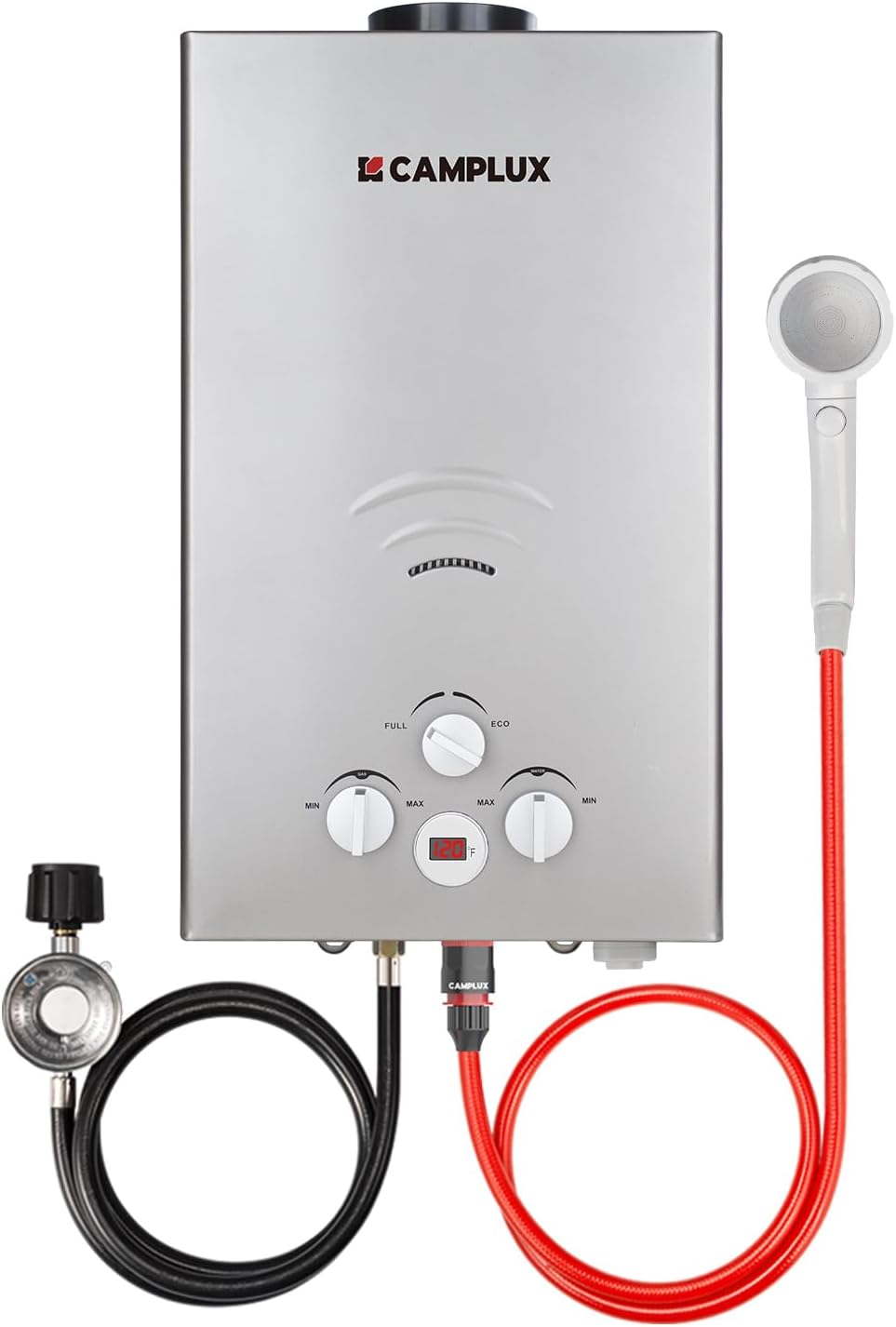
This CAMPLUX model raises the listed output to 2.64 GPM, backed by a 68,000-BTU heat rating. That makes it a stronger candidate when you want a more substantial shower flow than the 1.32 GPM option can provide. The unit is designed for portable outdoor applications such as camping, RV use, and remote cabins.
It starts at a listed water pressure of 3.6 PSI and supports pressure up to 110 PSI. Its listed protections include flame failure, overheating, and freezing, with a drain plug intended to let residual water out for cold-weather maintenance. The unit also has a stated maximum water temperature of 167°F, so careful adjustment and safe handling are important.
The additional output may be useful, but it does not remove the need to check your water source, propane supply, and incoming water temperature. Some users may also need a pump to provide enough pressure, depending on their water system. Compared with the smaller CAMPLUX model, this one offers higher flow but is heavier and less suited to buyers who put the smallest, simplest setup first.
Pros:
- Higher 2.64 GPM rated flow and 68,000-BTU output
- Starts at a listed 3.6 PSI
- Drain plug helps release remaining water for winter maintenance
- Designed for outdoor, portable use in cabins, RVs, and campsites
Cons:
- At 21 pounds, it is heavier than the smaller portable options
- Low-pressure water systems may still need a pump to operate reliably
Verdict: This is a sensible choice if your cabin setup can support its water-pressure needs and you want more rated flow than a compact shower heater provides.
GASLAND BS264: A Portable 10-Liter Option with Clear Use Limits

The GASLAND BS264 is a portable propane heater rated for 2.64 GPM and 68,000 BTU per hour. It is designed for outdoor use around cabins, campsites, RVs, and other remote setups. The manufacturer lists a temperature rise of 13°F to 43°F at the stated flow rate, so the water’s starting temperature is an important part of what you can expect at the outlet.
The heater starts at 3.6 PSI and uses two D-cell batteries for electronic ignition. The package includes a gas regulator and hose, an on/off shower head, mounting hardware, and a garden hose adapter. It is also listed with protections for flame failure, overheating, low water flow, dry combustion, freezing, and high water pressure.
This model has specific operating limits worth checking before you buy: the supplied information says it is not suitable for locations above 3,300 feet or for strong-wind conditions. It is splash-proof but not designed for prolonged exposure to rain or water. For winter storage, the manufacturer advises draining the heater and keeping it in a warm, dry place.
Pros:
- 2.64 GPM rated flow with a 68,000-BTU output
- Low-pressure startup listed at 3.6 PSI
- Two D-cell batteries power electronic ignition
- Includes a shower head and common connection hardware
Cons:
- Listed as unsuitable above 3,300 feet and in strong winds
- Needs protection from prolonged rain and careful winter storage
Verdict: Consider the BS264 if its altitude and weather limits fit your cabin location and you want a portable 2.64 GPM heater with included shower connections.
Syfuulv 1.58 GPM: A Lightweight Heater with a Digital Display

The Syfuulv portable heater is rated at 1.58 GPM and 41,000 BTU. It sits between the smaller CAMPLUX AY132G and the 2.64 GPM models in listed flow rate. A digital display gives you a temperature readout, which can make it easier to monitor the water as you adjust the settings.
The unit is listed at about 9.7 pounds, with a folding handle and a compact body intended for outdoor use. It starts at 3 PSI and includes a propane hose and regulator. The supplied product information also lists an oxygen-depletion shutoff, overheating protection, and high-pressure auto-drainage. Its seasonal operating modes and performance in cold conditions are manufacturer claims, so check the product instructions and suitability for your actual climate and water source.
This model may suit cabin owners who want a portable heater with a display but do not need the highest listed flow rate. Its advertised efficiency and cold-weather features should not be treated as a substitute for proper installation, outdoor operation, or winterizing. The supplied details do not state an included shower head or garden hose adapter, so confirm what comes in the package before planning your connections.
Pros:
- Digital temperature display
- Listed 1.58 GPM flow and 41,000-BTU output
- Starts at a listed 3 PSI
- Lightweight body with a folding handle
Cons:
- Lower rated flow than the 2.64 GPM options
- Package details do not list a shower head or garden hose adapter
Verdict: Pick the Syfuulv if portability and a temperature display matter more to you than maximum flow, and verify the included fittings before ordering.
GASLAND BE264: Higher Flow with an LED Temperature Display

The GASLAND BE264 is rated for 2.64 GPM and 68,000 BTU per hour, putting it among the higher-output options in this group. Its LED display shows temperature, which can help you keep track of adjustments. The manufacturer lists a temperature rise of 13°F to 43°F at the stated flow rate; actual outlet temperature depends on incoming water temperature and operating conditions.
For off-grid use, the heater is designed to run from a standard 20-pound propane tank and uses two D-cell batteries for electronic ignition. Its listed safety features include protection against overheating, low water flow, dry combustion, high water pressure, freezing, and flame failure. The package includes a regulator and hose, a shower head with an on/off switch, mounting hardware, and a garden hose adapter.
The higher flow rate makes this a stronger option than the 1.32 and 1.58 GPM models when your water and propane setup can support it. Still, it is an outdoor portable appliance, not a unit to install inside a cabin. Some users report needing a pump for their water supply, and the heater may take some adjustment to reach a comfortable shower temperature. Drain it and store it dry as directed when freezing weather is a concern.
Pros:
- 2.64 GPM rated flow and 68,000-BTU output
- LED temperature display helps monitor adjustments
- Uses a standard 20-pound propane tank and D-cell ignition batteries
- Includes a shower head, regulator hose, and garden hose adapter
Cons:
- May require a pump if your water source cannot provide enough pressure
- Outdoor use and winter drainage needs may complicate a permanent cabin setup
Verdict: The BE264 is a good fit if you want higher rated flow and a temperature display, provided you can supply enough water pressure and install it outdoors.
How to Choose a Propane Water Heater for an Off-Grid Cabin
Match Flow Rate to Your Hot-Water Needs
Flow rate describes how much water the heater can deliver per minute under its stated conditions. The options here range from 1.32 to 2.64 GPM. A lower-flow model may work for a single shower or wash station, while a higher-flow unit offers more capacity when the water supply and incoming temperature allow it. Do not assume the maximum listed flow will also deliver your preferred temperature rise; those demands compete for heat.
Check the Temperature Rise and Your Source Water
Temperature rise is the difference between the water entering the heater and the water leaving it. If your source water is very cold, the heater must raise its temperature further to reach a comfortable shower setting. The GASLAND models list a rise of 13°F to 43°F at the specified flow rate. Compare product specifications with your seasonal water temperature and intended use, and be prepared to reduce flow if you need a greater temperature rise.
Confirm Water Pressure and Pump Requirements
These portable heaters need moving water to start and operate. Listed startup requirements range from 3 to 3.6 PSI, but an off-grid source may not maintain that pressure. A gravity-fed tank, shallow well, or low-pressure line may need a pump, depending on the rest of your system. Check the heater’s pressure range and your pump’s output before buying; pressure that is too low or too high can prevent suitable operation.
Plan the Propane and Ignition Setup
Check the included regulator and hose, the propane connection, and whether you need batteries for ignition. The CAMPLUX AY132G and both GASLAND models specify two D-cell batteries; other models list different power details or do not provide the same battery information. Also consider how you will secure the propane cylinder, keep connections in good condition, and follow the manufacturer’s instructions for leak checks and operation.
Keep an Outdoor Heater Outdoors
All five products are presented as portable outdoor heaters. Do not place one in a cabin, bathroom, enclosed porch, or other indoor space unless the manufacturer explicitly approves that installation and the setup meets applicable safety rules. Propane combustion can create dangerous exhaust, so follow the manual, maintain the required clearances, and check local building and fire codes. A product’s safety features do not replace proper placement and ventilation.
Prepare for Rain, Wind, and Freezing Weather
Portable outdoor heaters need protection from harsh weather. The GASLAND BS264 product information specifically warns against prolonged exposure to rain and strong winds and gives an altitude limit of 3,300 feet. Cold can also leave water inside the heater, so follow the supplied draining and storage instructions before freezing conditions. Do not rely on an anti-freezing feature alone as a substitute for winterizing.
Choose Controls and Accessories That Fit Your Setup
A temperature display can make it easier to monitor adjustments, while a shower head with an on/off control can simplify a basic wash setup. Compare package contents carefully: some models include a shower head and garden hose adapter, while the Syfuulv product information does not list those items. Think through how the heater will mount, where water will enter and drain, and whether the included fittings match your cabin plumbing.
Frequently Asked Questions
Can I install one of these heaters inside my cabin?
These models are described as portable outdoor heaters. Do not operate them indoors or in an enclosed area. Follow the product manual and local rules, and choose an indoor-rated appliance if you need a permanently installed indoor water heater.
Will a propane tankless heater work with a gravity-fed water system?
It depends on the pressure your system can provide. The models in this guide list startup requirements of about 3 to 3.6 PSI, but a gravity-fed tank may not reach that level. Check your actual pressure and the heater’s specifications; a suitable pump may be needed.
Which model has the highest listed flow rate?
The CAMPLUX 2.64 GPM, GASLAND BS264, and GASLAND BE264 are each listed at 2.64 GPM. Your actual hot-water flow and temperature depend on incoming water temperature, pressure, and operating conditions.
Do these heaters need electricity?
Some use batteries for ignition rather than household power. The CAMPLUX AY132G and both GASLAND models specify two D-cell batteries. Check the product instructions for the exact power needs of the model you choose.
Can these heaters provide hot water in freezing weather?
Cold-weather performance depends on the model, water temperature, and setup. Freezing water left inside can damage a heater, so follow its draining and storage instructions. The GASLAND models advise draining and storing the unit in a dry place, and the BS264 information also calls for warm, dry winter storage.
How do I choose between a 1.32 GPM and a 2.64 GPM model?
Choose based on the amount of water you need and what your system can supply. A 1.32 GPM model is geared toward simpler, lower-flow use. A 2.64 GPM model offers more rated flow but needs a suitable water supply and enough propane to meet the demand.
Final Recommendation
For a basic off-grid shower where portability and low-pressure startup matter, the CAMPLUX AY132G is a practical lower-flow option. If you want more rated output, compare the 2.64 GPM models against your water pressure, weather exposure, and cabin location. The GASLAND BE264 adds a temperature display and a listed set of included shower connections, while the BS264 has important altitude and wind limits to consider. Whichever you choose, treat it as an outdoor appliance, plan for safe propane handling, and make winter drainage part of your setup.
