Low-angle filming can make a scene feel more dramatic, but holding a camera close to the ground is awkward without the right support. The best setup depends on how you plan to shoot: a camera cage with a low-position handle suits moving shots, while a chest-mounted rig creates a body-centered point of view. Articulating arms are better for mounting a small camera or accessory than for supporting a full cinema camera. Below, we compare five options and explain where each one fits.
| Product | Best for | Low-angle approach | Key limit |
|---|---|---|---|
| SMALLRIG 22" Magic Arm Clamp | Desk, overhead, or fixed-position shots | Long articulated arm for adjusting a mounted device | Recommended load capacity is 600 g |
| SMALLRIG 9.8" Magic Arm Clamp Kit | Mounting a monitor, light, or small camera | Clamps to a bar or other suitable support | Shorter arm is for accessories, not a heavy camera build |
| Fantaseal 3-Shoe Camera Stabilizer Cage | Handheld low-position shooting | Handle converts to a C-type low-position stabilizer | Made from ABS rather than aluminum |
| Glide Gear SNC 100 Snorricam | Body-mounted point-of-view footage | Articulating pole lets you position the camera in front of the body | Designed for a specific body-mounted perspective |
| Zeadio Aluminum Camera Cage Rig | Moving low-angle shots with accessories | Top handle provides a low-angle grip | Confirm your camera fits before buying |
Our Picks: Best Cinema Camera Rigs For Low Angle Filming reviews
1. SMALLRIG 22-Inch Magic Arm Clamp: Best for Fixed Low-Angle Mounting

This kit pairs a long, adjustable arm with a clamp that can attach to a desktop, round tube, or similar support. Its 22-inch reach gives you room to position a phone, webcam, action camera, light, or other compatible device at a low angle without holding it by hand. Double-ball joints allow angle changes, and the clamp includes friction pads to help protect the mounting surface.
The main trade-off is its recommended load capacity of 600 g. That makes it a poor choice for a large cinema camera or a heavy camera-and-lens setup. Think of it as a positioning tool for lightweight gear, not as a full camera cage or handheld rig. Some users find the clamp useful for desk-based filming and appreciate that the arm can be repositioned, but heavier devices may put too much force on the joints.
This is the most flexible option here for a low, fixed camera position, provided your device stays within the stated load limit. The included phone holder fits phones about 5.5 to 8.5 cm wide; you can also use the threaded connections with compatible accessories.
Pros:
- Long arm offers a wide range of positioning options.
- Clamp can attach to desks and round tubes.
- Includes a phone holder and a thread adapter.
- Useful for lightweight cameras, phones, lights, and webcams.
Cons:
- 600 g recommended load capacity rules out many cinema camera builds.
- A long arm can be more prone to slipping if overloaded or poorly positioned.
Verdict: Choose this SMALLRIG arm for an adjustable, fixed low-angle setup with lightweight gear, not for carrying a full-size camera rig.
2. SMALLRIG 9.8-Inch Magic Arm Kit: Best for Mounting Small Accessories

This compact kit combines a 9.8-inch articulating arm with a super clamp. The arm has 1/4-inch screws at both ends, while the clamp includes 1/4-inch and 3/8-inch threads. That setup can help you place a small monitor, microphone, light, or compatible camera accessory near your low-angle camera position.
The aluminum-alloy and stainless-steel construction is suited to rigging accessories onto a support such as a bar or stand. Rubber cushions help protect contact points and improve grip. The double-ball design gives you room to adjust the accessory’s angle, though its shorter reach offers less positioning range than the 22-inch SMALLRIG arm.
This is an accessory mount, not a handheld stabilizer or a complete camera cage. It makes the most sense when you already have a suitable camera support and want to add a small device nearby. The clamp’s stated opening range is 15 to 54 mm, so check the size of the surface you plan to attach it to.
Pros:
- Compact arm works well for positioning small rig accessories.
- Clamp has both 1/4-inch and 3/8-inch threaded holes.
- Rubber cushions help protect surfaces and equipment.
- Can attach to a range of compatible bars and supports.
Cons:
- Shorter reach gives you less freedom to place gear than a longer arm.
- Not designed as a primary support for a heavy camera setup.
Verdict: Pick this kit if your low-angle rig needs a compact mount for a monitor, light, or other small accessory.
3. Fantaseal 3-Shoe Stabilizer Cage: Best for Handheld Low-Position Shooting
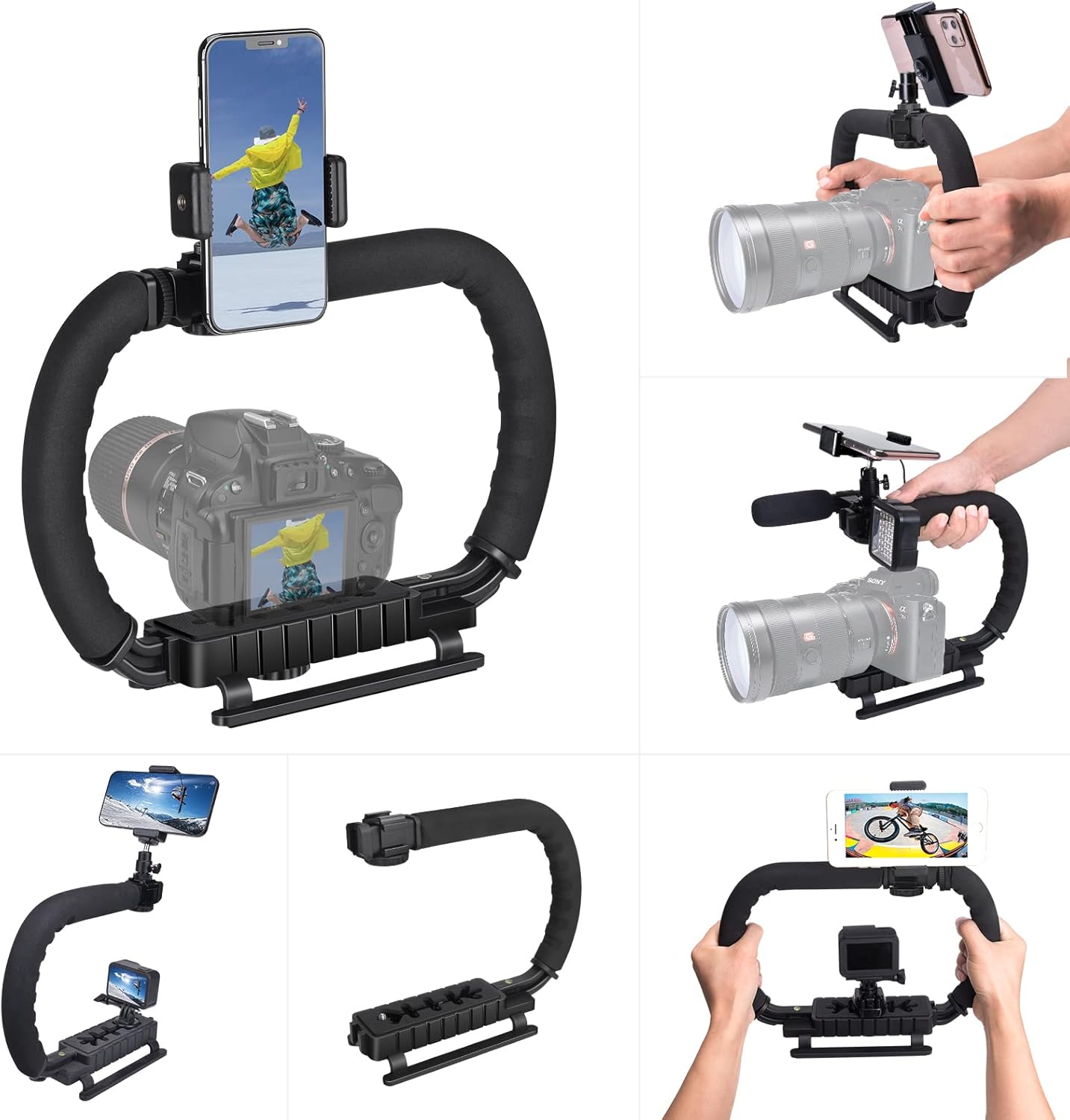
The Fantaseal is a handheld cage-style stabilizer with a detachable handle that can convert into a C-type low-position shooting grip. That design is more directly aimed at filming close to the ground than either magic arm. A two-handed hold can also give you more control when moving with the camera than gripping a small camera body alone.
Three shoe mounts on top provide places for compatible accessories such as a microphone or fill light. The kit also includes a detachable phone clip with a ball head, which can hold a phone as a monitor when used with a suitable camera app. It is made from ABS, keeping the design light, though it does not have the aluminum construction of the Zeadio cage.
The listing describes broad compatibility with DSLR, mirrorless, action cameras, camcorders, and smartphones, but that does not guarantee a fit for every body or lens combination. Check your camera’s dimensions and mounting arrangement before ordering. This pick suits creators who want a simple handheld low-position rig, rather than a full cinema build with rods and extensive accessory support.
Pros:
- Handle converts to a grip intended for low-position shooting.
- Two-handed grip can help with control during handheld filming.
- Three shoe mounts allow compatible accessories to be added.
- Includes a phone clip that can serve as a monitor mount.
Cons:
- ABS construction differs from the aluminum build of some alternatives.
- Fit may vary by camera, so check your equipment before buying.
Verdict: Choose the Fantaseal if you want a handheld rig with a dedicated low-position grip and a straightforward accessory setup.
4. Glide Gear SNC 100 Snorricam: Best for Body-Mounted POV Shots

The SNC 100 is a body-mounted Snorricam rig, designed to hold the camera in front of the wearer for a distinctive third-person perspective. Its adjustable pole has a 180-degree articulation range, and removable shoulder straps let you adjust how the rig sits. The frame is made from 6061 aluminum and is listed for cameras up to 3 pounds.
This is not a general-purpose low-angle cage. It can create unusual perspectives as the wearer moves, but the camera remains attached to the body rather than being carried near the floor like a handheld low-angle rig. The product is optimized for wide lenses in the stated full-frame-equivalent range of 8–24 mm, so lens choice matters for the intended look.
At 3 pounds, the rig itself is heavier than the handheld cages in this guide. It is best suited to planned shots where a body-mounted perspective is the goal. If you need a simple rig to sweep a camera close to the ground, the Fantaseal or Zeadio is a more direct fit.
Pros:
- Creates a distinct body-mounted, third-person camera perspective.
- Articulating pole provides multiple camera positions.
- 6061 aluminum frame balances durability with a portable design.
- Specified for cameras up to 3 pounds.
Cons:
- Its body-mounted perspective is specialized rather than a general low-angle grip.
- Wide-lens guidance limits the intended setup.
Verdict: Buy the SNC 100 if your project calls for a body-mounted POV effect; choose another option for ordinary ground-level camera moves.
5. Zeadio Aluminum Camera Cage: Best for Accessory-Ready Low-Angle Moves

This aluminum cage includes a top handle intended for low-angle shots, two 15 mm rods, several cold-shoe mounts, and 1/4-inch and 3/8-inch threaded holes. The mounting options make it a flexible choice for building a camera setup with accessories such as a microphone, light, follow focus, or matte box. Its listed maximum load recommendation is 20 kg, but your camera still needs to fit the cage and be properly secured.
Compared with the Fantaseal, the Zeadio is better suited to a more modular build, especially if you want to use the included rods and add accessories. The aluminum construction is a practical match for a rig you plan to assemble and handle, though the product information does not establish compatibility with every camera body. Some users report that the cage can feel too small for certain larger DSLR bodies, so measure your camera before choosing it.
The top handle gives you a way to carry the camera at a lower angle, but it does not make the setup a stabilized gimbal. For smooth walking shots, you will still need to manage camera movement and consider what stabilization your camera or lens provides. This is the strongest all-around cage option in this group for low-angle work with add-ons.
Pros:
- Top handle is designed for low-angle shooting.
- Includes two 15 mm rods for compatible accessories.
- Multiple cold shoes and threaded holes provide mounting choices.
- Aluminum construction supports a more modular camera build.
Cons:
- May not fit every DSLR or camera body; verify dimensions first.
- A cage and handle alone do not provide gimbal-style stabilization.
Verdict: Choose the Zeadio for a configurable low-angle camera cage with accessory mounts, after confirming that your camera fits.
How to Choose a Camera Rig for Low-Angle Filming
Match the rig to the kind of shot
Start by deciding whether you need a fixed camera position, a handheld move, or a body-mounted point of view. A magic arm can hold lightweight gear at a chosen angle, but it is not a substitute for a handheld rig. A cage with a handle is more practical for moving a camera near the floor. A Snorricam is a specialized choice for shots where you want the camera attached to the wearer.
Check camera weight and mounting limits
Compare the complete camera build—not just the camera body—with the rig’s stated limit. Include the lens and any accessories you plan to attach. The 22-inch SMALLRIG arm has a recommended capacity of 600 g, while the Glide Gear SNC 100 is listed for cameras up to 3 pounds. The Zeadio lists a higher maximum load recommendation, but physical fit and secure mounting still matter.
Confirm fit before you buy
Check the camera’s dimensions, mounting points, and any grip or battery extension that affects its shape. This is especially important with cage-style rigs, since compatibility claims may not cover every camera. For clamp mounts, measure the bar, desk edge, or tube you plan to attach to and make sure it falls within the clamp’s stated range.
Consider accessory needs
Think about what you need on the rig besides the camera. Cold shoes can hold compatible accessories such as a light or microphone, while threaded holes and 15 mm rods allow other mounting options. If you only need to position a small monitor or light, a magic arm may be enough. For a more built-out camera setup, the Zeadio offers more attachment points.
Plan for balance and control
A low angle can be difficult to hold steady, especially when you add a large lens or accessories. A two-handed grip may help with control, but a handle does not guarantee smooth footage. Keep heavy equipment supported, avoid overloading articulated joints, and test the setup before filming a long take or moving shot.
Think about comfort and the shooting environment
Handheld and body-mounted rigs put different demands on you. Consider how long you will carry the equipment, how much room you have to move, and whether straps or handles can be adjusted for your setup. Also check the product’s stated restrictions: for example, the SMALLRIG 9.8-inch kit is not described as corrosion-resistant and should not be used in seawater.
Frequently Asked Questions
What is the best type of rig for filming close to the ground?
For handheld low-angle moves, choose a cage or stabilizer with a low-position grip, such as the Fantaseal, or a cage with a top handle, such as the Zeadio. A magic arm is better for a fixed position with lightweight gear.
Can I use a magic arm to hold a cinema camera?
Only if the camera and its accessories stay within the arm’s recommended load capacity and the mount is secure. The 22-inch SMALLRIG arm is recommended for loads up to 600 g, so it is not suitable for many full camera builds.
Which option is best for a moving low-angle shot?
The Fantaseal and Zeadio are the most direct fits in this list. The Fantaseal has a handle that converts for low-position shooting, while the Zeadio includes a top handle and options for adding accessories.
Is the Glide Gear SNC 100 a low-angle camera cage?
No. It is a body-mounted Snorricam intended for a third-person perspective. It may support a distinctive moving shot, but it is not the same as carrying a camera near the ground with a handheld cage.
Will the Zeadio cage fit any DSLR?
No cage should be assumed to fit every DSLR. Check your camera’s dimensions and mounting layout against the cage before buying. Some users report fit issues with larger DSLR bodies.
Do these rigs stabilize footage like a gimbal?
Not necessarily. The cages and handles in this guide provide ways to mount or hold a camera, but they are not described as motorized gimbals. A secure grip can help with handling, but it does not guarantee stabilized footage.
Final Recommendation
For most moving low-angle shots, the Zeadio is the most versatile choice if your camera fits and you want room for accessories. The Fantaseal is a simpler alternative with a handle designed to convert for low-position filming. Choose the Glide Gear SNC 100 for body-mounted POV footage, and consider either SMALLRIG arm only when you need a fixed mount for lightweight equipment. Match the rig to your camera’s size and weight before ordering.
