
A mattress overlay can help redistribute pressure, but the right choice depends on the person’s skin condition, mobility, bed setup, and care plan. The options below include powered alternating-air systems, a non-powered zoned overlay, and a gel overlay. Compare their features and fit carefully, and ask a healthcare professional which type is appropriate—especially if a pressure sore is already present.
| Product | Overlay type | Standout feature | Best suited for |
|---|---|---|---|
| Lunderg Alternating Air Pressure Pad | Powered alternating air | Foam comfort layer and static mode | People who want cycling pressure with a softer surface option |
| MedVance Premium Alternating Air Pad | Powered alternating air | Digital pump with alarms and six-minute cycles | Care settings that want adjustable powered support |
| Platinum Health Prodigy Non-Powered Overlay | Non-powered air overlay | Three independently adjustable zones | People seeking zoned support without a pump or power cord |
| Careboda Alternating Pressure Mattress | Powered alternating air | Supports up to 350 pounds | Home care setups needing a straightforward pump system |
| Vive Gel Mattress Topper | Gel overlay | Wipe-clean waterproof cover | People who prefer a non-powered gel surface |
Our Picks: Best Mattress Overlay For Pressure Sores reviews
1. Lunderg Alternating Air Pad with Foam Comfort Layer

The Lunderg is a powered overlay that alternates air pressure through 130 cells. Its wave-like cycling is designed to shift pressure across the surface rather than hold it in one place. A foam layer snaps onto the pad to add a softer, more familiar feel, which may be helpful for someone who finds a bare air-cell surface uncomfortable.
The pump has adjustable pressure and a static mode that keeps the cells inflated instead of cycling. That gives caregivers an option for a steadier surface when needed, though static mode does not provide the same changing pressure pattern as alternating mode. The pump is listed at 23 dBA, and the system supports up to 300 pounds.
Setup involves connecting the hoses, inflating the pad, and adjusting the pressure to suit the user. The supplied instructions say initial inflation takes about 20 minutes. This is a practical pick for home or care settings where a powered overlay is suitable and comfort is a concern. Its capacity is lower than the Careboda model, and it needs an outlet and hose connection.
Pros:
- Includes a snap-on foam comfort layer.
- Offers alternating and static modes.
- Adjustable soft-to-firm pressure control.
- Listed pump noise level is 23 dBA.
Cons:
- Requires electricity, hoses, and pump setup.
- Supports up to 300 pounds, less than the Careboda overlay.
Verdict: Choose the Lunderg if you want alternating air support with a foam layer and the option to pause cycling in static mode.
2. MedVance Alternating Air Pad with Digital Pump

The MedVance is a powered air overlay designed to alternate pressure on a six-minute cycle. Its dual pump cores supply airflow, while a digital control panel provides adjustments and alarms. The manufacturer lists the pump noise level as under 20 dB, making this one of the quieter pump options in this group according to its specifications.
The pad is made from medical-grade vinyl and is described as waterproof and easy to clean. It is intended for standard hospital beds and home-care use. Compared with the Lunderg, it emphasizes its digital controls and low stated pump noise, while the Lunderg includes a foam comfort layer and a static mode.
This model may suit a caregiver who wants an adjustable pump system and a control panel with alarms. The product information does not specify a weight capacity, so check the current listing and confirm the fit with the bed before ordering. As with any powered overlay, plan for hose placement, outlet access, and routine checks that the system is running as intended.
Pros:
- Cycles pressure every six minutes.
- Digital control panel includes alarms.
- Dual pump cores and a stated noise level under 20 dB.
- Waterproof material is described as easy to clean.
Cons:
- Requires a pump, power outlet, and hose setup.
- Weight capacity is not stated in the supplied product details.
Verdict: Consider the MedVance if quiet operation and digital controls are priorities, and verify bed fit and capacity before purchase.
3. Platinum Health Prodigy Zoned Non-Powered Overlay

The Prodigy is a non-powered air overlay with three adjustable zones: head and upper body, hips and coccyx, and legs and feet. Each zone can be set separately, which gives caregivers more control over how support is distributed than an overlay with one setting across the whole surface.
The product description lists a depth of immersion of 3.5 inches and presents this as a way to reduce the chance of bottoming out. Unlike the powered options here, it has no pump, cord, or cycling air cells. That means no pump noise or electricity use, but it also does not provide an automatic alternating pressure cycle.
This may fit someone who needs a non-powered surface with adjustable zones, but it is especially important to check the product dimensions and intended fit before ordering. The manufacturer’s description stresses careful dimension checks. Discuss the overlay with a healthcare professional if it is being considered for an existing wound or a person at high risk of skin breakdown.
Pros:
- Three zones can be adjusted independently.
- Does not need electricity, a pump, or hoses.
- No pump noise or heat generation from a powered unit.
- Listed depth of immersion is 3.5 inches.
Cons:
- Does not alternate pressure automatically.
- Dimensions need careful checking before purchase.
Verdict: Pick the Prodigy if you want a non-powered overlay with zoned adjustments rather than an automatic air-cycling system.
4. Careboda Alternating Pressure Mattress with Quiet Pump
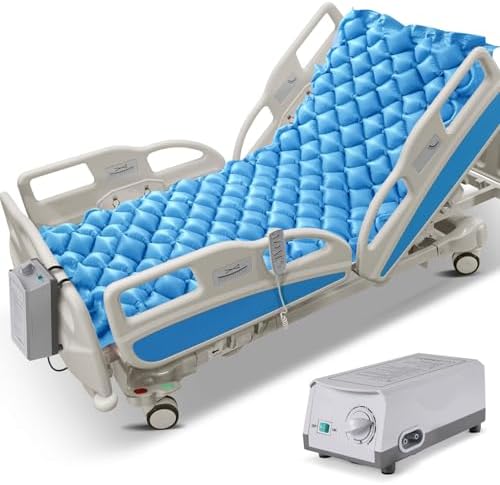
The Careboda is a powered overlay with sealed air chambers that inflate and deflate to shift pressure. Its pump has multiple settings and is listed at less than 40 dB. The overlay is made from medical-grade PVC and is described as waterproof and breathable, with a surface that can be cleaned.
The stated inflated dimensions are 75 by 35 by 2.8 inches, and the listed weight capacity is 350 pounds. The extended sections tuck under the mattress to help limit shifting, while hooks on the pump allow it to hang from the bed foot. These details may make it a practical option for a home-care bed, provided the measurements match the setup.
Compared with the Lunderg, Careboda offers a higher stated weight capacity but does not list a foam comfort layer or static mode in the supplied details. Its listed pump noise is also higher than the MedVance and Lunderg figures. Check that the pump can be positioned safely and that the hose is not strained or in the way.
Pros:
- Supports up to 350 pounds according to the product details.
- Stated dimensions are provided for fit checks.
- Pump has adjustable settings and bed-foot hooks.
- Waterproof PVC surface is described as easy to clean.
Cons:
- Requires power, a pump, and hose placement.
- Listed pump noise is under 40 dB, not as low as some options here.
Verdict: The Careboda is worth considering when its 350-pound listed capacity and stated dimensions suit your bed and care needs.
5. Vive Gel Mattress Topper with Non-Slip Base

The Vive overlay uses interconnected gel-filled chambers to contour to the body and spread weight across the surface. It does not use an air pump or automatic cycling, so it is a simpler option to set up than the powered overlays. A textured underside is designed to help keep it in place on a home or hospital bed.
Its waterproof outer cover is described as wipe-clean, which can make routine surface cleaning more straightforward. The product is intended for home care, senior care, and clinical settings, and includes a one-year guarantee. The supplied details do not give a weight capacity or dimensions, so confirm those points with the product listing before buying.
Because this is a gel overlay rather than a powered alternating system, it may suit someone who prefers a stable, non-powered surface. It will not provide timed pressure changes like the Lunderg, MedVance, or Careboda. For someone with an existing pressure injury or complex care needs, a clinician should help determine whether this type of surface is appropriate.
Pros:
- Interconnected gel chambers are designed to redistribute weight.
- Non-slip textured base helps limit shifting.
- Waterproof cover is described as wipe-clean.
- Includes a one-year guarantee.
Cons:
- Does not provide powered alternating pressure.
- Weight capacity and dimensions are not included in the supplied details.
Verdict: Choose the Vive if a non-powered gel overlay and easy surface cleaning matter more to you than automatic pressure cycling.
How to Choose a Mattress Overlay for Pressure Sores
Start with the person’s care needs
An overlay is only one part of pressure injury prevention and care. A person’s mobility, skin condition, comfort, and ability to change position all matter. If there is an open sore, worsening redness, pain, or other skin concern, contact a healthcare professional for advice rather than relying on an overlay alone. Ask whether a powered alternating surface, a zoned non-powered surface, or a gel overlay fits the care plan.
Choose between alternating air, zoned air, and gel
Alternating-air overlays use a pump to cycle air through chambers and change pressure over time. They need power and hose placement, and their pump settings and controls vary. A zoned non-powered overlay can offer separate adjustments without a pump, but does not automatically cycle. Gel overlays provide a more stable, non-powered surface. The best match depends on the individual’s needs and the guidance of their care team.
Check size and bed compatibility
Measure the bed and compare it with the overlay’s stated dimensions. Confirm whether the overlay is designed for a standard home mattress, a hospital bed, or both. A poor fit can cause shifting or interfere with repositioning. For products without dimensions in the available details, check the current listing or contact the manufacturer before ordering.
Confirm weight capacity
Do not assume that all overlays support the same weight. The Lunderg lists a 300-pound capacity, while the Careboda lists 350 pounds. The supplied details do not state a capacity for the MedVance or Vive. Match the product’s stated limit to the user’s needs, and contact the maker if the information is unclear.
Consider comfort and noise
Air cells can feel different from a regular mattress. The Lunderg includes a foam layer and a static mode, while the MedVance and Careboda emphasize pump features. Compare the stated pump noise levels if sound is a concern, but remember that the figures are product specifications and the actual experience may depend on the room and setup. A gel or non-powered overlay avoids a pump but does not provide automatic cycling.
Think about cleaning and daily care
Look for a surface and cover that suit the care routine. The MedVance and Careboda are described as waterproof and easy to clean, and the Vive has a waterproof wipe-clean cover. Follow the manufacturer’s cleaning instructions, and check how the overlay, pump, and hoses need to be maintained. Keep cords and hoses positioned to reduce trip hazards and avoid pulling on connections.
Plan for setup and caregiver use
Powered overlays need an accessible outlet, a safe place for the pump, and correctly connected hoses. Consider who will adjust the settings and check the system. Non-powered options avoid pump setup, but may still need careful positioning and adjustment. Before use, read the instructions and ask the care team to show you how to fit and operate the overlay correctly.
Frequently Asked Questions
Can a mattress overlay prevent pressure sores?
An overlay may help redistribute pressure, but it cannot guarantee that pressure sores will not develop. Regular skin checks, repositioning as advised, good skin care, and a suitable care plan are also important. Ask a healthcare professional which surface is appropriate.
Which type of overlay is best for someone who stays in bed for long periods?
There is no single best choice for everyone. A powered alternating-air overlay changes pressure over time, while zoned air and gel options provide non-powered support. A clinician can help match the surface to the person’s skin condition, mobility, comfort, and care needs.
Do alternating-air overlays need electricity?
Yes. The Lunderg, MedVance, and Careboda models in this guide use a pump and need power. The Platinum Health Prodigy and Vive gel overlay are non-powered options.
Can an overlay be used on a regular home mattress?
Some models are described for home use or as fitting standard beds, but compatibility depends on the overlay’s size and design. Check the stated dimensions and instructions, and confirm fit with the manufacturer if anything is unclear.
Does a mattress overlay replace repositioning?
No. An overlay should not be treated as a replacement for repositioning or other care steps. Follow the schedule and instructions provided by the person’s healthcare team.
What should I do if a pressure sore is already present?
Contact a healthcare professional for an assessment and care instructions. Do not rely on product claims alone to treat a wound. The right support surface depends on the wound and the person’s overall condition.
Final Recommendation
For a powered overlay with a softer top layer and a static setting, the Lunderg offers a useful mix of features. The MedVance stands out for its digital controls and stated low pump noise, while the Careboda lists the highest weight capacity among the products with a stated limit. If you prefer to avoid a pump, compare the zoned Platinum Health Prodigy with the gel-based Vive. Confirm fit and capacity, and involve a healthcare professional when choosing an overlay for pressure sore prevention or care.