A Dutch oven helps bread develop a crisp crust by holding heat and trapping steam around the dough. The right choice depends on more than capacity: lid shape, oven-temperature limits, enamel versus bare cast iron, and how much care you want to handle all matter. Below are five options, from versatile enameled pots to bread-focused designs and a cast-iron starter set.
Quick Comparison
| Product | Capacity | Construction | Best for |
|---|---|---|---|
| Lodge Essential Enamel Dutch Oven, Island Spice Red | 6 qt | Enameled cast iron | A versatile pot for bread and everyday cooking |
| Overmont Enameled Cast Iron Bread Oven | 6 qt | Enameled cast iron with a high-domed lid | Sourdough and taller loaves |
| Umite Chef Enameled Cast Iron Dutch Oven | 5 qt | Enameled cast iron | Bread baking and general-purpose cooking |
| Asderote Pre-Seasoned Cast Iron Bread Oven Set | 5 qt | Pre-seasoned cast iron | New bakers who want a full set of tools |
| Lodge Essential Enamel Dutch Oven, Oyster White | 6 qt | Enameled cast iron | Everyday use and bread baking in a light finish |
Our Picks: Best Cast Iron Dutch Oven For Baking Bread reviews
1. Lodge Essential Enamel: A Flexible 6-Quart Pick for Bread and More

This 6-quart round Dutch oven is a practical choice if you want one pot for bread as well as soups, braises, and other meals. Its cast-iron body retains heat, while the enamel coating means you do not have to season the cooking surface or worry about bare iron rusting during normal care.
The traditional lid and roomy capacity make it a flexible option for many home-baking routines. It is not shaped specifically like a bread cloche, though, so bakers focused on tall sourdough loaves may prefer the Overmont’s high-domed lid. Owners have also described it as sturdy, easy to clean with gentle hand washing, and useful for both bread and family-sized cooking.
There is an important temperature detail to check before baking: the supplied product information gives conflicting oven limits. The description says the pot is oven safe to 500°F, while the specifications list a 400°F temperature rating. Confirm the current product guidance before using it at a high bread-baking temperature.
Pros:
- 6-quart capacity suits bread and everyday cooking.
- Enameled surface does not require seasoning.
- Stovetop compatible and suitable for a range of cooking tasks.
- Available in a distinctive Island Spice Red finish.
Cons:
- Supplied temperature information is inconsistent, so verify the safe limit.
- The standard lid is less specialized for tall loaves than a bread-oven dome.
Verdict: Choose this Lodge if you want a versatile enameled Dutch oven, but confirm its oven-temperature limit before using it for a hot bread recipe.
2. Overmont Enameled Bread Oven: A High-Domed Lid for Sourdough

Overmont designs this 6-quart pot specifically for artisan bread baking. Its tall body and high-domed lid are intended to leave room for dough to expand and to hold steam around the loaf. That shape can be useful if your main goal is baking sourdough rather than buying a general-purpose Dutch oven first.
The enameled cast iron is listed as oven safe up to 500°F and compatible with gas, electric, ceramic, and induction cooktops. The enamel needs no seasoning, which makes upkeep simpler than with bare cast iron. The package also includes a cookbook and cotton handle covers, according to the supplied product details.
Its bread-focused shape is the main reason to consider it over the Lodge options. The trade-off is that a specialty bread oven may be less convenient than a conventional Dutch oven for some everyday recipes, and the handle covers do not replace proper oven mitts when handling a hot, heavy pot.
Pros:
- High-domed lid is designed to hold steam around bread.
- 6-quart size and tall body give dough room to expand.
- Enameled surface does not need seasoning.
- Listed as oven safe up to 500°F and compatible with several cooktop types.
Cons:
- Its bread-specific shape may be less convenient if you mainly want a standard cooking pot.
- Cast iron is heavy, so moving it in and out of the oven takes care.
Verdict: If sourdough is your priority and you want an enameled pot designed around a domed bread-baking lid, the Overmont is the most specialized option here.
3. Umite Chef 5-Quart Dutch Oven: A Compact All-Purpose Option

The Umite Chef is a 5-quart enameled cast-iron pot intended for both bread and everyday cooking. Its thick walls are designed to hold heat, and the lid has raised nodes that return condensation to the food. That moisture-focused design is useful for braising and stewing, while the pot’s cast-iron construction can also work for baking bread.
This model is listed as oven safe up to 500°F and compatible with induction, gas, electric, and ceramic cooktops. At 5 quarts, it has less capacity than the two 6-quart Lodge pots and the Overmont, which may suit smaller batches but gives you less room for a larger loaf or other cooking.
The care directions call for gradual heating and natural cooling before washing. In particular, avoid putting a hot pot into cold water, as the listing warns that a sudden temperature change can crack the enamel. If you want a pot for varied cooking and do not need a dedicated bread-oven shape, this is a useful middle ground.
Pros:
- 5-quart capacity works for bread and a range of everyday meals.
- Raised lid nodes help return condensation to the pot.
- Listed as oven safe up to 500°F.
- Compatible with induction and other common cooktop types.
Cons:
- Smaller capacity than the 6-quart alternatives.
- Enamel needs careful handling to avoid thermal shock and surface damage.
Verdict: Pick the Umite Chef if you want a versatile 5-quart enameled pot and can follow its gradual heating and cooling guidance.
4. Asderote Pre-Seasoned Set: A Starter Kit for Bread Bakers
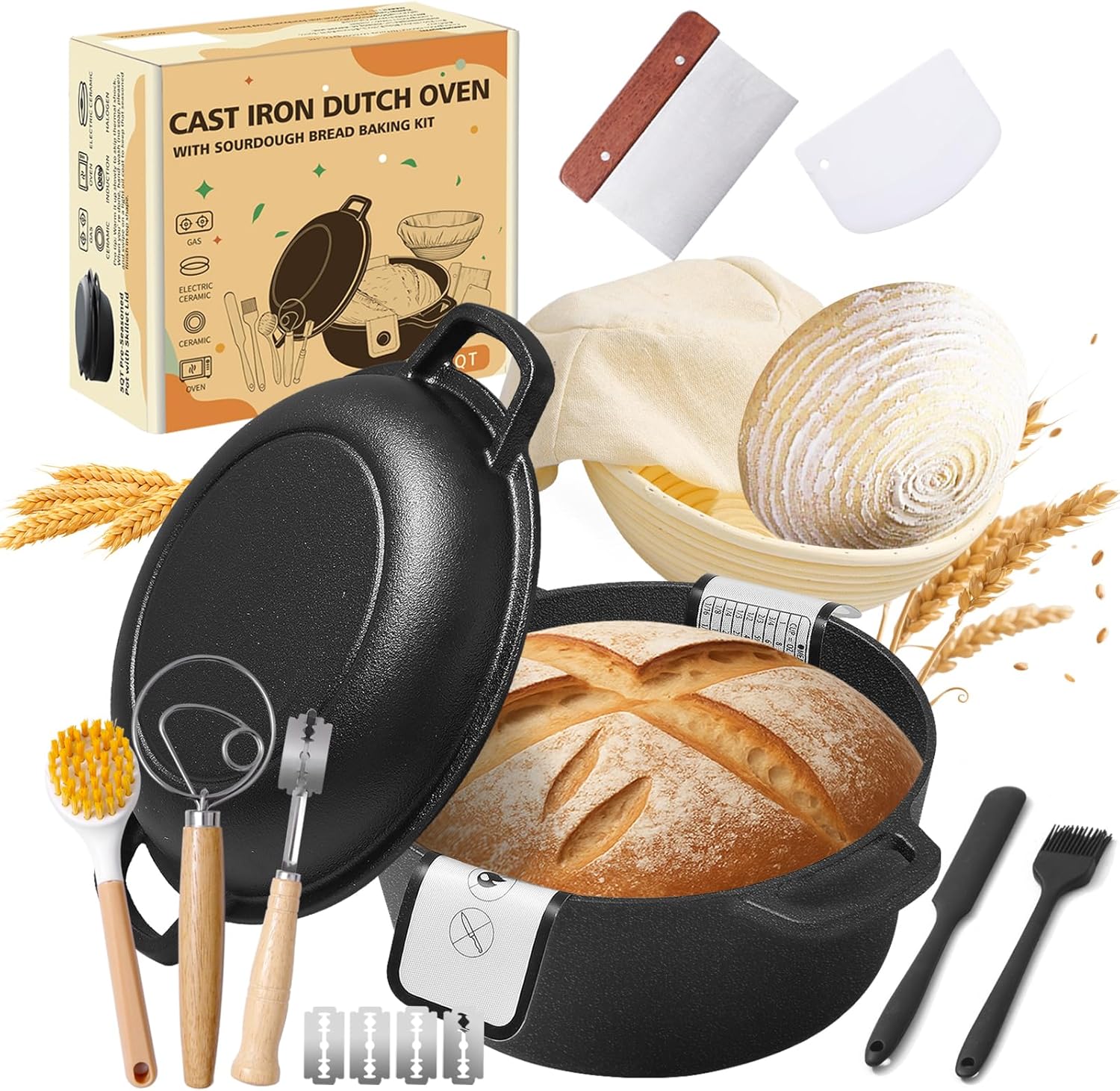
This 5-quart bread oven stands apart because it comes as a baking kit. The listed accessories include a proofing basket, bread sling, stainless-steel scraper, cleaning brush, dough whisk, bread lame, oil brush, and spatula. If you are starting from scratch, having several bread tools together can be more convenient than sourcing each item separately.
The pot is pre-seasoned, bare cast iron rather than enamel. That means it does not have an enamel surface to chip, but it does require care to maintain its seasoning and avoid rust. The product information says the lid doubles as a skillet and lists use with gas, electric, oven, grill, and campfire; it does not provide a specific maximum oven temperature, so check the included instructions before baking at high heat.
The extra tools are a benefit only if you expect to use them. If you already own a proofing basket and bread-making accessories, a simpler pot may be a better fit. This set also calls for drying the cast iron thoroughly and applying a thin layer of vegetable oil as needed.
Pros:
- Includes a 5-quart pre-seasoned cast-iron pot and several bread tools.
- The lid doubles as a skillet.
- Bare cast iron avoids an enamel coating that can chip.
- Designed for baking as well as frying, stewing, braising, and roasting.
Cons:
- Requires seasoning care and thorough drying to help prevent rust.
- The supplied details do not state a maximum oven temperature.
Verdict: Choose the Asderote set if you are new to bread baking and want the pot and several basic tools together, but be ready to care for bare cast iron.
5. Lodge Essential Enamel in Oyster White: A Classic 6-Quart Choice
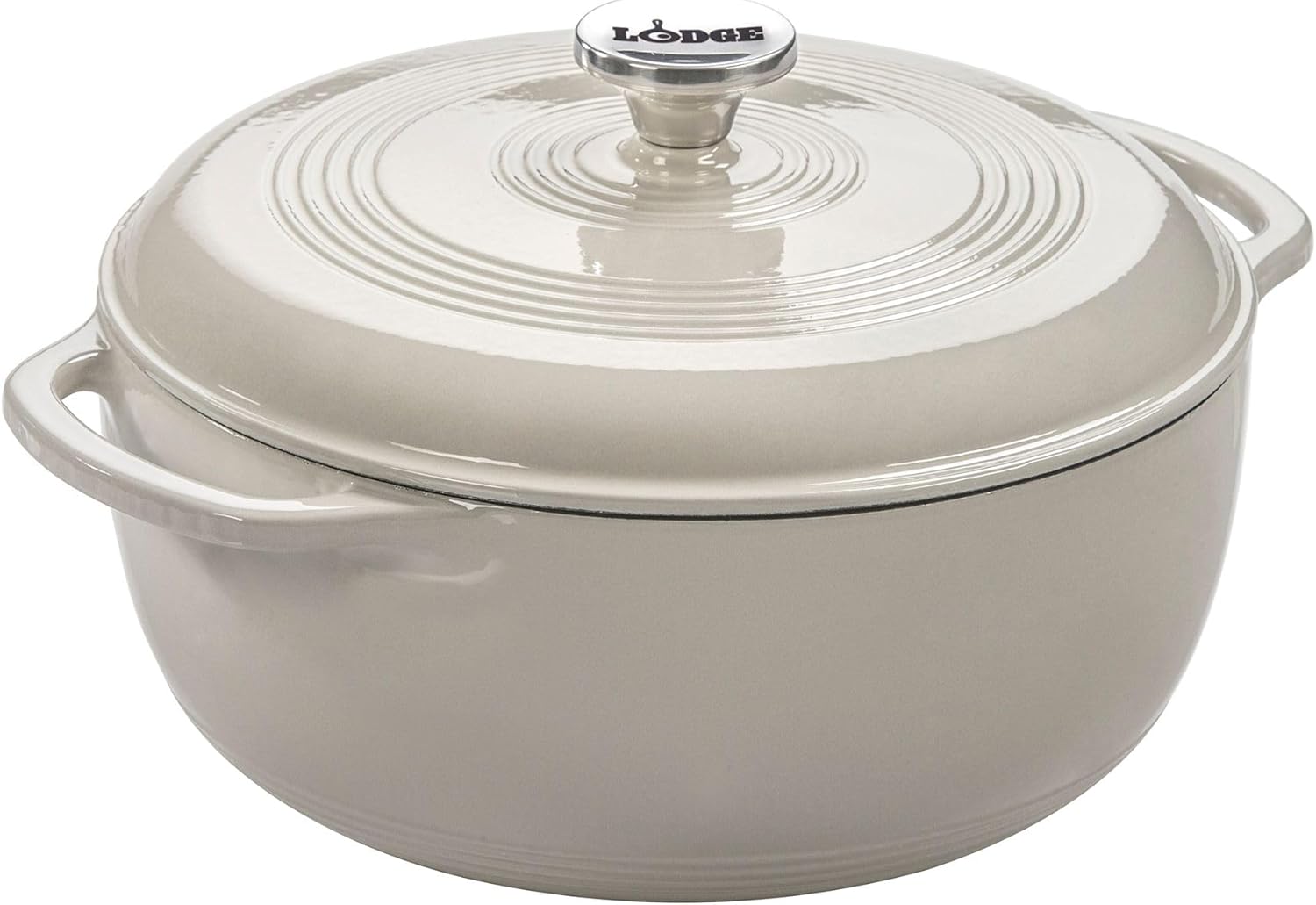
This Lodge has the same basic appeal as the Island Spice Red model: a 6-quart enameled cast-iron pot that can move from stovetop cooking to the oven. The enamel finish means you do not need to season it, and the pot can also be used for marinating and storing food according to the supplied description. Oyster White offers a quieter look than the red version.
The listing identifies this pot as oven safe up to 500°F. That makes it a more straightforward choice for bread recipes that call for a hotter oven than the temperature details supplied for the red Lodge model. Its standard Dutch-oven shape is still less specialized for tall loaves than the Overmont’s high-domed design.
Owners have described using it for sourdough as well as soups and stews, and gentle hand washing is a sensible way to help keep the enamel looking its best. Like the other enameled pots here, it is heavy and should be handled carefully when hot.
Pros:
- 6-quart capacity is useful for bread and larger meals.
- Listing specifies an oven limit of up to 500°F.
- Enameled surface does not require seasoning.
- Versatile for baking, simmering, marinating, and braising.
Cons:
- Standard lid is not as bread-specific as a high-domed lid.
- Cast-iron construction makes the pot heavy to lift.
Verdict: The Oyster White Lodge is a strong all-around choice if you want a 6-quart enameled pot with a stated 500°F oven limit and a finish that suits a lighter kitchen palette.
How to Choose a Dutch Oven for Baking Bread
Choose a lid shape that suits your loaf
A close-fitting lid helps trap steam released by the dough, which supports crust development during baking. A standard Dutch oven lid can do this while keeping the pot useful for other meals. A high-domed lid, like the one on the Overmont, is designed to leave more room above the dough and may be a better match for taller loaves. Think about the shape of bread you bake most often, not just the pot’s stated capacity.
Match the capacity to your dough and cooking habits
The options here range from 5 to 6 quarts. A 5-quart pot may be enough for a smaller household or a single loaf, while a 6-quart model offers extra room and can handle a wider range of family cooking. Capacity alone does not tell you the exact loaf size a pot will hold, so compare the interior shape and dimensions with your recipe and oven space when those details are available.
Check the oven-temperature limit
Bread recipes can call for a hot oven, so confirm the pot’s stated temperature rating before buying. The supplied information for the red Lodge model conflicts: its description says 500°F, while its specifications list 400°F. The Oyster White Lodge, Overmont, and Umite Chef listings state an oven limit of up to 500°F. The Asderote details do not give a maximum temperature, so check its instructions before use.
Pick enamel or bare cast iron based on care preference
Enameled cast iron does not need seasoning and is generally simpler to clean, but the surface should be treated gently. Avoid sudden temperature changes and abrasive tools that may damage the enamel. Bare, pre-seasoned cast iron, like the Asderote, needs a different routine: dry it thoroughly after washing and maintain its seasoning with a thin coating of oil when needed.
Consider what else you want to cook
If you plan to use the pot for soups, braises, and other stovetop meals, a conventional enameled Dutch oven may offer more day-to-day flexibility. If bread is the main reason for buying, a high-domed bread oven may better suit your baking routine. A bundled kit can be useful when you need bread tools, but it may not add much value if you already have the accessories.
Plan for weight and safe handling
Cast iron holds heat well, but it is heavy, especially when the pot is full and hot. Check that it fits comfortably in your oven and that you can lift it safely while wearing oven mitts. Cotton handle covers can offer added convenience, but handle protection and safe lifting still matter when moving hot cookware.
Frequently Asked Questions
Why use a Dutch oven for baking bread?
A lidded Dutch oven holds heat and traps steam around the dough. This creates a useful baking environment for developing a crisp crust without adding a separate steam tray.
Is enameled cast iron suitable for sourdough?
Yes. The enameled Lodge, Overmont, and Umite Chef options are described as suitable for bread baking. Enamel does not need seasoning, but follow the maker’s temperature and care instructions.
Is a high-domed lid necessary?
No. A standard Dutch oven can work for bread. A high dome may be helpful if you bake taller loaves or want a pot designed specifically around bread baking.
Can I use bare cast iron instead of an enameled pot?
Yes. The Asderote is a pre-seasoned bare cast-iron option. It needs more maintenance than enamel: dry it fully after washing and care for its seasoning as directed.
Which option has the highest stated capacity?
The Lodge Essential Enamel models and the Overmont are listed at 6 quarts. The Umite Chef and Asderote are listed at 5 quarts.
Which pot is best if I want bread tools included?
The Asderote set includes a proofing basket, bread sling, scraper, brush, dough whisk, bread lame, oil brush, and spatula. Check the product listing to confirm the current package contents before ordering.
What should I do about conflicting temperature information?
Follow the current manufacturer instructions for the specific model you own. In the supplied details, the red Lodge listing has different temperature limits in its description and specifications, while the Asderote listing does not state a maximum oven temperature.
Final Recommendation
For a bread-focused design, the Overmont stands out for its high-domed lid and stated 500°F oven limit. If you want a versatile 6-quart enameled Dutch oven for bread and everyday cooking, consider the Oyster White Lodge, which also has a stated 500°F limit. The Asderote is the most complete starter option for someone who wants bread tools included and does not mind maintaining bare cast iron. Before choosing, compare your recipe’s temperature needs, loaf size, and care preferences with the product’s current instructions.
