Choosing the best twin coil spring mattress for a bunk bed means balancing support with a mattress thickness that fits your frame safely. A compact 6-inch model is often easier to accommodate than a thicker hybrid, but the right choice depends on your bunk bed’s size limits, guardrails, and weight capacity. Here are five options, from a narrow bunk-friendly spring mattress to fuller-height twin hybrids.
Quick Comparison
| Mattress | Size and thickness | Coil style | Firmness | Best for |
|---|---|---|---|---|
| Novilla Twin 10-Inch Hybrid Mattress | 75 × 39 × 10 inches | Pocketed coils | Medium firm | Pressure relief and motion isolation |
| Zinus 6-Inch Narrow Twin Foam & Spring Mattress | 75 × 30 × 6 inches | Interconnected Bonnell coils | Medium | Narrow bunk and trundle frames |
| Linenspa 8-Inch Twin Hybrid Mattress | 74 × 39 × 8 inches | Continuous coil | Medium firm | Youth rooms and standard twin frames |
| Acochey 10-Inch Cooling Hybrid Mattress | 75 × 39 × 10 inches | Pocketed coils | Medium firm | A full-size twin feel with cooling features |
| MCIHPY 10-Inch Twin Hybrid Mattress | 75 × 39 × 10 inches | Pocketed coils | Medium | Edge support and a longer warranty |
Our Picks: Best Twin Coil Spring Mattress For Bunk Beds reviews
Novilla Twin Hybrid: Pocket-Coil Support with a Pillow-Top Feel

The Novilla pairs comfort foam with individually pocketed coils in a 10-inch twin mattress. Its medium-firm feel and pillow-top design are intended to combine cushioning with support, while the independent coils help limit motion transfer. The listed dimensions are 75 by 39 inches, a standard twin footprint.
This is a better fit for a bunk bed that specifically allows a 10-inch mattress than for a low-profile bunk setup. Its extra height may reduce guardrail clearance, so check the bunk maker’s mattress-thickness limit before ordering. At 40.8 pounds, it may also take more effort to lift into place than the narrower Zinus.
In everyday use, the foam-and-coil combination may suit sleepers who want more cushioning than a basic spring mattress. The listing says to allow up to 72 hours for the compressed mattress to regain its shape. It does not provide a maximum weight capacity, so confirm suitability with the manufacturer if that detail matters for your setup.
Pros:
- Pocketed coils are designed to reduce motion transfer.
- Foam comfort layer adds cushioning over the spring base.
- Medium-firm feel offers a balance of support and softness.
Cons:
- Its 10-inch height may not suit every bunk bed.
- The supplied details do not state a maximum weight capacity.
Verdict: Choose the Novilla if your bunk frame permits a 10-inch mattress and you want pocket-coil support with a cushioned top.
Zinus 6-Inch Narrow Twin: The Most Bunk-Focused, Space-Saving Pick

The Zinus stands out for bunk beds because it is both thinner and narrower than a regular twin: 75 by 30 inches and 6 inches thick. That footprint can work in compact bunk, trundle, day-bed, and RV setups, as long as the bed frame is made for a narrow twin. Its interconnected steel Bonnell coils provide traditional spring support, with foam above them for comfort.
At 22.7 pounds, it is the lightest listed option, which can make setup less cumbersome. The mattress is described as medium feel and has a stated maximum weight capacity of 250 pounds for this size. Its foam and cover are listed as CertiPUR-US and OEKO-TEX certified, respectively.
The trade-off is the narrower sleeping surface: it is not a standard 39-inch twin. Its 6-inch profile is useful when bunk-bed clearance is a concern, but you should still confirm the frame’s exact mattress dimensions and required guardrail clearance. Unlike pocket coils, interconnected coils are not designed to move independently.
Pros:
- Compact 6-inch profile suits many low-clearance bunk setups.
- Narrow twin width fits frames that are built for a 30-inch mattress.
- Lightweight compared with the other options in this guide.
- Foam and cover have the certifications listed in the product details.
Cons:
- Too narrow for a standard twin frame.
- Its listed weight capacity is lower than the capacities given for some other picks.
Verdict: If your bunk is designed for a 75-by-30-inch narrow twin, the Zinus is the most purpose-matched choice here for saving space and limiting mattress height.
Linenspa 8-Inch Hybrid: A Middle-Ground Profile for Youth Rooms

The Linenspa combines memory foam and comfort foam with a continuous-coil spring base. At 8 inches thick, it sits between the low-profile Zinus and the 10-inch hybrids in this roundup. The listed feel is medium firm, and the product is presented for youth rooms, guest beds, bunk beds, and trundles.
Its dimensions are 74 by 39 inches, so it is a little shorter than the standard 75-inch length shown for the other regular twin options here. Measure your frame rather than assuming it will fit every twin bunk. The listed maximum weight capacity is 300 pounds. The manufacturer says to allow 24 to 72 hours for the compressed mattress to expand.
This may be a practical compromise if you want a standard-width twin with foam cushioning but do not need a 10-inch profile. Some sleepers may find a medium-firm spring hybrid too firm for their preference; a separate topper could change the feel, but would also add height and should be counted when checking bunk clearance.
Pros:
- Eight-inch height is a middle ground between thin and full-height options.
- Foam layers pair with a continuous-coil support system.
- Medium-firm feel is described as suitable for back and stomach sleepers.
- Listed maximum weight capacity is 300 pounds.
Cons:
- At 74 inches long, it is shorter than the other standard-width twin mattresses listed here.
- Continuous coils do not provide the independent movement of pocketed coils.
Verdict: Consider the Linenspa if you want a standard-width hybrid with a moderate profile, but verify the 74-inch length and bunk-bed clearance first.
Acochey 10-Inch Cooling Hybrid: A Roomier Feel with Zoned Pocket Coils

The Acochey is a 10-inch hybrid with a medium-firm feel, cooling gel memory foam, a breathable knit cover, and individually pocketed coils described as zoned for support. The listed twin dimensions are 75 by 39 inches. The product details also state a 600-pound maximum weight capacity and describe the mattress as compatible with bunk beds, but your particular bunk frame’s thickness limit still takes priority.
Its thicker build may appeal if you want more cushioning than a thin bunk mattress, while the pocketed coils are designed to reduce motion transfer. The listing also claims CertiPUR-US certification, fiberglass-free construction, and a 100-night trial. These are product-listing claims, so check the current terms and details before purchase.
The key compromise is height: a 10-inch mattress can leave less guardrail above the sleeping surface than a 6- or 8-inch model. The mattress arrives compressed, and the product instructions advise standing clear while it expands. Choose it only after confirming both frame fit and safe guardrail clearance.
Pros:
- Pocketed coils and foam combine support with cushioning.
- Cooling gel foam and a breathable cover are designed to help with heat management.
- Product details state a 600-pound maximum weight capacity.
- Listed as compatible with bunk beds and backed by a 100-night trial.
Cons:
- Ten-inch height may be too tall for some bunk frames.
- The available product details do not specify the coil count or a separate warranty length.
Verdict: The Acochey is worth considering for a bunk that permits a 10-inch mattress and where cooling features and pocket-coil support are priorities.
MCIHPY 10-Inch Pocket-Spring Hybrid: Supportive Build with Edge Reinforcement
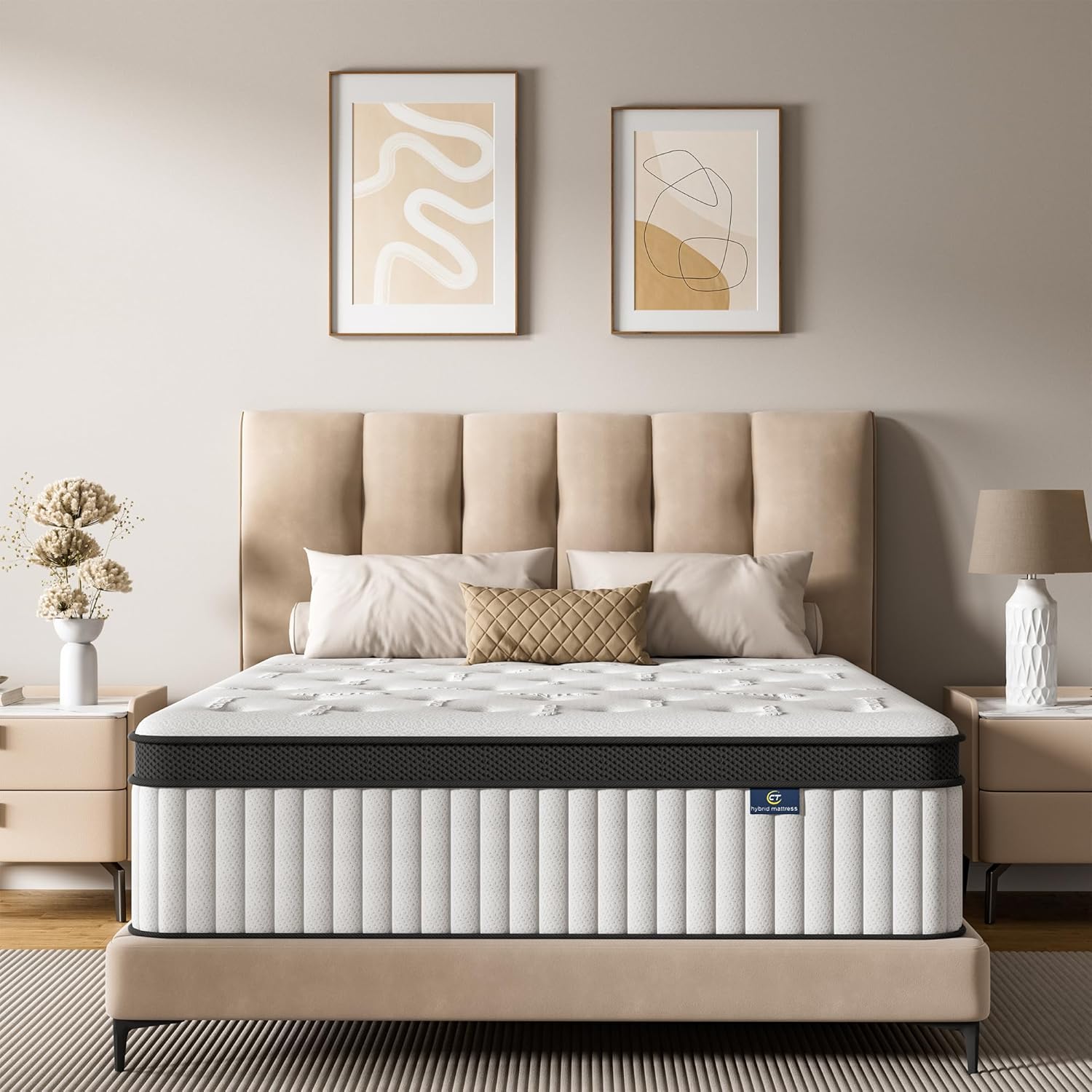
This 10-inch twin hybrid combines adaptive memory foam with individually wrapped pocket springs. Its medium feel, reinforced perimeter coils, and cooling materials are intended to provide a supportive surface with more stable edges. The product details list standard twin dimensions of 75 by 39 inches and a maximum weight capacity of 600 pounds.
Compared with the Novilla, this model is described as medium rather than medium firm and emphasizes reinforced edges. It may suit sleepers who want a more substantial hybrid feel, but the 10-inch height makes it less flexible for bunk beds with strict mattress-thickness limits. The listing says it is suitable for several frame types, including slatted and platform bases, though you should confirm your bunk’s specifications.
The supplied details state CertiPUR-US certification and a 10-year manufacturer warranty. The mattress is shipped compressed and is expected to expand within 48 to 72 hours. Some owners describe a supportive medium-firm feel and straightforward setup, though individual comfort can vary.
Pros:
- Pocket springs are designed to reduce motion transfer.
- Reinforced perimeter coils are intended to improve edge stability.
- Product details list a 600-pound maximum weight capacity.
- Listing states CertiPUR-US certification and a 10-year warranty.
Cons:
- The 10-inch profile may not work with every bunk’s guardrails.
- It is a heavier, fuller-height option than a compact bunk mattress.
Verdict: Pick the MCIHPY if your bunk allows a 10-inch mattress and you value pocket springs, reinforced edges, and the stated warranty.
How to Choose a Twin Coil Spring Mattress for Bunk Beds
Confirm the mattress footprint
“Twin” does not always mean the same exact dimensions. The Zinus is a narrow twin measuring 75 by 30 inches, while the other standard-width choices are 39 inches wide. The Linenspa is listed as 74 inches long; the other standard-width models are 75 inches long. Measure the bed’s inside width and length, then compare those numbers with the mattress listing before you buy.
Check thickness and guardrail clearance
Mattress thickness affects how much of a bunk bed’s guardrail remains above the sleeping surface. The options here range from 6 to 10 inches. Check the bunk manufacturer’s maximum mattress thickness and guardrail guidance, especially for the upper bunk. Do not rely only on a mattress being described as suitable for bunk beds; your frame’s instructions are the deciding factor.
Match the weight limits
Look at the mattress capacity and the bed frame’s weight limit, including the sleeper and any bedding. The supplied details list limits of 250 pounds for the narrow Zinus, 300 pounds for the Linenspa, and 600 pounds for both the Acochey and MCIHPY. The Novilla details provided here do not state a maximum. The bunk frame may have a different limit, and the lower applicable limit should guide your choice.
Choose the coil construction that fits your needs
These mattresses use different spring systems. The Zinus has interconnected Bonnell coils, and the Linenspa uses continuous coils. The Novilla, Acochey, and MCIHPY use individually pocketed coils. Pocketed coils can move more independently, while interconnected and continuous systems use connected spring structures. Consider the feel and motion isolation you want, but remember that foam layers and overall construction also affect comfort.
Consider the sleeper and the mattress feel
The listed firmness ranges from medium to medium firm. A medium-firm mattress may feel supportive to some sleepers, while others may prefer more cushioning. The Novilla adds a pillow-top design, and the Linenspa and other hybrids pair foam with springs. For a child’s bunk bed, consider their comfort needs as well as the frame’s safety limits. A topper adds height, so include it when checking guardrail clearance.
Plan for delivery and setup
Several of these mattresses arrive compressed in a box. Check the product instructions for expansion time: the Novilla lists up to 72 hours, the Linenspa says 24 to 72 hours, and the MCIHPY says 48 to 72 hours. Allow room to unpack the mattress safely, and follow the specific setup directions before using it.
Frequently Asked Questions
What mattress thickness is best for a bunk bed?
There is no single thickness that suits every bunk bed. Choose a mattress that stays within the frame maker’s thickness limit and leaves the required guardrail clearance. The 6-inch Zinus is the thinnest option here, but even that should be checked against your bunk’s instructions.
Is the Zinus mattress a standard twin?
No. It is a narrow twin measuring 75 by 30 inches, compared with the 39-inch width of a standard twin. It will only fit a bunk frame designed for a narrow twin.
Can a 10-inch mattress be used on a bunk bed?
It can be used only if the bunk bed’s instructions allow that thickness and the guardrails remain high enough above the mattress. Check the frame requirements before choosing the Novilla, Acochey, or MCIHPY.
Which option has pocketed coils?
The Novilla, Acochey, and MCIHPY listings describe individually pocketed coils. The Zinus uses interconnected Bonnell coils, while the Linenspa is listed with continuous coils.
Do these mattresses need time to expand?
Yes, the boxed models may need time to regain their shape after unpacking. Follow the instructions for your specific mattress; the listed expansion windows range from 24 to 72 hours for products that provide a time estimate.
Should I choose a foam-and-spring hybrid or a traditional spring mattress?
These picks are hybrids or spring mattresses with foam comfort layers. A hybrid may offer more foam cushioning over its coil base, while a simpler spring design can be a more compact option. Compare thickness, dimensions, firmness, and your bunk’s limits rather than relying on the mattress category alone.
Final Recommendation
For a bunk bed made for a narrow twin, the 6-inch Zinus is the most purpose-built option in this group. If your frame fits a standard twin but has a strict height limit, the 8-inch Linenspa offers a middle-ground profile—provided its 74-inch length works for your bed. The 10-inch hybrids may offer more cushioning and pocket-coil features, but they are best reserved for bunks that explicitly allow their height. Always verify mattress dimensions, weight limits, and guardrail clearance against your bunk bed’s instructions before ordering.