
The best science toys for 8 year olds make it easy to turn curiosity into hands-on discovery. Some focus on chemistry and silly reactions, while others explore rocks, crystals, and volcanoes. The picks below are designed for ages 8–12 and offer different kinds of projects, so you can choose a kit that matches your child’s interests and how much variety you want in one box.
Quick Comparison
| Science toy | Best for | What it includes |
|---|---|---|
| National Geographic Magic Chemistry Set | Science tricks and demonstrations | 10 experiments, a magic wand, gloves, and an illustrated guide |
| National Geographic Gross Science Kit | Gross-out experiments | 15 included experiments and a bonus guide with 30 household-item experiments |
| National Geographic Earth Science Kit | Rocks, crystals, and volcanoes | More than 15 experiment activities, two dig kits, and a learning guide |
| National Geographic Mega Science Lab | A broad mix of science topics | 45 experiments across Earth science, chemistry, and science magic, plus 30 household-item activities |
| National Geographic Science Magic Kit | A large collection of magic-themed experiments | More than 100 experiments, according to the product title |
Our Picks: Best Science Toys For 8 Year Olds reviews
1. National Geographic Magic Chemistry Set: Best for Science Tricks
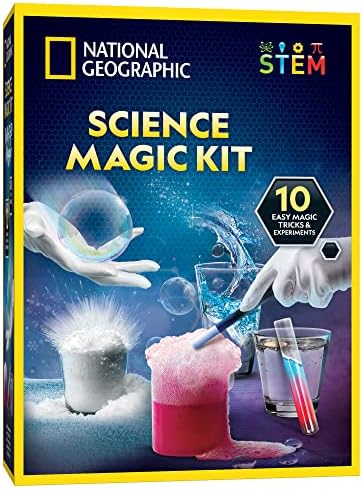
This kit combines beginner science experiments with a magic-show theme. Kids can try 10 tricks, including making a coin float, changing water color, and making snow appear. The included wand and white gloves help set the scene for performing the experiments for family or friends.
The illustrated guide explains how to carry out each activity and describes the science behind the effect. That makes the kit a good fit for children who enjoy showing off a result as much as learning how it works. The product description says the tools needed for its experiments are included, so you should not need to gather extra experiment tools before getting started.
Compared with the larger kits here, this one has a narrower focus and fewer activities. That can be a plus for a child who wants a clear theme rather than a large collection of unrelated projects. Its main limitation is that the 10 experiments may offer less variety over time than kits with more activities.
Pros:
- 10 experiments designed to work as magic tricks
- Includes a wand and white gloves for performances
- Illustrated instructions explain the science behind each effect
- Tools for the experiments are included, according to the product description
Cons:
- Offers fewer activities than the larger kits in this list
- Best suited to children who enjoy the magic-show theme
Verdict: Choose this set if your 8-year-old likes performing tricks and wants a focused introduction to science experiments.
2. National Geographic Gross Science Kit: Best for Silly Experiments

This kit makes messy-sounding science the main attraction. Its 15 included experiments feature activities such as boiling “boogers,” creating glowing worms, and making a test tube appear to vomit. The guide uses illustrated steps and explains the science involved, including polymers, chemical reactions, and pH.
The bonus booklet adds 30 more experiments that use common household products. That extends the kit beyond its supplied activities, but it also means those bonus projects require you to provide the listed household items. This is a good option for a child who enjoys silly demonstrations and is comfortable with experiments that may need a little cleanup.
Compared with the magic set, this kit leans more toward gross-out fun than performance tricks. It also provides more listed activities, though not all of them use only the contents of the box. The unusual theme may be a drawback if your child prefers neat, calm projects.
Pros:
- 15 included experiments with a funny, gross-out theme
- Bonus guide adds 30 activities using household products
- Explains topics such as polymers, chemical reactions, and pH
- Illustrated instructions support step-by-step experimenting
Cons:
- The bonus experiments require common household items
- The messy theme may not suit every child or household
Verdict: Pick this kit for a child who finds gross science funny and enjoys experiments with a playful, messy edge.
3. National Geographic Earth Science Kit: Best for Geology Projects

This set centers on Earth science, with activities such as building an erupting volcano, growing a crystal, making water tornadoes, and completing two geologic dig kits. The product title refers to more than 100 activities, while the description specifies more than 15 experiment activities. Those figures appear to describe different types or counts of activities, so it is sensible to focus on the listed projects when comparing kits.
The full-color learning guide explains the science behind the experiments, and the instructions are described as clear and easy to follow. The kit is designed to be shared with family, friends, or classmates, making it a strong choice for children who like hands-on projects they can do with someone else. Its focus is more specific than the Mega Science Lab, which covers chemistry and science magic as well as Earth science.
Digging activities and crystal growing can involve waiting or careful handling, so this set may work best when your child enjoys exploring at a steady pace rather than racing through a project. The product description does not provide a detailed list of every material or the time needed for each activity, so check the instructions and package details before planning a particular project.
Pros:
- Includes volcano, crystal-growing, water-tornado, and dig-kit activities
- Full-color guide explains the Earth science behind the experiments
- Designed for use with family, friends, or classmates
- Includes rock, mineral, and crystal specimens for a collection
Cons:
- More focused on Earth science than chemistry or science tricks
- The description does not list the materials or timing for every activity
Verdict: This is a strong match for a child who is especially curious about crystals, rocks, volcanoes, and geology.
4. National Geographic Mega Science Lab: Best All-in-One Variety

The Mega Science Lab brings together Earth science, chemistry, and science magic in one kit. It includes 45 experiments, such as building a volcano, growing a glow-in-the-dark crystal, making water tornadoes, creating gooey worms, and changing the color of water. A bonus guide adds 30 experiments using common household items.
The range is its biggest practical advantage: a child can move between different kinds of activities rather than sticking with one topic. The kit also includes real rock, mineral, and crystal specimens. Since the bonus activities use household items, they may call for a little planning beyond opening the box.
This is the broadest option among the detailed kits in this list, but a wide range of activities is not always the best fit for every child. If your young scientist is mainly interested in geology, the Earth Science Kit has a tighter focus. If they prefer magic tricks, the dedicated Magic Chemistry Set is more centered on performance.
Pros:
- Combines Earth science, chemistry, and science magic
- Includes 45 experiments plus a guide with 30 household-item activities
- Features volcano, crystal, water-tornado, and chemistry projects
- Includes rock, mineral, and crystal specimens
Cons:
- Some bonus activities require common household items
- Its broad mix may be less appealing than a focused kit for a child with one strong interest
Verdict: Choose the Mega Science Lab if you want one kit that spans several science topics and offers plenty of different project ideas.
5. National Geographic Science Magic Kit: Best for a Large Experiment Collection

This kit is positioned as a science-and-magic set for children ages 8–12, and its product title advertises more than 100 experiments. That makes it appealing if you are looking for a large activity collection with a magic theme.
The available product details provide little information about the exact experiments, included tools, or the contents of the guide. That makes it harder to compare its variety and setup needs with the other kits on this list. Before choosing it, check the current product listing for details that matter to your child, such as what materials are included and what activities are covered.
Compared with the Magic Chemistry Set, this product title points to a much larger experiment count, but the Magic Chemistry Set description offers more specific examples of its tricks and included accessories. The more detailed listing may be the easier choice if you want to know exactly what kinds of activities to expect.
Pros:
- Product title advertises more than 100 experiments
- Combines science activities with a magic theme
- Listed for ages 8–12
Cons:
- The supplied description does not detail the experiments or included materials
- There is less information available here for comparing its activities with other kits
Verdict: Consider this set if the large advertised experiment count appeals to you, but check the listing for activity and materials details before buying.
How to Choose a Science Toy for an 8-Year-Old
Match the kit to your child’s interests
Start with the kind of science your child already enjoys. A child who likes rocks and natural discoveries may get more from an Earth science kit, while someone who enjoys jokes and silly demonstrations may be drawn to gross science. Magic-themed experiments can suit kids who like performing and explaining how a trick works. A multi-topic kit can be a better fit when your child is still exploring different interests.
Look beyond the experiment count
A large number on the box does not always tell you how many projects use only the kit’s contents. For example, the Gross Science Kit and Mega Science Lab each include bonus activities that use common household items. Check whether the activities are self-contained or need materials from home, and compare the specific projects with the kinds of experiments your child wants to try.
Consider how much guidance is included
Illustrated, step-by-step instructions can help an 8-year-old follow an experiment with more confidence. Guides that explain the science behind each result can also make an activity more than a one-time trick. If your child is new to hands-on science, look for clear instructions and plan to be nearby to help with setup and following the directions.
Think about cleanup and the kind of play involved
Some activities are built around gross-out effects or chemistry demonstrations, while others involve crystals, specimens, or digging. Consider which style will be fun in your home and whether you have a suitable space for experiments. Follow the kit’s instructions for each activity, and supervise your child as needed.
Decide between a focused kit and a variety set
A focused set gives more attention to one theme, such as science magic or Earth science. A broad kit can introduce several topics, which may be useful if your child likes to switch between projects. Think about whether you want a clear theme or a mix of activities, and compare the available project details rather than choosing by the activity count alone.
Frequently Asked Questions
Are these science kits suitable for 8-year-olds?
Each product is described for children ages 8–12. As with any hands-on experiment set, read the instructions and provide adult help where needed.
Which kit is best for a child who likes magic tricks?
The National Geographic Magic Chemistry Set is designed around 10 experiments that double as tricks and includes a wand and white gloves. The Science Magic Kit is another option, though the supplied product details provide less information about its specific activities.
Which science kit focuses most on Earth science?
The National Geographic Earth Science Kit focuses on projects such as a volcano, crystal growing, water tornadoes, and geologic dig kits. The Mega Science Lab also includes Earth science activities, alongside chemistry and science magic.
Do any of these kits require household items?
Yes. The Gross Science Kit includes a bonus guide with 30 experiments using household products. The Mega Science Lab also includes 30 bonus experiments that use common household items.
Which option offers the widest mix of science topics?
The Mega Science Lab combines Earth science, chemistry, and science magic. It includes 45 experiments and a bonus guide with 30 household-item activities.
Is a higher experiment count always the better choice?
Not necessarily. A higher count may not show how many activities use only the kit’s contents or how closely the experiments match your child’s interests. Look at the listed activities, the guide details, and whether extra household items are needed.
Final Recommendation
For the broadest range of clearly described topics, the National Geographic Mega Science Lab is the most versatile pick. Choose the Earth Science Kit for a child who loves rocks, crystals, and volcanoes, or the Gross Science Kit for someone who prefers silly experiments. If science tricks are the main attraction, the Magic Chemistry Set offers a focused theme and specific activities. Match the kit to your child’s interests and check the activity details before you buy.