
Curly hair often needs moisture and gentle handling to help reduce breakage and keep the length you grow. A scalp or hair oil can add slip, soften dry strands, and fit into a wash-day or protective-style routine—but it cannot guarantee faster growth or treat hair loss. The best hair growth oil for curly hair is one that suits your scalp, texture, and preferred routine without leaving unwanted buildup. These five options range from rosemary blends to a lightweight spray designed for braids, twists, and locs.
Quick Comparison
| Product | Notable features | Best suited for |
|---|---|---|
| VITAL AFFAIR Rosemary, Castor & Batana Oil Blend | Rosemary, castor, batana, biotin, and vitamin E | Those seeking a multi-use oil blend |
| Botanic Hearth Rosemary Oil | Rosemary with biotin, castor, and jojoba oils | Scalp and strand conditioning |
| The Mane Attraction Stimulating Hair Growth Oil | Castor, rosemary, black seed, sweet almond, and vitamin E oils | Curly and coily hair, including protective styles |
| Kitsch Rosemary Pre-Wash Hair Oil | Rosemary extract, biotin, castor, jojoba, and argan oils | Pre-shampoo scalp care |
| Bronner Bros Tropical Roots Stimulating Hair Oil | Spray oil with castor oil, aloe vera, and botanical ingredients | Braids, twists, and locs |
Our Picks: Best Hair Growth Oil For Curly Hair reviews
VITAL AFFAIR Rosemary Blend for Multi-Use Conditioning
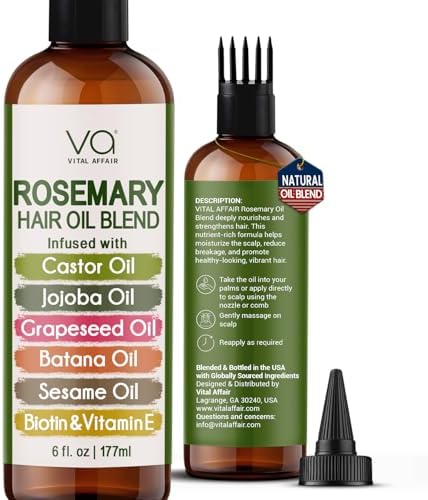
This six-fluid-ounce blend combines rosemary, castor, batana, grapeseed, and jojoba oils with biotin and vitamin E. The product is described as suitable for use on the scalp or hair, including as a leave-in conditioner. That flexibility can be useful if you want one oil for scalp massage and occasional attention to dry ends.
For curly hair, the main practical question is how much to apply. A blend that feels light to one person may feel too rich on fine curls or a scalp prone to buildup. Start with a small amount, part your hair to apply it to the scalp, and adjust based on how your curls look and feel. If using it on lengths, concentrate on dry ends rather than coating the whole curl pattern.
Its larger listed size and mix of carrier oils make it a versatile option compared with the smaller pre-wash Kitsch bottle. The formula is marketed as non-greasy and vegan, but the supplied product details do not give a full ingredient list or clarify the strength of each oil. Those who are sensitive to fragranced or botanical products should check the label and patch-test first.
Pros:
- Combines several oils with biotin and vitamin E
- Marketed for scalp, leave-in, and general hair use
- Larger listed size than several other picks here
- Described as vegan and cruelty-free
Cons:
- The multi-oil blend may feel heavy if you apply too much
- The supplied details do not specify ingredient amounts
Verdict: Choose this blend if you want a flexible, larger-size oil for scalp and strand conditioning, and are comfortable testing the amount your curls can handle.
Botanic Hearth Rosemary Oil for Scalp and Strand Care

Botanic Hearth’s four-fluid-ounce formula brings together rosemary, biotin, castor oil, and jojoba oil. The product is positioned as a conditioning oil for both scalp and hair, with claims around hydration, reducing breakage, and helping hair look thicker. These are cosmetic and product claims, not a guarantee of new hair growth.
Jojoba and castor oils give the blend a clear moisture-focused role in a curly-hair routine. You could apply a small amount along scalp parts or smooth a little over dry sections before washing. If your curls are fine or easily weighed down, keep it primarily on the scalp and rinse it out if your hair feels coated.
Compared with the Mane Attraction oil, this formula has a shorter listed ingredient combination and does not specifically call out type 3A-to-4C hair or protective styles. It may suit shoppers who want a straightforward rosemary blend, but the product information does not explain how much rosemary or biotin is included. Check the package directions and ingredient list before use.
Pros:
- Includes rosemary, biotin, castor, and jojoba oils
- Designed to condition both scalp and hair
- Described as cruelty-free and free from parabens and sulfates
Cons:
- May be too rich for some curl patterns if applied heavily
- The supplied details do not state ingredient concentrations
Verdict: This is a sensible pick if you want a rosemary-centered scalp and hair oil and prefer a simpler blend over a long list of oils.
The Mane Attraction Oil for Curls, Coils, and Protective Styles

The Mane Attraction combines castor, rosemary, black seed, sweet almond, and vitamin E oils in a four-fluid-ounce formula. Its product information specifically names curly and coily textures from 3A to 4C, along with relaxed and chemically treated hair. It is also presented as an option for braids, weaves, and locs.
The blend is designed to condition the scalp and help seal in moisture on the hair shaft. That focus can be useful for curls that feel dry between wash days or for protective styles where access to the scalp is limited. The directions describe applying a few drops, which is a helpful starting point; using more does not mean better results and may leave residue.
Unlike the spray-format Bronner Bros oil, this is a drop-applied blend, so you can target specific parts or dry sections. The product is described as lightweight and quick-absorbing, though a mix that includes castor oil may still feel substantial on finer hair. It can support a routine focused on scalp comfort and length retention, but it should not be treated as a proven hair-loss treatment.
Pros:
- Explicitly positioned for curly and coily hair, including 3A–4C
- Designed for use with braids, weaves, and locs
- Combines several conditioning oils with vitamin E
- Product directions suggest using only a few drops
Cons:
- The oil blend may feel rich on fine curls or an oily scalp
- Do not rely on it as a treatment for hair loss or scalp disease
Verdict: Choose this one if your routine includes coils or protective styles and you want an oil formulated with those uses in mind.
Kitsch Rosemary Oil for a Pre-Wash Scalp Routine

Kitsch’s 60 mL oil is made for pre-wash scalp care. Its listed ingredients include rosemary extract, biotin, castor oil, jojoba oil, argan oil, and lavender. The pre-shampoo format makes its intended use clearer than a multi-purpose oil: apply it before washing, then follow with your usual cleanser.
This can work well if you prefer not to leave oil in your curls all day. The product is described as helping loosen buildup and condition the scalp, while also softening dry strands. For curly hair, sectioning before application can help you use a small amount at the roots without saturating the lengths.
Compared with the larger VITAL AFFAIR blend, Kitsch comes in a smaller listed size and has a more specific pre-wash focus. Its lavender scent may appeal to people who enjoy scented hair care, but it may not suit everyone, especially those who avoid fragrance. The supplied details describe it as vegan and cruelty-free and state that it is Leaping Bunny Certified.
Pros:
- Clear pre-wash use makes it easy to fit into wash day
- Includes rosemary extract, biotin, and several conditioning oils
- Product details state that it is vegan and Leaping Bunny Certified
- Can be used for scalp care without leaving oil in the hair all day
Cons:
- The 60 mL size is smaller than several other picks
- Lavender scent may not suit fragrance-sensitive shoppers
Verdict: Pick Kitsch if you want a dedicated pre-wash scalp oil rather than a product intended mainly for daily leave-in use.
Bronner Bros Tropical Roots Spray Oil for Braids and Locs

Bronner Bros Tropical Roots is an eight-ounce spray oil described for moisture, shine, and use with braids, locks, and twists. The product details list castor oil, aloe vera, and botanical ingredients including pineapple and guava. Its spray format is its main practical difference from the dropper-style blends in this group.
A spray can make it easier to apply oil along a scalp or over a protective style without handling each section as carefully. The formula is marketed as lightweight and non-greasy, but it is still an oil: use a light application and check whether your hair or scalp feels coated. The supplied information does not list rosemary or biotin, so this is better viewed as a moisture-and-shine option than a rosemary-focused formula.
For loose curls, the spray format may be less precise than applying a few drops to selected areas. For braids, twists, and locs, its intended use is more direct. The listed size is also the largest among these selections, which may appeal if you plan to use an oil regularly on protective styles.
Pros:
- Spray application is convenient for braids, twists, and locs
- Large listed eight-ounce size
- Designed to seal in moisture and add shine
- Includes castor oil, aloe vera, and botanical ingredients
Cons:
- Not a rosemary- or biotin-focused option
- Spraying may be less precise for targeted scalp application
Verdict: Choose this spray if you mainly need moisture and shine for protective styles, rather than a rosemary-centered scalp oil.
How to Choose a Hair Growth Oil for Curly Hair
Decide whether you need scalp care or strand care
Scalp oils are applied at the roots, while oils for the hair lengths are often used to soften strands or help seal in moisture. Some products are made for both purposes, but that does not mean you need to coat your whole head. Think about your main goal—such as a pre-wash scalp routine, dry-end care, or maintaining a protective style—and choose a formula and format that fits it.
Match the formula to your curl pattern and density
Thicker oils can feel useful on dense, coarse, or very dry hair, but may weigh down fine curls. A lighter-feeling blend may be easier to spread through fine strands, though individual results vary. Start with a small amount and see how your hair responds before using more. If your scalp gets oily or product buildup bothers you, consider a pre-wash option or keep oil use occasional.
Choose an application format you will use correctly
Dropper-style oils let you place a small amount along scalp parts or on selected strands. A spray can be convenient for braids, twists, and locs, while a pre-wash oil gives you a clear place in your wash-day routine. The most suitable format is one that lets you apply the product evenly without oversaturating your curls or leaving residue.
Read the full ingredient list and directions
Product titles and descriptions may name featured ingredients without giving their amounts. Check the product label for the complete ingredient list, directions, and any cautions. If you are sensitive to botanical ingredients or fragrance, pay close attention to those details. Patch-test a new product on a small area of skin and stop using it if irritation occurs.
Keep expectations realistic about growth
Hair oils can condition the scalp and hair, and reducing breakage may help you retain more of the length you grow. That is different from proving that an oil causes new hair growth. If you have sudden, ongoing, or patchy hair loss, speak with a qualified health professional rather than relying on a cosmetic oil alone.
Frequently Asked Questions
Can hair oil make curly hair grow faster?
An oil may condition the scalp and strands, and a routine that reduces breakage can help you retain length. The product information for these oils does not prove that they make hair grow faster, and results are not guaranteed.
Should I put hair growth oil on my scalp or my curls?
Follow the product directions. Scalp oils are usually applied in small amounts along the roots, while some blends can also be used on dry lengths or ends. Avoid applying more than your hair needs, since excess oil can leave curls coated.
How often should I use a hair oil?
There is no single schedule that suits every scalp or curl pattern. Start with the directions on the product label and a modest amount. Adjust based on how your scalp feels and whether your hair develops buildup or looks weighed down.
Can I use these oils on braids, twists, or locs?
The Mane Attraction oil is described for protective styles, and Bronner Bros Tropical Roots is specifically designed for braids, locks, and twists. Use a light application and follow the label, since too much oil can build up around the scalp or style.
Is rosemary oil safe for every scalp?
No product is right for everyone. Check the ingredient list, patch-test before regular use, and stop if you notice irritation. If you have a scalp condition or persistent discomfort, ask a qualified health professional for guidance.
Which option is best for a pre-wash routine?
Kitsch is the clearest fit for a pre-wash routine because its product details specifically describe it as a pre-shampoo scalp oil. Follow the package directions and rinse it out as part of your normal wash routine.
What is the best oil here for protective styles?
The Mane Attraction is positioned for curly and coily hair, including braids, weaves, and locs. Bronner Bros Tropical Roots is another practical option if you prefer a spray format for braids, twists, or locs.
Final Recommendation
For a versatile oil blend, VITAL AFFAIR offers several featured oils and is described for scalp and hair use. The Mane Attraction is the most directly tailored to curls, coils, and protective styles, while Kitsch is the clearest choice for pre-wash care. Choose based on your curl density, scalp needs, and preferred application method—and treat any growth-related claims as unproven rather than guaranteed results.