
Sulfur in well water often creates a rotten-egg odor, but the right treatment depends on more than smell alone. Hydrogen sulfide levels, iron and manganese, household water use, and your plumbing all affect which system makes sense. These picks include automatic whole-house filters and a simpler spigot-mounted option, so compare their treatment approach and capacity with a recent water test before choosing.
Quick Comparison
| System | Treatment approach | Notable stated limits or features | Best fit |
|---|---|---|---|
| Oceanic Water Systems AIO 12" x 52" | Air injection and automatic backwashing | Up to 17 ppm hydrogen sulfide; media lasts about five years on average | Larger households with several bathrooms |
| iSpring WCFM500K | Air-based media regeneration with sediment filtration | Up to 20 ppm hydrogen sulfide; up to 12 ppm iron | Homeowners seeking automatic, chemical-free treatment |
| The Sulfur Eliminator Deluxe | Water-powered aeration at a well spigot | No electricity needed; uses an Iron Buster Filter for its stated warranty terms | A simpler spigot-based setup for odor and sediment concerns |
| Oceanic Water Systems AIS10-25SXT | Air injection and automatic backwashing | Media lasts about five years on average | Homes with four or more bathrooms |
| iSpring Iron, Manganese & H2S System | Three-stage cartridge filtration | Up to 15 GPM; iron up to 3.0 ppm and manganese up to 1.0 ppm | Households that want cartridge-based treatment for several contaminants |
Our Picks: Best Well Water Filtration System For Sulfur reviews
1. Oceanic Water Systems AIO 12" x 52": High-Capacity Air Injection Treatment

This automatic whole-house system uses air injection to oxidize hydrogen sulfide, iron, and manganese. The media then captures the oxidized material, and an automatic backwash flushes it away. Its single-tank setup creates an air pocket inside the tank rather than relying on a separate air pump or treatment tank.
The system is sized for larger households, with the product information pointing to homes with four or more people and three or more bathrooms. Its stated treatment limits are up to 17 ppm hydrogen sulfide, 27 ppm iron, and 11 ppm manganese. Those figures make it especially important to test your water and compare your results with the system’s specifications before buying.
The digital Fleck 5600SXT control valve manages the backwash cycle. The media is described as lasting about five years on average, though actual life can depend on your water and use. This is a sizable, plumbed-in system, so plan for installation space and a suitable drain for backwashing. It does not remove contaminants simply because they are present; the listed limits and your water chemistry matter.
Pros:
- States removal limits for hydrogen sulfide, iron, and manganese.
- Automatic backwashing helps flush captured material from the media.
- Single-tank air injection avoids a separate air pump or tank.
- Designed with larger households in mind.
Cons:
- Requires room for a large tank and a suitable backwash drain.
- Media replacement may be needed, and the stated average lifespan is not a guarantee.
Verdict: Choose this Oceanic system if your test results fit its stated limits and you need a high-capacity, automatic whole-house option for sulfur, iron, and manganese.
2. iSpring WCFM500K: Automatic Air-Based Filtration With Sediment Control

The WCFM500K is an automatic whole-house system for well water. It uses air to regenerate its media rather than adding chemical oxidizers, and it includes 3-micron sediment filtration for solids and turbidity. The product information states removal of hydrogen sulfide up to 20 ppm and iron up to 12 ppm, along with manganese.
An LED control screen lets you set automatic flush intervals based on water quality and household use. The manufacturer describes the system as requiring no filter replacements and gives a media lifespan of up to ten years. That lifespan is a stated maximum, not a promise for every well; water conditions and correct setup can affect how long the media performs as intended.
Compared with the Oceanic AIO models, this iSpring system has a higher stated hydrogen sulfide limit but a lower stated iron limit than the larger 12-by-52-inch Oceanic model. It also does not reduce total dissolved solids (TDS), so it is not a substitute for reverse osmosis if lowering TDS is your goal. Allow space for the equipment and its automatic flushing, and check installation requirements before committing.
Pros:
- States a hydrogen sulfide treatment limit of up to 20 ppm.
- Uses air rather than chemical oxidizers for media regeneration.
- Automatic flushing settings can be adjusted through the digital control.
- Includes 3-micron sediment filtration and manganese treatment.
Cons:
- Does not reduce TDS.
- Its stated iron limit is lower than that of the larger Oceanic AIO model.
Verdict: The WCFM500K is a strong option if your main needs are hydrogen sulfide, iron, manganese, and sediment treatment, and its stated limits match your test results.
3. The Sulfur Eliminator Deluxe: A Water-Powered Spigot Option

This product takes a different approach from the tank-based whole-house systems. It attaches to a well spigot or faucet and uses water pressure to aerate the water, without electricity. The manufacturer says the aeration process is designed to address rotten-egg sulfur odor, as well as iron, rust, and sediment.
The simpler connection may suit someone looking for a spigot-mounted treatment option rather than a large system installed in the home’s main water line. However, its product description does not give a hydrogen sulfide capacity or detailed whole-house flow specifications. Confirm how the unit connects to your plumbing and whether treating water at that point covers the uses you have in mind.
There is also a maintenance detail worth noting: although the system is described as maintenance-free, the stated lifetime warranty depends on using and replacing the Iron Buster Filter once a year. Factor that filter replacement into your plans, and check the warranty conditions before purchase. Unlike the automatic backwashing models, this product does not list a digital controller or an automatic tank backwash cycle.
Pros:
- Does not need electricity, according to the product information.
- Connects at a well spigot or faucet rather than requiring a large filter tank.
- Designed to address sulfur odor, iron, rust, and sediment.
Cons:
- No hydrogen sulfide capacity or detailed flow-rate limit is provided.
- The stated lifetime warranty depends on annual Iron Buster Filter replacement.
Verdict: Consider this option if a water-powered spigot setup fits your needs, but choose a rated whole-house system instead when you need clearly stated treatment limits and automatic backwashing.
4. Oceanic Water Systems AIS10-25SXT: Automatic Air Injection for Larger Homes
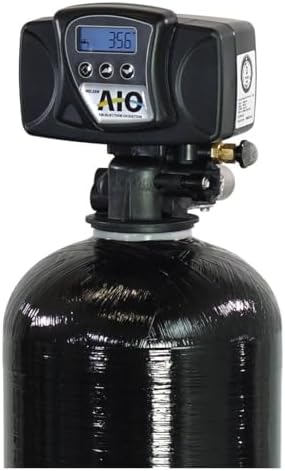
The AIS10-25SXT uses air injection to oxidize iron, sulfur, and manganese inside a single tank. Its media captures the oxidized material, and the system’s automatic backwash sends that material to the drain. Like the larger Oceanic model above, it uses a Fleck 5600SXT digital controller and does not require a separate air pump.
The product is described as suitable for homes with four or more bathrooms. Its media is said to last about five years on average and can be changed when needed. Unlike the 12-by-52-inch Oceanic model, the supplied product information does not give specific maximum ppm limits for hydrogen sulfide, iron, or manganese. That makes a direct capacity comparison difficult, so ask the supplier for the correct sizing and treatment limits for your well before ordering.
This system does not reduce TDS. It is a better match for households seeking an automatic oxidizing filter for several bathrooms than for anyone who needs a compact cartridge system. As with any backwashing filter, confirm that you have adequate installation space and a suitable drain, and account for periodic media service.
Pros:
- Uses air injection to treat iron, sulfur, and manganese in one tank.
- Automatic backwashing is managed by a digital controller.
- Designed for homes with four or more bathrooms.
- Media is described as easy to change when needed.
Cons:
- The supplied product details do not state maximum contaminant levels.
- Does not reduce TDS and needs a drain for backwashing.
Verdict: Choose the AIS10-25SXT if its size suits your home and the seller confirms that its treatment capacity matches your water test results.
5. iSpring Iron, Manganese & H2S System: Three-Stage Cartridge Filtration

This iSpring model uses three cartridge stages rather than an air-injection tank. The first is a 5-micron sediment filter. The second is a compound filter intended to target contaminants including hydrogen sulfide, chlorine, chloramine, lead, and mercury. The third is designed to reduce iron up to 3.0 ppm and manganese up to 1.0 ppm.
The system has 1-inch NPT connections and uses 20-by-4.5-inch cartridges. Its stated flow rate is up to 15 GPM, and the product information says the filters can last up to a year depending on water quality and use. That means you should plan for cartridge replacement and consider whether the ongoing cost and service work suit your household.
This system lists more treatment targets than the air-injection options, but its stated iron and manganese limits are comparatively modest. It does not provide a hydrogen sulfide capacity in the supplied details, so do not assume it will handle a strong sulfur problem without checking with the manufacturer and comparing your water test. It preserves TDS rather than reducing it.
Pros:
- Three stages target sediment and a range of listed contaminants.
- States a flow rate of up to 15 GPM.
- Uses standard-size cartridges that are replaced as needed.
- Preserves TDS rather than removing essential minerals through reverse osmosis.
Cons:
- Iron and manganese treatment limits are 3.0 ppm and 1.0 ppm, respectively.
- Cartridges may need replacement up to about once a year, depending on water and use.
Verdict: This cartridge system is worth considering when your contaminant levels fit its stated limits and you want multi-stage treatment, but it is not the clearest choice for high hydrogen sulfide because no capacity is provided.
How to Choose a Well Water Filter for Sulfur
Test for hydrogen sulfide and related contaminants
A sulfur smell can point to hydrogen sulfide, but odor alone does not show how much is in your water or whether iron and manganese are also present. Get a well-water test that measures the contaminants you are trying to treat, then compare the results with the system’s stated limits. If a product does not list a capacity, ask the manufacturer or supplier for guidance before buying.
Match the system to your household’s water use
Consider how many people live in your home, how many bathrooms you use at once, and the flow rate your plumbing needs. Some products are described for larger homes, while others list a maximum flow rate or a specific contaminant capacity. A system that cannot keep up with your household’s demand may not be the right fit, even if it targets the right contaminants.
Choose between air-injection tanks and cartridges
Air-injection systems oxidize contaminants and capture the resulting material in tank media, which is then flushed during backwashing. They can reduce the need for frequent cartridge changes, but they require space and a drain. Cartridge systems use replaceable filter stages and may be easier to understand as a staged setup, but replacement schedules and costs should be part of your decision.
Check the backwash and installation requirements
Before ordering a tank-based system, confirm that you have room for it and a suitable drain for its backwash cycle. Review the connection size, installation instructions, and any electrical or plumbing requirements. For a spigot-mounted product, check exactly where it connects and whether that point treats the water you intend to use.
Plan for upkeep and media life
Maintenance varies by system. The Oceanic tank systems describe media life of about five years on average, while the WCFM500K describes media regeneration and a lifespan of up to ten years. The cartridge-based iSpring model says filter life can be up to a year depending on water quality and use. Treat these as product estimates, not guarantees, and check the warranty conditions carefully.
Know what sulfur filtration will not do
Several of these systems target sulfur, iron, and manganese, but they are not all designed to lower total dissolved solids. The WCFM500K and the AIS10-25SXT explicitly do not reduce TDS, and the three-stage iSpring model says it preserves TDS. If TDS reduction is a separate goal, compare a suitable reverse-osmosis system for that need rather than assuming a sulfur filter will do both.
Frequently Asked Questions
What causes a rotten-egg smell in well water?
Hydrogen sulfide is a common cause of a rotten-egg odor in water. A water test can help confirm whether it is present and measure its level. Testing can also identify other issues, such as iron or manganese, that may affect your filter choice.
Will an air-injection system treat both sulfur and iron?
The air-injection systems in this guide are designed to oxidize sulfur and iron, and their media captures the oxidized material before it is flushed during backwashing. Check each product’s stated limits against your test results, since the listed capacity differs between models.
Do these systems remove TDS?
Not all of them do. The iSpring WCFM500K and Oceanic AIS10-25SXT state that they do not reduce TDS, and the three-stage iSpring cartridge system says it preserves TDS. Check the product details for any system you are considering if TDS reduction is important to you.
How often do well water filter media or cartridges need replacement?
It depends on the system, water quality, and usage. The Oceanic tank systems describe media life of about five years on average, the WCFM500K states up to ten years, and the three-stage iSpring system says cartridges may last up to a year. Follow the manufacturer’s instructions and monitor performance rather than relying on an estimate alone.
Can I install a sulfur filter myself?
Some products may be suitable for a simpler connection, while whole-house tank systems require space, plumbing connections, and a drain for backwashing. Review the installation instructions and consider a qualified installer if you are unsure about plumbing, flow, or drainage requirements.
Which option is best for a large household?
The Oceanic AIO 12-by-52-inch system is described for larger households, and the AIS10-25SXT is described for homes with four or more bathrooms. The iSpring WCFM500K also provides stated hydrogen sulfide and iron limits. Compare those specifications with your household’s flow needs and water test before deciding.
Final Recommendation
For a larger home with sulfur, iron, and manganese concerns, the Oceanic AIO 12-by-52-inch system stands out because it lists treatment limits for all three and uses automatic backwashing. The iSpring WCFM500K is another strong contender if its stated limits suit your water and you prefer air-based regeneration. For any of these systems, start with a well-water test and confirm capacity, installation needs, and upkeep before purchase.