If you’re looking for a 30-inch drop-in electric range with downdraft, the first thing to know is that the products below are cooktops, not full ranges: they have no oven. Each combines a built-in electric cooking surface with downdraft ventilation, which can be useful when you want to avoid a separate overhead hood. Before choosing one, check whether its vent recirculates air indoors or needs ductwork, and measure your countertop cutout carefully.
Quick Comparison
| Product | Cooking setup | Vent style | Notable features | Best for |
|---|---|---|---|---|
| Cooksir 30-Inch Downdraft Cooktop | Two cooking zones, including a dual-ring and bridge-style zone | Ductless recirculating | Child lock, timer, pause function | Kitchens where exterior ducting is difficult |
| ANHANE 30-Inch Four-Burner Cooktop | Four radiant heating elements | Integrated downdraft; confirm duct requirements | Ten power levels, child lock, residual-heat indicator | Shoppers seeking four zones and adjustable heat |
| Disaenvir 30-Inch Ductless Downdraft Cooktop | Electric ceramic cooktop; confirm zone layout | Ductless recirculating | Timer, child lock, pause, residual-heat indicator | Island kitchens without an exhaust route |
| Nafewin 30-Inch Four-Burner Cooktop | Four radiant elements | Three-speed downdraft with listed duct connection | Nine heat levels, timer, auto shutoff | Kitchens that can accommodate ducted ventilation |
| GTKZW 30-Inch Downdraft Cooktop | Four heating elements | Downdraft; verify recirculating or ducted setup | Bridge-style cooking area, timer, child lock | Flexible cooking layouts and larger pans |
Our Picks: Best 30 Inch Drop In Electric Range With Downdraft reviews
1. Cooksir: Ductless Downdraft for Flexible Kitchen Layouts
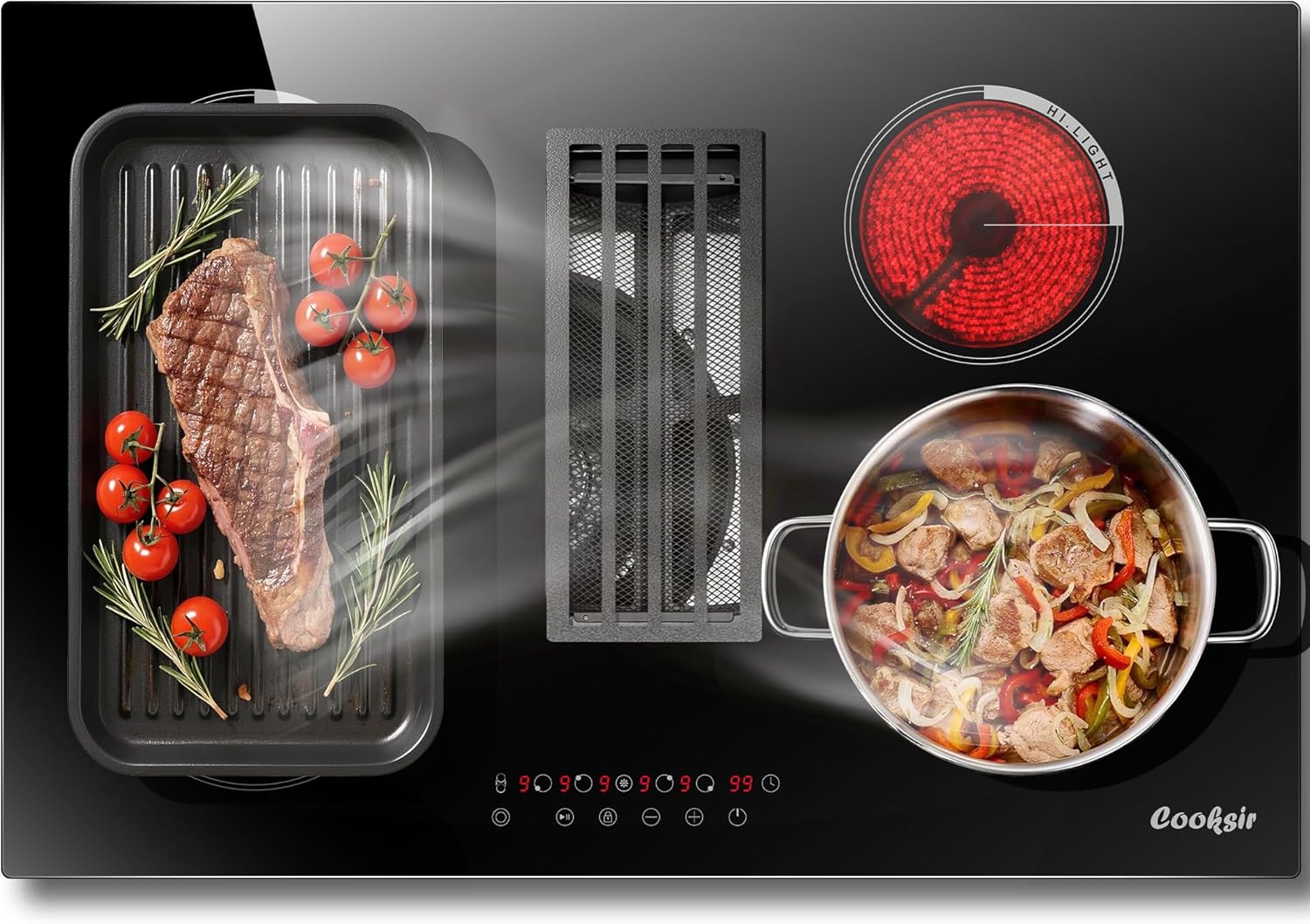
The Cooksir combines a smooth ceramic-glass electric cooktop with a built-in downdraft system. Its ventilation is described as ductless: it filters cooking air inside the unit and sends it back into the room, rather than requiring an exhaust pipe to the outdoors. That makes it a possible fit for an island or a kitchen where adding ductwork would be difficult.
Its cooking layout differs from the four-zone models here. The listing describes a dual-ring burner and a bridge-style cooking zone, giving you options for different pan sizes and larger cookware. The touch controls also include a timer, pause function, and child lock. These features may be handy during busy cooking, though the two-zone layout offers less capacity for preparing several separate dishes at once.
The smooth glass surface is designed for wipe-down cleaning. Some users report that it looks good and is manageable to install, while also noting that baked-on residue can take extra effort to remove. Plan on a compatible glass-cooktop cleaner, and make sure the counter dimensions match before ordering. The supplied details give a range of cutout lengths, so verify the required measurements with the seller and installer.
This is a 220V built-in appliance with wiring rather than a standard plug, according to the product details. Have a qualified professional confirm the electrical setup and installation requirements. Its ductless design is convenient, but recirculating air is not the same as exhausting smoke and moisture outdoors.
Pros:
- Ductless recirculation avoids the need for an exterior exhaust run.
- Bridge-style zone can suit larger cookware.
- Timer, pause, and child-lock functions are included.
- Smooth glass surface is straightforward to wipe after cooking.
Cons:
- Two cooking zones provide less flexibility than a four-zone cooktop.
- Requires 220V wiring; installation and cutout details need careful checking.
Verdict: Choose the Cooksir if ductless ventilation and a bridge-style cooking area matter more to you than having four separate cooking zones.
2. ANHANE: Four Radiant Zones with Adjustable Heat

The ANHANE is a built-in 30-inch radiant electric cooktop with four heating elements and integrated downdraft ventilation. Its design is aimed at kitchens where a conventional overhead hood would take up space or interrupt an open view, such as an island layout.
The listing highlights ten power levels and temperature adjustment, along with a child safety lock, residual-heat indicator, and automatic shutoff. These controls give you more adjustment options than a simple high-low setup and provide reminders that the glass can remain hot after cooking. It is described as compatible with flat-bottomed cookware, including cast iron, stainless steel, and glass.
There is an important specification point to verify: the product title says 6600W, while the description also refers to 6000W. Confirm the exact electrical and heating specifications with the seller before purchase. The listing describes the downdraft system but does not clearly establish whether every installation is ducted or recirculating, so check the ventilation configuration and required accessories as well.
Like the other glass-top models, this surface can be cleaned without removing exposed heating elements, but spills may need attention once the cooktop has cooled. The product is listed for 220–240V built-in installation, so have an installer confirm that your wiring and counter opening are suitable.
Pros:
- Four radiant zones offer room to cook several dishes at once.
- Ten power levels provide a range of heat settings.
- Includes a child lock, residual-heat indicator, and auto-shutoff.
- Works with a range of flat-bottomed cookware materials.
Cons:
- Wattage information in the listing is inconsistent and should be confirmed.
- Ventilation setup and duct requirements are not clear from the supplied details.
Verdict: The ANHANE is worth considering if you want four radiant cooking zones, but confirm its power rating and vent setup before committing.
3. Disaenvir: Ductless Recirculation for Island Kitchens

The Disaenvir is a ceramic electric cooktop with an integrated downdraft fan and internal air recirculation. Its main distinction is that it is presented as a ductless model, so it does not require an exhaust pipe leading outdoors. That can make installation more practical in some apartments, islands, and open-plan kitchens, though recirculation will not remove cooking air from the home.
The listing gives overall dimensions of 30.3 by 20.47 inches and a required countertop cutout of 29.13 by 19.3 inches. Measure your existing opening rather than relying on the product’s nominal 30-inch size. The description identifies the unit as a 220V, 60Hz appliance and recommends professional wiring installation.
Convenience features include a countdown timer that can shut off heating zones, a child lock, a pause function, and an indicator for residual heat. The smooth touch panel is intended to be easy to wipe clean. The supplied information does not clearly lay out the cooking-zone configuration, so confirm the number and arrangement of zones if your cooking routine depends on fitting several pans.
Compared with the Cooksir, this model’s listed cutout dimensions are more specific, but its cooking layout is less clear in the supplied product details. Its ductless approach is a strong fit when exterior venting is not practical; for frequent high-heat cooking, consider whether recirculating ventilation meets your needs.
Pros:
- Ductless recirculation does not require an outdoor exhaust duct.
- Specific overall and cutout dimensions are provided.
- Includes a timer, child lock, pause function, and residual-heat indicator.
- Touch controls and a smooth surface support simple cleanup.
Cons:
- Cooking-zone layout is not clearly described in the supplied details.
- Requires 220V wiring and a precisely sized cutout.
Verdict: Consider the Disaenvir when you need ductless downdraft ventilation, provided its cooking layout and recirculating performance suit your kitchen.
4. Nafewin: Four Burners with Three-Speed Downdraft

The Nafewin is a four-zone radiant cooktop paired with a built-in downdraft fan. Unlike the clearly ductless models in this group, its listing specifies a 6.3-inch pipe connection and airflow figures. This points to a ducted installation, so check the complete installation instructions and plan a route for the exhaust before buying.
Its four elements are listed at 1,800W, 1,800W, 1,500W, and 1,500W, with nine heat levels for each. The fan has three speed settings. This configuration offers separate zones for everyday cooking, while its black ceramic-glass surface is compatible with flat-bottomed cookware made from materials such as stainless steel, aluminum, ceramic, and glass.
Safety and timing features include a 99-minute timer, automatic shutoff, residual-heat indication, overheat protection, and a child lock. The product is described as hard-wired for 220–240V, with no plug, and the listing recommends installation by a licensed electrician. Its published cutout dimensions should be checked carefully with the seller or installer; do not assume that a standard 30-inch opening will fit without measurement.
For shoppers who can run an exhaust duct and want four independent cooking zones, the Nafewin offers a clearer vent connection than the recirculating options. The tradeoff is more involved planning, and the fan may make some operating noise, as the product information notes.
Pros:
- Four radiant zones with nine heat levels each.
- Three-speed downdraft fan with a listed duct connection.
- Includes timer, auto shutoff, child lock, and residual-heat indication.
- Works with several types of flat-bottomed cookware.
Cons:
- Requires duct planning and hard-wired electrical installation.
- The fan may produce noticeable operating noise.
Verdict: Pick the Nafewin if you want four radiant zones and can install its ducted ventilation and hard-wired connection.
5. GTKZW: Four Zones and a Bridge-Style Cooking Area

The GTKZW is a 30-inch electric cooktop with four heating elements and integrated downdraft ventilation. Its listed layout includes a bridge-style cooking area, which may be useful when you use larger cookware or want a broader heating surface than a small round zone provides. The smooth glass top is designed to work with cookware including cast iron, stainless steel, ceramic, glass, copper, and aluminum.
The product details list 10 power levels and a temperature range of 140–518°F, as well as a timer, child lock, pause function, and residual-heat indicator. Its product description also gives a 360 CFM ventilation figure. However, the listing uses both downdraft and recirculating-vent language without fully explaining the installation options. Confirm whether the unit can be ducted or recirculated, and which filters or parts are included.
The listed overall size is 30.32 by 20.47 inches, with a countertop cutout of 29.92 by 19.69 inches. Those measurements make careful planning important, especially if you are replacing an existing cooktop. The listing describes a 220–240V connection, so confirm the required wiring with a qualified installer.
Compared with the Nafewin, the GTKZW highlights a bridge-style zone and recirculating ventilation in its product details, while the Nafewin specifies a duct connection and fan speeds. The GTKZW may suit cooks who value flexible pan placement, but ventilation compatibility should be settled before purchase.
Pros:
- Four heating elements and a bridge-style cooking area.
- Ten power levels and a listed temperature range.
- Includes timer, child lock, pause function, and residual-heat indicator.
- Works with a variety of cookware materials.
Cons:
- The vent description does not clearly explain ducted versus recirculating installation.
- Requires a 220–240V connection and a precisely measured cutout.
Verdict: The GTKZW is a good candidate if you want four zones and bridge-style cooking, but confirm its vent configuration and dimensions before ordering.
How to Choose a 30-Inch Drop-In Electric Cooktop with Downdraft
Choose a cooktop, not a full range
A range is a single appliance with a cooktop and an oven. The options in this guide are built-in cooktops, so they do not include an oven. They may work for a kitchen remodel or replacement where you already have a separate oven, but they will not replace a freestanding range on their own. Check the appliance type before comparing features.
Decide between ducted and ductless ventilation
A ducted downdraft system moves cooking air through a pipe and out of the home. It requires a suitable route through a cabinet, floor, wall, or other approved space. A ductless recirculating model filters air inside the unit and returns it to the room. That can simplify installation, but it does not exhaust air outdoors. Check the listing and installation instructions for the exact vent type, filter needs, and included parts.
Measure the countertop cutout
“30 inch” describes the general product size, not necessarily the opening required in your counter. Compare the unit’s overall dimensions with its cutout dimensions, and confirm the required depth and cabinet clearance. Measure the existing opening in more than one place, and ask an installer to review the specifications before you order. This is especially important when a listing provides unusual or conflicting measurements.
Check voltage and wiring
These built-in cooktops are described as 220V or 220–240V appliances, and some listings say they are hard-wired rather than supplied with a standard plug. Make sure your kitchen has a compatible electrical circuit and that the appliance’s requirements match it. A qualified electrician can verify the circuit, wiring, and connection requirements before installation.
Match the cooking zones to your routine
Four-zone models give you more separate cooking areas for multiple pans. A bridge-style zone can be helpful with longer or wider cookware, while a dual-ring zone can accommodate different pan sizes. The Cooksir has a two-zone layout, so it may suit a simpler setup but offers less room for cooking several dishes at once. Check the product diagram for the exact zone arrangement.
Look at ventilation performance and noise
Fan power and airflow figures can help you compare models, but they do not tell the whole story. Downdraft vents draw air downward at the cooktop, so placement, cookware, cooking style, and installation can affect how well they capture smoke and steam. The Nafewin listing notes that its fan may make noise. If you often sear or fry, consider whether a downdraft system and its vent route will meet your needs.
Review safety controls and cleaning needs
Features such as a child lock, timer, automatic shutoff, pause control, and residual-heat indicator can make daily use easier. A smooth glass surface is generally simple to wipe, but spills can become harder to remove if they burn onto the surface. Follow the appliance’s care instructions and use products suitable for ceramic glass.
Frequently Asked Questions
Is a 30-inch electric cooktop with downdraft a full range?
No. A cooktop has a cooking surface but no oven. The models covered here are built-in cooktops, so you need a separate oven if you want oven functions.
What is the difference between ducted and ductless downdraft?
A ducted system carries cooking air outside through an exhaust pipe. A ductless system filters air inside the appliance and returns it to the room. Check the product details to confirm which type a model supports.
Will any 30-inch cooktop fit a 30-inch countertop opening?
Not necessarily. The outside width and the required cutout size are different measurements. Check the exact cutout dimensions, cabinet clearance, and installation instructions before buying.
Do these cooktops plug into a standard outlet?
The supplied details describe these models as 220V or 220–240V built-in appliances. Some are specifically listed as hard-wired with no plug. Confirm the electrical requirements for your chosen model and have a qualified electrician check your setup.
Can I use cast-iron cookware on these glass cooktops?
The product details for several models list compatibility with cast iron and other flat-bottomed cookware. Use care when moving heavy pans across glass to reduce the chance of scratching or impact damage, and follow the cooktop’s instructions.
Does ductless ventilation remove all cooking odors and moisture?
Ductless ventilation filters air and returns it to the kitchen; it does not exhaust air outside. Its results depend on the filter and cooking conditions. If removing cooking air from your home is important, look for a compatible ducted installation.
Final Recommendation
For a kitchen without a practical route for exhaust ductwork, the Cooksir and Disaenvir stand out for their stated ductless recirculation designs, though their cooking-zone layouts differ and should be checked carefully. If you can install an exhaust duct and want four separate radiant zones, the Nafewin provides the clearest listed duct connection. The ANHANE and GTKZW may also suit four-zone cooking, but confirm their inconsistent or unclear specifications first. Whichever model you choose, verify the cutout, vent setup, and electrical requirements with the product seller and a qualified installer.
