
If you have a septic system, choosing a water softener salt takes a little more thought than picking the cheapest bag at the store. Your softener’s brine and regeneration water eventually flow into your home’s wastewater system, so the salt you add and how often your softener cycles both matter. This guide looks at five popular options from Morton and other sellers, explains what each one offers, and helps you decide which fits your home. None of the listings below are specifically labeled as septic-safe, so treat any septic claim with caution and check with your septic service provider or your softener’s manufacturer before making changes.
Quick Comparison Table
| Product | Product Type | Best For | Key Highlight |
|---|---|---|---|
| Morton Clean and Protect Pellets (Pack of 2) | Salt pellets, 2 x 40 lb bags | Steady everyday softener use | Two bags for longer time between refills |
| Morton Pure and Natural Solar Salt Pellets | Natural salt pellets, 40 lb bag | Owners who want a natural-salt option | Easy-tear bag with a plastic handle |
| EcoPure EPS110 Whole House Water Softener | Complete softener system | Small households with 1 to 2 people | Demand-based regeneration that uses less salt |
| Clean and Protect Water Softener Salt Pellets (4 Pack) | Salt pellets, 4 x 40 lb bags | Long refill intervals and bulk buyers | 160 lbs total supply |
| Morton Water Softener Salt Crystals (4 Packs) | All-natural salt crystals, multi-pack | Shoppers who want a multi-pack of crystals | Compatible with all water softener types |
Our Picks: Best Water Softener Salt For Septic Systems reviews
Morton Clean and Protect Pellets: A Dependable Two-Bag Supply for Everyday Use

This is Morton’s Clean and Protect salt in pellet form, packed as two 40-pound bags for a total of 80 pounds. Pellets are a common choice for home softeners because they dissolve in the brine tank at a steady rate and are less likely to form the hard crust that can block the system. Morton describes its formula as helping prevent buildup and maintain softener efficiency, and the listing mentions reduced mushing and bridging in the brine tank, which are the two problems that most often cause a softener to underperform.
The two-bag format is the main practical advantage. For a household with a moderate water load, 80 pounds can cover a good stretch of time between trips to the store, and the bags include a handle and an easy-pour design that makes them manageable to carry down to a basement or utility room. The bags are heavy, though, so you will want a safe way to lift them into the brine tank.
For septic owners, this product sits in the middle of the pack. It is a straightforward sodium chloride salt, and it does not promise any septic-specific benefit. What it does offer is consistency. If your softener is set up correctly and you use the salt at the recommended rate, you avoid the wasted salt and extra brine that come from a poorly functioning tank. That kind of steady operation is a good goal for any home with a septic tank.
Compared with the other choices on this list, this is a solid default for households that want a known, widely available pellet and a manageable two-bag supply. It does not stand out on price-per-pound or on any unique feature, but it is a practical option for regular use.
Pros:
- Two 40-pound bags give you 80 pounds of salt for longer intervals between refills.
- Pellet form is designed to reduce mushing and bridging in the brine tank.
- Handles and easy-pour bags make lifting and loading simpler.
- Consistent, familiar Morton formula that is easy to find.
Cons:
- The listing does not mention any septic-specific benefit, so you will need to verify compatibility with your septic provider.
- Each bag is heavy, which can be a challenge for people with limited lifting ability.
Verdict: This is a reliable pick for homeowners who want a standard pellet salt in a practical two-bag size. If you are looking for a septic-focused product, you will need to confirm its suitability with a professional, but as a routine softener salt, it is a sound choice.
Morton Pure and Natural Solar Salt Pellets: A Natural-Salt Option for Routine Upkeep
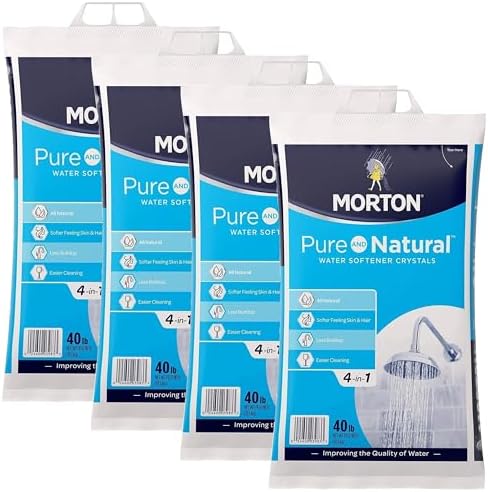
This Morton product is sold as a 40-pound bag of natural salt pellets, marketed as high-purity and made from naturally produced salt crystals. The product name and listing also use “Solar” and “4 in 1” wording, so the bag is positioned as a multi-purpose salt for softening, but the listing offers limited technical detail about how the crystals are processed. Read the bag carefully when it arrives and confirm the form that matches your softener’s manufacturer recommendations.
The bag has a simple tear feature and a sturdy plastic handle, which helps when you are lifting it over the brine tank rim. Like other single bags of this size, it is heavy, so the handle is more of a convenience than a solution for hard lifting. Some owners appreciate that the bag opens cleanly, which keeps dust and spillage to a minimum during refills.
For septic households, the main consideration is the same as with any sodium chloride salt. The salt itself does not remove the sodium that your softener adds to water, so the most useful steps are keeping your softener’s regeneration settings accurate and not adding more salt than your system needs. A cleanly operating softener sends less wasted brine into your system over time.
Compared with the two-bag Morton Clean and Protect option, this product is a single bag and works better for households that want to buy smaller quantities or test a natural-salt option before committing to a larger supply. It is a reasonable alternative, but buyers who prefer fewer trips to the store may find the multi-bag options more convenient.
Pros:
- Positioned as a natural, high-purity salt option.
- Easy-tear bag and plastic handle make opening and pouring simpler.
- Single 40-pound bag is a manageable test size for new softener owners.
Cons:
- The listing offers limited detail on the manufacturing process and provides no septic-specific guidance.
Verdict: A sensible choice if you prefer a natural-salt pellet in a single bag. Confirm that the form suits your softener and consult your septic provider if you have concerns about sodium loading, but it is a straightforward option for routine use.
EcoPure EPS110 Whole House Softener: A Salt-Saving System for Small Households

This one is different from the others on the list. The EcoPure EPS110 is a complete whole-house water softener, not a bag of salt. It is designed for one to two people and one to two bathrooms, and it uses AutoSense AI demand-based regeneration to adjust how often it cycles based on water use. Because you are buying the system rather than the salt, it fits a different need: if you are still choosing your softener or replacing an older unit, this is the item to consider.
The all-in-one cabinet design places the resin tank inside the brine tank. That layout reduces the footprint, which can be useful in closets, basements, or utility rooms where space is tight. The unit also includes a built-in sediment shield, which the listing says protects appliances and plumbing. The warranty is listed as one year for the full unit, three years on electronics, and ten years on the tank.
For septic owners, the appeal is efficiency. The listing states that the system can use up to 40 percent less salt than comparable demand-based 32,000-grain systems, and it says regeneration minimizes salt, water, and electricity use. Fewer regeneration cycles can mean less brine and backwash water entering your septic system, which is a meaningful consideration. Still, the exact impact depends on your water hardness, household size, and septic capacity, so this is a point to discuss with your septic provider rather than assume.
This system suits small households best. If you have a larger family or a home with heavy water use, a bigger unit may be a better fit, and the sizing guidance here is specifically for one to two people. The listing is also currently marked as unavailable, so you may need to check back or consider alternatives if you are shopping now.
Pros:
- Demand-based regeneration aims to reduce salt, water, and electricity use.
- Compact cabinet design saves space in tight installation areas.
- Built-in sediment shield and a multi-part warranty add long-term confidence.
- Sized for small households, which avoids oversizing a system you do not need.
Cons:
- It is a full system, so it is a much larger purchase than a bag of salt and requires installation planning.
Verdict: The best choice on this list if you need a new softener for a small home and want to reduce salt and water use. It is not a salt product, so do not buy it as a replacement for a bag of pellets. Confirm the sizing and septic compatibility with a professional before you buy.
Clean and Protect Salt Pellets 4-Pack: Best for Long Refill Intervals

This listing bundles four 40-pound bags of Clean and Protect salt pellets for 160 pounds total. The description positions the salt as a way to reduce mineral buildup in the softener and help maintain performance, and it lists common hard water complaints it aims to address, such as spotty dishes, soap scum, and scale on faucets. These are general softener benefits rather than septic-specific ones, but they show the product is meant for steady, long-term use.
The main strength here is supply. A 160-pound stock lasts a long time for most households, which means fewer heavy lifts and fewer store trips. Bulk buying also tends to make sense for homeowners who already know their softener’s salt usage. The tradeoff is storage: four bags take up real space, and they need a dry location so the salt does not clump before use.
From a septic standpoint, this product carries the same basic sodium chloride profile as the other Morton pellets. The bulk format does not change what goes into your softener, but it can make it easier to keep your regeneration schedule consistent. Consistency matters, because irregular salt levels can cause the softener to regenerate less effectively and waste salt.
Compared with the two-bag option, this four-pack is the better value for long-term supply, while the two-bag version is easier to store and manage. The brand listed for this item is “Generic,” even though the description identifies it as Morton Clean and Protect salt, so confirm the product details on the listing before you buy.
Pros:
- Four bags provide 160 pounds of salt, reducing how often you need to restock.
- Clean and Protect formula is designed to reduce mineral buildup in the softener.
- Good fit for households that already know their salt consumption rate.
- Covers a broad set of hard water concerns, from dishes to fixtures.
Cons:
- Four heavy bags need a dry, dedicated storage spot, and the bulk purchase is a large upfront commitment.
Verdict: The strongest option for buyers who want the longest interval between refills. It is a practical, dependable salt for everyday softener use. Store it properly, and confirm with your septic provider if you have questions about sodium levels.
Morton Water Softener Salt Crystals (4 Packs): A Versatile All-Natural Multi-Pack
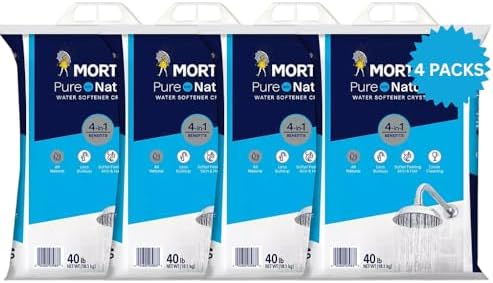
This Morton product is a multi-pack of all-natural salt crystals made from high-purity sodium chloride. The listing says it is designed to work with any type of water softener, which makes it a flexible choice if you are not sure which salt form your system prefers. Crystals and pellets behave a bit differently in the brine tank, so it is still wise to check your softener’s manual before switching forms.
The packaging uses an easy-tear opening and a sturdy plastic handle, similar to other Morton bags. That design makes it simpler to open and pour the salt without spilling. Buyers often mention that the bags are easy to handle for routine refills, and the multi-pack format gives you a steady supply without needing to rebuy often.
For households on septic systems, the key point is the same as for every other sodium-based salt on this list. The crystals do not change the sodium that the softener adds to water, so the most effective approach is to keep the softener’s settings matched to your water hardness and to avoid oversalting. Discuss your salt use with your septic service provider if you have a small tank or a history of drainage problems.
Compared with the Clean and Protect options, this product is positioned as a more general-purpose, natural salt. It is a good choice for shoppers who want a natural-crystal product in a multi-pack and who have a softener that accepts crystals. The main tradeoff is that the listing gives less detail about its specific formulation, so you may want to compare it closely with the pellet options if you have a specific maintenance concern.
Pros:
- All-natural, high-purity salt crystals in a multi-pack format.
- Listed as compatible with all water softener types.
- Easy-tear bags with a handle make refilling more manageable.
Cons:
- The listing offers less technical detail about formulation than the Clean and Protect pellets, which may matter if you have a specific softener issue.
Verdict: A flexible, natural-salt option for shoppers who want a multi-pack and a salt that works with most softeners. Check your softener’s manual to confirm crystals are appropriate, and talk to your septic provider about your overall sodium load.
How to Choose the Right Water Softener Salt for a Septic System
Understand How Softener Salt Affects Your Septic Tank
A water softener works by exchanging the calcium and magnesium in your water for sodium. Every time the softener regenerates, it flushes a salty brine solution and rinse water out of the unit and down the drain. That water ends up in your septic system, so the salt you use and how often your softener regenerates both affect what your septic tank receives. Most standard softener salts are sodium chloride, and they are used in the same basic way across brands. The practical goal is not to find a “septic-safe” salt with a magic label, but to use the right amount, keep your softener efficient, and understand how your septic system is designed to handle the load.
Compare Pellets and Crystals Based on Your Softener
Pellets and crystals are the two most common forms of softener salt. Pellets are compressed and tend to dissolve at a steady rate, which helps reduce the bridging and mushing that can form a crust in the brine tank. Crystals are less compressed and can be a good choice if your softener manufacturer specifies them. The best form is the one your softener’s manual recommends, because using the wrong form can affect how well the system regenerates. If you are unsure, check the manual or contact the manufacturer before switching. A softener that regenerates properly is less likely to waste salt, which helps keep the sodium load on your septic system predictable.
Consider Your Household Size and Water Use
How much salt you need depends on how much water your household uses and how hard your water is. A small household with moderate water use will go through salt much more slowly than a larger family with high daily water demand. Bulk bags, such as four-packs, make sense when you know your usage and have room to store them. Multi-bag purchases also reduce how often you lift heavy bags, but they require a dry, protected storage space. Matching the bag size to your consumption helps you avoid running low during a busy stretch or letting old salt sit too long.
Look for Efficient Softener Settings and Equipment
The salt you buy is only part of the picture. An efficient softener uses less salt and water per regeneration, and that matters for septic owners because it reduces the volume of brine and rinse water entering the system. Demand-based systems, like the EcoPure EPS110 in this guide, adjust regeneration based on actual water use instead of a fixed schedule. If you are already using a softener, ask a service technician to confirm the salt dosage and regeneration settings for your water hardness. Small adjustments can make a meaningful difference over the course of a year.
Check Bag Design, Handling, and Storage
Softener salt bags are heavy, and handling them safely is part of choosing the right product. Look for bags with sturdy handles, easy-tear or easy-pour openings, and a size you can lift without strain. A 40-pound bag is manageable for many people, but it can still be a challenge over the brine tank or on stairs. Store bags off the floor, in a dry area, and keep them sealed to prevent moisture from causing clumping. Salt that has absorbed moisture can bridge in the brine tank and reduce softener performance.
Weigh Brand Consistency and Warranty Coverage
Brand consistency matters because switching salts often can change how your softener behaves. If you find a product that your softener handles well, staying with it reduces surprises. For full softener systems, warranty coverage is also important. The EcoPure EPS110 listing describes a one-year full warranty, three years on electronics, and ten years on the tank. When comparing options, look at how much support you will have if something goes wrong, and keep the paperwork for your equipment in a safe place.
Confirm with Your Septic Professional
Every septic system is different. Tank size, soil conditions, household size, and the age of the system all affect how well it handles the water your home sends into it. Before making big changes to your softener or your salt, talk with a licensed septic professional about your system’s capacity and any concerns. Some homeowners also ask about potassium chloride as an alternative to sodium-based salt, but that change should be discussed with both your septic provider and your softener’s manufacturer, because it can affect softener performance and cost. A short conversation with the right expert can prevent costly problems later.
Frequently Asked Questions
Is any softener salt specifically designed for septic systems?
None of the products in this guide are labeled as septic-specific in their listings. Most standard softener salts are sodium chloride, and their effect on a septic system depends largely on how much salt your softener uses and how often it regenerates. If you want to reduce the load on your system, focus on efficient softener settings and talk to your septic provider about your tank’s capacity.
Do pellets or crystals work better for a septic home?
Neither form is inherently better for septic systems. The right choice depends on your softener’s design and the manufacturer’s recommendation. Pellets are often preferred because they dissolve steadily and resist bridging, but a softener designed for crystals will work best with crystals. Check your manual before switching.
How often should I add salt to my water softener?
Most softeners need salt when the level in the brine tank drops low enough that the salt is no longer submerged in water, or when the softener’s indicator signals a low level. The exact schedule depends on your water hardness, household size, and the softener’s settings. Check the brine tank regularly, and avoid letting it run empty for long periods.
Can using too much salt harm my septic tank?
Adding more salt than your softener needs does not improve softening, and it can increase the sodium and brine entering your septic system. It can also waste money and reduce softener efficiency. Follow your softener manufacturer’s dosage guidance and ask a technician to confirm the settings if you are unsure.
Is a demand-based softener better for a septic system?
Demand-based softeners regenerate based on actual water use rather than a fixed schedule. That can reduce the amount of salt, water, and brine released during regeneration, which may be helpful for septic owners. The benefit depends on your household’s water use and your system’s capacity, so discuss it with your septic professional and installer.
Should I switch to potassium chloride for my septic system?
Some homeowners consider potassium chloride as an alternative to sodium chloride. Before making that switch, confirm that your softener is compatible with it and get guidance from your septic provider and softener manufacturer. Changing salt types can affect softener performance and operating costs, so it should not be done without expert input.
How should I store softener salt bags?
Store salt bags in a dry, covered area off the concrete floor. Keep them sealed until you use them, and avoid damp basements or spaces where moisture can seep in. Moisture is the main cause of clumping and bridging, which can block the flow of salt into the brine solution.
Final Recommendation
For most homeowners looking for a standard softener salt, the Morton Clean and Protect pellets are a dependable choice, and the four-pack is the better pick if you want fewer refills. If you prefer a natural-salt option, the Morton crystal multi-pack and the Morton Pure and Natural pellet bag are reasonable alternatives. If you are replacing or buying a softener for a small home and want to cut down on salt and water use, the EcoPure EPS110 is the most relevant option on this list, though it is a full system rather than a bag of salt.
No product here is specifically labeled as septic-safe, so the most important step is to match your softener settings to your water hardness and confirm your plans with a septic professional. Choose the form and bag size that fit your softener and your household, and you will be well positioned to keep your water soft without placing unnecessary strain on your septic system.