
A network streamer with balanced outputs can simplify a hi-fi setup by combining network playback and digital-to-analog conversion while sending audio to an amplifier or preamp over XLR. The key is to check what each product means by “balanced”: some provide balanced line-level XLR outputs, while others offer balanced headphone outputs only. The picks below are compared using their listed features, with that distinction called out so you can match the streamer to your system.
Quick Comparison
| Product | Balanced connection listed | Network and streaming features | Best fit |
|---|---|---|---|
| Fosi Audio S3 Music Streamer DAC Preamp | XLR balanced outputs | AirPlay 2, Spotify Connect, TIDAL Connect, Roon Ready, Google Cast, DLNA, Qobuz Connect | Flexible streaming and a compact system hub |
| GUSTARD Audalytic DR80N | Balanced and single-ended analog outputs | Roon Bridge, AirPlay, UPnP, HQPlayer NAA, Qobuz Connect, TME Connect | High-resolution R-2R playback and network streaming |
| Gustard Audalytic AH90 DAC Streamer | Balanced headphone output; balanced line output is not specified | Roon Bridge, UPnP, HQPlayer NAA | A streamer DAC for listeners who also need headphone outputs |
| Gustard Audalytic DR70N R2R DAC | Analog output type is not specified in the supplied details | LAN streamer input; high-resolution USB and network decoding | R-2R conversion and broad digital-input support |
| Gustard R26II Discrete R2R DAC | Balanced XLR and single-ended RCA outputs | Network streamer; also has USB, IIS, AES, coaxial, and optical inputs | A versatile DAC and streamer for a component-based system |
Our Picks: Best Network Audio Streamers With Balanced Outputs reviews
1. Fosi Audio S3: A Compact Streamer, DAC, and Preamp with XLR
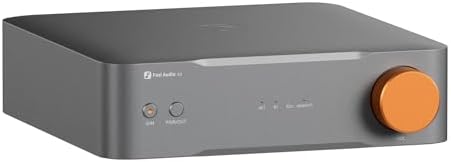
The Fosi Audio S3 is the most all-in-one choice in this group. It combines a network streamer, AK4493SEQ DAC, and preamp, with balanced XLR outputs for connection to compatible powered speakers, a preamp, or an amplifier. It also includes HDMI eARC and a subwoofer output, giving it a useful role in a two-channel or 2.1-channel setup.
Its streaming options cover common services and playback systems, including AirPlay 2, Spotify Connect, TIDAL Connect, Roon Ready, Google Cast, DLNA, and Qobuz Connect. Dual-band Wi-Fi 6 and Bluetooth 5.3 offer wireless options, while the listed LAN capability supports PCM playback up to 768kHz. The app adds a 10-band EQ, and a 12V trigger can help coordinate compatible equipment.
The compact size and preamp functions may reduce the number of boxes in your system. On the other hand, buyers who want a simple streamer with no setup or sound-shaping options may not need all of its connections. The supplied details also note that extended operation at peak power can generate some noise, and additional features may require a firmware update. The S3 is a particularly strong match if you want XLR line outputs plus TV and subwoofer connections in one device.
Pros:
- Combines streamer, DAC, and preamp functions.
- Provides balanced XLR outputs and a dedicated subwoofer output.
- Supports a wide range of streaming platforms and network protocols.
- Includes HDMI eARC, app-based EQ, and a 12V trigger.
Cons:
- Some features may require a firmware update.
- The supplied specifications note possible noise during extended operation at peak power.
Verdict: Choose the Fosi Audio S3 if you want a compact, feature-rich streamer DAC with confirmed XLR outputs and useful TV-system connections.
2. GUSTARD Audalytic DR80N: R-2R Conversion with a Built-In Network Bridge

The DR80N combines a discrete R-2R DAC with a CelWare network bridge. The listed network features include Roon Bridge, AirPlay, UPnP, HQPlayer NAA, Qobuz Connect, and TME Connect. It also has a microSD slot and supports high-resolution formats up to DSD1024 and 768kHz PCM, according to the supplied product details.
For a system that needs balanced connections, the DR80N is a more direct fit than devices whose balanced outputs are limited to headphones: its description specifies simultaneous balanced and single-ended outputs. The aluminum chassis, adjustable-brightness display, and IR remote are practical touches for a component rack or listening room. Its inputs include USB, coaxial, optical, I2S, and Bluetooth, adding options beyond network playback.
This model is best suited to listeners who want to explore R-2R conversion and have a system that can make use of its range of digital inputs and formats. Its many format and protocol options may be more than a basic streaming setup requires. Also, check the exact model designation when shopping: the supplied description distinguishes the network-equipped DR80N from the DR80, which does not include the same network bridge.
Pros:
- Lists both balanced and single-ended analog outputs.
- Combines R-2R conversion with a network bridge and microSD slot.
- Supports several network playback methods and high-resolution formats.
- Includes multiple digital inputs, a display, and an IR remote.
Cons:
- Its high-resolution format support may be unnecessary for simpler systems.
- Be sure the listing is for the network-equipped DR80N rather than the DR80.
Verdict: The DR80N is a compelling option if you want a network bridge, R-2R DAC, and clearly specified balanced line outputs in one component.
3. Gustard Audalytic AH90: A Streamer DAC with Balanced Headphone Outputs

The Audalytic AH90 combines a DAC, network streaming functions, and a headphone amplifier. Its listed digital features include an AK4499EX DAC, AK4191 modulator, FPGA-based signal handling, and XMOS XU316 processing. It supports Roon Bridge, UPnP, and HQPlayer NAA, along with high-resolution PCM and DSD playback.
The important distinction for this roundup is that the supplied details confirm balanced and single-ended headphone outputs, plus separate headphone and line-out controls. They do not clearly confirm balanced XLR line outputs for connecting to a balanced power amplifier or preamp. If you are shopping specifically for balanced line-level connections, verify the rear-panel output details before buying.
The AH90 makes more sense for someone who wants one component to serve as a network DAC and headphone listening hub. Its separate gain settings and output controls add flexibility for that use. Compared with the Fosi S3 or DR80N, however, it is not as clearly documented as a balanced-output choice for a conventional speaker system.
Pros:
- Combines network streaming, DAC, and headphone amplifier functions.
- Provides balanced and single-ended headphone outputs.
- Supports Roon Bridge, UPnP, and HQPlayer NAA.
- Has separate controls for headphone and line output.
Cons:
- Balanced XLR line outputs are not specified in the supplied details.
- Its feature set may be a poor match if you only need a streamer for a power amplifier.
Verdict: Consider the AH90 for a combined streamer DAC and headphone setup, but confirm its line-output connections if balanced XLR is essential to your system.
4. Gustard Audalytic DR70N: A Network-Ready R-2R DAC with Extensive Format Support

The DR70N is a discrete R-2R DAC with a LAN input for streamer use. Its description lists native DSD support up to DSD512, PCM up to 768kHz through USB and streamer inputs, and a range of connections that includes USB-C, dual coaxial, optical, and LAN. The CK01 clock and FPGA processing are also listed as part of its digital design.
This model may suit a system built around high-resolution files and several digital sources. Its range of inputs can accommodate equipment such as a computer, TV, or CD player, while the network input allows it to take part in a streaming setup. The product details describe the DAC architecture and digital connections in depth, but they do not clearly state whether the analog outputs are balanced XLR, single-ended RCA, or both.
That missing output detail matters for this particular category. Do not assume that an R-2R DAC with extensive digital support has balanced line outputs; check the rear-panel layout or listing details before choosing it for an XLR-based amplifier. Compared with the DR80N and R26II, the DR70N needs more verification before it can be confidently recommended as a balanced-output streamer.
Pros:
- Combines R-2R conversion with a LAN streamer input.
- Supports high-resolution PCM and native DSD formats through listed inputs.
- Offers several digital connections for different source components.
- Includes FPGA processing and a CK01 clock module.
Cons:
- The supplied details do not specify balanced analog outputs.
- Its format capabilities may be more than many everyday streaming systems need.
Verdict: The DR70N is worth considering for its R-2R and digital-input features, but verify balanced line-output support before buying it for an XLR-connected system.
5. Gustard R26II: A Discrete R-2R DAC and Streamer with XLR and RCA
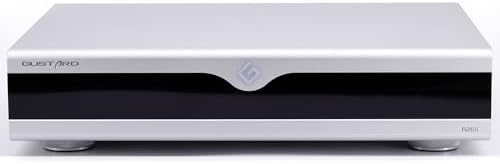
The Gustard R26II is a discrete R-2R DAC with a network streamer and both balanced XLR and single-ended RCA outputs. That combination gives it a clear place in this roundup: it can connect to a balanced amplifier while still supporting equipment that uses RCA. Its listed digital inputs include USB, IIS, AES, coaxial, and optical.
The R26II is built for a component-based system where you may use more than one digital source. Its 26-bit R-2R architecture, discrete Class-A low-pass filter, and GCLK-02 clock system are aimed at digital-to-analog conversion, while an external 10MHz clock input offers an additional system option. It supports PCM up to 32-bit/768kHz and native DSD2048 through IIS, according to the supplied details.
Its broad input selection and separate analog output types make it more adaptable than a streamer that offers only one output format. The tradeoff is that the detailed feature set may be unnecessary if you simply want an easy way to stream music to an existing DAC. The supplied description also gives less detail about its streaming services than the Fosi S3 or DR80N, so check that its network functions suit your preferred playback method.
Pros:
- Provides confirmed balanced XLR and single-ended RCA outputs.
- Combines a network streamer with a discrete R-2R DAC.
- Offers USB, IIS, AES, coaxial, and optical inputs.
- Supports high-resolution PCM and DSD formats as listed.
Cons:
- Its extensive DAC and clock features may be more than a basic streamer setup requires.
- The supplied details do not name as many streaming services as some competing options.
Verdict: Choose the R26II if you want a network streamer and R-2R DAC with both balanced XLR and RCA outputs for a flexible component system.
How to Choose a Network Audio Streamer with Balanced Outputs
Confirm the type of balanced output
For a connection to a stereo preamp, integrated amplifier, or power amplifier, look for balanced analog line outputs, usually identified as XLR. Balanced headphone outputs are a different feature: they connect to compatible headphones and do not automatically mean the device has balanced line-level outputs. Check the product’s connection list and rear-panel details before ordering.
Match the outputs to your other components
Check what your amplifier or powered speakers accept. XLR is useful when both devices support balanced connections, while RCA remains common in home audio. A streamer with both XLR and RCA, such as the R26II, offers more connection options. Also confirm whether you need a fixed DAC output or preamp-style volume control; the Fosi S3 is specifically described as a DAC preamp.
Choose streaming support that fits your setup
Make sure the streamer works with the services and playback method you already use. The supplied details list options such as AirPlay 2, Spotify Connect, TIDAL Connect, Roon Bridge or Roon Ready, UPnP, Qobuz Connect, and Google Cast across different models. These terms are not interchangeable, so compare the exact support listed for the model you are considering.
Consider wired and wireless network connections
Wi-Fi can make placement easier, while a LAN connection may suit a streamer near your router or network switch. Check which connection types are listed and whether they meet your home network needs. The Fosi S3 specifies dual-band Wi-Fi 6 and LAN-based high-resolution playback; the other models also list network or LAN functionality, but their supplied descriptions vary in detail.
Think about the digital sources you will connect
If the streamer will also serve a computer, television, CD player, or another digital source, compare its input selection. USB, optical, coaxial, AES, and IIS can support different system layouts. HDMI eARC on the Fosi S3 is a notable option for a compatible TV setup, while the Gustard models list several other digital inputs.
Keep format support in perspective
High-resolution PCM and DSD specifications can be useful if your library and playback software use those formats. They should not be the only basis for a choice, though. For everyday listening, network compatibility, output connections, ease of control, and fit with your amplifier may matter more than the highest listed sample rate.
Check the physical controls and system features
Displays, remote controls, app controls, EQ, subwoofer outputs, and 12V triggers can affect how easily a device fits into daily use. The Fosi S3 lists app-based EQ, HDMI eARC, and a subwoofer output, while the DR80N lists a display and IR remote. Choose the extras that solve a real need in your room rather than paying attention only to long specification lists.
Frequently Asked Questions
What does a balanced output do on a network streamer?
A balanced line output sends an audio signal over a connection designed to help reject certain kinds of noise picked up along the cable. To use it, your streamer and the next component should both support compatible balanced connections, usually XLR.
Are balanced headphone outputs the same as balanced XLR line outputs?
No. A balanced headphone output is intended for compatible headphones. A balanced XLR line output connects a source component such as a DAC or streamer to a preamp, amplifier, or powered speaker. Confirm which output type a product actually lists.
Which picks clearly list balanced line outputs?
The supplied details explicitly list XLR balanced outputs for the Fosi Audio S3 and balanced outputs for the GUSTARD Audalytic DR80N. The Gustard R26II specifies balanced XLR and single-ended RCA outputs. The AH90’s balanced outputs are described as headphone outputs, and the DR70N description does not clearly specify its analog output type.
Do I need a streamer with a built-in DAC?
Not always. A streamer with a DAC can connect directly to a compatible analog system, which may reduce the number of components. If you already own a DAC you want to use, a network bridge or streamer with a suitable digital output may be a better fit. Compare the actual outputs and inputs on both devices.
Is a LAN connection better than Wi-Fi for streaming?
Neither is the best choice for every home. Wi-Fi can make installation easier when the audio system is far from the router, while LAN provides a wired network connection where available. Choose the option that gives you a stable connection in your listening space.
Should I choose a streamer based on its highest supported audio format?
Only if you play material in that format and your complete playback chain supports it. Streaming compatibility, output type, app or control options, and connection to your amplifier are usually more practical starting points.
Final Recommendation
For the clearest all-in-one match, the Fosi Audio S3 combines confirmed XLR outputs with broad streaming support, preamp functions, HDMI eARC, and a subwoofer connection. The GUSTARD Audalytic DR80N and Gustard R26II are strong alternatives if you want R-2R conversion and balanced line connections. Treat the AH90 and DR70N as conditional choices for this specific category: confirm their analog output types if balanced XLR connection to an amplifier is a must.