
If your home runs on well water, choosing an electric water heater takes more thought than picking one off a shelf. Well systems often bring sediment, mineral content, and pressure changes that can affect how a heater performs and how long it lasts. This guide covers five electric options from the product data, with a clear look at where each one fits. You will also find a buying guide that explains the factors that matter most when your water comes from a well, so you can match a heater to your household, your flow needs, and your electrical setup.
Quick Comparison Table
| Product | Type | Power | Best Use | Availability |
|---|---|---|---|---|
| 110V Tankless Water Heater Electric, 3000W Under Sink | Tankless, point of use | 3000W, 110V | Single sink, small kitchen or bathroom | Listed as available |
| UTank 1.7 Gallons Under Sink Hot Water Heater 120V Plug In | Small storage tank | 1500W, 120V | Tight spaces, short hot water runs | Listed as available |
| VEVOR Electric Water Heater, 18 Gallon Tank | Storage tank | 1600W | Family households needing a steady supply | Listed as available |
| Rheem 8kW Multi Fixture Tankless Electric Water Heater – 240V | Tankless, whole-home style | 8kW, 240V | Multiple fixtures with a qualified electrical setup | Currently unavailable |
| Tankless Water Heater Electric 110V, 3000W Instant Under Sink | Tankless, point of use | 3000W, 110V | Kitchen, bathroom, or RV-style spaces | Listed as available |
Our Picks: Best Electric Water Heater For Well Water reviews
Compact 3000W Under Sink Tankless Heater for Light Household Use

This is a small, wall-mounted tankless unit built to heat water at the point where you use it. Instead of keeping a full tank of water hot all day, it warms water only as it flows through. The listed power is 3000W on a 110V circuit, and the stated temperature rise is about 82°F at 0.3 GPM and about 131°F at 0.5 GPM. That means it works best at a low flow rate, such as a bathroom sink or a kitchen faucet used for hand washing and dish rinsing.
The build uses stainless steel and ABS plastic, with an LED display and a control that lets you switch between Fahrenheit and Celsius. The unit includes several protections, including waterproofing rated IPX4, leakage protection, dry-boil protection, and automatic shutoff when it overheats or sits idle. The product data lists an ETL standard and a 1/2 inch NPT connection, so plumbing adapters are usually simple to source.
For well water, the main concern is sediment. Tankless heaters use small internal passages and heating elements, so grit, sand, or iron particles can build up over time and reduce flow or performance. Owners of tankless units commonly report that a whole-house sediment filter ahead of the heater makes a big difference. In everyday use, this model is most sensible as a supplemental unit for a single fixture, not as the only source of hot water for a busy home. The listing also notes that it is not suitable for showers, which typically need more flow than this unit can heat well.
Compared with the other choices in this list, this unit offers the simplest setup for a small space. It is less capable than the 240V Rheem model, but it is also far easier to place under a sink. It is a practical choice for a guest bathroom or a small kitchen where you want hot water quickly without a storage tank.
Pros:
- Compact, under-sink design that saves space
- Runs on a standard 110V outlet setup, with no tank to maintain
- Protective features include leakage and dry-boil protection
- Simple installation with standard 1/2 inch NPT connections
Cons:
- Not suited for showers, and sediment in well water may require a pre-filter for long-term reliability
Verdict: This is a good fit for a single sink or small bathroom if you have a steady, low-flow need and install a sediment filter upstream. It is not a whole-home solution for well water households.
Small 1.7 Gallon Plug-In Storage Heater for Tight Spaces
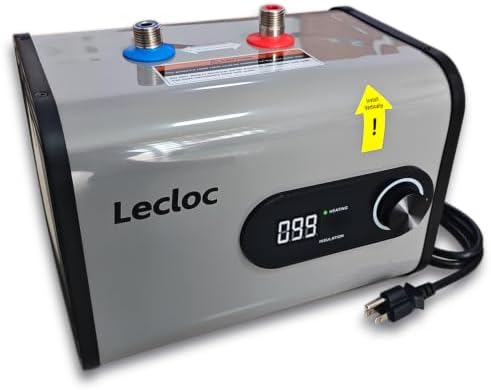
This unit is a small storage tank heater rated at 1.7 gallons. It plugs into a standard 120V outlet, which removes the need for a dedicated high-voltage circuit. The stated heating power is 1500W, and the body is built from 304 stainless steel with foam insulation to hold heat between uses. An LED temperature display and a large control knob make it easy to adjust the setting at a glance.
Its footprint is the main selling point. The listed dimensions are 12.0 inches wide, 8.5 inches deep, and 9.5 inches tall, so it can fit under a sink or on a shelf in a utility area. The product includes a 53-inch cord, which gives you flexibility in where you place it. The listing also notes an IPX4 waterproof rating and an overheat cut-out with automatic reset.
The limitations are capacity and recovery. A 1.7-gallon tank gives you a short burst of hot water, so it suits handwashing, a quick dish rinse, or a single small task. Well water adds another challenge. Sediment can settle at the bottom of any tank, and mineral deposits can build on the heating element over time. In practice, owners of small tanks often flush them periodically and install a sediment filter on the cold line to extend service life. Because the listing does not state any well-water specific certification, check the manufacturer’s guidance before connecting it to a well system.
Compared with the tankless options in this list, this heater is easier to install because it plugs in, but it delivers far less usable hot water. It is best viewed as a convenience heater for a specific task rather than a primary water source.
Pros:
- Plugs into a standard 120V outlet with no special wiring
- Compact footprint that fits under many sinks
- Stainless steel construction with insulation for steady heat retention
- Clear LED display and large control knob for easy adjustment
Cons:
- Small capacity limits how much hot water you can use at one time
Verdict: Choose this heater if you need a small, plug-in source of hot water for a single sink and can accept limited capacity. It is not a good match for showers or whole-house use on well water.
18-Gallon Storage Tank Heater for Steady Family Demand

This is the largest storage option in the group, with an 18-gallon capacity and a 1600W immersion heating element. The listing says it can heat water up to 167°F, and the temperature is adjustable with a rotary knob between 30°C and 75°C. An LED display shows the heating status. The tank has an enamel glass coating and 20mm of foam insulation, which the listing says can keep water hot for up to 24 hours.
This size makes sense for a family household. Eighteen gallons gives you enough stored hot water for dishwashing, laundry, and several short showers in sequence. The unit is designed for both residential and commercial settings, so it can handle a steady daily load. The enamel coating and insulation are features that help protect the tank and reduce heat loss between uses.
Well water is where a storage tank needs the most attention. Sediment will collect at the bottom of the tank, and minerals can build up on the heating element and inner walls. Plan on regular flushing, and consider a sediment filter and a water softener or scale-control method if your well water is hard. Because the listing does not mention well-water certification, confirm compatibility with the manufacturer and your installer before you commit. The larger tank also takes more space and needs a stable mounting location.
Compared with the 1.7-gallon plug-in model, this tank offers far more hot water per cycle and suits a full household. It does not offer the endless flow of a tankless unit, but it is a more practical choice for families who run several hot water tasks at once.
Pros:
- 18-gallon capacity supports multiple hot water uses in a row
- Enamel coating and foam insulation help protect the tank and hold heat
- Adjustable temperature control and LED display for simple operation
- Suitable for both household and commercial-style demand
Cons:
- Large footprint and sediment buildup risk make regular maintenance essential on well water
Verdict: This is the best choice in the list for a family that needs a reliable supply of stored hot water. Plan for flushing, a sediment filter, and a sturdy installation space before you buy.
High-Output 240V Tankless Heater for Multiple Fixtures

This Rheem unit is the most powerful model in the group. It is an 8kW tankless heater designed for 240V single-phase power, and the listing states it can deliver up to 1.95 GPM. The thermostatic control adjusts in one-degree steps from 80°F to 140°F, which gives you precise control over the output temperature. It is designed to heat water only when a tap is opened, which removes the energy used to keep a storage tank hot. The listing describes it as about 90 percent smaller than a traditional tank heater.
The wiring requirements are the key detail. The listing calls for a 40-amp double-pole breaker, #8 AWG copper conductors with ground, and a recommended minimum 100-amp electrical service panel. Many older homes may need an electrical upgrade before this unit can run safely, so confirm your panel capacity before you shop. Given those requirements, this is a project for a licensed electrician and a plumber familiar with tankless systems.
For well water, the best-performing setup pairs this heater with a whole-house sediment filter and, if needed, a scale-control system. Tankless units are sensitive to flow and particles, so filtration protects the heat exchanger and keeps output steady. Also check that your well pump and pressure tank can deliver enough flow for the number of fixtures you plan to run at once. The listing currently shows the unit as unavailable on Amazon, so verify stock before planning a project around it.
Compared with the 110V point-of-use units, this model is in a different category. It is built for multiple fixtures and higher flow, but it requires more electrical preparation and professional installation.
Pros:
- Higher power output designed for multiple fixtures
- Precise digital temperature control in one-degree steps
- Compact tankless design saves floor space compared with tank systems
- Warranty listed as 5 years for leaks and 1 year for parts
Cons:
- Requires 240V service, a 40-amp breaker, and a recommended 100-amp panel, which can add significant installation cost
Verdict: This is the right choice for a household that needs tankless hot water at several fixtures and has the electrical capacity to support it. Skip it if your panel is small or if you want a simple plug-in solution.
Second 110V Under Sink Tankless Heater for Small Spaces

This is a 3000W, 110V tankless unit that works much like the first model in this list. It heats water on demand and is designed to mount on a wall, often under a sink. The listing states a rise of about 82°F at 0.3 GPM and about 131°F at 0.5 GPM. The control panel uses an LED display and lets you switch between Fahrenheit and Celsius by holding the power button.
The protective features are similar to the other 110V model. The listing includes IPX4 waterproofing, leakage protection, dry-burning protection, and automatic power-off for over-temperature or inactivity. It also carries an ETL standard mark and comes with pre-made mounting holes and 1/2 inch NPT connections. The listing mentions a 24-month warranty, which gives you a clear period of coverage for the unit.
The listing advises wiring with a conductor of at least 2.5 square millimeters and a breaker rated above 32 amps. Follow those requirements closely, since a 110V unit at 3000W draws substantial current. Also, the heater must be installed vertically, as the listing warns that horizontal installation can cause heating element faults. Like any tankless unit on well water, sediment filtration is a smart addition to protect the element and keep flow steady.
Compared with the first 110V model, this option is very similar in size and output, so the choice often comes down to availability, warranty terms, and how you prefer to mount the unit. It is still a point-of-use heater, not a whole-home solution, and it is not suited for showers.
Pros:
- Compact wall-mounted design that suits under-sink installation
- Multiple built-in protections, including dry-boil and leakage protection
- Listed 24-month warranty for added coverage
- Standard 1/2 inch NPT connections simplify plumbing
Cons:
- Strict vertical installation and wiring requirements make a licensed installer a wise choice
Verdict: This is a solid pick for a single sink or small bathroom if your electrical circuit meets the listed requirements. It is best paired with a sediment filter and kept away from shower use.
How to Choose an Electric Water Heater for Well Water
Understanding Sediment and Filtration
Sediment is the most common issue for well water owners. Sand, silt, and small mineral particles can travel from the well into your plumbing, and heaters are often the first place they settle. In a storage tank, sediment collects on the bottom and can reduce heating efficiency and make the tank noisy. In a tankless unit, particles can clog the internal passages and reduce flow. For either type, a whole-house sediment filter installed before the water heater is one of the best investments you can make. Choose a filter rated for your well’s typical particle size, and replace or clean it on the schedule the manufacturer recommends.
Managing Mineral Content and Scale
Hard water is another concern for well owners. Dissolved minerals such as calcium and magnesium can form scale on heating elements and heat exchangers, which makes the heater work harder and can shorten its life. Scale is more visible in storage tanks, where it builds up over time, but tankless units are not immune. If you know your water is hard, consider a water softener or a scale-control system. Before buying, test your water so you know what you are dealing with. A lab test or a home test kit can show hardness, iron, and other minerals that may affect your choice.
Matching Flow Rate to Your Needs
Tankless heaters deliver hot water at a rate measured in gallons per minute, and their output temperature depends on how fast water flows through them. The product listings in this guide show that the smaller 110V units are designed for low-flow tasks, such as a bathroom sink or kitchen faucet. Showers typically require more flow, and the listings note that the 110V units are not suited for them. Multi-fixture models, such as the 240V Rheem unit, are designed for higher combined demand. Think about how many fixtures you plan to run at the same time, then choose a unit that can meet that demand without dropping temperature.
Checking Your Water Pressure and Pump Setup
Well systems rely on a pump and a pressure tank, and the pressure can change as the pump cycles on and off. Tankless units need a steady flow to activate and maintain temperature, so unusual pressure swings can cause inconsistent output. If you notice fluctuations, talk to a well contractor about your pump, pressure switch, and pressure tank before you install a new heater. A well-sized, well-maintained system will make any water heater perform better.
Confirming Electrical Capacity and Wiring
Electric water heaters draw a lot of power, and the electrical side of the installation is not optional. The 110V units in this guide list specific wiring and breaker requirements, including conductors of at least 2.5 square millimeters and breakers rated above 32 amps for the 3000W models. The 240V Rheem unit calls for a 40-amp double-pole breaker and a recommended 100-amp service panel. Before you buy, have a licensed electrician check whether your panel and circuits can handle the load. Skipping this step can lead to tripped breakers, damaged equipment, or safety hazards.
Choosing Between Tankless and Storage Tank Designs
Tankless heaters provide hot water on demand and do not keep a reservoir hot all day. They save space and can reduce standby energy use, but they rely on consistent flow and can be sensitive to sediment. Storage tanks hold a set amount of hot water ready to use, which helps when several people need hot water at once. They take up more room and require periodic flushing, especially on well water. Your household size, daily hot water habits, and available space should guide this choice more than any single feature.
Planning for Installation and Maintenance
Installation details can make or break a water heater’s performance. Several listings in this guide require vertical installation, and all of them need correct electrical and plumbing connections. Plan for a mounting location with enough clearance and easy access for service. On well water, schedule routine maintenance, including sediment filter changes, tank flushing for storage models, and periodic checks of the heating element and connections. A simple maintenance routine protects your investment and helps you get consistent hot water for years.
Frequently Asked Questions
Do any of these water heaters come with a special well-water certification?
The product data in this guide does not state a well-water certification for any of the five models. You should confirm compatibility with the manufacturer before you install any of them on a well system. A sediment filter and, where needed, a scale-control system will help protect any heater you choose.
Can a tankless electric water heater handle a shower on well water?
The 110V units in this list are not designed for showers. The listing for the first model notes that showers usually need about 1.8 GPM, which is more than these units can heat effectively. For shower use, consider the 240V Rheem model, provided your electrical service supports it and your well pump can deliver enough flow.
How often should I flush a storage tank water heater on well water?
Flushing frequency depends on your water quality and how much sediment your well produces. Many owners flush storage tanks on a regular schedule, often once or twice a year, and more often if they notice cloudy water or reduced hot water output. Follow the manufacturer’s instructions and consider a sediment filter to reduce how much grit reaches the tank.
Do I need a sediment filter before installing an electric water heater?
A sediment filter is strongly recommended for well water, regardless of which heater you choose. Filters help keep particles away from heating elements and internal passages, which can extend the life of the unit and maintain steady performance. Choose a filter that matches your well’s conditions and plan regular replacements.
Which option is best for a small apartment or single bathroom?
The 110V under-sink tankless units are the most practical choice for a small apartment or single bathroom. They are compact, mount on a wall, and do not require a storage tank. Make sure your circuit meets the listed wiring requirements, and avoid using them for showers.
Is a 240V tankless heater worth the extra installation effort?
A 240V tankless heater can be worth it if you need hot water at several fixtures and your home has the electrical capacity to support it. The Rheem listing calls for a 40-amp double-pole breaker and a recommended 100-amp panel, so an electrical upgrade may be required. If your household needs modest hot water at one or two points, a 110V point-of-use unit may be a more practical and affordable path.
Which heater should I choose overall for well water?
For most well water households, the 18-gallon storage tank from VEVOR offers the most dependable everyday supply for a family, provided you commit to flushing and filtration. For a single sink or small bathroom, one of the 110V tankless units paired with a sediment filter is a good fit. Choose the 240V Rheem model only if your home has the electrical capacity and you need multi-fixture output.
Final Recommendation
No single heater is the best fit for every well water home. Your household size, the number of fixtures you need to run, your electrical panel capacity, and your water quality all shape the right choice. For a family that needs a steady supply of stored hot water, the 18-gallon VEVOR tank is the most practical option in this group, as long as you plan for regular flushing and sediment filtration. For a small bathroom or kitchen sink, a 110V under-sink tankless unit paired with a sediment filter is a sensible, space-saving solution. Test your water, confirm your electrical setup, and match the heater to the job you need it to do.