
Choosing a studio lighting kit is easier when you start with the kind of work you do. A compact softbox can be enough for video calls or a small product setup, while portraits and full-body photos may call for larger modifiers, multiple lights, and a backdrop. These five kits range from a single softbox to more complete studio packages, so you can compare their lighting options and included gear before deciding.
Quick Comparison
| Lighting kit | Best for | Notable features |
|---|---|---|
| Torjim Softbox Photography Lighting Kit | Simple, single-light setups | 16-inch softbox, 85W bulb, remote, 60-inch stand |
| Thoslatay 2-Pack Softbox Lighting Kit | Two-light portraits and video | Bi-color bulbs, remote dimming, two softboxes |
| ShowMaven Photography Lighting Kit | Versatile home studio setups | Softboxes, umbrellas, backdrops, reflector |
| LINCO Lincostore AM169 Studio Light Kit | Portraits and chroma-key work | Four lights, softboxes, umbrellas, three backdrops |
| EMART Photography Lighting Kit | Backdrop and portrait photography | Large backdrop support, softboxes, umbrellas, reflector |
Our Picks: Best Studio Lighting Kits For Photography reviews
Torjim Softbox Kit: A Straightforward Single-Light Setup
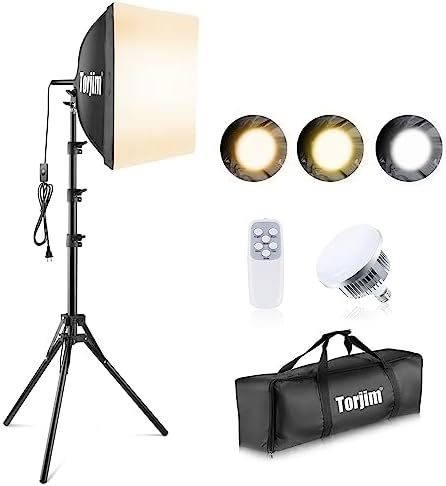
The Torjim kit keeps the setup simple: one 16-by-16-inch softbox, an 85W bulb, a diffuser, a remote, and a tripod that extends to 60 inches. The softbox uses a reflective inner surface and a soft diffuser to spread light more evenly than a bare bulb. Its head rotates up to 210 degrees, which gives you room to change the direction of the light.
The bulb is described as having a color-temperature range of 3000K to 7500K. That broad range can help you adjust the look of the light for different rooms or creative styles. The supplied details do not specify remote functions beyond its inclusion, so check the product listing for the controls you need before buying.
As a one-light kit, it is best suited to a small portrait corner, product photos, live streams, or video calls. It is less flexible for a traditional two-light portrait setup unless you add another light or use a reflector to fill shadows. The 16-inch softbox is also relatively compact, so it may not spread light as broadly as the larger modifiers in the LINCO or EMART kits.
- Pros: Compact softbox is practical for small spaces.
- Pros: Includes a bulb, diffuser, remote, and stand.
- Pros: Rotatable head makes it easier to direct the light.
- Cons: One light limits the range of setups without extra equipment.
- Cons: The stand is shorter than several stands included with the other kits.
Verdict: Choose the Torjim if you want a basic, compact softbox setup and do not need a full multi-light studio package.
Thoslatay 2-Pack: Adjustable Light for Two-Light Setups

This Thoslatay listing is for a two-pack of 16-by-16-inch softboxes. The kit’s 85W LED bulbs are described as bi-color, with a 2700K–6400K range, adjustable brightness, and a stated CRI of 95+. Those controls can be useful when you want to match the lighting to a room or make small changes without moving the stands.
The stands adjust from 18 to 60 inches, and each softbox head rotates up to 210 degrees. The listing also describes a wireless remote with a 30-foot range and a carrying bag. It notes that the remote does not include a battery, so plan to supply one. The softboxes are relatively small, which favors desk-level work, streaming, and tight portraits over lighting a large scene.
Two lights offer more control than a single-softbox kit. You can use one as the main light and the other to soften shadows or brighten the background. Compared with the larger ShowMaven, LINCO, and EMART packages, this kit focuses on adjustable softbox lighting rather than providing a broad assortment of umbrellas and backdrop equipment.
- Pros: Two softboxes support more flexible lighting than a single light.
- Pros: Bi-color bulbs and brightness adjustment offer control over the light.
- Pros: Remote and carrying bag are listed as included.
- Cons: The remote requires a separately purchased battery.
- Cons: Small softboxes may not cover large subjects or wide scenes evenly.
Verdict: The Thoslatay is a good fit if you want two adjustable softboxes for portraits, product work, or video and do not need a backdrop system.
ShowMaven Kit: A Broad Mix of Lights and Backdrops

The ShowMaven package is a more complete studio set. Its listed contents include three softboxes, two white umbrellas, two silver-and-black umbrellas, a gold-and-black umbrella, five 65W bulbs, five light stands, a backdrop support stand, three fabric backdrops, a carrying bag, and a 24-inch reflector. That range of modifiers gives you more ways to shape or soften continuous light than a basic softbox kit.
The softboxes measure 20 by 28 inches, while the umbrellas are 33 inches across. The stands adjust from 27 to 78 inches, and the softbox heads rotate up to 210 degrees. The package also includes black, white, and green polyester backdrops. These options make it possible to build a background for portraits or product work without sourcing a separate support system.
The tradeoff is that a kit with many stands and accessories needs more storage and setup space than a compact two-light package. The supplied details also do not specify bulb color temperature or dimming controls, so this may be less convenient if you need precise color or brightness adjustments. Its range of included gear makes it a versatile choice, but you should check the package contents and compatibility details before ordering.
- Pros: Includes several softboxes, umbrellas, and a reflector for shaping light.
- Pros: Three backdrops and a support stand create a ready-made background setup.
- Pros: Adjustable stands allow a range of light positions.
- Cons: The many components require more storage and setup space.
- Cons: Supplied details do not state bulb color temperature or dimming features.
Verdict: Pick the ShowMaven if you want a varied home-studio package with lighting modifiers and backdrops in one set.
LINCO AM169: A Complete Kit for Portrait and Green-Screen Work

The LINCO AM169 combines four light stands and bulbs with two 24-by-24-inch softboxes, two 33-inch umbrellas, and a backdrop support system. The package also includes black, white, and green muslin backdrops and a carrying bag. This mix makes it a practical option when you want more than one type of light modifier and need a background for portraits, video, or chroma-key projects.
The four included bulbs are listed as 30W LEDs with a 5700K color temperature. That daylight-balanced specification provides a consistent starting point, while the softboxes and umbrellas help spread or soften light. The backdrop stand adjusts to a stated maximum height and width of 6.7 feet. Its size is more suited to smaller portrait and video setups than to wide scenes requiring a full-height, broad background.
Compared with the EMART set, the LINCO package lists a lower maximum backdrop width and height, but it includes four light stands and four bulbs. The muslin backgrounds can be washed and ironed at low temperature according to the supplied details; they may need some preparation to look smooth after storage. Consider the space needed for all the stands and the backdrop support before setting up in a small room.
- Pros: Four lights and a mix of softboxes and umbrellas offer several setup options.
- Pros: Includes three muslin backdrops and a support system.
- Pros: The 5700K bulb specification gives a clear daylight-balanced starting point.
- Cons: The backdrop system is smaller than the EMART kit’s listed maximum dimensions.
- Cons: Multiple stands and backdrops require room for setup and storage.
Verdict: The LINCO AM169 suits creators who want a multi-light kit with backdrops, especially for portraits, video, and green-screen work in a modest-size space.
EMART Kit: Large Backdrop Support with Multiple Light Modifiers

The EMART package stands out for its backdrop support, which adjusts from 2.6 to 8.5 feet high and from 5 to 10 feet wide. It includes three 6-by-9-foot cotton backdrops in black, white, and green, along with clamps and backdrop clips. That generous support range can be useful for portraits and wider video frames, provided your room has enough floor and ceiling space.
For lighting, the kit lists two 24-inch softboxes, two 33-inch translucent umbrellas, two 50W 5500K LED bulbs for the umbrella setup, four 50W LED bulbs overall, and four 7-foot light stands. It also includes a 24-inch five-in-one reflector and a carrying bag. The softboxes and umbrellas give you options for shaping a portrait setup, while the reflector can help redirect or soften existing light.
The larger backdrop system is a key advantage over the more compact LINCO setup, but it also calls for more room. The listing notes that the cotton backdrops may arrive wrinkled and suggests hanging or steaming them from the reverse side. If you work in a small apartment or only need a single fill light, this much equipment may be more than you need.
- Pros: Wide, height-adjustable backdrop support accommodates larger setups.
- Pros: Includes softboxes, umbrellas, backdrops, clamps, and a reflector.
- Pros: Four listed LED bulbs and four stands support multi-light arrangements.
- Cons: The backdrop system needs substantial room to use fully.
- Cons: Backdrops may need steaming or hanging to remove transport wrinkles.
Verdict: Choose the EMART if a broad backdrop system and a range of lighting modifiers matter more to you than a compact footprint.
How to Choose a Studio Lighting Kit for Photography
Match the kit to your shooting space
Start by measuring the space where you plan to work. A compact softbox kit is easier to place in a desk area or small room. Larger packages with several stands and a backdrop support need more floor space, room to position lights, and somewhere to store the equipment. Also consider the height of your ceiling if you plan to raise light stands or use a tall background.
Decide how many lights you need
One light can work well for a simple portrait, product shot, or video call. A second light can fill in shadows or brighten a background, while larger kits give you more options for separating a subject from the background. More lights also mean more stands, bulbs, cables, and setup time, so choose a kit that fits your actual projects rather than buying the largest package by default.
Choose the right modifier
Softboxes direct softened light toward a subject and are useful when you want more control over its direction. Umbrellas spread light over a wider area and can be a flexible option for portraits. Larger modifiers generally cover more of a subject or scene, while compact softboxes can be easier to use in tight spaces. A reflector is a simpler way to bounce or soften light without adding another powered bulb.
Check color temperature and brightness controls
Color temperature affects whether light looks warmer or cooler. A kit with adjustable color temperature gives you more flexibility when matching room lighting or changing the mood of a scene. Dimming controls help you fine-tune brightness without moving the light as far away. If a product listing does not specify these controls, do not assume they are included.
Look at stand height and stability details
Stand height affects where you can position the light, especially for standing portraits or larger products. Check the maximum height and whether the kit uses independent locks or other details to secure the stand. Regardless of the listed construction, place stands on a stable surface and position them so people are less likely to bump into them.
Consider backdrops and setup time
If you need a clean background, a kit with a support stand and backdrops can save you from buying those pieces separately. Compare the backdrop dimensions with the area you plan to photograph. Fabric backdrops may need to be hung, steamed, or ironed to reduce wrinkles, so factor in preparation and storage as well as the listed size.
Think about portability and storage
A carrying bag can make a kit easier to transport, but a complete package with several lights and a backdrop stand will still take up more space than a single softbox. Check which parts are included and how many stands you will need to pack away after a shoot. If you move between locations often, a smaller kit may be easier to manage.
Frequently Asked Questions
What is the best type of studio light for portraits?
A softbox is a useful starting point because its diffuser softens the light. For more control, a two-light setup can combine a main light with a fill light. An umbrella is another option when you want to spread light across a wider area.
Is one softbox enough for photography?
One softbox can be enough for simple portraits, product photos, and video calls. You can also use a reflector to bounce light back toward the subject. If you need more even control across a scene or want to brighten the background separately, consider a kit with multiple lights.
What does color temperature mean for studio lighting?
Color temperature describes whether light appears warmer or cooler. A bulb with adjustable color temperature can help you match the lighting in a room or create a different look. A fixed-temperature bulb provides less flexibility but can still work well when its color suits your setup.
Are softboxes or umbrellas better?
Neither is best for every situation. Softboxes can give you more directional control, while umbrellas spread light broadly and are often quick to position. Some of the larger kits in this guide include both, which lets you choose a modifier for the subject and space.
Do studio lighting kits include backdrops?
Some do, but not all. The Torjim and Thoslatay options focus on softbox lighting, while the ShowMaven, LINCO, and EMART packages list backdrops and support equipment. Check the specific package contents before ordering.
How much space do I need for a backdrop kit?
It depends on the width and height of the support system and the distance you need between the subject, lights, and background. A wide backdrop stand such as the one listed with the EMART kit needs more room than a compact softbox setup. Measure your available space before choosing a kit.
Final Recommendation
For a simple starter setup, the Torjim offers a compact softbox and basic accessories. The Thoslatay is a stronger match if you want two softboxes with adjustable color temperature and brightness. If backdrops and multiple modifiers are central to your work, compare the broader ShowMaven, LINCO, and EMART packages against your available space. Choose the kit that fits your subjects, room, and preferred level of control—not just the one with the most pieces.