
If your well water leaves orange stains on sinks or makes your laundry look dingy, your water softener may be fighting iron. Iron is one of the most common problems for softener owners, and it can coat resin beads so they soften less well over time. Choosing the right product can protect your system and keep your water feeling soft. This guide looks at five options, from liquid resin cleaners to a whole-house softener and a replacement resin, so you can match a product to your water and your setup.
Quick Comparison Table
| Product | Product Type | Best For | Iron-Related Focus | Listing Status |
|---|---|---|---|---|
| Res Care Liquid Water Softener Cleaner | Liquid resin cleaner | Routine cleaning of fouled resin | Cleans iron, manganese, and metal particles from resin pores | Available |
| EcoPure EPCL Universal Water Softener Cleaner | Universal softener cleaner | Owners of many softener brands | Removes iron, rust, and sediment buildup | Available |
| Aquasure Harmony Series 50,000 Grains Whole House Water Softener | Whole-house softener system | Homes with 3 to 4 bathrooms | Pre-filled resin with a listed iron reduction of up to 10 ppm | Available |
| Pro Products RO05B RO65N Rust Out Water Softener Cleaner | Powder cleaner added with salt | High-iron well water | Dissolves iron buildup in the resin bed | Currently unavailable |
| Water Softener Resin 1 Cu Ft, 32K Grain High-Capacity 7% Cross-linked | Replacement softener resin | Standard residential softener replacement | Cation exchange resin for hardness; listing does not claim dedicated iron removal | Available |
Our Picks: Best Water Softener Resin For Iron Removal reviews
Res Care Liquid Cleaner for Routine Resin Maintenance

Res Care is a liquid cleaner built for softeners that have started to foul. Its listing describes a formula meant to clean metallic and organic compounds from resin beds, with a specific focus on iron, manganese, and metal particles trapped in the resin pores. For an iron problem, that targeted focus is the main reason to consider it.
Using it is simple. You pour the liquid directly into the brine well or salt tank, and the listing says a half-cup treats most residential softeners. That low effort makes it easy to fit into a routine. You do not need to disassemble anything or handle harsh tools, which matters if you want to keep up with maintenance rather than wait for a problem to get worse.
Res Care is also NSF certified to NSF/ANSI 60 for drinking water, which is a useful detail for households that want assurance about additives in their water supply. The product is best seen as a maintenance tool. It can help restore a fouled system, but it is not a fix for a poorly sized or badly configured softener. If your water has very high iron levels, you may still need a pre-treatment step.
Compared with the EcoPure cleaner below, Res Care has a narrower message. It is centered on resin cleaning and iron and manganese removal rather than a broad mix of sediment, rust, and buildup. If iron is your main concern, that focus can be an advantage. Some owners who want one product to cover many types of deposits may find the EcoPure option more flexible.
Pros:
- Targets iron, manganese, and metal particles directly inside the resin pores
- Simple liquid dose, with a half-cup listed for most residential softeners
- Poured into the brine well or salt tank, so no disassembly is needed
- NSF certified to NSF/ANSI 60 for drinking water
Cons:
- Works best as routine maintenance and may not solve severe fouling on its own
Verdict: Res Care is a strong choice if you want a simple, iron-focused resin cleaner you can add to your salt tank on a regular schedule. It fits best for owners who already have an iron issue and want a targeted cleaning routine.
EcoPure EPCL Universal Cleaner for Mixed Deposits and Many Brands

The EcoPure EPCL is a universal softener cleaner designed to work across many brands, including EcoPure, Whirlpool, Omni, Culligan, GE, Kenmore, Morton, Rheem, and North Star. The listing says it helps remove deposits from the resin bed, valve, and system, which are areas that salt alone may not clean well. It also names iron, sediment, dirt, and rust as targets, which makes it a broader cleaner than the iron-only products in this list.
The recommended schedule is to use it every four months. That gives you a clear routine, and it is easy to mark on a calendar. Many owners appreciate a set interval because it turns maintenance into a habit rather than a reaction to stained laundry or a drop in water quality.
The product also connects to warranty protection. The listing says regular use with product registration can extend the parts and labor warranty of an EcoPure softener up to five years. Read the registration terms carefully before counting on that benefit, since warranty details depend on the manufacturer’s conditions. Still, it is a useful extra for buyers who want to protect a larger investment.
In practical terms, EPCL is a good middle ground. It is less narrow than Res Care, so it may suit homes that deal with iron along with rust and sediment. Its universal compatibility also helps if you do not know the exact brand of your existing softener. The trade-off is that a general cleaner may not be as specialized as a dedicated iron product for very heavy iron loads.
Pros:
- Works with a long list of softener brands, which helps with uncertain equipment
- Addresses iron, rust, and sediment together in one routine
- Clear four-month maintenance schedule that is easy to follow
- Registration may extend the parts and labor warranty up to five years with regular use
Cons:
- As a general cleaner, it may not match a dedicated iron product for heavy iron problems
Verdict: The EcoPure EPCL is a practical pick for owners who want one cleaner for several types of buildup across different softener brands. If your water has iron mixed with rust and sediment, it is a sensible first choice.
Aquasure Harmony Whole-House Softener With Digital Control

Unlike the other products here, the Aquasure Harmony is a complete whole-house softener rather than a cleaner or a bag of replacement resin. It is rated for up to 50,000 grains of hardness and is aimed at homes with three to four bathrooms. If you are shopping for a new system and iron is one of several water problems, this is the most complete option on the list.
The listing describes a triple-purpose pre-filter that targets chlorine, sediment, heavy metals, and other contaminants. It also states that the pre-filled fine mesh resin can reduce iron levels by up to 10 ppm. That is a meaningful claim for iron-heavy water, but it is a manufacturer figure, so test your own water before you rely on it. Iron levels vary widely from well to well, and a water test is the only way to know your starting point.
The control head is one of the product’s clearest strengths. It includes a backlit digital display and adjustable auto-flush intervals, so you can tune the regeneration schedule to your water quality and usage. Owners who like to monitor their equipment will appreciate that it does not require guesswork. Build details such as the stainless steel bypass valve and corrosion-resistant components also suggest a sturdy, long-term installation.
The main consideration is commitment. A whole-house unit costs more to buy, requires installation work, and takes up floor space. You are also tying your iron strategy to one system rather than adding a cleaner to an existing unit. The listing mentions a 30-day money-back guarantee, a five-year extended manufacturer warranty when activated online within 60 days, and free U.S.-based technical support. Those terms help reduce risk, but you should confirm them before purchase.
Pros:
- Complete whole-house system sized for up to 50,000 grains of hardness
- Digital metered control head allows adjustable auto-flush intervals
- Pre-filter and resin are designed to address iron alongside other contaminants
- Listed support terms include a 30-day money-back guarantee and a five-year extended warranty when activated within 60 days
Cons:
- Requires a larger investment and installation effort than a simple cleaner or resin swap
Verdict: The Aquasure Harmony is the right choice if you need a complete softener with iron handling for a busier household. If you only need to clean an existing system, a dedicated cleaner will be a more cost-effective step.
Pro Products Rust Out Powder for High-Iron Well Water

Rust Out is a powder cleaner made for high-iron well water. Its listing says it dissolves iron buildup in the resin bed and then rinses away during normal regeneration. You add it with your salt, and the listing advises adding one-half cup for every 40 pounds of salt. For layering, it suggests placing the powder between salt bags so that each regeneration carries a small dose of cleaner.
The product’s targeted purpose is clear. Its description focuses on iron and rust that coat the resin and foul the softener, and it claims to turn those deposits into a clear solution that rinses away without harsh or abrasive chemicals. For a household where iron is the central problem, that direct approach is appealing.
Rust Out also has uses beyond the softener. The listing mentions rust stain removal in dishwashers, on dishes, glassware, white fabrics, tubs, and showers, and it says the product is safe on porcelain, fiberglass, and acrylic finishes. Some owners find this versatility helpful, though you should always follow the label directions for each use. The ability to clean stains around the home adds practical value beyond the softener tank.
The biggest drawback right now is availability. The listing currently shows the product as unavailable, so you may need to check back later or compare it with another option. Its powder form also requires careful measuring and layering with salt, which is a little more hands-on than pouring a liquid into the brine well. If you are comfortable with a salt-based routine, that is a manageable trade-off.
Pros:
- Designed specifically for high-iron well water and iron buildup in the resin bed
- Added with salt, so it fits into regular regeneration without extra equipment
- Also useful for rust stains on several household surfaces when used as directed
- Labeled for porcelain, fiberglass, and acrylic finishes
Cons:
- Currently unavailable, and the powder requires careful dosing and layering with salt
Verdict: Rust Out is a strong option for homes with heavy iron in well water, especially if you like a salt-added routine. Because it is currently unavailable, check its stock status before planning your maintenance around it.
Superior Filters 1 Cubic Foot Resin for Softener Replacement
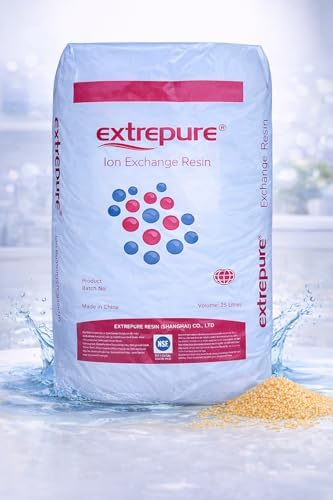
This product is a one-cubic-foot bag of replacement softener resin rather than a cleaner. It is a polystyrene sulfonate cation exchange resin with a 7% cross-link, and the listing describes a 32,000-grain removal capacity for standard residential systems. If your current resin has worn out or lost capacity, this is the kind of product you would use to rebuild the softening media itself.
That distinction matters for iron. A resin bed is designed to remove hardness minerals, and the listing does not describe this product as an iron-removal media. Iron can still foul any softening resin, so a new bed does not guarantee iron protection. For iron-heavy water, you should consider whether your water needs a dedicated iron solution or pre-treatment before choosing a standard resin.
The listing says the resin is compatible with most standard softener systems and recommends using a funnel for precise filling. It also states that the product meets NSF certification standards. Filling a tank is a hands-on job, so plan for the weight and mess, and read your softener manual before you open the tank. Many owners who replace resin appreciate a product that fits common equipment without special modifications.
In comparison with the cleaners on this list, this is a larger commitment. A cleaner helps maintain what you have, while a resin replacement restores the softening material. If your system is still working but has iron stains, a cleaner is usually the first step. If the resin is exhausted or badly damaged, this product becomes a more logical choice.
Pros:
- Replaces worn-out softening resin with a 32,000-grain listed capacity
- Compatible with most standard residential softener systems
- Listing states it meets NSF certification standards
- Funnel-friendly filling is recommended for a cleaner install
Cons:
- Not described as an iron-removal media, so iron-heavy water may still need a separate solution
Verdict: This resin is a sound choice when your softener needs new media and your water’s main problem is hardness. If iron is the bigger concern, pair it with a dedicated iron treatment or choose one of the iron-focused products above.
How to Choose the Right Resin or Iron Product
Choosing a product for iron removal can be confusing because many items sound similar. Some are cleaners, some are full systems, and some are replacement resin. The right choice depends on your water chemistry, the condition of your current softener, and how much effort you want to put into maintenance. The sections below walk through the key factors.
Start With a Water Test
Before you buy anything, find out how much iron is in your water and what form it takes. Iron in well water is often present as ferrous iron, which is dissolved and clear when it comes out of the tap, or as ferric iron, which oxidizes and forms particles that look orange or brown. Each form behaves differently in a softener. A water test from a certified lab or a reputable water treatment dealer gives you numbers you can use to compare products. Without that information, you are guessing, and a cleaner may not solve a problem that needs pre-treatment.
Decide Between a Cleaner, a System, or New Resin
Your next decision is whether you need maintenance, an upgrade, or a replacement. If your softener is still working but iron stains are showing up, a cleaner such as Res Care, the EcoPure EPCL, or Rust Out may be the most sensible first step. If the system is old, undersized, or has no reliable iron handling, a complete unit like the Aquasure Harmony might make more sense. If your resin is exhausted or physically damaged, a replacement bed such as the 1 cubic foot resin may be the right fix. Matching the product type to the problem saves money and avoids disappointment.
Consider Resin Capacity and System Size
Capacity is measured in grains, and it tells you how much hardness the resin can remove before it needs regeneration. The listed 32,000-grain capacity on the replacement resin suits standard residential systems. The Aquasure Harmony is rated for up to 50,000 grains and is designed for larger households. Think about your household size, daily water use, and hardness level. A system that is too small will regenerate often and may struggle with iron, while an oversized system can be more than you need.
Check Compatibility and Certification
Compatibility matters most when you are adding a product to an existing softener. The EcoPure cleaner lists a wide range of brands, which can help if you are unsure of your equipment. The resin listing says it fits most standard systems. For any product that touches your drinking water, look for certifications. Res Care is NSF certified to NSF/ANSI 60, and the replacement resin states that it meets NSF certification standards. Read the product label and your softener manual before making a purchase, and when in doubt, contact the manufacturer.
Plan Your Maintenance Routine
Iron problems are rarely solved once and forgotten. Cleaners work best on a regular schedule, and the EcoPure listing suggests every four months. Rust Out is added with salt, so you need to measure carefully and layer it between bags to keep each regeneration supplied. A whole-house system with digital controls lets you adjust auto-flush intervals to your water quality. Choose the option that you will actually maintain. A product that fits your routine will perform better than one that you forget to use.
Weigh Warranty, Returns, and Support
Warranty and support terms can change the value of a purchase. The Aquasure Harmony listing mentions a 30-day money-back guarantee, a five-year extended manufacturer warranty when activated online within 60 days, and free U.S.-based technical support. The EcoPure listing says registration may extend the parts and labor warranty up to five years with regular use. These details are worth reading closely, since they depend on the terms set by each manufacturer. Keep your receipts and product registration records in a safe place.
Frequently Asked Questions
Can a regular water softener resin remove iron?
A standard softening resin removes hardness minerals, and it can also be affected by iron. Iron can coat the resin beads and reduce their ability to soften water. That is why many owners use a cleaner or pre-treatment for iron. The best approach depends on your water test results and the type of iron present.
How often should I use a resin cleaner?
The EcoPure EPCL listing recommends using it every four months for best results. Other cleaners, such as Res Care, are added as needed, and the label gives the dosing instructions. Follow the directions on the product you choose, and adjust your schedule if your water has higher iron levels.
Is Res Care safe for drinking water systems?
Res Care is listed as NSF certified to NSF/ANSI 60 for drinking water. That certification addresses drinking water additives. Always follow the label instructions, and check your softener’s manual to confirm that the product is appropriate for your setup.
Does Rust Out only work on water softeners?
No. The Rust Out listing also describes uses for removing rust stains in dishwashers, on dishes and glassware, on white fabrics, and on tubs and showers. It says it is safe on porcelain, fiberglass, and acrylic finishes. Still, you should follow the label for each use and test a small area first if you are unsure.
Do I need a whole-house system if I only have a little iron?
Not always. If your water has minor iron and your softener is working well, a cleaner may be enough. A whole-house system makes more sense when you need a complete upgrade, have higher hardness, or want a control head that lets you manage regeneration more precisely. A water test can help you decide.
How do I know if my softener resin needs replacing?
Signs can include hardness returning to your water, persistent iron staining, reduced soap performance, or a resin bed that looks clumped or damaged when inspected. If cleaning does not help, the resin may be worn out. In that case, a replacement bed like the 1 cubic foot resin may be the right option. A professional technician can also help you confirm the cause.
Final Recommendation
For most owners who already have a softener and notice iron problems, the Res Care Liquid Cleaner is the most targeted pick. It focuses on iron, manganese, and metal particles in the resin and fits easily into a routine. If your water has iron mixed with rust and sediment, or you own a brand that is not well known, the EcoPure EPCL is a flexible alternative. For high-iron well water and a salt-based routine, Rust Out is a strong choice when it is in stock. Homes that need a complete upgrade should look at the Aquasure Harmony, and owners whose resin has worn out should consider the replacement resin, paired with an iron solution if needed. Start with a water test, then match the product to the real problem.