
Cleaning a catch is easier when your knife has the right blade length, power source, and grip for the fish you handle most. The best electric knife for cleaning fish should help you make controlled cuts without adding too much bulk or battery hassle. These five picks include cordless models for use away from an outlet and corded options for longer sessions at a cleaning station. The comparisons below are based on the features listed for each product, not personal testing.
Quick Comparison
| Product | Power | Blade options | Best for |
|---|---|---|---|
| FLISSA 12V Cordless Electric Fillet Knife | Cordless; two rechargeable batteries | 8-inch and 10-inch | Anglers who want a spare battery ready |
| Rapala Heavy Duty Electric Fillet Knife | Electric; power source details not listed | 7.5-inch | Frequent fish cleaning with a heavy-duty motor |
| KastKing Speed Demon 110V Electric Fillet Knife | 110V AC with an 8-foot cord | 7-inch and 9-inch | A fixed cleaning station or longer sessions |
| Calamus BladeVolt Cordless Electric Fillet Knife | Cordless; built-in rechargeable battery | 7-inch and 9-inch | Anglers who want cordless use and USB-C charging |
| SHEMUST 12V Cordless Electric Fillet Knife | Cordless; two rechargeable batteries | 8-inch flexible and 10-inch rigid | Switching between delicate and heavier cuts |
Our Picks: Best Electric Knife For Cleaning Fish reviews
FLISSA 12V Cordless Knife: A Two-Battery Kit for Flexible Use
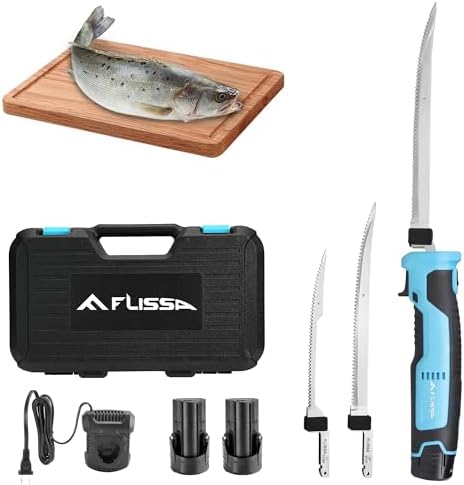
The FLISSA is a cordless electric fillet knife supplied with two rechargeable 2,000mAh battery packs. That spare battery can be useful when you are cleaning a larger catch or working away from a convenient charging spot. An LED battery indicator gives you a way to check the remaining charge.
It comes with 8-inch and 10-inch stainless steel blades, so you can choose a shorter blade for more controlled work or a longer one for larger fish. The listing describes the blades as corrosion-resistant and replaceable. A soft ergonomic handle and trigger guard are intended to support grip and control, while the carrying case stores the knife and its accessories.
The main trade-off is that cordless tools need charged batteries, and the listing recommends taking a break after 20 minutes of continuous use to let the tool cool. It also advises against continuous cutting through hard bones. Compared with the other picks, FLISSA stands out for including two batteries and two longer blades, but it does not list the motor speed or a runtime figure.
Pros:
- Includes two rechargeable 2,000mAh battery packs
- Comes with 8-inch and 10-inch replaceable blades
- LED battery indicator and trigger guard
- Includes a molded carrying case
Cons:
- Does not list a specific runtime or motor speed
- Listing recommends rest breaks during extended use
Verdict: Choose the FLISSA if you want a cordless kit with a spare battery, two blade lengths, and a dedicated case.
Rapala Heavy Duty: A Straightforward Pick for Repeated Filleting

Rapala’s Heavy Duty Electric Fillet Knife focuses on motor power and a simple blade setup. It includes a 7.5-inch stainless steel blade, which offers a useful middle ground for many everyday fish-cleaning tasks. The product description calls the blade dishwasher-safe.
The listing describes an advanced heavy-duty motor and claims twice the speed and three times the power of standard electric fillet knives. Those are manufacturer comparisons rather than a guarantee of performance with every fish or cutting style. Its ergonomic handle is designed for a secure grip during longer sessions.
This option may suit you if you prefer a familiar single-blade format and expect to clean fish regularly. The trade-off is less flexibility than kits with multiple blade lengths. The supplied details also do not specify whether this model is cordless or provide battery, cord, or case information, so check the listing for those details before buying.
Pros:
- Heavy-duty motor is a key feature of the design
- Includes a 7.5-inch stainless steel blade
- Blade is described as dishwasher-safe
- Ergonomic handle is designed for comfortable use
Cons:
- Only one blade length is listed
- Power-source and included-accessory details are limited
Verdict: Consider the Rapala if you want a focused, heavy-duty option with a single 7.5-inch blade and do not need a multi-blade kit.
KastKing Speed Demon: A Corded Knife with Two Blade Profiles

The KastKing Speed Demon is a 110V electric fillet knife with an AC motor listed at 15,500 rpm. Its 8-foot power cord makes it a practical match for a cleaning station near an outlet, though it is less convenient than a cordless knife when you need to move around.
The kit includes 7-inch Finesse and 9-inch Talon blades made from 420 stainless steel with a titanium vapor-deposition coating. KastKing describes the coating as corrosion-resistant. A balanced shape and soft, non-slip handle are intended to help with maneuverability, while the carrying case is described as water-resistant and puncture-resistant. The listing also states that the knife is ETL certified and exceeds UL982 standards.
Two blade profiles give you more choice than a single-blade model, and an outlet-powered design avoids battery charging. You will need to be near a suitable power source, however. The product instructions call for confirming that the blades are fully inserted, the rivet is engaged, and the trigger lock is unlocked before use.
Pros:
- Includes 7-inch and 9-inch blade sets
- 8-foot cord provides room to work near an outlet
- Listed 15,500-rpm AC motor
- Includes a carrying case and non-slip handle
Cons:
- Requires access to an outlet
- Blade installation and trigger-lock checks add setup steps
Verdict: Pick the KastKing if you clean fish near an outlet and want two blade profiles without managing rechargeable batteries.
Calamus BladeVolt: Cordless Convenience with a Built-In Battery

The Calamus BladeVolt is a cordless model with a built-in 2,600mAh lithium-ion battery. Its listing claims nearly two hours of continuous runtime, but actual runtime can vary with use. The battery is permanently enclosed rather than removable, and the included USB-C charging cable is 1.6 feet long.
A 27,000-rpm motor is paired with 7-inch Finesse and 9-inch Talon stainless steel blades. Calamus says the blades are passivated and mirror-polished to resist corrosion. A soft elastomer handle, trigger guard, battery-level indicator, and carrying case round out the kit. The listing also describes temperature controls intended to help protect against overheating.
The built-in battery makes the knife a tidy choice for cordless use, but you cannot swap in a spare battery to keep working while the first one charges. The short charging cable may also affect where you can place the knife while charging. Compared with the FLISSA and SHEMUST kits, the BladeVolt trades replaceable batteries for a battery built into the handle.
Pros:
- Includes 7-inch and 9-inch blades
- USB-C charging and a battery-level indicator
- Trigger guard and temperature-control features are listed
- Includes a carrying case
Cons:
- Battery is permanently enclosed and cannot be swapped
- Included charging cable is 1.6 feet long
Verdict: Choose the BladeVolt if you want cordless operation, two blade lengths, and USB-C charging, and you are comfortable with a built-in battery.
SHEMUST 12V Cordless Knife: Flexible and Rigid Blades in One Kit

This 12V cordless kit includes two rechargeable 1,500mAh batteries and two blade styles: an 8-inch flexible blade and a 10-inch rigid blade. The product description positions the shorter, flexible blade for delicate filleting and the longer, stiffer one for heavier cuts. Both blades are described as corrosion-resistant stainless steel and use a quick-release mechanism.
The listed motor runs at 2,800 strokes per minute. The seller states that each battery provides more than 50 minutes of runtime, for more than 100 minutes combined, and that the included charger takes about 150 minutes to charge one battery. Those figures are product claims, not guaranteed results. The description also mentions a safety lock switch.
Having a second battery and two different blade styles makes this kit versatile for anglers who clean a mix of fish sizes. The trade-offs are the listed charging time and the fact that a 10-inch blade may feel long if you mainly work with small fish. The supplied description also promotes the knife for other cutting jobs, but its blade choices and design are most relevant to fish cleaning.
Pros:
- Includes two rechargeable batteries
- 8-inch flexible and 10-inch rigid blades suit different cuts
- Quick-release blade system is designed for tool-free changes
- Safety lock switch is listed
Cons:
- Listed charging time is about 150 minutes per battery
- The longer blade may be more than needed for small fish
Verdict: The SHEMUST is a strong fit if you want a cordless setup with spare-battery capacity and both flexible and rigid blades.
How to Choose an Electric Knife for Cleaning Fish
Choose a Power Source for Your Cleaning Setup
A corded knife can make sense if you clean fish at a station with an outlet nearby. It avoids battery charging and may suit longer sessions, but the cord limits where you can work. A cordless knife is easier to carry to a boat, campsite, or outdoor cleaning area. If you choose cordless, decide whether you prefer a built-in battery or removable packs you can swap.
Match Blade Length and Flex to Your Catch
Shorter blades can feel easier to control for smaller fish and close cuts, while longer blades offer more reach for larger fillets. Flex also matters: a flexible blade can help you follow contours, while a rigid blade may suit firmer, heavier cuts. Consider the fish you clean most often instead of assuming the longest blade is always the best choice.
Look at Battery Capacity and Charging Details
For cordless models, compare the number of batteries, listed capacity, charging method, and stated runtime. A spare battery can reduce interruptions, while a built-in battery keeps the design self-contained but cannot be swapped during a session. Treat runtime figures as estimates because cutting demands and use patterns can affect how long a charge lasts.
Check Grip, Controls, and Blade Installation
A secure, comfortable handle helps you guide the knife more carefully, especially when your hands are wet. A trigger guard or safety lock can add a useful layer of control. Before use, follow the maker’s instructions for inserting and checking the blades; do not operate the knife if a blade does not feel securely engaged.
Consider Cleaning, Corrosion, and Storage
Fish cleaning exposes blades to moisture and residue, so corrosion-resistant materials and straightforward blade removal are useful features. Check the product’s care instructions before washing any part; a dishwasher-safe blade does not mean the motor or handle can go in water. A case can also help keep the knife and spare blades together during transport.
Think About Heat and Cutting Limits
Electric knives are made for controlled slicing and filleting, not every tough cutting task. Follow the manufacturer’s guidance on use and cooling breaks, and avoid forcing the blade through hard bones. If the tool becomes unusually hot or behaves differently than expected, stop and consult the product instructions.
Frequently Asked Questions
What blade length is best for cleaning fish?
It depends on the size of your catch and the cuts you make. A shorter blade can be easier to control on smaller fish, while a longer blade gives you more reach on larger ones. A kit with two lengths offers more choice if you clean different fish sizes.
Is a cordless electric fillet knife better than a corded one?
Neither is best for everyone. Cordless models are easier to carry and use away from an outlet, while corded models do not depend on battery runtime. Choose based on where you clean fish and how long your typical session lasts.
Should I choose a knife with removable batteries?
Removable batteries let you switch to a charged pack instead of waiting for the installed one to recharge. A built-in battery can make the design simpler, but it cannot be replaced mid-session. Consider whether uninterrupted use or a self-contained design matters more to you.
Can I use an electric fillet knife to cut through bones?
These knives are intended mainly for controlled filleting. Some product descriptions mention cutting through meat or bones, but that does not mean you should force a blade through hard bones. Follow the manufacturer’s instructions and stop if the knife struggles or heats up.
How should I clean an electric fillet knife after use?
Follow the care instructions for your specific model. Remove the blades only as directed, clean them according to the maker’s guidance, and keep the motor and battery areas away from water unless the product instructions specifically allow otherwise. Dry and store the parts properly before transport.
Do I need more than one blade?
One blade may be enough if you usually clean fish of a similar size. Multiple lengths or blade styles give you more flexibility for different fish and cuts. If you buy a kit with interchangeable blades, make sure you are comfortable changing and securing them before use.
Final Recommendation
For an all-around cordless kit with two batteries and two blade lengths, the FLISSA is a practical place to start. Choose the KastKing Speed Demon if you work near an outlet and want two blade profiles, or the Calamus BladeVolt if USB-C charging and a built-in battery better suit your setup. The best choice is the one that matches your usual fish size, cleaning location, and preferred power source.