
If you want a pour over coffee maker that can handle a full pot for a family or a small office, capacity matters more than almost anything else. Many pour over brewers are built for one or two mugs, so a 12-cup model is a different kind of purchase. This guide covers five options, from a commercial-style 12-cup brewer to manual pour over carafes in the 8-cup to 6-cup range. You will see how each one brews, what it does well, where it falls short, and which kind of coffee drinker it suits best.
| Product | Brand | Capacity | Brewing Style | Best For |
|---|---|---|---|---|
| SYBO 12-Cup Commercial Pour Over Coffee Maker | SYBO | 12 cups | Automatic drip with multi-stream shower head | Offices, busy kitchens, and groups |
| Bodum 34oz Pour Over Coffee Maker | Bodum | 8 cups (4 oz each) | Manual pour over with stainless mesh filter | Hands-on brewers who like glass carafes |
| OXO Brew Pour Over Coffee Maker with Water Tank | OXO | Water tank up to 12 oz | Auto-drip water tank with built-in timer | Hands-off pour over with a simple setup |
| asobu Insulated Pour Over Coffee Maker (32 oz.) | asobu | 32 oz | Manual pour over with insulated carafe | Slow mornings and travel |
| Melitta Pour-Over Coffee Brewer & Stainless Steel Carafe Set | Melitta | 42 oz (6 cups) | Manual pour over with paper cone filters | Budget-minded home and office use |
Our Picks: Best 12 Cup Pour Over Coffee Maker reviews
SYBO 12-Cup Commercial Pour Over Coffee Maker for High-Volume Brewing

This is the only model in this group that truly matches the 12-cup target. Despite the “pour over” name, it works as an automatic drip machine built for commercial-style use. It is designed to brew up to 12 cups in under 10 minutes, which makes it a strong fit for offices, restaurants, hotels, and busy home kitchens where several people need coffee at once.
The two warming plates are one of its most useful features. You can brew a fresh pot while keeping another one warm, so coffee stays available during a rush instead of waiting for the next batch. The simple controls and indicator lights keep the operation easy to follow, which matters when the machine is shared by several people with different levels of coffee experience.
The multi-stream shower head and flat-bottom filter basket are designed to spread water evenly over the grounds. This setup aims for consistent extraction across the whole pot, which is a practical advantage over simpler drip machines that can leave dry spots in the grounds. The reusable brew basket also cuts down on the ongoing cost of paper filters, though you will still need to clean it regularly to keep the flavor clean.
The carafe design includes a lid and spout shaped to guide the pour into the cup and catch drips, which helps keep the counter tidy. The machine carries ETL, CE, ROHS, and Intertek certifications, which is a meaningful point if you plan to use it in a workplace or food service setting. Stock can change on Amazon, so check the listing for current availability before you plan around it.
Compared with the manual pour over options in this list, this model trades hands-on control for speed and volume. If you enjoy adjusting your pour, grind, and timing, a manual brewer will give you more say over the final cup. If you need a large batch with minimal effort, this one is the clear choice in the group.
Pros:
- Brews up to 12 cups, matching the capacity you are looking for
- Two warming plates keep one pot hot while another brews
- Multi-stream shower head and flat-bottom basket support even extraction
- Reusable stainless steel brew basket reduces the need for paper filters
Cons:
- Larger footprint and more features than a typical home pour over brewer may need
- Requires regular cleaning of the basket and shower head to maintain flavor
Verdict: The SYBO is the best option here if you need to brew 12 cups at a time for an office, restaurant, or large household. It offers speed, dual warming, and certified safety features that the manual brewers cannot match. Skip it if you want a small, hands-on pour over for one or two cups.
Bodum 34oz Pour Over Coffee Maker With Permanent Stainless Steel Filter

The Bodum is a classic manual pour over brewer with a heat-resistant borosilicate glass carafe and a cork band that adds a warm, simple look to the countertop. It makes 8 cups, with each cup listed at 4 ounces, so it suits a couple of people or a small group rather than a full office. The carafe is single-walled, which keeps the design light and clean but offers no insulation.
The standout feature is the permanent stainless steel mesh filter. Because it does not absorb oils the way a paper filter can, the brew keeps more of its body and aromatic character. This is a practical benefit for anyone who wants a fuller-tasting cup and does not want to keep buying filters. The filter is also easy to rinse, and the carafe is listed as dishwasher safe, which keeps cleanup simple.
Brewing with this model takes a bit of attention. The directions call for coarse ground coffee, a small bloom pour in a circular motion, and then the rest of the water. Once you get the rhythm, it is a rewarding way to start the morning, but it asks more of you than an automatic machine. Some users find that a little practice goes a long way in getting the flavor they want.
Among the options here, the Bodum sits in the middle of the pack for convenience. It costs you more hands-on time than the OXO or the Melitta, but it gives you a cleaner flavor profile than a paper-filter setup and a more elegant look than most plastic brewers. It is a good pick for someone who enjoys the process and wants to brew by hand without a large commitment.
Pros:
- Permanent stainless steel filter removes the need for paper filters
- Borosilicate glass carafe is heat resistant and easy to monitor while brewing
- Attractive cork band design fits well on a kitchen counter
- Carafe and filter are listed as dishwasher safe for easier cleanup
Cons:
- Single-wall carafe does not hold heat for long periods
Verdict: The Bodum is a solid choice for hands-on coffee lovers who want a fuller-bodied cup without paper filters. It is not built for a full 12-cup batch, so it fits best for one to four people. Choose it if you enjoy the ritual of pouring by hand and do not need insulation or large volume.
OXO Brew Pour Over Coffee Maker With Water Tank for Hands-Off Brewing

The OXO Brew takes a different approach from the other manual options. Instead of pouring by hand, you fill the water tank, and the auto-drip system controls the flow over the grounds. It has a built-in timer and a matte black finish, and the tank is marked so you can measure water up to 12 ounces. This makes it a hands-off way to get a pour over style brew without standing over the carafe.
The lid is a practical touch. It holds heat during brewing and doubles as a drip tray that catches residual coffee after the pot is finished. That small detail helps keep the counter cleaner, which is something many brewers overlook. The package also includes 10 unbleached, all-natural #2 cone filters, so you can start brewing right away.
The main limit is capacity. With a water tank that tops out at 12 ounces, this is a single-serving or small-batch brewer rather than a pot for a group. It works well for one person who wants a consistent cup without much effort, but it will feel slow if you are making coffee for several people in the morning.
Compared with the Bodum or the asobu, the OXO trades control for convenience. You do not have to manage the pour, which makes it a good choice for people who find manual pour over too fussy. It is less suited to those who want to fine-tune every step of the brew, and the smaller capacity sets it apart from the 12-cup and larger carafe options in this list.
Pros:
- Auto-drip water tank controls flow without manual pouring
- Built-in timer and clear water markings make brewing simple
- Lid doubles as a drip tray to keep the counter tidy
- Includes 10 cone filters to start brewing right away
Cons:
- The 12-ounce water capacity limits it to small batches, not a full pot
Verdict: The OXO Brew is a good pick for a single person or a couple who want a simple, hands-off pour over experience. It is not the right choice for a 12-cup need. Buy it if you value ease of use and a tidy setup over volume.
asobu Insulated Pour Over Coffee Maker for Hot Coffee on the Go
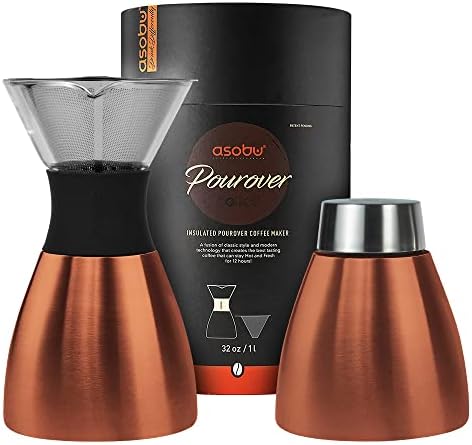
The asobu is built around heat retention. It has a 32-ounce carafe with double-wall vacuum insulation and a copper-lined interior, and the manufacturer states that it keeps coffee hot for up to 12 hours. That makes it a useful option for people who brew early and drink slowly, or who want coffee ready during a long workday.
The reusable stainless steel micro mesh filter removes the need for paper filters, and the carafe is made with borosilicate glass and food-grade materials. The design is easy to carry, which makes it a good fit for travel, road trips, or a desk. The body is heat resistant, so it stays comfortable to grip once the coffee is brewed.
Insulated carafes behave differently from glass ones, so expect a different kind of brewing experience. You are still pouring by hand, which means you control the bloom and the water flow. Some users find the micro mesh filter needs a careful rinse to prevent fine grounds from lingering, so plan on a little extra attention during cleanup.
Among the manual options, the asobu is the best pick for portability and heat retention. It is a better fit for one or two people who want a hot cup over a long period than the uninsulated Bodum. Compared with the Melitta, it offers a more modern build and a stainless filter instead of paper cones, though it holds less than the 42-ounce Melitta set.
Pros:
- Double-wall vacuum insulation keeps coffee warm for long periods, according to the manufacturer
- Reusable micro mesh filter eliminates the need for paper filters
- Portable design suits travel, work, and home use alike
- Heat-resistant body stays comfortable to hold
Cons:
- Fine micro mesh can require careful rinsing to keep the cup clean
Verdict: The asobu is a strong choice if hot coffee over several hours matters to you, or if you want a portable pour over for travel. It is a good everyday option for one or two people. It is not built for a 12-cup batch, so choose it for personal portions rather than group brewing.
Melitta Pour-Over Brewer and Stainless Steel Carafe Set for Budget Brewing

The Melitta set is the most traditional pour over system in this group. It includes a plastic brewing cone, a lid, and a stainless steel carafe that holds 42 ounces, or about 6 cups. You place a Melitta #4 paper cone filter in the brewer, add ground coffee, and pour hot water over the grounds. It is a simple, familiar method that many people already know.
The stainless steel carafe keeps the coffee hot without the glass fragility of a traditional pot. It also serves well as a second pot when you want a decaf option or a different roast alongside your regular brew. The cone and lid are BPA-free and top-rack dishwasher safe, so cleanup takes little effort, and the set includes a starter supply of filters.
The trade-off is an ongoing cost of paper filters and a less refined feel than the stainless or glass options. Because the cone is plastic, some users may prefer a more solid build for long-term daily use. The brewing result depends a lot on how you pour, so consistency takes some practice.
Compared with the other manual brewers here, the Melitta offers the largest capacity of the manual options, and it is easy to find replacement filters. It suits a household or office that needs a moderate pot without much setup. It is not the most premium build in the list, but it delivers reliable basics and a simple, familiar process.
Pros:
- Holds 42 ounces, the largest manual capacity in this group
- Stainless steel carafe keeps the design durable and practical
- Cone and lid are dishwasher safe for easy cleanup
- Includes a starter supply of #4 cone filters
Cons:
- Ongoing cost of paper filters and a plastic brewing cone may feel less durable than metal or glass options
Verdict: The Melitta is a practical, budget-friendly way to brew about 6 cups by hand. It is a good fit for a home or small office that wants a familiar pour over process. If you want a full 12-cup automatic brewer, choose the SYBO. If you want a plastic-free, reusable filter, look at the Bodum or asobu.
How to Choose the Right 12 Cup Pour Over Coffee Maker
Shopping for a 12-cup pour over coffee maker can be confusing because the term “pour over” covers both manual brewers and automatic drip machines. Knowing the difference will help you avoid buying the wrong style for your needs. The guide below walks through the factors that matter most so you can match a model to your daily routine.
Capacity and Real Brewing Volume
Check the listed capacity carefully. A “12-cup” machine typically refers to a large automatic brewer, while many manual pour over carafes list their size in ounces, such as 32 or 42 ounces. Remember that a standard coffee cup is smaller than a typical mug, so a 42-ounce carafe may hold about 6 cups by the listing. If you regularly brew for a group, pick the capacity that matches your largest batch, not your average one.
Brewing Method: Automatic or Manual
Automatic brewers handle timing and water flow for you. They are ideal when you want speed and consistency across a large pot. Manual pour over brewers give you control over the bloom, the pour rate, and the total brew time. They reward patience and tend to suit people who enjoy experimenting with grind size and technique. Decide which tradeoff you are comfortable with before you compare features.
Filter Type and Long-Term Cost
Filters shape both flavor and running costs. Reusable stainless steel mesh filters avoid the ongoing expense of paper filters and tend to let more oils pass into the cup. Paper cone filters trap more fine particles and produce a cleaner, lighter cup, but they require regular purchases. Think about how often you will brew and which flavor profile you prefer.
Carafe Material and Heat Retention
The carafe affects how the coffee looks, how it feels, and how long it stays hot. Borosilicate glass is heat resistant and lets you see the brew level, but a single-wall design cools quickly. Vacuum-insulated stainless or double-wall carafes hold heat much longer, which helps if you drink slowly or brew ahead. Choose the material that matches how quickly you finish your coffee.
Ease of Cleaning and Daily Maintenance
A coffee maker you dread cleaning will end up unused. Look for parts that are dishwasher safe, filters that rinse easily, and lids or drip trays that keep the counter clean. Automatic brewers with shower heads and baskets need more regular attention to prevent buildup, so plan a simple cleaning routine. Manual brewers are usually quicker to clean but still need a rinse after each use to keep the flavor fresh.
Footprint, Storage, and Portability
Consider where the brewer will live. A large commercial-style machine needs counter space and an outlet near the sink or work area. Manual carafes are lighter and easier to store, and some insulated models travel well for work or trips. Measure your available space before you buy, especially if you are sharing a kitchen or office break area.
Matching the Machine to Your Daily Routine
Think about how you actually use coffee. A household with several early risers may need a fast, large-batch brewer with a warming plate. A single person who enjoys a slow morning ritual may prefer a manual pour over with a stainless filter. A traveler or someone who works from a desk may value insulation and portability above all. The best choice is the model that fits your real routine, not the one with the most features.
Frequently Asked Questions
Is a pour over coffee maker the same as a drip coffee maker?
Not exactly. A pour over brewer usually requires you to add hot water to the grounds by hand, or uses a controlled water tank to mimic that process. A drip coffee maker is typically an automatic machine that heats and dispenses water on its own. Some products, including the SYBO in this guide, sit between the two categories, so check the description carefully.
Which option in this guide brews 12 cups at once?
The SYBO 12-Cup Commercial Pour Over Coffee Maker is the only model in this group that matches a 12-cup capacity. The other options are sized in ounces, ranging from a 12-ounce water tank to a 42-ounce carafe, so they suit smaller batches.
Do I need paper filters with a pour over coffee maker?
It depends on the model. The Bodum and asobu use reusable stainless steel mesh filters, so you do not need paper for daily brewing. The Melitta uses #4 cone paper filters, and the OXO includes #2 cone filters. Paper filters catch more fine particles, while metal filters let more oils into the cup.
How long does an insulated pour over carafe keep coffee hot?
The asobu carafe is designed with double-wall vacuum insulation, and the manufacturer states that it keeps coffee hot for up to 12 hours. Actual results depend on how hot the coffee is when you pour it and how often you open the lid, so treat the figure as a guide rather than a guarantee.
What grind size works best for pour over coffee?
For most manual pour over brewers, a medium to coarse grind works well, and the Bodum instructions specifically call for coarse ground coffee. Automatic and paper filter systems may need a slightly different grind, so adjust by tasting. If your coffee tastes bitter, try a coarser grind. If it tastes weak or sour, try a finer one.
Are these coffee makers safe to use in an office or restaurant setting?
The SYBO is the model in this guide that lists ETL, CE, ROHS, and Intertek certifications, and it is designed for commercial-style use in offices, restaurants, and hotels. The other models are presented as home or personal brewers. Always confirm the safety certifications and intended use before you install any appliance in a workplace.
Which pour over coffee maker is best for someone who wants a simple setup?
The OXO Brew is the easiest option for a hands-off experience, since its water tank controls the flow and it includes a built-in timer and filters. If you want a manual method with minimal parts, the Melitta set is also simple to learn and easy to clean. Both suit beginners who want a straightforward routine.
Final Recommendation
For a true 12-cup pour over coffee maker, the SYBO is the strongest choice in this group. Its fast brewing, dual warming plates, and certified build make it the best option for offices, busy kitchens, and large households. If your needs are smaller, the other models offer a range of options. The Melitta is a practical, budget-minded choice for about 6 cups, the asobu suits travel and long-lasting warmth, the Bodum appeals to hands-on brewers who want a stainless filter, and the OXO works well for a simple, hands-off routine. Match the capacity and brewing style to your daily habits, and you will end up with a coffee maker you actually enjoy using.