
If you have ever struggled to keep a pot of soup at a gentle simmer, or watched a sauce scorch on the bottom while the burner stayed on its lowest setting, you already know why a cast iron plate can be useful. Gas burners put out a concentrated flame that can be too hot for delicate cooking, even on the lowest setting. A heat diffuser sits between the flame and your cookware to spread that heat out. A cast iron griddle, on the other hand, is a flat cooking surface for searing, grilling, and frying. Both products are sold under the same search term, so this guide covers both types. The five picks below include simmer plates for slow cooking and reversible griddles for stovetop cooking, and each section explains which kind of cooking it suits best. Use this guide to decide which type of cast iron plate fits the way you cook.
Quick Comparison Table
| Product | Type | Key Size | Stovetop Compatibility | Best For |
|---|---|---|---|---|
| Heat Equalizer 9.25″ Cast Iron Heat Diffuser/Simmer Plate | Heat diffuser | 9.25 inches | Gas, electric, glass, ceramic (not induction) | Defrosting and slow simmering |
| EWFEN Reversible Grill/Griddle, Pre-Seasoned Cast Iron Griddle Pan | Reversible griddle | 16.7 x 9.5 inches | Gas, ovens, induction, campfires | Large batches and grilling |
| Cast Iron Heat Diffuser for Gas Stove, Simmer Plate for Slow Cooking | Heat diffuser | 9.45-inch bottom diameter, 4.5-inch flat top | Gas, electric, glass | Small pots and gentle simmering |
| MARINOVA Cast Iron Heat Diffuser for Gas Stove with Two Sizes | Heat diffuser (two plates) | 8.25 inches and 6.75 inches | Gas and electric (not induction) | Matching different pot sizes |
| GGC Cast Iron Reversible Griddle, Double Sided Griddle Pan | Reversible griddle | 13 x 8.25 inches | Gas stovetops and outdoor grills | Searing meats and cooking breakfast |
Our Picks: Best Cast Iron Plate For Gas Stove reviews
Heat Equalizer 9.25″ Cast Iron Heat Diffuser: A Versatile Simmer Plate for Everyday Cooking

The Heat Equalizer is a 9.25-inch cast iron heat diffuser designed to sit under your pot or pan on a gas burner. Its job is to take the sharp, concentrated flame and spread it into a wider, softer source of heat. The product is built to work with gas, electric, glass, and ceramic stovetops. It is not intended for induction cooktops, so check your range before you buy.
The most noticeable design feature is the set of more than 480 small heat collectors on the underside of the plate. The manufacturer says these features concentrate and hold heat, which is meant to lower energy waste. The plate also has a patent-pending design aimed at more even heat distribution. These claims are the maker’s, and they are hard to measure in a kitchen. What you can judge is how the plate behaves on the stove: it lets you hold a steady low heat for long stretches, which is the main reason most people buy a plate like this.
In practical use, the Heat Equalizer works well for tasks that need patience. Many owners use it to slowly melt chocolate, warm milk without a skin forming, or keep a stew at a murmur for an hour. Some users also rely on it for gently defrosting frozen food in a pot, a job that usually requires constant attention on a high burner. The plate is heavy, which helps it stay put on the grate, but it also means you should lift it with care when it is hot. The 9.25-inch size suits standard saucepans and medium pots. It may feel small under a large stockpot.
Compared with the other diffusers in this list, the Heat Equalizer sits in the middle for size and is among the more flexible options for stove type. It is a good choice if you want one plate that covers a range of slow-cooking jobs and you cook on gas or electric. Its main limitation is the lack of a handle, which some cooks find awkward. It is also less suited to cooks who want a second, smaller plate for very small pans.
Pros:
- Broad compatibility with gas, electric, glass, and ceramic stovetops
- Good for slow simmering, melting, and gentle defrosting
- Heavy cast iron base that stays steady on the grate
- The 30-day return policy gives buyers a window to test the fit
Cons:
- Not suitable for induction stovetops
- No handle, so lifting a hot plate requires a towel or mitt
Verdict: The Heat Equalizer is a strong, all-around choice for cooks on gas or electric stoves who want a dependable simmer plate for common slow-cooking jobs. If you need a plate for a range of tasks and your cookware is standard size, this is a solid pick.
EWFEN Reversible Cast Iron Griddle: A Dual-Sided Pan for Searing and Breakfast

The EWFEN is a rectangular, reversible cast iron griddle measuring 16.7 by 9.5 inches. One side is ribbed for grilling meats and vegetables, and the other side is smooth for eggs, pancakes, and toast. It is not a heat diffuser. Instead, it is a flat cooking surface meant to span a large part of your burner or even two burners. It is pre-seasoned, which means you can start cooking right away.
The build is simple and heavy. The maker describes it as pure cast iron with oil seasoning and free of PFOA and PTFE. The bottom is smooth and edge-free, which helps protect glass or ceramic cooktops from scratches. It can be used on gas stoves, in ovens, on induction cooktops, and over a campfire. The product should not go in the microwave or the dishwasher, and it needs to be dried right away after washing to prevent rust.
In daily use, the large cooking area is the main advantage. You can cook a full batch of bacon or several pancakes at once, which saves time on busy mornings. The ribbed side gives meats visible grill marks, though it does not replicate the smoky taste of an outdoor grill. Many owners appreciate how well the surface holds heat once it warms, which helps with searing. The trade-off is weight. Cast iron this size is heavy, so lifting it on and off the stove takes two hands and some care. The seasoning also needs regular use and oil to keep improving, so new owners should expect some patience.
Compared with the GGC griddle in this list, the EWFEN is larger and works on more heat sources, including induction. It is a better fit for families or anyone who cooks large portions. However, it takes up more space on the stove and in the cabinet. If your kitchen is small or you only cook for one or two people, the smaller GGC may be easier to manage.
Pros:
- Large cooking surface that handles big batches
- Reversible design covers both grilling and flat-surface cooking
- Works on gas, induction, and oven setups
- Pre-seasoned, so it is ready to use out of the box
Cons:
- Heavy to lift, and not dishwasher or microwave safe
Verdict: The EWFEN is a good choice for families and cooks who want a large, versatile griddle that moves between the stovetop, oven, and grill. It is not a simmer plate, so buy it for searing and cooking breakfast rather than for gentle heat control.
Difalbech Cast Iron Heat Diffuser: A Simmer Plate with an Elevated Design for Small Pans

The Difalbech diffuser is a cast iron plate with a raised platform that keeps your cookware away from direct flame. Its listed dimensions include a 9.45-inch bottom diameter, an 8.46-inch top diameter, and a height of 1.8 inches. It also includes a 4.5-inch flat top section that the maker recommends for small cookware such as milk pots and teapots. The product is designed for gas, electric, and glass stoves.
The raised design is what sets this plate apart from a flat diffuser. Because the pan sits higher above the burner, the plate blocks more direct heat and lets the cast iron do most of the work. The maker also describes a high-temperature enamel finish. That finish can make cleaning easier, and it can reduce the chance of food sticking to the plate itself, though no finish fully prevents residue on a heavy cooking surface. The maker also says the plate can help protect nonstick coatings from direct flame, which is a useful point if you own pans with delicate coatings.
In everyday cooking, this type of elevated plate is best for long, low-heat jobs. Soups, rice, sauces, and braises benefit from the steady heat it provides. Some owners find that the small top section is handy for warming a single cup of milk or a small pot of sauce. The main challenge is that the plate is tall, so you need enough clearance above the burner. Check your stove grate and pot handles before buying. The raised profile can also make it harder to slide a pan on and off quickly, so it is less convenient than a flat diffuser for fast tasks.
Compared with the Heat Equalizer, the Difalbech is more specialized. It offers a stepped design that suits small pots, while the Heat Equalizer works better as a flat, all-purpose plate. The MARINOVA set offers two sizes, which may matter more to cooks who use many pan sizes. If you cook mostly with small pots, the Difalbech is a sensible choice.
Pros:
- Raised platform keeps cookware away from direct flame
- Small flat top section suits milk pots and teapots
- Compatible with gas, electric, and glass stovetops
- Enamel finish can make cleaning simpler
Cons:
- Tall profile needs clearance above the burner and can be awkward to move
Verdict: The Difalbech is a good pick for cooks who regularly use small pots and want a raised plate that protects both the pan and its coating. Measure your stove clearance before you buy, and it will be a reliable choice for low-heat cooking.
MARINOVA Cast Iron Heat Diffuser Set: Two Simmer Plates for Different Pot Sizes
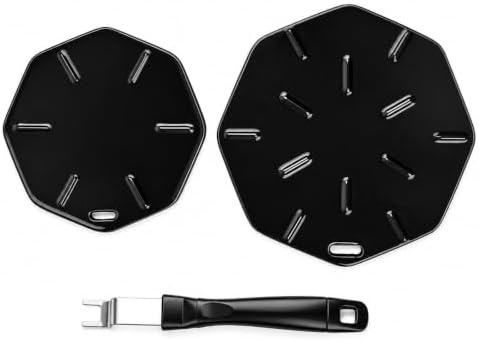
The MARINOVA set includes two cast iron simmer plates, measuring 8.25 inches and 6.75 inches. Each plate has a black enamel coating and comes with removable stainless steel handles. The maker states that the set works on gas and electric stoves but is not intended for induction. It is a good option for cooks who want more than one size without buying two separate products.
The two-size approach is the main selling point. A single plate often fits some pots well and others poorly. A 6.75-inch plate suits a small saucepan, while the 8.25-inch plate covers a medium pot. Having both lets you match the plate to the job. The removable handles are a practical touch. They make it easier to move a hot plate on and off the burner, which many users find more comfortable than lifting a plain cast iron disk with a towel.
The enamel coating is another point to consider. It can make the plates easier to wipe clean and gives them a finished look. Enamel can chip if it is dropped or banged against a hard surface, so handle the plates carefully and avoid stacking heavy pans on them. In daily use, the set works well for milk, chocolate, gravy, and curry, where steady low heat matters. The smaller plate is especially helpful for keeping a small pan of sauce warm without scorching the bottom.
Compared with the Difalbech, the MARINOVA set gives you more flexibility in size, while the Difalbech offers a raised profile and a single plate with a small top section. Compared with the Heat Equalizer, it covers smaller pots more directly. Its limitation is that the plates are smaller overall, so they may not suit very large stockpots.
Pros:
- Two sizes cover small saucepans and medium pots
- Removable stainless steel handles make handling easier
- Black enamel coating supports easier cleaning
- Works on gas and electric stoves
Cons:
- Not intended for induction, and the enamel can chip if dropped or banged
Verdict: The MARINOVA set is the most practical choice for cooks who use several pot sizes and want simmer plates that are easy to move. If you mostly cook with small to medium pots on a gas or electric stove, this set offers good value and flexibility.
GGC Cast Iron Reversible Griddle: A Compact Double-Sided Pan for Stovetop and Grill

The GGC griddle is a reversible cast iron pan with a 13-by-8.25-inch cooking surface. One side is ribbed for searing steaks, chops, fish, and vegetables. The other side is smooth for pancakes, eggs, and bacon. The maker lists it as suitable for indoor stovetops and outdoor barbecues. It is a flat cooking surface, not a heat diffuser, so it belongs in a different category from the simmer plates above.
The griddle has a matte coating and wide side handles. The handles are useful when you need to lift the pan with oven mitts and carry it to the table. The product arrives unseasoned. The maker recommends coating it with vegetable oil, such as flaxseed oil, and heating it before the first use. That step takes a little time, but it sets the base for a smoother cooking surface later. The matte finish should be protected by using nonmetal utensils, and the maker advises against soaking the pan for more than 15 minutes.
In practice, the GGC is a good size for two to four servings. It heats evenly enough to sear and holds warmth well, which helps when you cook several batches. It fits well on a standard gas burner and can also be used on a grill. Some cooks find the smaller surface easier to store and clean than a larger griddle. The trade-off is that you must keep the seasoning in good shape. Because it arrives unseasoned, it needs more upfront attention than a pre-seasoned pan, and it can stick if the oil layer is thin.
Compared with the EWFEN, the GGC is smaller, lighter, and easier to fit in a cabinet. The EWFEN is better for large batches and induction use, while the GGC suits smaller households and outdoor grilling. Compared with the diffusers in this list, it offers a very different function. Choose it for cooking food, not for slowly holding a pot at a low simmer.
Pros:
- Reversible design handles searing and flat-surface cooking
- Wide side handles make it easier to lift with oven mitts
- Compact size suits small households and easy storage
- Works on both stovetops and outdoor grills
Cons:
- Arrives unseasoned, so it needs oil and heat before first use
Verdict: The GGC griddle is a good fit for cooks who want a manageable, double-sided pan for everyday stovetop cooking and occasional grilling. It is a practical choice for small households, as long as you are willing to season it before the first use.
How to Choose the Right Cast Iron Plate for Your Gas Stove
Decide Whether You Need a Heat Diffuser or a Griddle
The first question to ask is what job you want the plate to do. A heat diffuser, also called a simmer plate or flame tamer, sits under a pot to spread out the flame and hold a gentle heat. It is the right tool for soups, sauces, rice, milk, and slow-cooked dishes. A griddle, by contrast, is a flat cooking surface that you heat up and cook directly on. It suits pancakes, eggs, steaks, and vegetables. Buying the wrong type is the most common mistake. If you want to stop sauces from scorching, a griddle will not solve the problem, and if you want to sear a steak, a diffuser will not give you the surface you need.
Check the Size Against Your Cookware and Burners
Size matters more for diffusers than for griddles. A simmer plate should be slightly smaller than the bottom of the pot it supports, so the heat spreads evenly without spilling out to the edges. A plate that is too small leaves the pot unsupported, while one that is too large may not sit well on your grate. Measure the bottoms of your most-used pots before you buy. For griddles, think about how much food you cook at once and how much room you have on your burner. A large griddle can span two burners on some ranges, but it may be awkward on a crowded stove. Remember that a larger cooking surface is also heavier, so consider how comfortably you can lift it.
Consider Your Stove Type and Cooktop Limits
Not every cast iron plate works on every cooktop. Some products in this list are not intended for induction, while others are listed for induction use. Before buying, check the manufacturer’s stated compatibility. This matters most if you plan to move the plate between stoves or if you have a mixed kitchen. Gas stoves are the most flexible setting for these products, but you should still confirm that the plate’s base and height work with your grates and clearance above the burner.
Think About Finish, Seasoning, and Care
Cast iron comes in several finishes. Some plates are bare cast iron, some have an enamel coating, and some have a matte or seasoned surface. Enamel is often easier to wipe clean and does not need seasoning, but it can chip if it is dropped or banged against hard surfaces. Bare or seasoned cast iron needs oil after washing and drying to prevent rust. Pre-seasoned griddles save you upfront work, while unseasoned ones need oil and heat before the first use. Plan to dry cast iron completely after cleaning, and avoid the dishwasher, since harsh detergents and long soaks can strip seasoning and encourage rust.
Look at Handles and Ease of Handling
Cast iron is heavy, and a hot plate is easy to mishandle. Handles can make a big difference in comfort and safety. Some models include removable stainless steel handles, while others have wide side handles or no handles at all. If you have limited hand strength or you often move a plate on and off the burner, choose a design that gives you a secure grip. Always use a towel or oven mitt, even when the handles look cool, because cast iron holds heat for a long time.
Match the Plate to How You Actually Cook
The best plate is the one that fits your everyday cooking. If you make a lot of soups, sauces, and warm drinks, a heat diffuser will likely earn its place in your drawer. If you cook breakfast for a family or enjoy grilling indoors, a large reversible griddle will be more useful. Some cooks buy both. Think about your typical meals, your pan sizes, your stove, and the amount of time you want to spend on seasoning and cleaning. Matching the product to your routine is more important than chasing the most features.
Frequently Asked Questions
What is a cast iron heat diffuser used for?
A cast iron heat diffuser sits between the burner and your cookware. It spreads out the flame and provides a gentler, more even heat. Cooks often use it for simmering soups, melting chocolate, warming milk, cooking rice, and holding sauces at a low temperature without scorching.
Can I use a cast iron griddle on a gas stove?
Yes. Cast iron griddles are commonly used on gas stoves. Choose a size that fits your grates and does not hang far off the burner. Make sure the griddle sits flat so that heat distributes evenly. Preheat it gradually, and avoid sudden temperature changes, which can stress cast iron.
Do cast iron simmer plates work on induction cooktops?
Several of the products in this list are not intended for induction stovetops, according to their listings. Always check the manufacturer’s compatibility notes before you buy. The EWFEN griddle is listed for induction use, which makes it a different option for those cooktops.
How do I clean a cast iron plate without damaging it?
Wash the plate by hand with warm water and a soft sponge. For stuck-on food, soak briefly, but avoid long soaks. Dry it right away with a towel, and then apply a thin layer of cooking oil if the surface is bare or seasoned. Enamel-coated plates need less oil but should still be dried completely. Do not put cast iron in the dishwasher.
What should I do if my cast iron plate starts to rust?
Scrub the affected area with steel wool or a stiff brush, then rinse, dry thoroughly, and coat the surface with cooking oil. For products with enamel coatings, avoid steel wool on the coating itself. Use a gentle scrubbing method and dry the plate fully to prevent the problem from returning.
Will a heat diffuser make my cooking use less gas?
A diffuser can help you hold a low heat more steadily, which may reduce the need to adjust the flame. Some manufacturers claim energy savings, but the actual effect depends on your stove, cookware, and cooking habits. Treat any savings claim as a general expectation rather than a guaranteed result.
Which cast iron plate is best for most home cooks?
For most people who want a single product for slow cooking, the Heat Equalizer is a strong choice because it works on several stove types and suits common simmering tasks. For cooks who need a large cooking surface, the EWFEN griddle is more practical. Pick the type that matches your main cooking task.
Final Recommendation
The best cast iron plate for your gas stove depends on what you want it to do. If your main goal is gentle, steady heat for sauces, soups, and slow-cooked meals, start with the Heat Equalizer. It is a versatile flat diffuser that works across several stove types. If you cook for a crowd or want a surface for searing and breakfast, the EWFEN griddle gives you the most room and flexibility. For small pots and delicate coatings, the Difalbech plate offers a raised design that keeps pans away from direct flame. The MARINOVA set is the best pick for those who use several pot sizes, and the GGC griddle suits smaller households and outdoor grilling. Match the product to your cooking style, check your stove’s compatibility, and you will find a plate that makes your everyday cooking more controlled and more enjoyable.