
Sourdough rewards heat. A loaf needs a blast of steam in the first minutes of baking so the crust can expand and form that crackly, golden shell. A heavy, lidded pot does this job better than most home ovens can on their own, which is why a Dutch oven has become the go-to tool for home bakers. Not every pot is built the same way, though. Some are sized for bread, some come with proofing baskets and scoring tools, and some are really cooking pots that happen to work for baking. This guide compares five popular options so you can find the one that fits your kitchen, your baking habits, and your budget.
Quick Comparison Table
| Product | Size | Finish | Best For |
|---|---|---|---|
| AHJ 6QT Dutch Oven For Bread Baking, Enameled Cast Iron Dutch Oven Pot with Lid | 6 quart | Triple-layer enamel | Larger loaves and all-around cooking |
| Pre-Seasoned Cast Iron Dutch Oven for Bread Baking with Sourdough Bread-Baking Supplies | 5 quart | Pre-seasoned cast iron | Beginners who want a full starter set |
| CRUSTLOVE 5 QT Pre-Seasoned Dutch Oven for Bread Baking with Lid and Kit | 5 quart | Pre-seasoned cast iron | Simple, traditional bread baking |
| CRUSTLOVE 5 QT Enameled Dutch Oven for Bread Baking with Lid & Starter Kit | 5 quart | Enameled | Bakers who want less seasoning upkeep |
| EDGING CASTING Pre-Seasoned Cast Iron Dutch Oven Pot with Skillet Lid Cooking Pan | Not stated | Pre-seasoned cast iron | Cooks who want a 2-in-1 pot and skillet |
Our Picks: Best Dutch Oven For Baking Sourdough Bread reviews
AHJ 6QT Enameled Dutch Oven: Roomy Pick for Larger Loaves
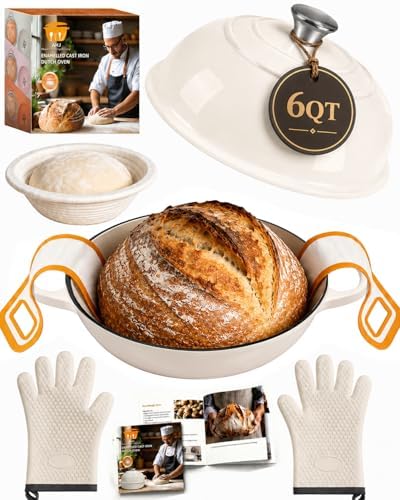
This is a 6-quart enameled cast iron Dutch oven with a dome-style lid. The dome design is the main feature for bread bakers. It traps moisture that rises from the dough, which helps your loaf stay soft for longer in the early stage of baking and then crisp up as the lid comes off. The set also includes a banneton proofing basket with a liner, a silicone bread sling, and silicone baking mitts, so you have what you need to start baking right after unboxing.
The triple-layer enamel coating is the biggest difference between this pot and a bare cast iron model. Enamel does not need seasoning, so you can skip the oil routine that bare iron requires. The product listing states that the pot is oven-safe to 500°F and works on gas, induction, and electric stovetops. Those details matter if you plan to use the pot for stews and roasts as well as bread. In everyday use, many owners appreciate the generous interior, which gives a boule or a larger batch of dough more room to rise and spread.
From a critical standpoint, the dome shape has trade-offs. A dome lid can be a little less forgiving than a flat one when you are lifting dough in and out, and the banneton basket is only as useful as your shaping technique. Some users report that the enamel can pick up staining over time if it is not cleaned promptly, and heavy cast iron always requires a careful, two-handed approach when it is hot. If you want the most compact option for a smaller kitchen, this size may feel bulky.
Pros:
- Generous 6-quart capacity suits larger boules and family-size meals
- Enamel coating means no seasoning routine and easier day-to-day care
- Oven-safe to 500°F and compatible with gas, induction, and electric cooktops
- Starter kit includes a proofing basket, bread sling, and mitts
Cons:
- Heavy and bulky for smaller kitchens or anyone who prefers lighter cookware
- Dome-shaped lid can make loading and shaping dough a bit more awkward
Verdict: This is a strong choice if you want a larger pot that works for bread, roasts, and braises alike. Choose it if you value enamel’s low-maintenance finish and have the storage space for a bigger piece of cookware.
Asderote Pre-Seasoned 5QT Starter Set: Best Accessory Bundle

This pre-seasoned cast iron Dutch oven is a 5-quart pot that comes as part of a large starter kit. The package includes a bread proofing basket, a bread sling, a stainless steel scraper, a bowl scraper, a wooden-handled dough whisk, a bread lame for scoring, a silicone oil brush, a silicone spatula, and a cleaning brush. For someone who is just starting with sourdough and does not want to shop for each tool separately, the bundle is a practical way to get everything in one order.
The lid is worth a closer look because it doubles as a skillet. Its grooves are designed to catch and drip liquid back onto food, and the listing says they also help lift food off the surface so fat can drain. That flexibility is useful if you like to sear or fry in the same piece of cookware you bake in. The product description highlights a heavy-gauge base and reinforced sidewalls, which are intended to help with heat retention and reduce burnt bottoms.
Pre-seasoned cast iron is ready to use, but it still needs care. Buyers often note that brown spots can appear after extended use, and the manufacturer’s own note explains that these spots are not rust. Keeping a thin layer of oil on the surface and drying the pot fully after washing will protect it. The main drawback is that the lid’s skillet design makes it a little less like a classic bread lid, and some bakers may prefer a simple dome for better steam control. The pot is also heavier than most nonstick alternatives, so lifting it with wet hands requires caution.
Pros:
- Large accessory bundle covers nearly every early step of sourdough baking
- Skillet-style lid adds flexibility for frying, searing, and everyday cooking
- Pre-seasoned surface is ready to use straight out of the box
- Heavy base is designed to support steady heat and less scorching on the bottom
Cons:
- Bare cast iron needs ongoing oil care to stay in good shape
- The skillet lid may not provide the same steam control as a classic dome
Verdict: This is the best pick for beginners who want a complete kit without hunting for tools one by one. If you are comfortable maintaining cast iron and like the idea of a pot that can also work as a skillet, it offers strong value.
CRUSTLOVE 5QT Pre-Seasoned Dutch Oven: Traditional Bread Baking Kit

This pre-seasoned 5-quart cast iron Dutch oven is aimed at people who want a classic, no-frills approach to bread. The 10-inch bread oven comes with a bread proofing basket, a silicone bread sling, a scoring lame, a dough whisk, and a booklet of recipes in English and Spanish. The kit is simple and focused, which makes it easy to understand what you are getting and what you still need to learn.
Cast iron holds heat well, and the listing describes the pot as offering even heat distribution for a crisp crust. The pre-seasoned surface means you can start baking without a long preparation process. This matters when you want to get a first loaf in the oven without spending a weekend on setup. The included booklet is useful for beginners who want guided recipes, although experienced bakers will likely rely on their own formulas.
The strengths of this set are its clarity and its focus on bread. The downsides mirror those of any bare cast iron product. You will need to keep the surface oiled and dried, and cast iron is heavy when filled with dough and hot. Compared with the enameled CRUSTLOVE option below, this model asks a little more of you in maintenance but gives you a traditional, familiar feel. It is a good match for bakers who like the idea of a timeless tool.
Pros:
- Simple, focused kit that covers the core tools for bread baking
- Pre-seasoned cast iron works right out of the box
- Recipe booklet in two languages helps beginners get started
- Traditional design suits a classic, hands-on baking style
Cons:
- Requires regular oil care to keep the surface in good condition
- Heavy when hot, so handling it safely takes practice
Verdict: Pick this set if you want a straightforward, traditional bread kit and you do not mind basic cast iron care. It is a dependable starting point for a new sourdough hobby.
CRUSTLOVE 5QT Enameled Dutch Oven: Low-Maintenance Baking Pot

This is the enameled version of the CRUSTLOVE 5-quart bread kit. It uses the same general setup, with a banneton basket, a silicone bread sling, a scoring lame, a dough whisk, and a recipe booklet in English and Spanish. The main difference is the finish. Instead of bare, pre-seasoned iron, this pot has an enamel surface that is designed to handle bread baking without the oil routine.
For many home bakers, that change is the deciding factor. Enamel does not need seasoning, so cleanup is simpler and you avoid worrying about rust if the pot sits damp. The 5-quart size is a good fit for a standard sourdough boule, and the lid’s dome shape supports the steam-trapping process that gives a loaf its crust. The product listing also describes the company as an American business that stands behind its tools, which may give some buyers extra confidence when they are choosing between brands.
Enamel has its own limits. The coating can chip if it is struck hard, and it is not as forgiving with high-heat searing as bare cast iron can be. Some bakers also find that enamel-lined bases may not develop the same deep browning on the bottom of a loaf. If you want a pot that is easy to care for and suits bread first, this is a sensible choice. If you want maximum searing power and a traditional feel, the bare cast iron version may suit you better.
Pros:
- Enamel finish removes the need for regular seasoning
- Easy cleanup makes it a convenient everyday bread tool
- Kit includes the core tools needed to shape, score, and bake
- Dome lid supports steam for a crisp, golden crust
Cons:
- Enamel can chip if it is dropped or struck, so handle it with care
- May not deliver the same deep bottom browning or searing as bare cast iron
Verdict: This is an excellent option for bakers who want a low-maintenance pot focused on bread. Choose it if you would rather spend your time on dough than on cast iron care.
EDGING CASTING 2-in-1 Skillet Lid Dutch Oven: Versatile Cooking Pot

This pre-seasoned cast iron Dutch oven is built around a 2-in-1 idea. The shallow skillet lid can be used on its own for frying or searing, and the pot underneath handles soups, stews, roasts, and bread. The set includes a bread baking basket and basic cooking tools, so it can serve as an all-in-one piece for a home cook who wants more than bread from a single purchase.
The listing describes the pot as pre-seasoned with vegetable oil and says it is meant to be dried on the stove and wiped with a thin coat of natural oil after cleaning. Cast iron is known for storing and transferring heat well, and that property helps when you are searing meat or building a deep braise. For bread, the pot works as a heavy baking vessel, but the lid design is different from a classic dome, so you may need to adjust your technique to get the steam and crust you want.
The biggest question for bakers is whether this pot’s shape and lid suit sourdough as well as a dedicated bread Dutch oven does. It is a capable option for mixed use, but it is not the most specialized bread tool on this list. The product details do not list an exact capacity, so buyers who want a specific size should check the listing carefully before ordering. Like other bare cast iron, it needs consistent oiling and careful drying to prevent rust.
Pros:
- 2-in-1 design works as both a pot and a skillet for varied cooking
- Includes a bread baking basket along with basic cooking tools
- Cast iron stores and transfers heat efficiently for searing and braising
- Pre-seasoned finish is ready for cooking right away
Cons:
- Lid design is less specialized for bread than a classic dome, which may affect steam control
- Requires regular oiling and careful drying to keep it rust-free
Verdict: Choose this pot if you want a versatile cast iron cooker that happens to bake bread well. If your main goal is artisan sourdough, one of the dedicated bread-focused options above will likely serve you better.
How to Choose the Best Dutch Oven for Sourdough Bread
Choosing a Dutch oven for sourdough is less about brand names and more about how you bake. The right pot depends on your loaf size, your tolerance for cast iron care, and whether you want a specialized bread tool or a pot that does many jobs. The sections below explain the factors that matter most so you can match a product to your kitchen.
Size and Capacity
Size is the first thing to check. A 5-quart pot is a common choice for a standard sourdough boule, which usually fits comfortably with room for the dough to expand. A 6-quart pot gives you extra space for larger loaves or for cooking meals for a family. Keep in mind that a bigger pot is heavier and takes up more shelf space. Measure your oven’s interior as well, since some larger pots may not fit on a lower rack. Also think about the loaves you usually make. If you bake small batches, a smaller pot may heat up faster and be easier to handle.
Cast Iron Versus Enameled Finish
Bare cast iron and enameled cast iron both hold heat well, but they ask different things of you. Pre-seasoned bare iron needs occasional oiling and thorough drying so it does not rust. Many bakers enjoy this routine because it feels traditional, and a well-kept pot develops a smooth, naturally nonstick surface over time. Enameled pots skip most of that work. They are easier to clean and are not affected by moisture in the same way, but the enamel can chip if it is struck hard. Think about how much maintenance you want to do and how you plan to store the pot.
Lid Shape and Steam Control
Steam is what gives sourdough its open crumb and crisp, glossy crust. A dome-shaped lid traps moisture from the dough and returns it to the loaf during the early bake, which is why most bread-focused Dutch ovens use this design. A flat or skillet-style lid can still work, but it may let more steam escape, so you might need to adjust your baking time or preheating method. If you bake sourdough often, a lid that clearly supports steam will give you more consistent results than one designed mainly for frying or braising.
Included Accessories
Some kits include a proofing basket, a bread sling, a scoring lame, a dough whisk, and other tools. These extras can save money and time, especially for beginners who are still building their setup. A banneton basket helps your dough hold its shape during the final rise, and a lame lets you score the top of the loaf for a controlled, decorative opening. If you already own these tools, you may prefer a pot sold without a kit so you are not paying for duplicates. Check the included items against what you already have before you buy.
Cooktop and Oven Compatibility
Dutch ovens are used on the stove and in the oven, so compatibility matters. Confirm the maximum oven temperature and whether the pot works on your cooktop type, especially if you have induction. Sourdough baking usually happens at high heat, often around 450°F to 500°F, so the pot needs to handle those temperatures safely. Check the product details and the lid’s material before you assume it will fit your routine. Good compatibility gives you more uses for the pot beyond bread.
Weight and Handling
Cast iron is heavy, and a full pot with hot dough is awkward to lift. Consider your strength, your counter space, and how you will move the pot in and out of the oven. Heavier pots tend to hold heat better, which helps the bottom of your loaf brown evenly, but they can be tiring to handle. Silicone mitts and a bread sling make transfers much safer. If you have limited grip strength or a small kitchen, a lighter pot may be the more comfortable choice even if it trades off some heat retention.
Frequently Asked Questions
Do I need a Dutch oven to bake sourdough bread?
You do not strictly need one, but a Dutch oven is the easiest way to get a crisp, well-shaped crust at home. It traps steam from the dough during the first part of baking, which mimics the effect of a professional steam oven. Many bakers use a baking stone or a tray of water instead, but those methods are harder to control.
Is enameled or bare cast iron better for sourdough?
Both can produce excellent loaves. Bare cast iron is a good choice if you enjoy seasoning and maintaining cookware, and it can develop strong bottom browning. Enameled cast iron is easier to clean and does not need seasoning, which makes it a comfortable option for everyday baking. Choose based on how much care you want to give your cookware.
What size Dutch oven is best for a standard sourdough loaf?
A 5-quart pot works well for most standard boules. It has enough room for the dough to rise and spread without crowding. A 6-quart pot is a good choice if you bake larger loaves or cook for a bigger group, but it is heavier and takes more space.
Do I have to preheat the Dutch oven before baking?
Yes, preheating is important. Put the empty pot and lid in the oven while it heats, so the pot is very hot when you add the dough. This creates a strong burst of heat that helps the loaf rise quickly and form a crust. Use oven mitts, since the pot will be extremely hot.
How do I keep a pre-seasoned cast iron Dutch oven from rusting?
Wash the pot gently after use, dry it completely, and then apply a thin layer of vegetable oil. Brown spots that appear after extended use are often normal seasoning changes rather than rust, according to the product information for one of the models above. Store the pot in a dry place and avoid leaving it damp.
Can I use these Dutch ovens for cooking meals other than bread?
Many of these pots can handle soups, stews, braises, and roasts. Some also work as skillets for frying or searing. Check each product’s details for oven temperature limits and cooktop compatibility before you use it for a specific recipe. The more versatile the pot, the more value you get from it.
Is a bread kit worth it for a beginner?
For a beginner, a kit can be very helpful because it includes the tools you need to start right away. A proofing basket, bread sling, and scoring lame are useful for learning shape and structure. If you already own these items, a pot sold on its own may be a better buy.
Final Recommendation
For most home bakers, the CRUSTLOVE 5QT Enameled Dutch Oven is a strong all-around pick. It offers a bread-focused kit, a low-maintenance enamel finish, and a size that suits a typical sourdough loaf. If you want a complete beginner set with a traditional bare cast iron pot, the Asderote pre-seasoned starter kit is the best value for getting every tool in one order. Bakers who want a larger pot for bread and everyday cooking should look at the AHJ 6QT option. The EDGING CASTING 2-in-1 pot is a good fit if you want a versatile cooker first and a bread tool second. Think about your loaf size, how much cleaning you are willing to do, and whether you want extra accessories, and you will find the right pot for your kitchen.