
If you use an air fryer often, you already know that a light, even coat of oil makes a real difference. Too much oil leaves food greasy, and too little leaves it dry or unevenly browned. A good oil spray bottle lets you control that amount with each press. Glass sprayers also let you pour in your own oil, which is cheaper and more flexible than buying aerosol cans. This guide covers five popular options, explains how each one performs for air frying and everyday cooking, and helps you choose the right one for your kitchen.
Quick Comparison Table
| Product | Capacity | Oil Per Press (as listed) | Standout Trait |
|---|---|---|---|
| Poshetion 2 in 1 Olive Oil Sprayer, 16oz Light-Proof Glass | 16 oz | About 0.2 g | Light-proof glass and a sealed, leak-resistant spout |
| FLAIROSOL OLIVIA SIGNATURE Oil Sprayer, 200ml Glass | 200 ml | About 1 g per full stroke | Fan-spray nozzle with a built-in filter and buckle lock |
| Oil Sprayer for Cooking, 200ml Glass Olive Oil Sprayer Mister | 200 ml | About 1.5 g | Lightweight and portable, with a technique-focused spray |
| Olive Oil Sprayer for Cooking, Glass Oil Sprayer Mister | Not specified | 1 g | External spring and a residual oil collection port |
| Poshetion 2 in 1 Olive Oil Sprayer, 16oz Oil Dispenser | 16 oz | About 0.2 g | Graduated glass for tracking oil level and an anti-drip spout |
Our Picks: Best Oil Spray Bottle For Air Fryer reviews
Poshetion 2 in 1 Olive Oil Sprayer With Light-Proof Glass for Light, Controlled Coating

This 16-ounce sprayer is built around a light-proof glass body designed to protect oil from light exposure. That matters because oil that sits on a counter near a window can go stale faster than oil kept in a cabinet. The bottle is larger than most sprayers in this group, so you refill it less often, though it is also a bit bulkier to store in a small cabinet. The spray mechanism releases roughly 0.2 grams of oil per press, which is a very light amount. For an air fryer basket, that can be ideal if you want a thin sheen on vegetables or a lightly coated chicken breast without pooling oil at the bottom of the basket.
The sprayer’s nozzle is made from BPA-free PP, and the glass is described as lead-free. The top section includes a sealed spout, and the listing points to a one-hand ergonomic handle. In everyday use, the trade-off with a very low output per press is that you may need several presses to cover a large tray of potatoes or a full sheet of vegetables. Some users report that the sheen-style mist works well for delicate foods but takes more patience when you need a heavier coat for frying or browning.
The package includes six pre-printed labels and two blank labels, which is a small but practical touch if your pantry has several oils, vinegars, or seasoning containers. The labels are described as water-resistant, so they should hold up better near a stove than plain paper stickers.
Pros:
- Light-proof glass helps protect oil from light exposure during storage.
- Very low output per press gives you tight control for low-fat cooking.
- The 16-ounce capacity means fewer refills for households that cook often.
- Labels are included, which helps you organize multiple oils and condiments.
Cons:
- The small dose per press can feel slow when coating large batches.
This is a strong choice if you want a bigger bottle and very precise portions for light coating. It is less suited to heavy, high-volume frying. If you mostly want a thin layer of oil on air fryer foods, this one is a dependable option.
FLAIROSOL OLIVIA SIGNATURE Fan-Spray Sprayer for Even Air Fryer Coverage
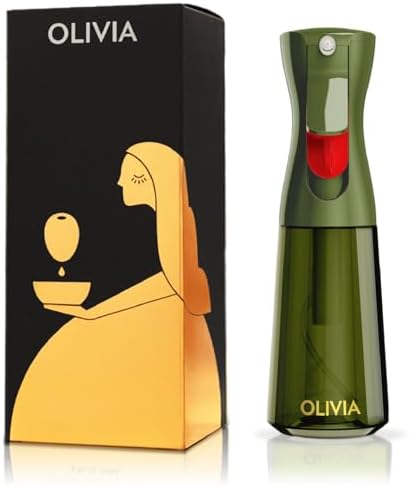
The FLAIROSOL Olivia Signature is a 200-milliliter glass sprayer with a fan-spray nozzle. Each full stroke releases about one gram of oil, which sits between the very light sprayers and the heavier ones in this lineup. That middle range is useful for air fryer work because it covers a wide area quickly without soaking the food. The fan pattern is the main reason this model stands out. Instead of a narrow jet, the spray spreads across the basket or pan, which helps you avoid the bare patches that often appear when you spray from one spot.
The design includes a built-in filter meant to keep the nozzle from clogging, along with an anti-drip trigger and a buckle that locks the sprayer to prevent accidental leaks. The buckle is a thoughtful detail if you carry the bottle to a picnic or grill, though it adds one more part to clean. Many owners appreciate the ergonomic trigger, which makes it easy to spray with one hand while you hold a tray or lid with the other.
The listing says the sprayer works with many liquids, including olive oil, avocado oil, canola oil, soy sauce, wine, and water. That versatility is handy, but thin liquids like soy sauce or wine should be used carefully because they behave differently from oil in a fine mist. The wide mouth makes refilling easier than with narrow-necked sprayers. Overall, this model suits anyone who wants an even, attractive mist and a sprayer that can move from the kitchen to outdoor cooking.
Pros:
- The fan-spray nozzle gives broader, more even coverage than a narrow stream.
- The built-in filter and anti-drip trigger help reduce clogs and messy drips.
- The wide opening makes refilling less awkward than with many glass sprayers.
- The buckle lock adds portability for outdoor cooking.
Cons:
- Thin liquids such as soy sauce or wine may not behave as neatly as oil in the mist.
This is one of the most balanced choices here. It handles air frying, baking, and salad dressing well, and its fan spray is a clear advantage when you want even coverage. If you cook with a range of oils and want a sprayer that works outside the kitchen too, this model is a smart pick.
200ml Glass Oil Sprayer Mister for Portable, Budget-Friendly Cooking

This 200-milliliter glass sprayer is light, at about 0.2 pounds empty according to its listing, and that makes it easy to toss in a bag or keep on a shelf without taking up much room. Each trigger pull releases about 1.5 grams of oil, roughly a quarter teaspoon. That is a bit more than the lightest sprayers in this group, which can be helpful if you want a visible coating on food in an air fryer basket without overdoing it.
The listing emphasizes the way you move the sprayer. The instructions say to start swinging before you pull the trigger and release the trigger before you stop swinging. This is an important point. If you pump while holding the sprayer still, oil can collect in one spot and create a greasy patch. Once you learn the motion, the spray is easier to control, but beginners may notice uneven coverage in the first few uses. Some users report that a short practice session with an empty bottle or a paper towel helps them get a smooth, even coat.
The thick, clear glass is described as durable, and the body is easy to wash by hand. The product is also described as leak-proof, which is useful if you tend to toss sprayers into a bag. This model is one of the more economical glass options in the group, which makes it appealing for people who want to try a glass sprayer without a large commitment. Keep in mind that the listing shows this item as currently unavailable, so check the Amazon page for current stock before you plan around it.
Pros:
- Lightweight and compact, which suits travel or small kitchens.
- Each press delivers a clear, measurable amount of oil for calorie-aware cooking.
- The glass body is easy to clean and refill.
- Its moderate output works well for coating food in an air fryer basket.
Cons:
- The spray technique takes practice, and uneven coating is likely if you pump while standing still.
This sprayer is a good fit for cooks who value portability and simplicity. It rewards a little practice, and once you adopt the swinging motion, it can produce a clean, even coat. If you can accept a learning curve and want a lightweight glass option, it is worth considering, provided it is in stock.
Ruolan Glass Olive Oil Sprayer With Anti-Drip Collection Port for Clean Countertops

This Ruolan sprayer is designed around a moderate dose of about one gram per press. Its most distinctive feature is a residual oil collection port that is meant to catch drips and send them back into the bottle. Oil drips are a common frustration with sprayers, especially when you set the bottle down on a sticky counter or reach for it with greasy fingers. A port that channels leftover oil back into the bottle is a practical solution, although how much it helps will depend on how you store and tilt the sprayer.
The listing also describes an external spring that sits outside the oil path. In theory, this design reduces clogging and corrosion because the spring is not sitting in the liquid. Keeping mechanical parts out of the oil flow is a sensible approach, and it may make cleaning simpler over time. The listing claims a smoother pump, but that will be easiest to judge through regular use.
The operation tip is worth reading before your first use. A fast, full trigger pull produces a fine, fan-shaped mist that suits air frying and baking. A slow pull creates a steady stream that is better for drizzling over salads. This two-mode behavior is useful, but it means your technique affects the result. People who want a consistent mist every time will need to get into the habit of pulling the trigger quickly and firmly. The glass is BPA-free and food-grade, and it is safe for oils and vinegars, which gives it a broad range of kitchen uses.
Pros:
- The residual oil collection port helps reduce drips on counters and hands.
- The external spring design is intended to lower clogging risk.
- A fast trigger pull produces a fine mist that suits air fryer coating.
- Food-grade glass works with a range of oils, vinegars, and sauces.
Cons:
- Spray results depend heavily on trigger speed, so it may take a few tries to get a consistent mist.
This sprayer is a thoughtful option for people who are tired of drips and sticky bottles. Its fan-shaped mist is a good match for air frying, and the collection port addresses a common complaint about this type of product. If you are willing to practice your trigger technique, it is a strong all-around choice.
Poshetion 2 in 1 Oil Dispenser With Graduated Glass and Anti-Drip Spout

This second Poshetion listing shares the same 16-ounce size and the same light, controlled spray output of about 0.2 grams per press. The main difference in the listing is the emphasis on the bottle’s graduated transparent glass, which lets you see how much oil is left at a glance. That is a small but meaningful advantage over opaque or light-proof bodies, since you can plan refills before you run out in the middle of cooking. The trade-off is that transparent glass offers less protection from light, so storing the bottle in a cabinet or away from a sunny window is a good idea.
The listing describes an anti-drip spout intended to keep oil from dribbling onto the counter and to limit buildup around the nozzle. The top components are made of BPA-free PP, and the glass is described as lead-free. Like its sibling model, it includes six pre-printed labels and two blank labels for customizing your kitchen containers. Because the two Poshetion listings are so similar, your choice may come down to whether you prefer a light-protective body or a see-through body that makes oil levels easy to monitor.
This sprayer works best for people who cook with a light touch and want to keep track of their oil supply. Its small dose per press makes it a good match for low-fat air fryer recipes, though it will be slower for heavy coating jobs.
Pros:
- Graduated glass makes it easy to see how much oil remains.
- The anti-drip spout helps keep the counter and hands cleaner.
- The 16-ounce capacity reduces how often you need to refill.
- Labels are included for organizing multiple kitchen containers.
Cons:
- Transparent glass offers less light protection, so the bottle should be stored in a dark cabinet.
This model is a practical option if you value visibility and a larger capacity. It is very similar to the light-proof Poshetion listing, so pick the one that matches your storage habits. For air fryer use that calls for a very thin coat, it performs well.
How to Choose the Right Oil Spray Bottle for Your Air Fryer
Spray Output Per Press
The amount of oil released with each press is the single most important factor for air fryer cooking. Sprayers in this group range from about 0.2 grams to about 1.5 grams per press. A very low output, like the Poshetion models, gives you a light sheen that suits vegetables, fish, and foods that brown easily without much fat. A medium output, around 1 gram, is a good all-purpose range for chicken, potatoes, and frozen snacks. Higher outputs can help when you need a more generous coat, but they can also lead to greasy results and smoke if you preheat the basket with too much oil. Think about the foods you cook most often and choose a sprayer that matches that pattern.
Spray Pattern and Nozzle Design
A narrow stream concentrates oil in one area, while a fan or mist pattern spreads it across a larger surface. For an air fryer basket, which has a limited footprint and often holds food in a single layer, an even mist helps avoid bare spots and oily clumps. Look for a sprayer that describes a fan or fine mist, and be prepared to adjust your technique. Some models also offer a slower trigger pull that produces a steady stream, which can be useful for drizzling dressings. A sprayer with more than one spray mode can be flexible, but it also takes a bit more practice to master.
Glass Versus Plastic Bodies
Glass bottles are popular because they do not hold onto odors, they are easy to wash, and they let you see how much oil is left. The sprayers in this lineup use glass bodies, which is a common preference for people who want a durable, food-safe container. Light-proof glass adds protection against light exposure, which can matter for oils you store for weeks. Transparent glass makes refilling and monitoring easier, but it should be kept in a cabinet or other dark spot. Consider your storage space and how often you cook to decide which tradeoff suits you best.
Capacity and Refill Frequency
A 200-milliliter sprayer is compact and easy to handle, so it works well for people with small kitchens or for those who want to carry a sprayer to a grill or picnic. A 16-ounce bottle holds more oil and means fewer refills, which is practical if you cook several times a week or feed a larger household. Keep in mind that a bigger bottle is heavier when full and takes more room in a cabinet. A good rule is to match the capacity to how quickly you use oil, so you are not constantly topping off or throwing away oil that has been sitting too long.
Ease of Refilling and Cleaning
A wide opening makes refilling less messy, especially when you are pouring from a larger oil bottle. Narrow necks can spill and slow the process. Cleaning matters just as much. Sprayers with fewer small parts and simpler nozzles are easier to rinse and keep clear. Built-in filters can help prevent clogs, but they also need occasional attention. When you compare models, look at how the nozzle comes apart and how much effort it takes to keep it working well over time.
Drip Control and Leak Resistance
Drips are one of the most common frustrations with oil sprayers. Anti-drip spouts, sealed tops, and residual oil collection ports all aim to reduce mess. These features matter most if you store the sprayer near your air fryer, since oily countertops attract dust and make cleanup harder. Tighten the cap fully after each use, and store the bottle upright to reduce leaks. A sprayer that holds its seal well is more pleasant to use day to day.
Versatility Beyond Oil
Some sprayers are designed mainly for cooking oil, while others handle vinegar, soy sauce, wine, or water. If you want one bottle for several purposes, check the listed compatibility. Thin liquids may spray differently than oil, so a sprayer that works well with olive oil may not produce the same fine mist with soy sauce. If you plan to use the same bottle for multiple liquids, rinse it well between switches to avoid flavor transfer.
Frequently Asked Questions
Can I use any cooking oil in these sprayers?
Most of the sprayers in this group are described as safe for common cooking oils, including olive oil and avocado oil. Oils with a high smoke point are generally better for air frying, since the air fryer can run hot. Check each product’s listing for specific compatibility notes, and avoid thick oils or fats that solidify at room temperature, since they may clog the nozzle.
Why does my oil sprayer clog?
Clogs usually come from oil that has thickened, food particles that have entered the bottle, or residue that has built up around the nozzle. Wiping the nozzle after each use, storing the bottle upright, and rinsing the mechanism periodically can help. Models with a built-in filter or an external spring may be less prone to clogging, but no sprayer is completely immune to buildup.
How do I get an even spray on food in the air fryer?
Hold the sprayer about a few inches from the food and keep it moving. For mist-style sprayers, pull the trigger quickly and firmly. For sprayers that describe a swing technique, start moving before you press the trigger and release before you stop. Spray in a sweeping motion rather than a single spot. Lightly coating the food, rather than soaking it, gives the best browning and crispness.
Is a glass oil sprayer better than an aerosol can?
Glass sprayers let you use your own oil, which can be more economical and lets you avoid propellants found in some aerosol products. You also control the type of oil you use. Aerosol cans are convenient for quick use and travel, but a refillable glass bottle is a better everyday choice for many home cooks who want flexibility and a more natural approach to cooking spray.
Can I put oil sprayers in the dishwasher?
Many glass sprayers can be washed by hand more reliably than in a dishwasher, and the nozzle assemblies are often best cleaned by hand as well. Check each product’s care guidance before placing it in a dishwasher. Hand washing with warm, soapy water and rinsing the nozzle thoroughly is the safest approach for most models.
How much oil should I use in an air fryer?
Less is usually better. A light, even coat is typically enough for most foods. Many cooks find that a few short presses across a basket or tray provide enough coverage for vegetables or chicken. Start with a small amount and add more only if the food looks dry or fails to crisp. Tracking the grams released per press can help you stay within your goals if you are counting calories.
Which sprayer is best for most air fryer owners?
For most people, the FLAIROSOL Olivia Signature offers the most balanced mix of even fan-spray coverage, practical design features, and versatility. If you prefer very light coating and a larger bottle, the Poshetion models are excellent options. The Ruolan sprayer is a strong pick if drips are your biggest frustration.
Final Recommendation
The best oil spray bottle for your air fryer depends on how you cook. If you want even coverage and a flexible bottle that works indoors and outdoors, the FLAIROSOL Olivia Signature is the most well-rounded choice in this lineup. If you prefer very light, precise portions and a larger capacity, either Poshetion model is a strong fit, with the light-proof version better suited to storage in bright spaces and the graduated version better for tracking how much oil is left. The Ruolan sprayer stands out for its drip-control features and fine fan mist, while the compact 200-milliliter sprayer is a good budget-friendly choice for portable cooking if it is in stock. Match the output per press, bottle size, and spray style to your everyday cooking, and you will get crisper results with less oil.