
If sediment keeps clogging your faucets, staining your fixtures, or wearing out your washing machine and water heater, a whole house water filter can protect your entire plumbing system from the source. Sediment includes sand, rust, silt, and other particles that come through the water supply. Because these particles are physical, a sediment filter works by catching them before they reach your pipes and appliances. The right choice depends on your water source, your plumbing setup, and how much maintenance you want to handle. This guide walks through five popular options, from a complete filtration system to replacement cartridges and a spin-down prefilter, so you can match a product to your home.
| Product | Type | Filter Rating | Best For |
|---|---|---|---|
| GE Whole House Water Filtration System | Complete filtration system with install kit | Sediment and rust reduction (per product listing) | Homeowners who want an all-in-one setup |
| PUREPLUS 5 Micron Sediment and Carbon Water Filter, 2-Pack | Replacement cartridge (10″ x 4.5″) | 5 micron | Municipal tap water with an existing 10″ x 4.5″ housing |
| SimPure 10″ x 4.5″ Whole House Water Filter Clear Housing | Empty housing (cartridge sold separately) | Depends on cartridge installed | Owners who want a clear, sturdy housing and their own cartridge choice |
| Aquaboon 5 Micron 10 x 2.5 Sediment Water Filter, 6-Pack | Replacement cartridge (10″ x 2.5″) | 5 micron | Households with a 10″ x 2.5″ housing and a budget for bulk replacements |
| iSpring WSP-50 Spin Down Sediment Filter | Flushable spin-down prefilter | 50 micron | Heavy sediment as a first stage before finer filters |
Our Picks: Best Whole House Water Filter For Sediment reviews
GE Whole House Water Filtration System: The Complete Starter Setup

The GE Whole House Water Filtration System is the only product in this group that arrives as a complete system rather than a loose cartridge. It is designed to reduce sediment and impurities before water reaches your plumbing and appliances. The unit uses one of several compatible GE filters, including the FXWTC, FXPWC, FXWSC, and FXUSC, and it mounts at the point where water enters your home. For homeowners who want a single purchase that covers the housing, connections, and filtration, this is the most direct route.
The included installation kit is a major part of the appeal. It contains a 3/4 inch plumbing connection, a pressure relief valve, a bypass option, a mounting bracket, and a remote filter reminder light. The bypass lets you shut off filtration for service without cutting water to the house, which is a practical feature when you need to swap a cartridge or troubleshoot a leak. The reminder light takes some guesswork out of filter changes, since many people forget the schedule until water pressure drops. The clear sump also lets you see how dirty the filter has become, which helps you judge when it needs attention in your own water conditions.
In everyday use, many owners appreciate that the system is designed around a familiar installation path. Setup still requires basic plumbing skills, and you should plan for a shutoff, a cut into the main line, and a clear spot near the entry point. Some buyers find the install easier when they already have a plan for the mounting location and the drain or relief side. Because the system relies on GE-specific cartridges, you need to keep buying the matching filter type, so the long-term cost depends on the specific model you choose and how often your water demands a change.
Compared with the replacement-only options on this list, the GE system asks more of you at the start but offers a simpler ownership story. You are not hunting for matching housings or fittings. It suits a homeowner with a standard setup who wants a sediment-focused solution that feels finished out of the box. It is less suitable for anyone who already owns a housing and simply needs cartridges.
Pros:
- Complete system that includes the install kit, bypass, and mounting bracket
- Bypass option makes filter changes and maintenance less disruptive
- Remote filter reminder light helps you keep a consistent change schedule
- Clear sump lets you check the filter condition at a glance
Cons:
- Requires plumbing work, so a professional may be needed for some homes
- Only works with specific GE-compatible filter cartridges
Verdict: The GE system is a strong pick if you want an all-in-one sediment solution with the accessories included and you are comfortable with a standard plumbing installation. Choose it for convenience and a clear maintenance path, not for the lowest long-term parts cost.
PUREPLUS 5 Micron Sediment and Carbon Cartridge: A Two-Pack Replacement Option

The PUREPLUS filter is a replacement cartridge rather than a housing. It is built as a 10 inch by 4.5 inch cartridge with a 5 micron rating, and the listing describes a sediment and carbon design. The product combines three polypropylene layers with a coconut shell activated carbon layer. The manufacturer lists a wide set of compatible housings, so this filter fits households that already have a standard 10 by 4.5 inch system in place. Because it comes as a two-pack, it also makes sense for buyers who want to keep a spare on hand.
The filter’s design focuses on layered density. The listing states that the layered structure captures particles at different depths, which can extend service life compared with simpler designs. The product listing suggests replacement every three to six months for an average household, though the actual interval depends on how much sediment your water carries and how much water you use. The listing also states a high total capacity, but your real change schedule will depend on your water quality, so you should monitor pressure and clarity rather than rely on a calendar alone.
Some owners find that this type of cartridge is easy to swap when the housing is already in good shape. Because the filter is a standard size, the installation process is mostly about removing the old cartridge and seating the new one correctly. That convenience is real, but it depends on your housing being compatible and your O-rings being in good condition. Buyers who skip that check sometimes end up with leaks or poor seating. Used with a well water source, the product listing itself cautions that results may not match expectations, so this is better suited to municipal supplies.
Compared with the GE system, this cartridge is less expensive to get started with, but it asks you to already have or buy a compatible housing. It is a practical choice for a homeowner who needs regular sediment protection and wants an easy cartridge to keep stocked.
Pros:
- Two-pack makes it easy to keep a spare and reduce interruptions
- Multi-layer design combines sediment removal with a carbon layer
- Fits many standard 10 by 4.5 inch housings
- Simple swap process when your existing housing is in good condition
Cons:
- Not recommended for well water, according to the product listing
- Requires a compatible housing, which is not included
Verdict: This PUREPLUS two-pack is a sensible replacement choice for a standard municipal supply and an existing 10 by 4.5 inch housing. Buy it if you want a reliable, easy-to-stock cartridge. Skip it if you rely on well water or do not yet own a compatible housing.
SimPure Clear Whole House Filter Housing: A Sturdy Empty Housing for Your Own Cartridges
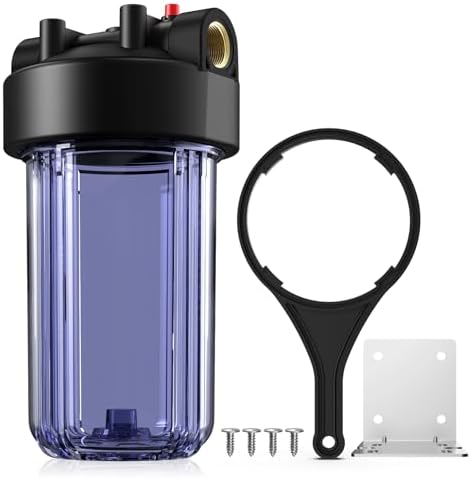
The SimPure DB10C is a filter housing with no cartridge included. It is built for standard 10 by 4.5 inch filters and uses a clear body so you can see when the cartridge needs attention. The listing describes a reinforced polypropylene body and a food-grade construction. It also states that the housing was tested against NSF standards. This is a useful detail, but it is worth confirming the exact certification scope in the product listing before you rely on it for a specific purpose.
The design includes several features that matter during installation. The ports are brass, the listing mentions a double O-ring design intended to reduce leaks, and the inlet and outlet are standard 1 inch NPT. The housing also includes a built-in red pressure-relief button, a wrench, a heavy-duty steel mounting bracket, and screws. Brass threads seal well, but the listing advises against using too much Teflon tape, because heavy wrapping can damage the threads and cause leaks. This is a practical point that many people overlook, and it is worth following closely.
Users who buy an empty housing often do so because they want flexibility. You can pair the SimPure body with the cartridge that best fits your water, and the listing names a range of compatible cartridges. That freedom comes with a responsibility to choose the right filter, since a mismatched cartridge can waste money or fail to address your sediment problem. The housing is also large. Before you buy, measure the mounting space and make sure you can open the bowl for filter changes without strain.
Compared with the GE system, this is a better fit for someone who already understands their water and wants to choose the cartridge separately. It is a more hands-on option, but the clear body and sturdy build make it a dependable base for a long-term sediment setup.
Pros:
- Clear housing makes it easy to see when the cartridge needs changing
- Brass ports and a double O-ring design aim to reduce leak risk
- Includes a wrench, mounting bracket, screws, and a pressure-relief button
- Works with a wide range of standard 10 by 4.5 inch cartridges
Cons:
- Filter cartridges and push fittings are sold separately, which adds to the total cost
- The large body needs ample space for mounting and cartridge changes
Verdict: The SimPure housing is a solid choice if you want a clear, durable base and plan to buy your own cartridge. Pick it when you value flexibility and have the space to install it. If you want everything in one box, look at the GE system instead.
Aquaboon 5 Micron Sediment Cartridges: Budget-Friendly Bulk Replacements

The Aquaboon product is a six-pack of 5 micron sediment cartridges in a 10 by 2.5 inch format. That size is different from the 10 by 4.5 inch cartridges found in many whole house systems, so checking your housing size is the most important step before buying. The listing describes a melt-blown polypropylene construction meant to capture rust, sand, dirt, and sludge. It also says the cartridge is made from food-grade material and is designed to avoid fiber shedding, which is a useful quality point for a sediment cartridge.
The main appeal is value in bulk. A six-pack lets you keep several cartridges on hand, which helps when you have a home with heavy sediment or a schedule of frequent changes. The listing also claims that the filter maintains steady water flow without a major pressure drop. That claim is worth testing in your own system by watching your flow rate after installation and after each change. In everyday use, many owners appreciate that the cartridges are simple to swap, though the result depends on the housing’s condition and how well the new cartridge seats.
The filter is a sediment-only product, so it does not address chemicals or taste. That is appropriate for a first-stage filter but means you may need additional treatment if your water has other concerns. The listing also mentions well water filtration, so it may be a practical option for well owners, but you should confirm that your water testing supports a sediment-only approach before you rely on it.
Compared with the PUREPLUS cartridge, the Aquaboon option emphasizes quantity and a different size. It suits a household that already has a 10 by 2.5 inch housing and wants an affordable stock of replacements. It is less suitable for anyone with a standard 10 by 4.5 inch system, since the size mismatch would prevent a proper fit.
Pros:
- Six-pack gives you a steady supply of replacements
- Melt-blown polypropylene is designed to capture rust, sand, and sediment
- Listing describes food-grade material and no fiber shedding
- Simple cartridge swap in compatible housings
Cons:
- The 10 by 2.5 inch size will not fit standard 10 by 4.5 inch housings
- Sediment-only filtration does not address chemicals or taste
Verdict: The Aquaboon six-pack is a good value for anyone with a 10 by 2.5 inch housing who needs a steady stock of sediment cartridges. Confirm your housing size first. If your system uses the larger format, choose a different cartridge.
iSpring WSP-50 Spin Down Sediment Filter: A Flushable First Stage

The iSpring WSP-50 is a different kind of sediment filter. Rather than a disposable cartridge, it is a spin-down prefilter rated at 50 micron. It uses a stainless steel mesh screen inside a see-through housing, and it is designed to be flushed regularly through a valve on the bottom. Because the sediment collects in the housing and is flushed out, the filter can handle heavy particles without needing a cartridge change. The listing describes the screen as lasting one to two years, which makes it a long-term component of your system.
The design is practical. The body uses a lead-free brass head, and the connections include 1 inch MNPT and 3/4 inch FNPT ends, with a garden hose barb on the flush valve. That barb helps direct the flush water to a drain or outdoor area. The clear housing lets you see the buildup, which tells you when a flush is due. The product is rated for water temperatures between 40 and 100 degrees Fahrenheit and pressures from 15 to 115 psi, and the listing states it is for indoor use only.
This filter works best as a first stage. Its 50 micron rating is coarse compared with the 5 micron cartridges on this list, so it removes larger particles and protects the finer filters that follow. The listing warns that screens may clog quickly when sediment is heavy, and it recommends a larger micron rating or a different spin-down model if your water carries a lot of material. In everyday use, some owners find the flushing routine manageable, but it does require a habit of checking and cleaning. It is less convenient than a swap-and-go cartridge if you prefer no maintenance at all.
Compared with the other options, this filter is a specialized tool. It does not replace a fine sediment cartridge in most homes, but it can extend the life of those cartridges and reduce how often you need to change them. It suits a household with noticeable grit or rust that wants a reusable first stage.
Pros:
- Flushable and reusable, which reduces ongoing cartridge costs
- Stainless steel mesh screen is listed to last one to two years
- Clear housing shows when flushing is needed
- Dual threaded connections and a hose barb make installation flexible
Cons:
- The 50 micron rating is too coarse to serve as a final sediment filter
- Screens may clog quickly in high-sediment water, and it is for indoor use only
Verdict: The iSpring WSP-50 is a smart first stage for a home with heavy sediment and a plan for regular flushing. Pair it with a finer filter downstream. If you want a single filter that catches small particles and requires no flushing, choose a cartridge-based option.
How to Choose the Right Whole House Sediment Filter
Know Your Water Source and Sediment Level
The first question to answer is where your water comes from. Municipal supplies and well water carry different types of sediment, and the filter that works well for one may struggle with the other. Well water often contains more sand, silt, and natural particles, so a heavier prefilter or a flushable stage may make sense. Municipal water usually has lower sediment, but older pipes can shed rust and scale. If you notice grit in the sink, cloudy water after a main break, or rust stains on fixtures, you likely need a sediment filter. A water test can help you understand the scale of the problem before you spend money on equipment.
Understand Micron Ratings
A micron rating describes the size of particles a filter is designed to catch. A 5 micron cartridge catches much smaller particles than a 50 micron screen. Finer filters protect appliances better but clog faster when water carries heavy sediment. Coarser filters last longer under heavy loads but leave more fine material in the water. Many homes use a two-stage approach, with a coarse prefilter catching large debris and a finer cartridge catching the rest. Think about your water and your appliances. If your goal is protecting a water heater or a washing machine, a finer filter downstream is often the better investment.
Check Housing Size and Connection Type
Before you buy any cartridge or housing, confirm its size and connection type. The products in this guide include 10 by 4.5 inch cartridges, a 10 by 2.5 inch cartridge, and a spin-down prefilter with NPT threads. A mismatch can leave you with a filter that will not fit, or one that leaks. Measure your existing housing, check the existing cartridge markings, and read the compatibility list carefully. If you are starting from scratch, a complete system like the GE unit removes much of the guesswork, though you still need to plan the installation location.
Plan for Maintenance and Replacement Costs
Every sediment filter needs attention, and the maintenance style differs across products. Disposable cartridges require regular replacement, and the cost adds up over the year. Flushable filters reduce cartridge costs but require you to flush the housing and check the screen. Set a reminder or use a built-in indicator if one is available. Keep spare cartridges on hand so a change never leaves your home unfiltered for long. Your actual schedule depends on water quality and household use, so inspect the filter regularly rather than relying only on the suggested interval.
Consider Installation Skills and Space
Whole house filters are installed on the main water line, which often means shutting off water, cutting pipe, and adding fittings. Some people handle this comfortably, while others prefer a plumber. Consider how much space you have near the entry point, and whether you can reach the housing for cartridge changes without strain. Large housings need extra room, and features like bypass valves and pressure-relief buttons can make maintenance easier. If you are unsure, hiring a professional for the first installation is a reasonable choice that can prevent leaks and fitting problems.
Balance Flexibility Against Convenience
Some buyers want a single complete system, while others prefer to buy a housing and choose their own cartridges. A complete system offers convenience and matching parts, but it limits you to specific cartridge types. A housing with separate cartridges gives you more choice, but it requires more research and attention to compatibility. Replacement-only cartridges suit people who already own a housing and want an easy restock. Choose the approach that matches your comfort with plumbing, your water conditions, and how much ongoing decision-making you want to handle.
Frequently Asked Questions
What is the difference between a sediment filter and a carbon filter?
A sediment filter removes physical particles such as sand, rust, and silt, while a carbon filter is designed to address chlorine, some chemicals, and certain tastes and odors. Some cartridges combine both functions, like the PUREPLUS product with its carbon layer. If your main concern is grit and rust, a sediment-focused filter is the right starting point.
Do I need a whole house sediment filter if I already have a faucet filter?
Yes, in many cases. A faucet filter treats only the water at one tap, while a whole house filter protects every fixture, appliance, and pipe connected to the main line. Sediment can damage washing machines, water heaters, and valves even when your drinking water looks clear. A whole house filter addresses the problem at the source.
How often should I change a whole house sediment filter?
The right interval depends on your water and how much you use. The PUREPLUS listing suggests changing its cartridge every three to six months for an average household, but heavy sediment may require more frequent changes. Check the filter regularly and watch for signs such as reduced water flow, a sudden pressure drop, or visible buildup in the housing.
Can I use a sediment filter on well water?
Many well owners use sediment filters, but the right choice depends on the water quality. The PUREPLUS listing notes that its product may not deliver expected results with well water. The Aquaboon listing mentions well water filtration, and the iSpring WSP-50 is designed for heavy particles. A water test is the best way to understand what your well water contains before you choose a filter.
Will a sediment filter reduce water pressure?
A filter can reduce pressure if it clogs or if the micron rating is too fine for your flow needs. The Aquaboon listing says its cartridge maintains steady flow without a major pressure drop, but you should still check flow after installation and after each change. The iSpring listing notes that large particles can cause pressure loss when a screen clogs, so regular flushing matters.
Do I need a professional to install a whole house filter?
Many homeowners with basic plumbing skills can install a whole house filter, but the job involves shutting off water and working on the main line. If you are not comfortable with soldering, threading, or pressure testing, a licensed plumber is a safe choice. Installing the bypass and pressure-relief features correctly also helps you maintain the system safely.
Is a flushable prefilter better than a disposable cartridge?
It depends on your needs. A flushable prefilter like the iSpring WSP-50 reduces ongoing cartridge costs and handles heavy sediment well, but it requires regular flushing and is coarser. A disposable cartridge is simpler to swap and often captures finer particles. Many homes benefit from using both, with the flushable unit first and a finer cartridge after it.
Final Recommendation
For most homeowners who want a complete, straightforward sediment solution, the GE Whole House Water Filtration System is the most practical choice. It includes the accessories and features that make installation and maintenance easier, and it reduces the guesswork of matching parts. If you already have a standard 10 by 4.5 inch housing, the PUREPLUS two-pack is a dependable replacement option for municipal water. If you want a clear, sturdy housing and plan to choose your own cartridge, the SimPure housing is a strong base. The Aquaboon six-pack suits a 10 by 2.5 inch system and bulk replacements, while the iSpring WSP-50 works best as a flushable first stage for heavy sediment.
Start by identifying your water source and your existing equipment. Measure your housing, confirm the cartridge size, and decide how much maintenance you are willing to handle. Once you have those answers, the right filter for your home is usually clear.