
Wireless lavalier microphones have become one of the easiest ways to improve audio for interviews, vlogs, classroom presentations, and live events. A clip-on mic hidden near your collar captures your voice far better than a camera’s built-in microphone, and wireless transmission lets you move without dragging a cable behind you. Range is the feature that matters most when you need freedom of movement. A mic that cuts out at the edge of a room or on a walk across a parking lot can ruin a take. This guide compares five wireless lavalier options with a focus on transmission distance, noise handling, battery life, and everyday usability, so you can match the right kit to the way you record.
Quick Comparison Table
| Product | Best For | Listed Range | Listed Battery Life | Noise Handling |
|---|---|---|---|---|
| FOKiRa Mini 3-in-1 Noise-Cancelling Wireless Lavalier Microphone | Simple plug-and-play recording | 150 feet | Not specified in listing | Noise-cancelling technology |
| XIOMOUS Wireless Lavalier Microphone for iPhone and Android, 2 Mics 1 Receiver | Two-person interviews and podcasts | 262 feet | 6 to 7 hours per microphone | AI noise cancellation with two levels |
| DJI Mic (2 TX + 1 RX + Charging Case) Wireless Lavalier Microphone | Feature-rich content creation and onboard recording | 250 meters (820 feet) | 5.5 hours per transmitter, up to 15 hours with case | Noise reduction with built-in processing |
| innopow 200-Channel Wireless Microphones System, Wireless Lavalier Microphone | Churches, events, and small stages | 180 to 240 feet line-of-sight | 14 to 17 hours | Cardioid pickup pattern |
| MAONO T5 Wireless Lavalier Microphone for iPhone, Android, Camera, and PC | Lightweight mobile vlogging | Not specified in listing | Up to 9 hours per transmitter, 40 hours total with case | Dedicated ENC chip with adjustable levels |
Our Picks: Best Wireless Lavalier Microphones With Long Range reviews
FOKiRa Mini 3-in-1 Noise-Cancelling Wireless Lavalier: A Simple Plug-and-Play Option
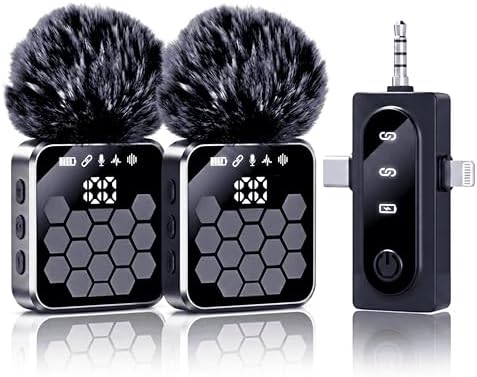
The FOKiRa Mini is designed for people who want audio that works without a learning curve. The listing emphasizes a true plug-and-play setup. You connect the receiver, plug in the microphone, and start recording without installing drivers or apps. For a creator who switches between a phone, a camera, and a laptop, that simplicity has real value. Fewer setup steps mean fewer chances to lose time before a shoot or meeting.
The product’s main selling point is its noise-cancelling technology. The listing says it reduces background sounds such as traffic and crowd noise so your voice stays in focus. Noise cancellation works best when the speaker is close to the microphone, so keep the clip-on mic within a few inches of the mouth for the cleanest result. The listed transmission range is 150 feet. That distance is enough for a typical living room, an office, or a short walk outdoors, but it falls short of the longer ranges offered by some other products on this list.
Many owners appreciate how quickly the system gets going. For solo content creators who record in one place, that ease counts for a lot. The main drawback is the lack of detail in the listing. Battery life is not specified, and there is limited information about the audio format or how the receiver handles multiple devices. Buyers who need precise specifications may want to check the listing carefully before ordering.
Compared with the other options here, the FOKiRa Mini is a straightforward tool rather than a feature-heavy kit. It does not offer two microphones or onboard recording. It makes the most sense for a single speaker who values fast setup over extra features.
Pros:
- Plug-and-play setup with no drivers or apps required
- Noise-cancelling technology helps isolate your voice
- Compact form suited to quick, mobile recording
- Clear 150-foot transmission range for typical indoor and outdoor use
Cons:
- Battery life is not listed, which makes long shoots harder to plan
- Range is shorter than several competing options
Verdict: The FOKiRa Mini is a good choice if you want a simple, single-speaker wireless mic that you can set up in seconds. If you need extended range or two microphones, look at the options below.
XIOMOUS Dual Wireless Lavalier System for Two-Person Recording

The XIOMOUS system is built around a simple idea: two people, one receiver, and clean audio from both. The kit includes two transmitters and one receiver, so you can record an interview, a podcast conversation, or a two-person video without juggling separate systems. The microphones pair with the receiver automatically, which removes one of the most common setup headaches.
The listed transmission range is 262 feet in a clear, unobstructed environment. That figure is a best-case number. Walls, crowds, and metal objects reduce range in real spaces, so plan on a shorter working distance indoors. Even so, the range gives you more flexibility than many basic kits, especially for outdoor interviews where you want to walk and talk.
The AI noise cancellation is one of the more interesting features. The listing claims up to 90 percent noise reduction and offers two levels of processing. The second level is useful because a quiet room and a busy street call for different settings. Be cautious with the 90 percent figure, since it reflects ideal conditions. In practice, the system works best when the microphones sit close to each speaker’s chest and the background noise is steady rather than sudden.
Audio specifications are solid for the price class, with support for 48kHz and 24-bit recording. The kit also includes reverb and mute functions, which give you some creative and practical control during a session. Connector options include Lightning and Type-C receivers, so check that the version you choose matches your phone before you buy.
Battery life is listed at roughly 6 to 7 hours per microphone. That is adequate for most interviews and short sessions but may require charging breaks for all-day events. Many owners appreciate the dual-mic design for conversations, although the system is less suited to a single speaker who wants a long-running, do-everything kit.
Pros:
- Two transmitters and one receiver suit interviews and two-person content
- Listed 262-foot range gives good freedom of movement
- Two-level AI noise cancellation adapts to different environments
- Lightning and Type-C receiver options cover common phones
Cons:
- Battery life of 6 to 7 hours per microphone may fall short on long shoots
- The 90 percent noise reduction claim depends heavily on mic placement and environment
Verdict: The XIOMOUS system is one of the best fits for two-person interviews and podcasts on a phone or tablet. Choose the connector type that matches your device, and plan for battery breaks on longer recordings.
DJI Mic: A Feature-Rich Kit With Onboard Recording and Charging Case

The DJI Mic is the most complete kit in this lineup. It includes two transmitters, a receiver, and a charging case that stores and charges everything in one place. The transmitters and receiver come pre-linked, which means you can take the kit out of the case and start recording quickly. For creators who travel or shoot in several locations, the all-in-one design keeps the setup organized.
Range is a major strength. The listing gives a maximum transmission distance of 250 meters, or 820 feet, in open, unobstructed environments. That is the longest listed range among the five products here. Real-world performance will drop with walls, interference, and crowded spaces, but the headroom is valuable for outdoor shoots and wide-open event spaces.
Battery life is another high point. The transmitters are listed at 5.5 hours each, the receiver at 5 hours, and the charging case extends total use to about 15 hours. The magnetic attachment makes it easy to hide the transmitter on clothing, and the receiver’s 0.95-inch OLED touchscreen gives you direct control over settings and battery status without a phone.
The built-in storage stands out. The 8GB of internal memory can record up to 14 hours of 48kHz, 24-bit audio without compression. That feature acts as a backup. If your phone or camera drops the connection, you still have a clean recording. It also lets you record each transmitter separately, which gives you more control in editing.
The main downside is availability. The listing data for this product shows it as currently unavailable, so check stock before planning around it. The kit also has more features than a simple single-speaker shoot requires. If you only need basic clip-on audio, a simpler option may serve you better.
Pros:
- Listed 250-meter range is the longest in this group
- Charging case extends total battery life to about 15 hours
- Onboard 8GB storage provides a backup recording
- Built-in OLED touchscreen allows quick adjustments on the receiver
Cons:
- Listing shows limited availability, so stock may be inconsistent
- Feature set may be more than casual users need
Verdict: The DJI Mic is an excellent pick for creators who want maximum range, reliable battery life, and built-in recording in one kit. If it is in stock and fits your budget, it is one of the strongest all-around options here.
innopow 200-Channel UHF System for Stage, Church, and Event Use

The innopow system is a different type of product from the others on this list. It is a UHF wireless microphone system built for live sound rather than phone-based content. The kit includes a receiver, one lavalier microphone, one headset microphone, one handheld microphone, a power adapter, a cable, and antennas. It suits churches, small stages, classrooms, karaoke nights, and family events where several people need to speak or sing.
The system offers a wide set of selectable frequencies and two ways to set them. You can use automatic scanning to find a clear frequency, or set channels manually when you run multiple systems. That flexibility matters in busy venues where radio interference can cause dropouts. The receiver also provides two XLR outputs and one 1/4-inch mixed output, which connect to mixing boards and amplifiers more easily than consumer-grade kits.
Listed battery life is 14 to 17 hours, which is strong for a full day of events or services. The listed line-of-sight range is 180 to 240 feet, or 60 to 80 meters. That range is practical for a stage or sanctuary, and it stays consistent when the speaker moves within the room. The listing also notes that a power amplifier is recommended for the best results, which is an important detail for buyers who plan to run the system through a sound setup.
The cardioid pickup pattern helps focus on the speaker and reduce feedback from the sides and rear. The microphones are described as clear and loud enough for small venues. Still, this is not a noise-cancelling vlogging kit. If your main need is cutting out traffic or café noise during a street interview, a dedicated noise-cancelling lavalier will serve you better.
Pros:
- Multiple microphone types cover lavalier, headset, and handheld use
- Long battery life of 14 to 17 hours suits full events
- XLR and 1/4-inch outputs connect to mixers and amplifiers
- Frequency scanning and manual setup help avoid interference
Cons:
- Not designed for phone-based vlogging or mobile video production
- The listing recommends a power amplifier, which adds to the total setup
Verdict: The innopow system is the best choice here for live events and performance spaces. It is not a good match for solo phone creators, but it is a practical tool for anyone who needs reliable wireless sound in a room.
MAONO T5: An Ultra-Light Mic for Phone-Based Creators
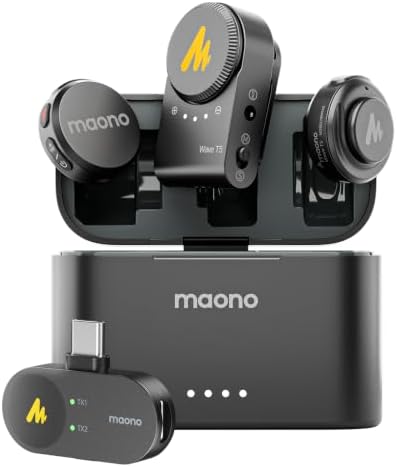
The MAONO T5 is built for creators who want a small, light microphone that disappears on camera. The listing describes the transmitter as weighing just 9 grams, which makes it easy to clip onto a shirt or jacket for long walking shots, cooking videos, or hands-free content. It is designed for phones, cameras, and computers, which covers most mobile creators.
Noise handling is a clear focus. The T5 uses a dedicated ENC chip and offers three modes with 14 levels of noise cancellation, adjustable through the companion app. That level of control is useful because you can tune the setting for a quiet bedroom or a busy market. The app is required for these adjustments, so plan to install it before your first shoot.
Several practical touches stand out. A long press on the mute button sends a signal that can trigger the phone’s shutter remotely, which is handy for solo recording. Playback is possible without unplugging, so you can check a take on the go. The Type-C port also allows the phone to charge while connected, and the receiver does not need its own charging.
The four one-tap voice presets offer quick tone adjustments. Options include a balanced vocal setting, a brighter tone for social media, a warmer tone for storytelling, and a deeper broadcast-style sound. These presets help beginners get a polished sound without editing software.
Battery life is a strength. Each transmitter is listed at up to 9 hours, and the charging case brings total use to about 40 hours. The listing does not give a range figure, however. For a product marketed around wireless freedom, that gap matters, and buyers who need long-distance performance should confirm the specifications before buying. In everyday use, many owners appreciate the small footprint and the ease of switching between devices, though the range question is worth weighing.
Pros:
- Very lightweight transmitter at 9 grams for discreet wear
- Adjustable noise cancellation with three modes and 14 levels
- Remote shutter function and phone charging support add everyday convenience
- Long battery life, with up to 40 hours total from the charging case
Cons:
- Range is not listed in the product details, which limits comparison for long-distance use
- Advanced noise settings depend on the companion app
Verdict: The MAONO T5 is an excellent choice for mobile creators who value a tiny, feature-packed mic with strong battery life. If you need a confirmed long-range specification, compare it closely with the DJI Mic or the XIOMOUS system first.
How to Choose the Right Wireless Lavalier Microphone for Long-Range Use
Understanding Real-World Range
Manufacturers usually list range as a best-case number measured in open space with no obstacles. The DJI Mic lists 250 meters, the XIOMOUS system lists 262 feet, and innopow lists 180 to 240 feet line-of-sight. These numbers are useful for comparison, but your actual range will depend on walls, metal objects, the human body, and radio interference from other devices. A good rule is to plan for roughly half of the listed distance in a typical building. If you record outdoors, you may get closer to the published figure, though terrain and obstructions still matter. Test the setup in the exact space where you plan to record before an important shoot.
Noise Cancellation Versus Noise Reduction
Many products use the terms noise cancellation and noise reduction as if they mean the same thing, but they describe different approaches. Noise reduction usually works by filtering out steady background sounds such as a fan or air conditioner. Noise cancellation tends to focus on separating voice from surrounding sound, often with processing that adapts to the environment. Both features help, but neither replaces good microphone placement. Keep the clip-on mic close to the speaker’s chest or collar, and avoid placing it where clothing rubs against it. Products with adjustable levels, like the XIOMOUS and MAONO T5, give you more control. Fixed settings are simpler but offer less flexibility for changing locations.
Battery Life and Charging Options
Battery life determines how long you can record before you need to swap in a charged transmitter or stop for a break. A kit with 5 to 7 hours per microphone works well for interviews and short video sessions. For event work, a longer runtime such as the 14 to 17 hours listed by innopow is a much better fit. Charging cases add real value because they keep your mics ready between sessions. Pay attention to whether a product’s total battery figure includes the case, since that changes how long you can record in a full day. Some products also let you charge a phone through the mic, which can save a port on a long shoot.
Compatibility With Your Phone, Camera, or Computer
Before you buy, confirm that the receiver matches the port on your device. Some kits offer Lightning and Type-C versions, while others rely on a standard connection or a cable adapter. Cameras may need a 3.5mm input or an adapter, and computers may use USB or a 3.5mm jack. Read the connector details in each listing carefully. Also check whether the product needs an app for setup or for advanced settings. A kit that works without installing software is ideal for quick shoots, but apps can unlock useful controls for those who want more precision.
Number of Transmitters and Receiver Design
Think about how many people you need to record at once. A single transmitter is enough for a solo vlogger or a presenter. Two transmitters work well for interviews, podcasts, and two-person videos. Systems built for events, like the innopow kit, may include handheld and headset microphones alongside lavaliers. More transmitters mean more flexibility, but they also add setup steps and more batteries to manage. A receiver with a clear screen or onboard controls can make adjustments faster, especially when you are changing settings between takes.
Recording Features and Backup Options
Some wireless mics record audio directly to internal storage, which provides a safety net if the wireless signal drops during a recording. The DJI Mic’s 8GB of memory and its ability to record each transmitter separately are valuable for this reason. Extra features such as reverb, mute buttons, voice presets, and remote shutter control can also improve your workflow. Choose features that match your actual process. A creator who edits heavily may prefer clean, unprocessed audio, while someone who publishes quickly may appreciate built-in presets that deliver a polished sound right away.
Build Quality, Size, and Comfort
A lavalier microphone sits close to your body for long periods, so size and weight matter. Very small transmitters, such as the 9-gram MAONO T5, are easy to hide and comfortable to wear for hours. Magnetic attachments, like those on the DJI Mic, let you position the transmitter quickly and remove it without fussing with clips. Check how the clip or attachment method works with your clothing. Thin fabrics may need a different clipping position than a jacket or sweater. Also consider how the receiver fits into your gear bag, especially if you carry a camera, phone, and stabilizer on the same shoot.
Frequently Asked Questions
How far can a wireless lavalier microphone really reach?
Most listed ranges assume open space with no walls or interference. In a typical room or office, you should expect a shorter working distance. Outdoor use usually gives the best results, but crowds, buildings, and metal structures can still reduce performance. Testing the setup at your recording location is the most reliable way to know what you can expect.
Do I need an app to use these microphones?
Not always. Some products, such as the FOKiRa Mini, are designed to work right out of the box with no app or driver. Others, like the MAONO T5, use an app to adjust advanced noise cancellation levels. Check the product details before you buy if you want to avoid software setup entirely.
Can I use these microphones with both iPhone and Android phones?
Some products are designed for both platforms, but the connector type matters. The XIOMOUS system offers Lightning and Type-C receiver options, so you need to choose the version that matches your phone. Always confirm the connector before buying, and consider an adapter only if the listing says it is supported.
Is noise cancellation the same as noise reduction?
They are related but not identical. Noise reduction often targets steady sounds, while noise cancellation typically works to separate your voice from the surrounding environment. Both help, but close microphone placement still makes the biggest difference in clarity.
Which option is best for two-person interviews?
The XIOMOUS system is a strong choice because it includes two transmitters and one receiver. The DJI Mic also works well for two speakers and adds onboard recording and a longer total battery runtime, although its availability may vary.
Why does battery life matter so much for long recordings?
A mic that runs out of power in the middle of an interview or event can ruin the entire session. Longer runtimes and charging cases give you more freedom to record without interruptions. For full-day shoots or live events, prioritize products with strong total battery life and a convenient way to recharge between takes.
Final Recommendation
Each of these five microphones serves a different type of user, so the best choice depends on how you record. For a simple, single-speaker setup that works right away, the FOKiRa Mini is a practical pick. For two-person interviews and podcasts with a generous listed range, the XIOMOUS system is a well-rounded option. The DJI Mic stands out for maximum range, onboard recording, and a charging case that keeps you running through a long day, provided it is in stock. For live events, churches, and small stages, the innopow system offers the most flexibility and the longest battery runtime. The MAONO T5 is the best fit for mobile creators who want a tiny, feature-rich mic with excellent battery life, although buyers who need a confirmed range figure should compare it carefully with the others. Match your choice to your recording environment, your number of speakers, and your device, and you will get clean, reliable audio that keeps up with your movement.