
If you grew up with a steel filter sitting on the kitchen counter, you already know that a good cup of South Indian filter coffee depends on more than the beans. The drip chamber, the mesh, the material, and the size all shape the thick, chicory-tinged decoction that makes the drink what it is. Many shoppers search for a coffee maker for Indian filter coffee and find dozens of near-identical steel cylinders with little guidance on which one actually suits their kitchen. This guide narrows the field to five popular options, explains how each one brews, and points out where each one fits best. Whether you want a small brewer for a solo morning cup or a larger pot for a family gathering, you should be able to find a clear match below.
Quick Comparison of the Top 5 Picks
| Product | Size | Material | Best For |
|---|---|---|---|
| PAJAKA South Indian Filter Coffee Maker 6-8 Cup Mug Madras Kaapi Kappi Drip Decoction Maker Brewer Dripper | 6-8 cup (per listing) | Stainless steel | Families and decoction lovers who want a versatile brewer |
| South indian filter coffee maker indian style 10.1 oz (300 ml) | KERAM indian coffee filter 304 stainless steel | 10.1 oz (300 ml) | 304 stainless steel | Travel, camping, and zero-waste brewing |
| KSJONE South Indian Filter Coffee Maker 7 oz,2-4 Cups Stainless Steel Coffee Maker, Drip Coffee Brewer, Madras | 7 oz, 2-4 cups | Stainless steel | Couples and small households |
| PANCA South Indian Filter Coffee Maker | Traditional Drip Coffee Decoction Maker for Hot & Cold Coffee (400ML | 400 ml, 4-5 cups | Food-grade brass | Larger households and induction users |
| SHASTHA FOODS Stainless Steel South Indian Filter Coffee Maker(Size # 3) – 260 ml (Pack of 1) B-P | 260 ml (Size #3) | Stainless steel | Traditional everyday brewing with easy cleanup |
Our Picks: Best Coffee Maker For Indian Filter Coffee reviews
PAJAKA South Indian Filter Coffee Maker: The Versatile Family-Size Brewer

The PAJAKA filter is a traditional two-part steel brewer designed to produce a concentrated decoction, the strong base that forms the heart of South Indian filter coffee. Its listing describes a 6-8 cup capacity, which makes it the most generous option in this group. You add coffee grounds to the upper chamber, pour hot water over them, and let the liquid drip slowly into the mug or vessel below. The process takes patience, but it rewards you with a bold, full-bodied concentrate that you can dilute to your taste.
Build quality is where this model makes a good first impression. The stainless steel body is rust-resistant according to the product description, and the metal filter is meant to capture the character of the coffee without paper or other disposable parts. For anyone who wants a durable everyday brewer, that matters. Steel holds up to repeated hot water and daily scrubbing far better than thin aluminum, and it avoids the plastic components that can warp over time.
Practical use is where PAJAKA stands out from the rest of the list. The listing highlights more than just traditional coffee. It suggests using the decoction for espresso-style shots, milkshakes, and ice cream, which makes this brewer a good fit for households that like experimenting with coffee-based drinks. In our analysis, that flexibility is its biggest selling point. Many owners appreciate having enough concentrate on hand to serve several people or to prepare a batch of cold coffee for the week.
This brewer suits families, frequent hosts, and anyone who wants a single steel pot that can do most of the work. It is less suited to someone who only brews one cup at a time, because the decoction-making process rewards a larger batch. Compared with the smaller KERAM and KSJONE options, PAJAKA asks for more counter space and a bit more time, but it returns a larger yield per session.
Pros:
- Generous 6-8 cup capacity suits families and guests
- Stainless steel construction supports long-term daily use
- Decoction works for hot coffee, cold drinks, and dessert recipes
- Simple, paper-free brewing with no electricity required
Cons:
- Larger footprint takes up more room in small kitchens
- Slow drip process means you need to plan ahead for morning coffee
Verdict: If you want one steel brewer that can serve a family and still handle creative coffee drinks, the PAJAKA is a strong pick. Choose it if batch size matters more than compact storage.
KERAM Indian Coffee Filter: The Compact Travel-Friendly Brewer

The KERAM brewer is a traditional two-chamber slow-drip filter with a 10.1 oz (300 ml) capacity, made from 304 food-grade stainless steel. The listing emphasizes a fully manual design that needs no electricity, batteries, pods, or electric machine. That makes it one of the most portable choices in this roundup. If you want filter coffee at a campsite, on a road trip, or in a hotel room with only a kettle, this is the kind of brewer that makes sense.
Its permanent metal filter is another strength. Because there are no paper filters or replacement cartridges, your running cost stays close to the price of the coffee itself. Over a year of daily use, that avoids a steady stream of small purchases and reduces waste. The listing also notes that the decoction works for cold coffee, coffee shakes, affogato, and baking, which gives you more than one way to use each batch.
In everyday use, the main trade-off is volume. At 300 ml, this brewer makes a modest amount of decoction, which is ideal for one or two people but may feel limiting when hosting. Some buyers find the slow drip rate takes a bit of attention, and you should plan around it if you are in a hurry. The lighter build means it is easy to pack and store, but it also means you should handle it gently and avoid dropping it on hard floors.
KERAM suits solo drinkers, couples, travelers, and anyone who wants a no-waste brewing method they can take anywhere. Compared with PAJAKA, it trades batch size for portability. Against KSJONE, which is also a small brewer, KERAM offers a slightly larger 300 ml volume and a stronger emphasis on outdoor and travel use.
Pros:
- Fully manual design works without electricity or batteries
- 304 stainless steel body suits repeated daily brewing
- Paperless metal filter eliminates ongoing filter costs
- Compact size makes it easy to pack for travel and camping
Cons:
- 300 ml capacity is limited for larger groups
Verdict: The KERAM is the best choice for travelers, campers, and single or double households that want a low-waste, electricity-free brewer. If you need to serve a crowd, choose a larger model instead.
KSJONE South Indian Filter Coffee Maker: A Simple Option for Small Households
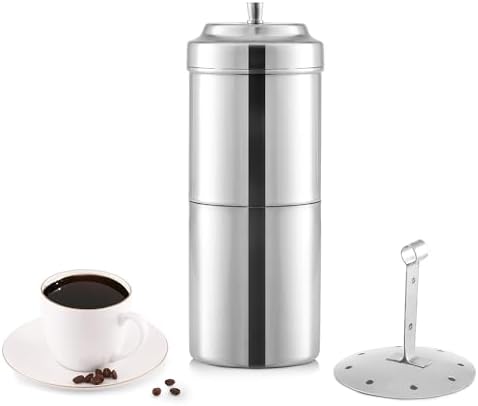
The KSJONE brewer is a stainless steel drip filter listed at 7 oz with a 2-4 cup serving range. It follows the familiar South Indian pattern: a perforated upper chamber holds the grounds, and hot water slowly percolates through to create a concentrated decoction. The listing describes the steel filter’s many small holes as the key to even water distribution, which is the basic principle behind a well-extracted decoction.
What makes this model appealing is its straightforward approach. The listing gives a simple process: add one or two tablespoons of coffee, pour in hot water, and press the grounds gently so they dissolve properly. That simplicity is useful if you are new to filter coffee and do not want to master a complicated routine. In everyday use, many owners find the steps easy to repeat each morning once they settle on a coffee-to-water ratio that suits their taste.
The brewer’s size is its main limitation and its main advantage. Two to four cups is ideal for a couple or a small household, and the compact footprint is easy to store in a crowded kitchen. However, the listing’s keyword-heavy gift section is more of a marketing layer than a product feature, so buyers should focus on the brewing details rather than the gift language. Also, the listing does not clearly describe every component, so check the product specifications before you buy if you have specific needs.
This brewer suits couples, apartment dwellers, and beginners who want an affordable steel filter without extra features. Compared with KERAM, it has a similar capacity range but a stronger focus on home brewing rather than travel. Compared with PAJAKA, it offers less yield but a smaller, easier-to-store footprint.
Pros:
- Compact size fits small kitchens and small households
- Simple brewing steps make it friendly for beginners
- Stainless steel filter provides a pure, unadulterated extraction
- Versatile enough for hot coffee, cold drinks, and baking
Cons:
- Listing lacks detailed specifications on some components
Verdict: The KSJONE is a sensible choice for couples and small households who want a simple, compact steel brewer. Pick it if you value straightforward use over a large batch.
PANCA South Indian Filter Coffee Maker: The Brass Option for Larger Batches

The PANCA maker stands apart from the others in this list because it is made from food-grade brass rather than stainless steel. With a 400 ml capacity, the listing suggests 4-5 cups of strong decoction, which places it in the mid-size range. It uses the same perforated top chamber and bottom collection container as a traditional filter, so the brewing ritual will feel familiar to anyone who has used a steel dripper.
The brass construction brings both character and responsibility. The listing describes it as rust-proof and durable, and brass does resist corrosion well when kept dry. However, brass can tarnish over time, so you should expect to polish it occasionally if you want it to keep its bright look. Cleaning is straightforward: the listing recommends rinsing with water or mild detergent, and the smooth surface makes that easy. Buyers who prefer a warm, traditional appearance on the counter often value this finish.
Cooktop compatibility is another distinguishing detail. The listing states that the maker works on both gas stoves and induction cooktops, which is useful if you want to heat water in a separate pot and pour it in. It is worth noting that the brewer itself does not need electricity, so the induction mention refers to the kettle or pot you use alongside it. In everyday practice, owners appreciate a brewer that suits a range of kitchens without fuss.
PANCA suits households that brew larger batches, people who enjoy a traditional metal look, and anyone who wants a single brewer that can handle hot and cold coffee. It is a better match for families than for solo drinkers. Compared with the steel models here, it offers a similar workflow but a different material profile, which some shoppers prefer and others find higher maintenance.
Pros:
- 400 ml capacity suits families, offices, and small gatherings
- Food-grade brass construction has a distinctive, traditional look
- Works with the hot and cold coffee methods described in the listing
- Smooth surface makes cleaning quick and simple
Cons:
- Brass may tarnish and needs occasional polishing to look its best
Verdict: The PANCA is a strong choice for larger households that want a traditional brass brewer with a mid-size yield. If you prefer low-maintenance steel, one of the stainless models may suit you better.
SHASTHA FOODS Stainless Steel Filter Coffee Maker: A Classic Everyday Brewer

The SHASTHA FOODS brewer is a stainless steel filter in Size #3, with a listed capacity of about 260 ml of thick decoction. It is the smallest model in this roundup by volume, but it is a practical, traditional option for people who want a no-frills filter that does exactly what it promises. The description notes a handle, which helps when you lift the upper chamber or pour the decoction off the top.
Cleanup is one of its strongest points. The listing states that it is easy to wash with soap and water and is dishwasher safe. For a brewer that handles fine coffee grounds every day, quick cleanup is a real convenience. Many owners find that a brewer they can clean in minutes is one they actually use every morning rather than leaving on the shelf.
The trade-off is in the details. The listing offers less information than some competitors about specific dimensions and components, so you may want to confirm the fit and handling before purchase. In addition, stock on this listing may be limited at times, so check availability before you plan around it. In everyday use, the smaller volume is best suited to one or two cups, and it may feel too small for a family.
This brewer suits people who want a simple, budget-minded steel filter for daily use and do not need a large batch. Compared with PANCA, it trades volume and material character for easier cleaning and a classic steel build. Compared with KERAM, it offers a similar yield but a more traditional, less travel-focused design.
Pros:
- Stainless steel build supports long-term daily brewing
- Dishwasher-safe design makes cleanup simple
- Handle makes the brewer easier to lift and pour
- Traditional design suits everyday South Indian coffee routines
Cons:
- Smaller capacity suits one or two cups better than a family
Verdict: The SHASTHA FOODS brewer is a dependable pick for solo drinkers or couples who want a classic, easy-to-clean steel filter. Choose it if you prioritize simplicity and cleanup over batch size.
How to Choose the Right Indian Filter Coffee Maker
Choosing a filter coffee maker is less about finding the single best product and more about matching the brewer to your routine. The five models above cover a wide range of sizes and materials, so the right choice depends on how many people you brew for, where you plan to use the brewer, and how much maintenance you are willing to do. The following factors will help you make a confident decision.
Capacity and Batch Size
Capacity is the first factor to consider because it determines how much decoction you can make in one session. A 300 ml or 260 ml brewer, like the KERAM and SHASTHA FOODS models, is ideal for one or two people who drink a cup or two each morning. A 400 ml brewer, like PANCA, or a larger 6-8 cup listing, like PAJAKA, makes more sense for households that serve guests, brew for the whole family, or like to keep decoction on hand for other recipes. Buying a brewer that is slightly larger than you think you need gives you room for experimenting with cold coffee and desserts, but a brewer that is far too big can waste time and coffee grounds.
Material and Build Quality
Most traditional filter coffee makers are made from stainless steel, and that is a sound choice for everyday use. Stainless steel resists rust, handles hot water repeatedly, and holds up to daily washing. Among the models here, KERAM specifically notes 304 food-grade stainless steel, which is a common and reliable grade for kitchen use. Brass, as used in PANCA, offers a different look and a traditional character, but it requires more attention to keep its appearance. If you want a brewer that stays bright with minimal effort, stainless steel is the lower-maintenance option. If you enjoy the warm tone of metal and don’t mind occasional polishing, brass can be a rewarding choice.
Two-Chamber Design and Filter Mesh
The core of any filter coffee maker is its two-chamber design. The upper chamber holds the grounds, and the lower chamber collects the decoction as it drips through. The quality of the mesh or perforated base affects how evenly the water passes through the grounds. The KSJONE listing emphasizes many small holes for even distribution, which is the right principle to look for. When you compare models, pay attention to how the chambers fit together, how stable the upper chamber sits on the lower one, and whether the filter feels solid rather than flimsy. A well-made filter produces a smoother, more consistent extraction, which is the difference between a thin, bitter cup and a rich, aromatic one.
Heating and Cooktop Compatibility
Most filter coffee makers in this category are manual. They do not plug in, and they rely on the hot water you pour in. That means the real heat source is your kettle, pot, or stovetop. The PANCA listing states that it works with gas stoves and induction cooktops, which is useful if you heat water in a pot on the stove. If you plan to use an induction cooktop, check that your kettle or pot is induction-compatible, because the brewer itself does not need power. Choosing a brewer that suits your kitchen setup means you can enjoy your coffee without changing your existing equipment.
Ease of Cleaning and Daily Maintenance
A filter coffee maker is only useful if you actually use it every day, and that depends heavily on how easy it is to clean. Fine coffee grounds can cling to the mesh, and oils can build up over time. Steel models that are dishwasher safe, like SHASTHA FOODS, or that rinse easily with mild detergent, like PANCA and PAJAKA, save you time. Smooth surfaces are easier to clean than heavily textured ones. Plan to rinse the brewer after each use and to scrub the mesh periodically. A model that is simple to clean is more likely to stay in your routine.
Portability and Storage Space
Your kitchen size and lifestyle matter when choosing a brewer. A compact model, like KERAM or KSJONE, fits in a crowded cabinet and travels well, which is helpful if you camp, hike, or take road trips. Larger brewers, like PAJAKA and PANCA, take up more counter or cabinet space but give you a bigger yield. If you often travel or want a brewer for the office, portability should rank high on your list. If you have a dedicated coffee corner at home, a larger brewer may be perfectly comfortable.
Versatility Beyond Traditional Coffee
Many buyers want a brewer that can do more than serve a single cup of traditional coffee. The PAJAKA and KERAM listings both describe uses for the decoction beyond hot filter coffee, including iced coffee, espresso-style shots, coffee shakes, and dessert recipes. If you enjoy experimenting in the kitchen, a brewer that produces a concentrated decoction gives you a useful base ingredient. Think about how you plan to use your decoction. If you mostly drink it hot with milk and sugar, almost any model here will serve you well. If you want to explore cold drinks and baking, a larger, more versatile brewer may give you more room to experiment.
Value and Long-Term Use
Price is always part of the decision, but value depends on how long a brewer lasts and what it costs to use. Paperless steel filters avoid the ongoing expense of disposable filters, which is a major advantage for daily drinkers. Because stock and pricing change frequently on Amazon, compare the current listing details rather than relying on a set figure. Focus on durability, capacity, and maintenance first, then check the listing for the most current cost and availability. A slightly higher-quality brewer that you use every morning for years often delivers better value than a cheaper model that you replace quickly.
Frequently Asked Questions
What is South Indian filter coffee, and how is it different from regular drip coffee?
South Indian filter coffee is made by slowly dripping hot water through finely ground coffee in a metal filter, which produces a thick, concentrated decoction. Unlike standard drip coffee, which is brewed to a full cup in a machine, the decoction is usually mixed with hot milk and sugar at serving time. The result is a strong, rich drink with a distinct character.
Do I need electricity to use these filter coffee makers?
No. The models in this list are manual brewers. They rely on hot water from a kettle or pot, so you do not need an electric machine. The KERAM listing specifically highlights that it works without electricity, batteries, or pods, and the same basic principle applies to the other steel and brass options here.
Which brewer is best for a family of four?
For a larger household, the PAJAKA listing, which describes a 6-8 cup capacity, offers the most generous batch size. The PANCA model, with its 400 ml capacity and listed 4-5 cups, is also a practical choice for a family. Smaller models like KERAM or SHASTHA FOODS may need to be brewed multiple times to serve four people.
Can I use the decoction for cold coffee or dessert recipes?
Yes. Several listings describe using the decoction for iced coffee, cold coffee, coffee shakes, and baking. Because the decoction is concentrated, you can dilute it with chilled milk, ice, or sweeteners to suit your taste. Many home cooks also use it in desserts that call for strong coffee.
How do I clean a filter coffee maker properly?
Rinse the upper and lower chambers with warm water after each use, and use a soft brush or mild detergent to clear fine grounds from the mesh. The SHASTHA FOODS listing notes that it is dishwasher safe, while other models are typically cleaned by hand. For brass, dry the brewer thoroughly and polish it occasionally to prevent tarnish.
Is stainless steel better than brass for a filter coffee maker?
Neither material is objectively better, but they suit different preferences. Stainless steel is low-maintenance, resists rust, and holds up to daily use. Brass has a warm, traditional look and is described as rust-proof in its listing, but it can tarnish and needs occasional polishing. If you want minimal upkeep, stainless steel is usually the easier choice.
Which filter coffee maker should I buy overall?
For most households, the PAJAKA South Indian Filter Coffee Maker is the strongest all-around pick because it combines a generous capacity, steel construction, and versatility for both traditional and creative coffee drinks. If you travel often or want a compact, electricity-free brewer, the KERAM model is an excellent alternative. Smaller households will find the KSJONE and SHASTHA FOODS brewers simple and practical, while PANCA suits those who want a traditional brass look and a mid-size yield. Check each listing for current availability and details before you buy, and choose the size that fits the number of people you usually brew for.