
Choosing the best air mattress for bedridden patients means balancing pressure redistribution, comfort, noise, fit, and ease of care. These alternating-pressure pads sit on top of an existing mattress and use an electric pump to inflate and deflate air cells in cycles. They may help reduce prolonged pressure on the skin, but they do not replace regular repositioning or advice from a clinician. Here are five options, with practical differences to help you narrow your choice.
Quick Comparison
| Product | Key Features | Weight Capacity | Best For |
|---|---|---|---|
| Vive Alternating Air Pressure Mattress Pad | 130 air cells, adjustable pump, about 22 dBA | Up to 300 lb | Quiet operation and a familiar topper-style setup |
| KEKOY Alternating Air Pressure Mattress Pad | 130 air cells, five pressure levels, under 28 dBA | Not specified | Adjustable pressure and waterproof cleanup |
| SereneLife Air Pressure Mattress Pad | Breathable air channels, repair kit included | Up to 330 lb | A stated hospital-bed size and higher listed capacity |
| PELEGON Alternating Air Pressure Mattress Pad | Adjustable pressure, tool-free setup | Not specified | Caregivers who need a longer topper |
| FOMMOF Alternating Air Pressure Mattress Pad | 130 air cells, adjustable pump, waterproof surface | Up to 300 lb | Flexible bed fit and straightforward cleaning |
Our Picks: Best Air Mattress For Bedridden Patients reviews
1. Vive Alternating Air Pressure Mattress Pad: A Quiet, Well-Specified Pick

The Vive pad uses 130 air cells that inflate and deflate in a repeating wave. This alternating pattern is designed to shift pressure across the mattress surface rather than leave the body resting on the same areas all the time. It is a topper, so it goes over an existing mattress instead of replacing the bed.
Its pump is listed at 22 dBA, and each pressure cycle lasts about six minutes. Those details may matter if the pump will run near the patient overnight. The pad has a waterproof vinyl surface and flaps that tuck between the mattress and frame to help keep it in place. The stated weight capacity is 300 pounds.
This is a strong option if quiet operation and a clearly described cell system are priorities. Its six-minute cycle is shorter than the cycle stated for several other picks, but a faster cycle is not automatically better for every person. Ask a clinician whether this style of support is suitable for the patient’s needs, and check the bed dimensions before ordering.
Pros:
- 130 air cells provide alternating pressure across the pad.
- Pump is listed at 22 dBA.
- Waterproof surface and mattress-tucking flaps support everyday care.
- Listed weight capacity is up to 300 pounds.
Cons:
- Its stated six-minute cycle may not suit every care plan or comfort preference.
- The topper format requires an existing mattress or suitable bed frame.
Verdict: Choose the Vive if you want a quiet, 130-cell topper with a stated weight capacity and a design that tucks onto an existing bed.
2. KEKOY Alternating Air Pressure Mattress Pad: Adjustable Pressure Choices
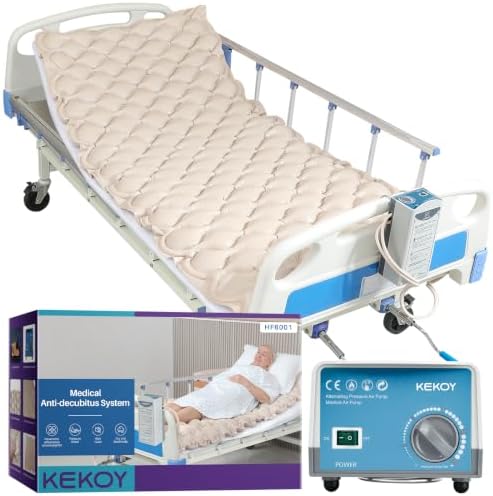
The KEKOY pad has 130 bubble-style air cells that alternately inflate and deflate to help redistribute pressure. Its pump offers five pressure levels, giving caregivers a range of settings to try for comfort. The product description lists a cycle of about 10 to 12 minutes and says the pump operates below 28 dBA.
The waterproof surface is intended to make routine cleanup easier after spills, sweat, or incontinence. The product is described for home care, long-term care, and recovery, but the listing does not provide a weight capacity or pad dimensions in the available details. Confirm both with the seller and compare the measurements with your bed before buying.
Compared with the Vive, KEKOY offers more stated pressure settings, while the Vive gives a lower stated pump-noise figure and a shorter cycle. KEKOY may be a fit if adjustable firmness and wipe-clean care are your main priorities, provided the size and capacity work for the patient.
Pros:
- 130 air cells support alternating pressure.
- Five pressure levels allow for adjustment.
- Waterproof surface is designed for easier cleaning.
- Listed pump noise is below 28 dBA.
Cons:
- Weight capacity and pad dimensions are not specified in the supplied product details.
- The listed cycle is longer than the Vive’s stated cycle.
Verdict: Consider KEKOY if multiple pressure settings and a waterproof surface matter most, but verify fit and weight capacity before purchasing.
3. SereneLife Air Pressure Mattress Pad: A Defined Hospital-Bed Size

SereneLife is an alternating-pressure air pad made from PVC. Its listing gives an inflated size of 78.74 by 35.43 inches and a thickness of 2.76 inches, which can help you compare it with a hospital bed or another intended surface. The stated capacity is up to 330 pounds, the highest listed among these five options.
The pad has breathable air channels and micro air holes, which the manufacturer describes as features for airflow and comfort. It comes with an electric pump that supports 110/220V power and a puncture patch repair kit. The listed pressure range is 70–130 mmHg; caregivers should follow the product instructions and consult a clinician about whether the pad’s settings are appropriate.
Unlike several choices with a stated count of 130 air cells, the supplied SereneLife details do not give a cell count or pump-noise level. Its specific dimensions and higher stated weight capacity are useful points of comparison, but measure the bed carefully and consider whether pump noise may affect sleep in your care setting.
Pros:
- Provides stated inflated dimensions for easier bed-fit checks.
- Listed weight capacity is up to 330 pounds.
- Includes a puncture patch repair kit.
- Has breathable channels and micro air holes, according to the product description.
Cons:
- The supplied details do not state a pump-noise level or air-cell count.
- Its PVC surface and listed pressure range may not fit every patient’s care needs.
Verdict: SereneLife is worth considering when its stated hospital-bed dimensions and 330-pound capacity match your requirements.
4. PELEGON Alternating Air Pressure Mattress Pad: A Longer Topper

PELEGON is an alternating-pressure topper intended for hospital beds, home beds, and extended bed rest. Its listing gives dimensions of 84 by 37 inches and describes a tool-free setup. Those measurements are longer than SereneLife’s stated inflated length, so this model may be worth a look if you need a longer pad—but compare its dimensions with the actual sleeping surface before ordering.
The product description says its air cycles redistribute body weight and that the pump offers adjustable pressure. It does not provide a specific number of cells, cycle length, noise level, or weight capacity in the supplied details. Those missing specifications make it harder to compare directly with models that list more operating information.
PELEGON may suit caregivers who value a longer footprint and simple setup. Since details about capacity and pump noise are not provided here, contact the seller to confirm them, especially if the patient has specific support needs or is sensitive to sound.
Pros:
- Stated size of 84 by 37 inches helps with bed-fit planning.
- Designed for hospital beds and many home-bed setups.
- Tool-free setup is intended to simplify installation.
- Pressure is adjustable, according to the product description.
Cons:
- Weight capacity, pump noise, cell count, and cycle length are not specified in the supplied details.
- The longer size may not fit every bed frame or mattress.
Verdict: Choose PELEGON only after confirming its missing capacity and operating details, particularly if its 84-inch length is a good match for your bed.
5. FOMMOF Alternating Air Pressure Mattress Pad: Flexible Fit and Waterproof Care

FOMMOF uses 130 air cells that cycle in waves, with the product description giving an approximate 10-to-12-minute cycle. Its pump has adjustable pressure levels, and the listing describes both alternating and static modes. This combination may appeal to caregivers who want to choose between cycling pressure and a steadier feel, though the patient’s care team should guide the choice of mode.
The listing gives a sleeping size of 78 by 35 inches and a packaged size of 89 by 38 inches. It is described as fitting a range of bed types, but the inflated sleeping dimensions are the more useful measurement when checking whether it will cover your mattress. The waterproof PVC surface is designed to wipe clean, and the stated capacity is up to 300 pounds.
FOMMOF’s listed cycle and capacity resemble the KEKOY’s in some ways, while its description adds static mode and specific sleeping dimensions. Its pump is listed at under 28 dBA. Check that the pad is large enough for the bed and ask the seller to clarify any questions about setup or what is included in the package.
Pros:
- 130 cells and an approximate 10-to-12-minute alternating cycle.
- Adjustable pressure and a stated static mode.
- Waterproof surface is designed for wipe-clean care.
- Stated sleeping dimensions and a 300-pound capacity are provided.
Cons:
- The 78-by-35-inch sleeping area may not suit every bed.
- Its stated capacity is lower than SereneLife’s listed 330 pounds.
Verdict: FOMMOF is a practical option if its sleeping dimensions suit the bed and you want adjustable pressure, a waterproof surface, and a stated static mode.
How to Choose an Air Mattress for a Bedridden Patient
Ask the care team what type of support is appropriate
An alternating-pressure topper can help redistribute pressure, but it is not a treatment plan on its own. The patient’s medical needs, skin condition, mobility, and risk of pressure injuries all matter. Ask a clinician which type of surface is suitable and how it should fit into a broader care plan. Follow their advice about repositioning, skin checks, and any existing wounds.
Measure the bed and compare the sleeping area
Measure the mattress or hospital-bed surface before choosing a pad. Compare those measurements with the product’s inflated or sleeping dimensions, not just the packaged size. A pad that is too short or narrow may leave parts of the bed uncovered, while one that is too large may bunch or hang over the edges. Check how the pad is secured, too.
Check weight capacity and patient support
Choose a model whose stated capacity meets the patient’s needs. Among these picks, the listed capacities range from 300 pounds for Vive and FOMMOF to 330 pounds for SereneLife; the supplied details do not state a capacity for KEKOY or PELEGON. When a listing does not provide a capacity, confirm it with the seller before buying rather than assuming.
Consider pump noise and cycle timing
The pump runs while the pad is in use, so its sound and cycle pattern can affect the patient and caregiver. The listed noise figures differ: Vive states 22 dBA, while KEKOY and FOMMOF state below 28 dBA. Vive gives an approximate six-minute cycle, and KEKOY and FOMMOF list cycles of about 10 to 12 minutes. These figures are not a direct measure of comfort, so consider the patient’s needs and check with a clinician when unsure.
Look for practical pressure controls
Some pads list adjustable pressure settings, which can help caregivers find a more comfortable setting within the product’s directions. KEKOY specifies five levels; other product descriptions mention adjustable pressure without giving the same level of detail. Avoid changing settings based only on guesswork if the patient has special support needs. Follow the instructions and seek guidance from the care team.
Plan for cleaning and daily care
A waterproof surface can make it easier to wipe away spills and moisture, but check the manufacturer’s care instructions before using cleaners or disinfectants. Also consider how the pad fits beneath sheets, how its hoses route to the pump, and whether the pump can sit somewhere stable without creating a trip hazard. A setup that caregivers can maintain safely is more useful than one with features that are hard to manage.
Confirm what is included and what the warranty covers
Check whether the pump, hoses, repair materials, and any mounting flaps are included. SereneLife lists a puncture patch kit, and Vive lists a one-year guarantee. Warranty terms, setup instructions, and included parts can vary, so read the product details carefully and confirm anything important before ordering.
Frequently Asked Questions
Can an alternating air mattress prevent pressure sores?
Alternating-pressure pads are designed to shift pressure across the body and may help reduce prolonged pressure on certain areas. They cannot guarantee prevention and do not replace repositioning, skin checks, or advice from a clinician. If you notice persistent redness, broken skin, or a new wound, contact a healthcare professional.
Does a patient still need to be repositioned on an air mattress?
Yes, unless the patient’s care team gives different instructions. An alternating-pressure pad is not a substitute for a repositioning plan. Ask the clinician how often the patient should be moved and how to check areas at risk of pressure injury.
Do these pads replace the bed’s mattress?
No. The products listed here are mattress pads or toppers intended to sit on an existing mattress or bed surface. Check each product’s instructions for placement and setup.
How do I know whether a pad will fit a hospital bed?
Measure the bed’s sleeping surface and compare it with the product’s stated inflated or sleeping dimensions. For example, SereneLife lists an inflated size of 78.74 by 35.43 inches, while FOMMOF lists a sleeping size of 78 by 35 inches. Check the fit of the topper and the location of its hoses before use.
How loud are the pumps?
Noise specifications vary by model. Vive lists 22 dBA, while KEKOY and FOMMOF state below 28 dBA. The supplied details for SereneLife and PELEGON do not give a noise figure. Actual sound may depend on setup and surroundings, so check the manufacturer’s information if quiet operation is essential.
Can the air pressure be adjusted?
Several models list adjustable pressure. KEKOY specifies five levels, while Vive, PELEGON, and FOMMOF describe adjustable pressure without the same amount of detail. Use the settings according to the instructions and ask the care team for guidance if the patient has specific support requirements.
Which option is best for a heavier patient?
Based on the supplied product details, SereneLife has the highest listed capacity at up to 330 pounds. Vive and FOMMOF list capacities up to 300 pounds. KEKOY and PELEGON do not state a capacity in the available details, so confirm it with the seller before considering either one.
Final Recommendation
For a quiet topper with 130 air cells, a stated 22 dBA pump, and a listed 300-pound capacity, the Vive is the most straightforward all-around choice in this group. SereneLife may be a better match if its stated dimensions and 330-pound capacity fit your needs. FOMMOF offers a waterproof surface, adjustable pressure, and a stated static mode, while KEKOY emphasizes multiple pressure levels. PELEGON stands out for its stated 84-inch length, but key operating details are not provided here. Before choosing any model, confirm bed fit and capacity, then check with the patient’s care team to make sure the pad suits their care plan.