
An alternating air pressure pad can help change where pressure rests on the body during long periods in bed. The right choice depends on factors such as bed size, weight capacity, pump noise, ease of adjustment, and how the pad fits into a caregiver’s routine. These five options offer different combinations of air cells, controls, materials, and support. They are designed to support pressure care, but they do not replace advice from a healthcare professional or a regular repositioning plan.
Quick Comparison
| Product | Notable features | Weight capacity | Best suited for |
|---|---|---|---|
| Alcedo Alternating Air Pressure Mattress Pad | Five pressure settings; waterproof, breathable surface | 300 lb | Home or hospital use with simple pressure adjustment |
| VOCIC Alternating Air Pressure Mattress Pad | Static mode, CPR rapid-deflation release, protective cover | 440 lb | Higher weight capacity and additional care features |
| KEKOY Alternating Air Pressure Mattress Pad | 130 air cells; five pressure levels; pump listed below 28 dBA | Not specified in supplied details | Quiet operation and adjustable pressure care |
| FOMMOF Digital Air Pressure Mattress Pad | Digital controls, remote, five-minute setup claim | 350 lb | People who want digital adjustment and remote access |
| FOMMOF 130-Cell Air Pressure Mattress Pad | 130 air cells; adjustable pump; waterproof surface | 300 lb | Care routines that call for a simple bubble-cell pad |
Specifications and included features can change, so confirm the current product details and fit before ordering.
Our Picks: Best Air Pressure Pad For Mattress reviews
1. Alcedo Alternating Air Pressure Mattress Pad: A Straightforward, Adjustable Option

The Alcedo is an alternating air pad designed for home care and hospital-style beds. Its inflated bubble area measures 75 by 35 inches, and the product is listed with a 300-pound weight capacity. The air cells inflate and deflate in cycles to shift pressure across the sleeping surface.
A pump with five pressure settings lets you adjust the firmness. Metal hooks help secure the pump, while the pad’s breathable, waterproof surface is intended to make routine cleaning easier. The product is also listed as FSA/HSA eligible; check your plan’s rules before relying on that benefit.
This is a practical option if you want familiar dial-style pressure adjustment rather than a digital display or remote. The stated size and weight limit are useful details to compare with your bed and care needs. The product information does not specify a cycle time or a pump noise measurement, so those details may matter if you are especially sensitive to sound.
Pros:
- Five adjustable pressure settings.
- Waterproof, breathable surface for easier cleanup.
- Metal pump hooks support a secure setup.
- FSA/HSA eligibility is listed by the manufacturer.
Cons:
- The listed weight capacity is lower than the VOCIC model’s.
- No pump noise level or cycle timing is provided in the supplied details.
Verdict: Choose the Alcedo if you want a simple, adjustable pad with a clearly stated size and a waterproof surface, and its 300-pound limit suits the intended user.
2. VOCIC Alternating Air Pressure Mattress Pad: Higher Capacity and Care-Focused Features

The VOCIC stands out for its listed 440-pound capacity and added features for caregiving. It measures 75 by 31 by 4 inches when inflated, according to the supplied product details. A protective cover is included, adding a layer over the air cells and helping shield them from everyday wear.
The product description highlights a static mode that firms the surface for repositioning and daily care. It also includes a CPR rapid-deflation release, which is described as a quick way to empty the pad in an emergency. The pump is listed at 45 dB, and the manufacturer describes its ceramic design as quiet; compare that figure with other products’ claims carefully, since testing methods may differ.
The nylon polyether TPU surface is described as waterproof and breathable, and the package includes repair solution for minor punctures. This combination may suit users who want a higher stated capacity and a cover included. Its listed width is narrower than some other pads here, so measure the bed and confirm that the pad will cover the area you need.
Pros:
- Highest stated weight capacity among these five options.
- Static mode and a rapid-deflation release are included.
- Protective cover and repair solution are supplied.
- Waterproof surface is designed to wipe clean.
Cons:
- Its 31-inch width may not suit every bed or care setup.
- The pump’s stated 45 dB level is worth considering if quiet is your top priority.
Verdict: The VOCIC is a strong choice if you need a higher listed weight capacity and value static mode, an included cover, and quick deflation.
3. KEKOY 130-Cell Mattress Pad: A Quiet Pump With Five Pressure Levels
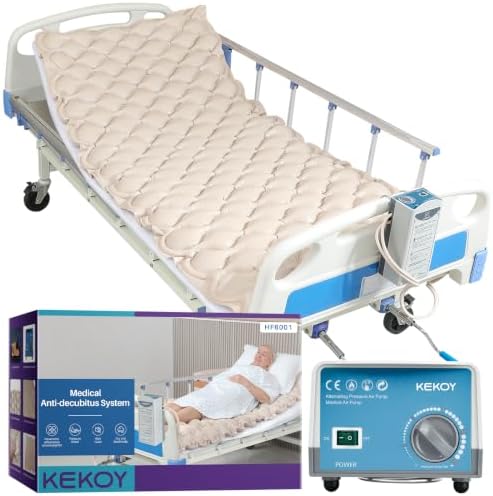
The KEKOY uses 130 bubble air cells that alternate inflation to redistribute pressure across the pad. The manufacturer positions it for people at risk of pressure sores during extended bed rest, including people with limited mobility or recovering after surgery. It is a pressure-care aid, not a treatment for an existing wound or a substitute for a clinician’s care plan.
Its pump is listed as operating below 28 dBA, and the cycle is described as running about every 10 to 12 minutes. Five pressure levels allow caregivers to adjust the feel for the user’s comfort. The waterproof surface is intended to simplify cleaning after spills or moisture exposure.
Quiet operation and multiple pressure settings make this a useful option for overnight care, especially when pump noise is a concern. However, the supplied product details do not state a weight capacity or pad dimensions. Check those specifications with the seller before buying, and confirm the size against your bed.
Pros:
- 130 air cells cycle to shift pressure across the surface.
- Five pressure levels provide adjustment options.
- Pump is listed below 28 dBA.
- Waterproof surface supports easier daily cleanup.
Cons:
- Weight capacity and dimensions are not provided in the supplied details.
- It does not list a digital display or remote control.
Verdict: Consider the KEKOY if a quiet pump and 130-cell design are priorities, but verify its size and weight limit before making a decision.
4. FOMMOF Digital Air Pressure Pad: Remote Controls for Easier Adjustments

This FOMMOF pad is aimed at users and caregivers who prefer digital controls. Its product description lists an easy-to-read display and a remote for adjusting airflow and pressure. That setup may be more convenient than reaching for a pump dial, depending on how the bed is arranged.
The product is listed with a 350-pound weight capacity and a durable vinyl construction. The manufacturer describes setup as taking about five minutes, with the tube connected to the pump before inflation. It also lists a one-year warranty and 24/7 customer support; confirm current coverage and terms before purchase.
The description does not provide the pad’s dimensions, cell count, or a measured pump noise level. Those missing details make it harder to compare fit and overnight sound with the other options. The product also makes medical benefit claims, but shoppers should ask a healthcare professional whether this type of pad is suitable for their care needs.
Pros:
- Digital display and remote are designed for convenient adjustment.
- 350-pound stated weight capacity.
- Vinyl construction is described as durable.
- Warranty and customer support are listed by the manufacturer.
Cons:
- Dimensions and pump noise level are not stated in the supplied details.
- Its digital controls may be unnecessary if you prefer a basic pump.
Verdict: Pick this FOMMOF model if digital adjustment and a remote are more important to you than having detailed size and noise specifications upfront.
5. FOMMOF 130-Cell Mattress Pad: A Basic Bubble Design for Home Care

This FOMMOF model uses 130 air cells that the product description says cycle in gentle waves about every 10 to 12 minutes. It is designed for home care and other bed-care settings where a pad that alternates pressure may be useful during long periods in bed.
The pump is listed below 28 dBA, with adjustable pressure settings. The waterproof PVC surface is intended to wipe clean, and the pad has a stated 300-pound capacity. Its listed sleeping area is 78 by 35 inches, so compare those measurements with your mattress before ordering.
The description mentions a one-click “sleep function,” but does not clearly explain how it differs from the standard alternating cycle. If a static mode or a specific control behavior is important, check the product listing for clarification. Compared with the VOCIC, this pad has a lower stated weight capacity and does not list the same rapid-deflation feature or included protective cover.
Pros:
- 130 air cells alternate on a stated 10-to-12-minute cycle.
- Pump is listed below 28 dBA.
- Waterproof surface is designed for easier cleaning.
- Sleeping area and weight capacity are provided.
Cons:
- Its 300-pound capacity is lower than the VOCIC model’s.
- The sleep function is not fully explained in the supplied details.
Verdict: This FOMMOF is worth considering if you want a 130-cell pad with a stated sleeping size, a quiet-pump claim, and a 300-pound capacity.
How to Choose an Air Pressure Pad for a Mattress
Match the pad to the bed and sleeping area
Check the pad’s inflated dimensions, not just its packed size, and compare them with the mattress you plan to use. A pad that is too narrow may leave parts of the body outside the air-cell area. Also look at how the product is meant to sit on the bed and whether any uninflated section needs to be tucked under the mattress.
Confirm the weight capacity
Choose a model with a stated capacity that safely accommodates the intended user. The products here list limits ranging from 300 to 440 pounds, while the KEKOY details supplied do not state a limit. Do not guess when a key specification is missing; confirm it with the seller before purchase.
Consider pump noise and placement
The pump runs as the pad operates, so its sound and position can affect the sleep environment. Some products provide a decibel figure, while others only describe the pump as quiet or do not give a noise measurement. Look at how the pump attaches to the bed and whether the tubing can reach without being stretched or pinched.
Choose controls that work for the caregiver
Basic pressure settings may be enough for many care routines. A digital display or remote can make adjustments easier when the pump is hard to reach, while a static mode may help during repositioning. Check exactly what each control does rather than assuming that similarly named features work the same way across brands.
Look at materials and cleaning needs
A waterproof surface can make cleanup easier after spills or moisture exposure. Consider whether the pad includes a separate cover, what material it uses, and whether the manufacturer explains how to clean it. Follow the product’s care instructions to avoid damaging the air cells or pump connections.
Review safety and care requirements
An alternating pressure pad may be one part of a pressure-care plan, but it cannot guarantee prevention or treat a pressure injury on its own. Ask a healthcare professional which support surface is appropriate, how often the user should be repositioned, and how to check the skin. If a wound is present or skin changes are concerning, seek professional guidance.
Check setup, emergency features, and warranty terms
Before buying, make sure the included pump, tubing, and accessories suit the bed and care setting. Features such as quick deflation can be relevant in some situations, but they should not replace an emergency plan. Check the current warranty, return terms, and what support the manufacturer provides.
Frequently Asked Questions
What does an alternating air pressure pad do?
It uses air cells that inflate and deflate in a cycle to shift pressure across the pad. These products are designed to support pressure redistribution during extended time in bed. Ask a healthcare professional whether a particular model fits the user’s needs.
Can an air pressure pad prevent or heal bed sores?
Product descriptions may claim support for pressure sore prevention, but no pad can guarantee prevention or healing. Skin checks, repositioning, and a care plan from a qualified healthcare professional remain important. Get medical advice if a pressure injury is suspected.
Can you use an alternating pressure pad on a regular bed?
Several products in this selection are described for home use as well as hospital or care settings. Check the inflated dimensions, how the pad secures to the bed, and whether its tubing and pump can be positioned safely on your setup.
How do you choose the right pressure setting?
Start with the manufacturer’s instructions and any guidance from the user’s clinician. The best setting can depend on the person and the care plan, so do not rely on a general rule or use a setting that causes discomfort.
Are these pads noisy?
Pump noise varies. The KEKOY and one FOMMOF model are listed below 28 dBA, while the VOCIC pump is listed at 45 dB. These figures come from product descriptions and may not be directly comparable because the measurement methods are not provided.
How should you clean an air pressure pad?
Follow the manufacturer’s care instructions. A waterproof surface may be easier to wipe clean, but avoid soaking the pump or electrical parts. Disconnect the system as directed before cleaning, and let the pad dry as instructed.
What is the best air pressure pad for a mattress?
The best fit depends on your needs. The VOCIC offers the highest stated weight capacity and includes a static mode and rapid-deflation release. The Alcedo has five pressure settings and a breathable, waterproof surface. Compare fit, capacity, noise, controls, and clinician guidance before choosing.
Final Recommendation
For shoppers who want a higher stated capacity and extra care-focused features, the VOCIC is the most feature-rich option in this group. The Alcedo is a straightforward alternative with five pressure settings and a waterproof, breathable surface, while the KEKOY and one FOMMOF model list quieter pump claims. Before ordering, confirm the pad’s dimensions and capacity, and consult a healthcare professional about whether an alternating air pad is appropriate for the intended user.