
Keeping produce fresh in the refrigerator is harder than it looks. Berries turn mushy, lettuce wilts in its own moisture, and cut vegetables dry out or pick up odors from the rest of the fridge. Airtight food storage containers with built-in drainage baskets solve many of these problems. They keep moisture from pooling around food, seal out air and smells, and help you see what you have before it goes bad. The right set can also tidy up a crowded fridge and make meal prep easier. This guide reviews five popular options so you can find the one that fits your kitchen, your produce habits, and your storage space.
Quick Comparison Table
| Product | What You Get | Main Material | Best For |
|---|---|---|---|
| Freshmage Fruit Storage Containers for Fridge with Removable Colander 4 PCS | 4 containers with 4 matched colanders, 0.32 L to 2.7 L | BPA-free PP | Small to mid-size fridges and a simple starter set |
| Anysig 8 Pack Fridge Fruit Storage Containers with Removable Colander | 8 containers, 8 colanders, 8 lids, and 2 divider plates | Food grade PP 5 | Large households and bulk produce buyers |
| GENICOOK Glass Produce Storage Containers for Fridge, 2-Set | 2-piece set with removable colanders and silicone lids | Borosilicate glass with BPA-free silicone lids | Shoppers who prefer glass and a clean, visible look |
| 5 Pack Large Fruit Storage Containers for Fridge Set with Removable Colander | 5 lidded containers from 320 ml to 4600 ml | BPA-free PP with silicone sealing rings | Varied sizes for fruit, vegetables, and meats |
| 5 Pack Large Fruit Storage Containers for Fridge with Removable Colander | 5 lidded containers from 300 ml to 4300 ml | Plastic with airtight silicone seals | Everyday produce, salads, and meal prep |
Our Picks: Best Airtight Food Storage Containers For Fridge reviews
Freshmage Fruit Storage Containers With Removable Colander, 4-Piece Set

The Freshmage set is a straightforward entry point into fridge produce storage. You get four containers in graduated sizes, ranging from about 0.32 liters to 2.7 liters, and each one pairs with a matching removable colander. That range covers a handful of berries, a bunch of grapes, a head of lettuce, or a tray of chopped vegetables for meal prep. The containers are made from BPA-free PP plastic and are rated for a wide temperature range, from -22°F to 284°F, which the manufacturer notes makes them dishwasher and microwave safe. The product description also states that lids are not included in that safety statement, so check the lid arrangement carefully before you buy and plan to wash lids by hand if needed.
The design centers on two ideas: a sealed environment and drainage. Each container uses a sealing ring and locking buckles to limit moisture loss, while the colander lifts washed produce above any water that collects at the bottom. In everyday use, this combination helps berries and leafy greens stay drier, which slows the soggy, moldy decline many people see in an open produce drawer. The stackable shape also helps the containers fit together when they are not in use, which matters in a fridge where shelf space is always tight.
Many owners appreciate that the set is simple to understand. You do not have to think about which piece does what, and the sizes make it easy to match a container to the amount of food you are storing. Buyers who want to start organizing their fridge without buying a large set will find this appealing. The four-piece count is also easier to store in a cabinet than a larger kit. Its main limitation is capacity. Households that buy produce in bulk, or that want dedicated containers for several different foods at once, may find four containers too few. The sealing buckles also take a bit of hand strength to open and close, which some people may find tiresome if they access the fridge many times a day.
Compared with the larger sets on this list, Freshmage is the more modest option. It trades quantity and size variety for simplicity and a lower commitment of fridge space. If you are testing whether a dedicated produce system fits your routine, this is a sensible place to begin.
Pros:
- Four sizes cover everything from small berry portions to larger vegetable batches.
- Matching colanders make washing and draining produce a one-step process.
- Sealing rings and locking buckles help limit moisture loss inside the container.
- The compact count is easy to store and a good fit for smaller fridges.
Cons:
- The four-container count may feel limited for large households or heavy produce buyers.
- Locking buckles can take some effort to operate on a daily basis.
Verdict: The Freshmage set is a practical, low-commitment choice for anyone who wants to tame a messy fridge and keep berries, greens, and cut vegetables fresher. It is best for small to mid-size households or as a first step before buying a larger system.
Anysig 8-Pack Fridge Fruit Storage Containers With Dividers and Lids

The Anysig kit is built for volume. It includes eight containers, eight removable colanders, eight airtight lids, and two divider plates. The set is arranged in four sizes, with two of each: about 112 ounces, 57 ounces, 27 ounces, and 13 ounces. The largest containers can be split with a divider, so you can store two kinds of produce in one box, such as apples in one half and grapes in the other. For households that buy produce in bulk or prep meals for several days, this flexibility is the main selling point.
The containers are made from food grade PP 5 plastic, rated from -22°F to 284°F, and the manufacturer describes them as dishwasher and microwave safe, with the note that lids are not included in that statement. The lids use food grade silicone seals and four reinforced locking clips. Each colander sits inside its container and separates fruit from water that collects at the bottom, which supports the freshness goal of the whole system. The stackable shape is designed to keep a large set organized, and the divider plates help you avoid mixing different foods in the same space.
In everyday use, the strength of this set is its variety. Many households find that having eight containers means they rarely need to juggle leftovers, salad greens, and fruit in the same bin. The dividers are a thoughtful addition for people who like to keep produce separated by type or ripeness. The company also states that it offers replacement service for damaged seals within 180 days, which gives buyers some reassurance that the sealing parts are backed by a support policy.
The trade-off is space. Eight containers and their lids take up real estate in a fridge, and a large set can crowd out other items if you do not plan the layout first. Some buyers may also find that the 13-ounce containers are too small for their needs while the larger sizes are more than they use. A kit this big is best suited to people who will genuinely use the full range. For a smaller household, a leaner set may be easier to live with.
Pros:
- Eight containers with eight lids and colanders offer the most storage capacity in this lineup.
- Divider plates let you separate two types of produce in the larger containers.
- Food grade PP 5 construction and a broad temperature rating suit everyday fridge use.
- A stated 180-day replacement policy for damaged seals adds some peace of mind.
Cons:
- The large number of pieces can crowd a standard fridge if you do not plan the layout.
- Lids are not included in the dishwasher and microwave safety statement, so lid care should be checked before cleaning.
Verdict: The Anysig set is the strongest pick for large families, meal preppers, and bulk produce shoppers who want a complete, flexible system in one box. If you rarely fill more than a few containers, a smaller set will be easier to manage.
GENICOOK Glass Produce Storage Containers for Fridge, 2-Piece Set
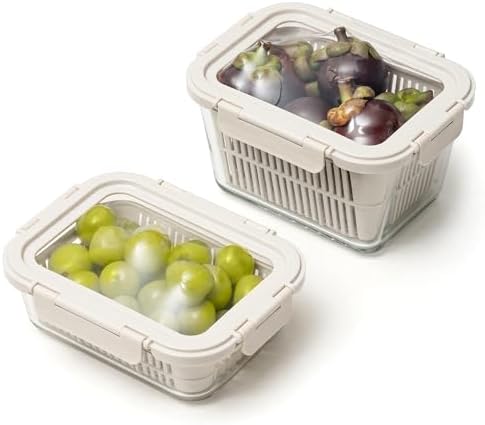
The GENICOOK set takes a different approach by using borosilicate glass instead of plastic. It is a two-piece set, and each container combines a removable colander with a flexible BPA-free silicone lid. If you prefer a fridge that looks tidy and clear, or you want storage that does not hold onto strong smells, glass is a natural choice. The product description notes that borosilicate glass resists stains and odors, and the transparent walls let you see at a glance what is inside, which can reduce the chance of forgetting leftovers at the back of the shelf.
The elevated colander is the key feature for produce. By lifting washed fruit or vegetables above any water at the base, it supports airflow and reduces the moisture buildup that leads to soggy lettuce and mold. The idea of washing, draining, and storing in one container is especially useful for herbs, berries, and chopped vegetables that you want ready to grab. The silicone lids provide a secure seal, and the containers are described as stackable, which helps keep the fridge orderly.
Glass has clear advantages, but it also brings practical limits. It is heavier than plastic, so a full set takes more effort to lift in and out of the fridge, and it can break if dropped on a hard floor. Buyers who have young children or who juggle busy kitchens may prefer plastic for its durability. Because this is a two-piece set, it also suits smaller households or people who want a focused produce station rather than a full fridge overhaul. In the same way, it is less suited to someone who needs many containers in different sizes.
Compared with the plastic sets on this list, GENICOOK is the premium-feeling, low-odor option. It is less about quantity and more about a clean, durable, easy-to-see solution for the produce you use most often.
Pros:
- Borosilicate glass resists staining and odor absorption, which helps keep the fridge smelling clean.
- Clear walls make it easy to see what is inside and what needs to be used first.
- The elevated colander promotes airflow and helps wet produce stay drier.
- Flexible BPA-free silicone lids create a secure, simple-to-use seal.
Cons:
- Glass is heavier than plastic and can break if dropped, which requires more careful handling.
Verdict: The GENICOOK glass set is a strong choice for shoppers who want a clean, odor-resistant, and visually organized produce system. It suits smaller households and anyone who values glass over plastic, but it is less practical for those who need many containers or who handle storage roughly.
COZEVACLY 5-Pack Fruit Storage Containers With Filter Colanders

The COZEVACLY set offers five containers in a wide range of sizes, from about 320 milliliters to 4600 milliliters. That spread is one of its strongest features. The smallest piece suits a few berries or a sprig of herbs, while the largest can hold a big head of lettuce, a bag of grapes, or a batch of meal prep vegetables. Each container includes a removable filter colander with a 5 mm gap design intended to drain water quickly, which is useful when you rinse produce before putting it away.
The containers are made from BPA-free food grade PP with silicone sealing rings, and the lids close with four reinforced latches. The manufacturer describes a working range from -20°C to 120°C (-4°F to 248°F), and the containers can be cleaned in the dishwasher once the lid is removed. The set is designed to stack and nest, which helps when the containers are empty and you want to reclaim cabinet or fridge space. The product description also mentions use in the freezer, which adds some flexibility beyond the fridge.
In practice, the combination of sizes is well balanced. Many households find that the five containers cover most of their needs without leaving them with too many odd sizes. The latches and gasket work together to limit leaks and odor transfer, which matters when storing wet produce or meats in the same fridge as other foods. The nestable design is also helpful for people who want to store the set compactly between uses.
The main drawback is that the latch system and gasket need to be checked regularly. A silicone seal can collect debris if not cleaned properly, and a loose latch can reduce the airtight effect. The filter colander also requires rinsing after each use so water and residue do not build up in the gaps. Some people may also find that the plastic walls show wear over time more readily than glass. Still, for a balanced, everyday set, these are manageable concerns.
Pros:
- Five sizes from small to large cover a wide range of fruit, vegetables, and meal prep portions.
- Four latches and silicone gaskets help create a reliable seal for odor and moisture control.
- The 5 mm gap colanders drain water efficiently after rinsing produce.
- Stackable and nestable shapes help save space when the containers are not in use.
Cons:
- Silicone seals and colander gaps need regular cleaning to keep the airtight effect working well.
Verdict: The COZEVACLY set is a well-rounded, practical choice for most households that want a versatile range of sizes and a dependable seal. It is a solid middle-ground option for everyday produce, leftovers, and meal prep.
RockBerry 5-Pack Large Fruit Storage Containers With Removable Colander

The RockBerry set is a five-container kit with sizes from about 300 milliliters to 4300 milliliters. Like the other plastic options here, it pairs each container with a removable colander meant to drain excess water and help fruits and vegetables stay crisp. The sizes are a good match for typical fridge needs, from a small snack of berries to a large batch of salad greens or meal prep portions. The product description also suggests the containers can serve as fruit bowls, salad bowls, or leftover containers, which adds to their everyday usefulness.
The containers are made from plastic with airtight silicone seals and four reinforced locking clips. The product description notes a temperature range of -20°C to 120°C (-4°F to 248°F), dishwasher safety, and microwave use with the lid removed. That combination makes the set practical for meal prep as well as produce. The leakproof design is intended to keep liquids and odors contained, which is useful for wet ingredients or foods that tend to release moisture. The stackable shape also helps keep the fridge tidy.
Many owners appreciate that the set is easy to use day to day. The sizes are intuitive, and the colander and lid system work in a familiar way, so there is little learning curve. For households that want one set to handle fruit, vegetables, salads, and leftovers, the variety is a real advantage. The microwave and dishwasher notes also make the containers easy to move from storage to reheating and back to the sink.
The limits are similar to other plastic kits. Plastic may pick up staining from certain foods over time, and the lids should be removed before microwaving, which is a small extra step. The silicone seal and latches also need periodic cleaning to stay effective. Buyers who want the strongest odor resistance or a glass look may prefer a different option, but for most everyday kitchens, this set delivers a practical balance of convenience and capacity.
Pros:
- Five sizes cover fruit, vegetables, salads, and leftovers in one practical kit.
- Airtight silicone seals and four locking clips help limit moisture loss and odor escape.
- Dishwasher and microwave use (lid removed) make cleanup and reheating simple.
- Stackable design helps keep a crowded fridge more organized.
Cons:
- Plastic can show staining over time, and lids must be removed before microwaving.
Verdict: The RockBerry set is a reliable, everyday choice for people who want a versatile, easy-to-use kit for produce, salads, and meal prep. It is a strong option for most households that do not need the extra volume of a larger system.
How to Choose the Right Airtight Food Storage Containers for Your Fridge
Think About How Much Produce You Store
Start by looking at what actually goes into your fridge each week. A household that buys berries, salad greens, and cut vegetables several times a week needs more containers than someone who mainly keeps leftovers and a few fruits. Count how many separate items you would like to keep apart, because mixing foods in one container can cause moisture transfer and odors. Kits with four containers suit smaller households, while sets with eight pieces or more are better for families and meal preppers. A bigger set is only useful if you will fill most of it, so be realistic about your habits.
Pay Attention to Sizes and Shapes
A good set includes a range of sizes rather than several containers that are all the same. Small containers work well for herbs, berries, and snack portions, while larger ones handle lettuce, whole bunches of grapes, and meal prep batches. Check the capacity figures listed for each product and compare them with the foods you buy most often. Also think about shape. Stackable and nestable designs save space when the containers are full or empty, which matters in a crowded fridge. Shallow containers can be easier to see into, while deeper ones may hold more produce but can hide food at the back of the shelf.
Understand the Seal and Lid Design
The phrase airtight is common in product listings, so look at how the seal actually works. Many of the products on this list use silicone sealing rings combined with locking clips or buckles. These parts help reduce moisture loss and keep smells contained, but they also need regular cleaning. Food residue can collect in the gasket and affect the seal over time. Before you buy, check whether the lids are included with the set and whether the manufacturer states which parts are safe for the dishwasher or microwave. Some listings note that lids should be removed before microwaving or are not covered by the dishwasher safety statement, so it is worth reading those details closely.
Consider the Colander and Drainage System
A removable colander is one of the most useful features in a produce container, but not all colanders work the same way. Look for a design that lifts produce above any water that collects at the bottom, since sitting in water is one of the main causes of soggy greens and mold. The size of the drainage gaps also matters. Smaller holes may keep tiny berries in place, while larger openings can drain faster but may let small items slip through. Think about the produce you buy most often and whether the colander fits your rinsing routine. A colander that is easy to remove and rinse will get used more often, which helps the whole system work better.
Compare Plastic and Glass Materials
Most containers in this category are made from plastic, usually BPA-free PP. Plastic is lightweight, affordable, and generally easy to handle, which makes it a good choice for families and busy kitchens. Glass, such as the borosilicate option on this list, offers a different set of benefits. It tends to resist stains and odors, and its clear walls make it easy to see what is inside. The trade-off is weight and fragility. Glass is heavier and can break if it is dropped, so it suits people who handle containers carefully. If you value a tidy, low-odor look and do not mind a little extra care, glass can be worth the effort. If you want a durable, lightweight set for daily use, plastic is usually the more practical choice.
Check Temperature Ratings and Cleaning Instructions
Temperature ratings tell you how the containers handle the fridge, freezer, dishwasher, and microwave. Several products on this list list a range from about -20°C to 120°C, while others state a wider range in Fahrenheit. These figures give you a sense of how the material will hold up when moving between cold storage and warm food. Also read the cleaning notes carefully. Some manufacturers say the containers are dishwasher safe but recommend removing the lid first, while others note that lids are not included in the safety statement. Following these instructions helps protect the seals and extends the life of the set.
Plan for Fridge Space and Storage Between Uses
Finally, think about where the set will live when it is not in use and how it will fit in your fridge. A large set can be hard to organize if you do not have a clear plan for each shelf and drawer. Stackable and nestable containers are helpful for storage between uses, especially if your cabinet space is limited. Measure your fridge shelves and drawers before you buy, and consider whether you want a dedicated produce drawer or a bin system on a shelf. A little planning will help you decide whether a compact set or a full kit fits your home.
Frequently Asked Questions
Are airtight produce containers worth buying for the fridge?
For many households, yes. Containers with a sealing ring and a drainage colander can help keep leafy greens, berries, and cut vegetables fresher than an open bag or a plain bowl. They also help you organize the fridge and see what needs to be used first. The benefit depends on how often you buy fresh produce and how well you clean and dry the containers.
Should I wash produce before putting it in the container?
Many of these containers are designed to be used after rinsing. The removable colander makes that step easier, because you can wash the produce and let water drain away before storing it. Make sure the produce is dry enough that it does not sit in standing water. Excess moisture is one of the main causes of mold and spoilage, even in a sealed container.
Are these containers safe to put in the dishwasher and microwave?
Several of the products on this list state that their containers are dishwasher safe, and some also note microwave use. However, product listings often specify that lids should be removed before microwaving or that lids are not covered by the safety statement. Always check the manufacturer’s instructions for the specific set you buy, and when in doubt, hand wash lids and gaskets to protect the seal.
Is glass or plastic better for storing fruit and vegetables?
Neither is better in every situation. Glass resists stains and odors and lets you see what you have, but it is heavier and can break. Plastic is lighter, easier to handle, and generally more forgiving of drops. If you want a clean-looking, low-odor fridge and handle items carefully, glass is a strong choice. If you need durability and easy handling for a busy household, plastic is usually more practical.
How do I clean the seals and colanders so they keep working well?
Remove the lid and colander after each use and wash them with warm soapy water, or place them in the dishwasher if the manufacturer allows it. Pay close attention to the silicone sealing ring, because food particles and moisture can collect in the groove. Let all parts dry fully before reassembling them. A clean, dry seal helps the lid close tightly and keeps odors from building up.
Can I use these containers in the freezer?
Some products on this list note freezer use or a wide temperature range, but you should confirm this for the exact product you buy. Freezer use may affect how the lids seal and how easily the containers separate from frozen contents. Leave a little space for food to expand, and check the manufacturer’s guidance before storing items in the freezer.
Which set is the best overall choice for most people?
For most households, the COZEVACLY and RockBerry five-piece sets offer a practical balance of sizes, sealing features, and everyday convenience. If you need a larger system, the Anysig set provides the most containers and dividers. If you want glass, GENICOOK is the strongest choice, and if you want a smaller starter kit, Freshmage is a sensible option.
Final Recommendation
The best airtight food storage container set for your fridge depends on how much produce you buy and how you plan to use the containers. For a large household or someone who preps meals in bulk, the Anysig 8-pack offers the most capacity and flexibility. For most everyday kitchens, the COZEVACLY and RockBerry five-piece sets strike a strong balance between size variety, sealing features, and easy cleaning. If you prefer glass and want a clean, low-odor look, GENICOOK is the best fit, while Freshmage is a practical starting point for smaller households or anyone testing a produce system for the first time. Consider your fridge space, your produce habits, and your cleaning routine, then choose the set that you will use every day.