
Choosing the best backpack for a DSLR and laptop means balancing camera protection, storage, access, and comfort. The right bag should keep your camera kit organized while giving your computer its own padded space—and still feel practical to carry on a shoot or trip. These five backpacks offer different approaches, from hard-shell protection to flexible dividers and quick-access pockets. Compare the laptop fit and gear layout with your own equipment before choosing.
Quick Comparison
| Backpack | Laptop fit | Standout feature | Best suited for |
|---|---|---|---|
| MOSISO Hardshell Camera Backpack | Up to 16 inches | Hard front panel and adjustable dividers | Photographers who want structured protection |
| K&F CONCEPT Hardshell Camera Backpack | Up to 15.6 inches | 22-liter capacity and hard-shell front | Travelers carrying a camera kit and laptop |
| RAINSMORE Tactical Camera Backpack | 15.6 inches | Side camera access and included rain cover | Outdoor shoots and flexible gear setups |
| MOSISO Tactical Camera Backpack | Up to 16 inches | Separate upper storage compartment | Photographers who pack personal items with gear |
| MOSISO Camera Backpack with Rain Cover | 15–16 inches | Back and side access with rain cover | Photographers who want multiple ways to reach gear |
Our Picks: Best Backpack For Dslr And Laptop reviews
1. MOSISO Hardshell Backpack for a DSLR and 16-Inch Laptop
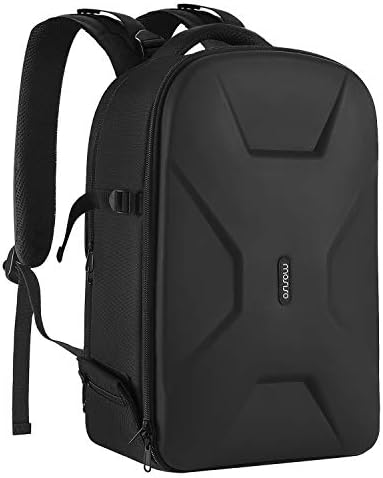
This MOSISO backpack pairs a structured front with two main compartments: a customizable camera area and a separate laptop sleeve. Its listed exterior size is 17.32 by 11.8 by 7.5 inches. Inside, removable padded dividers let you arrange space for a camera, lenses, flashes, or a compatible drone, rather than relying on one fixed layout.
The laptop compartment is listed for computers up to 16 inches. Two accessory pockets can hold smaller items such as cables, memory cards, and a power bank. There is also a side strap for a tripod or monopod, a side pocket for a water bottle or umbrella, and a back pocket for valuables. A trolley strap can attach the bag to luggage.
The hard front panel and padded interior are useful if your bag may get bumped during a commute or trip. The front is described as waterproof PU leather, but that does not make the entire backpack waterproof. For heavy rain, use suitable additional protection and keep electronics away from moisture.
This is a good match if you want a defined camera space and a laptop sleeve in one bag. Its structured front may be less flexible to pack than a soft-sided design, and its stated laptop size is a maximum rather than a guarantee that every 16-inch model will fit. Check your computer’s dimensions against the sleeve before ordering.
Pros:
- Adjustable padded dividers for different camera kits
- Separate laptop compartment listed for up to 16 inches
- Hard front panel adds structure and impact buffering
- Includes tripod carrying, side storage, and a luggage pass-through
Cons:
- The hard front panel may limit how flexibly the bag can be packed
- Water-resistant front material should not be mistaken for a fully waterproof bag
Verdict: Choose this MOSISO if you want a structured camera backpack with a roomy adjustable gear area and a laptop sleeve listed for up to 16 inches.
2. K&F CONCEPT Hardshell Backpack with 22-Liter Capacity

The K&F CONCEPT is a 22-liter camera backpack with an exterior size of 17.3 by 11 by 7 inches. Its main camera area uses removable dividers, so you can change the layout for a camera, lenses, flashes, or other compatible equipment. A hard-shell front and padded interior are designed to buffer the contents from bumps and drops.
A rear laptop compartment is listed for devices up to 15.6 inches. The front opens fully, which can make it easier to see and arrange gear when you set the bag down. Two interior accessory pockets provide space for smaller items, while a hidden back pocket is intended for a phone, wallet, or other valuables. The bag also has a tripod strap, a side pocket, and a trolley strap.
The padded mesh back panel and adjustable shoulder straps are designed to spread the load and improve airflow. Those details may be useful when you carry camera gear for longer stretches, though the total comfort will depend on how much equipment you pack and how it is arranged.
Compared with the MOSISO hardshell above, this model has a slightly smaller stated laptop limit and a listed 22-liter capacity. Its full-opening front favors organized packing, but it may be less convenient than a side-access bag when you need to grab your camera without opening the main compartment. Confirm that your laptop fits the sleeve’s actual dimensions, especially if it has a thick case.
Pros:
- 22-liter capacity with customizable camera dividers
- Hard-shell front and padded interior
- Rear laptop compartment listed for up to 15.6 inches
- Includes a trolley strap, tripod strap, and separate small-item pockets
Cons:
- The laptop size limit is smaller than some options in this group
- Full-front access requires opening the bag to reach the main camera area
Verdict: Consider this K&F CONCEPT if a 15.6-inch laptop fits your needs and you prefer a structured, customizable 22-liter pack for travel.
3. RAINSMORE Tactical Backpack with Side Camera Access

The RAINSMORE backpack is built around a customizable main compartment with six padded dividers and three elastic security straps. The layout is described as suitable for one or two camera bodies with several lenses, or for a camera kit paired with a drone and accessories. A padded laptop compartment fits devices up to 15.6 inches.
One of its most useful features is a side opening for reaching a camera without opening the entire bag. The inside of the side flap has SD card slots and a secured battery pouch, keeping frequently used small items close to the access point. The pack also has two front zipper pockets, interior mesh pockets, a hidden back pocket, and a side elastic pocket.
The 900D Oxford fabric is described as water-resistant, and the package includes a rain cover for added weather protection. The bag also has a breathable mesh back panel, padded shoulder straps, and an adjustable chest buckle. MOLLE webbing and a patch panel provide options for attaching compatible extras, while the listed carry features include bottom tripod straps and a side pocket for a compact tripod.
This design is a strong fit for outdoor photographers who value quick access and a flexible storage layout. The tactical webbing and multiple straps may be more than a minimalist commuter wants, and the laptop limit is 15.6 inches rather than 16. Compare the bag’s interior measurements with your equipment, since a stated capacity does not guarantee that every combination of camera, lens, and accessories will fit.
Pros:
- Side camera access helps you reach gear without opening the whole bag
- Six padded dividers and elastic straps support flexible packing
- Includes a rain cover and has water-resistant fabric
- Has a padded laptop compartment, tripod options, and MOLLE webbing
Cons:
- The tactical features and straps may feel unnecessary for a simple daily carry
- The laptop compartment is listed for up to 15.6 inches
Verdict: Pick the RAINSMORE if quick side access, outdoor weather protection, and a highly adjustable camera compartment matter more to you than a streamlined design.
4. MOSISO Tactical Backpack with a Separate Upper Compartment

This MOSISO tactical model separates everyday packing from camera gear. The upper compartment is intended for items such as clothes, a towel, or other personal essentials. The lower camera compartment has removable padded dividers for arranging cameras, lenses, flashes, or a drone. That split layout can be useful when you want a single backpack for a shoot and a day out.
The rear laptop compartment is listed as compatible with several laptop sizes up to 16 inches. The bag also has two front zipper pockets, a side pocket, a back anti-theft pocket, and a bottom tripod or monopod holder. Its polyester build includes webbing across the exterior for attaching compatible pouches or outdoor gear. The padded interior is designed to buffer equipment from scratches and impacts.
Side or front access offers alternatives to opening the backpack fully, while the padded shoulder straps and back panel are shaped for carrying comfort. Its listed overall dimensions are 17.13 by 11.81 by 8.27 inches, so this is a substantial pack rather than a compact camera sling. Think about whether you will use the upper storage space; if you only carry a camera and laptop, a simpler two-compartment design may be more efficient.
Among these picks, this is the clearest option for combining camera equipment with a separate personal-item compartment. It has more of a tactical daypack layout than the hard-shell models, but its soft-sided structure will not provide the same hard-front design as those bags. Check both your laptop’s dimensions and the size of your camera kit before committing.
Pros:
- Separate upper compartment for personal items
- Removable dividers let you configure the lower camera area
- Laptop compartment listed for devices up to 16 inches
- Includes multiple access points, a tripod holder, and exterior webbing
Cons:
- Its larger, multi-compartment layout may be more bag than a light kit requires
- It does not have the hard-shell front used by some other picks
Verdict: Choose this MOSISO if you want room for camera gear, a laptop, and personal items in separate sections of one backpack.
5. MOSISO Camera Backpack with Back and Side Access

This MOSISO backpack combines customizable padded dividers with two ways to reach camera gear. The back opens wide for arranging equipment, while a side access port is designed for grabbing a camera without opening the entire pack. The listed camera compartment measures 16.53 by 11.21 by 4.33 inches, which is helpful when comparing the interior with your specific kit.
The laptop compartment is described for 15- to 16-inch computers. The interior foam padding is intended to buffer gear from scratches and impacts, and the bag includes a rain cover for wet conditions. Straps on both sides can carry a tripod or monopod, and the top handle gives you another way to lift the pack.
Its shoulder straps are adjustable, and the back panel is designed with breathable padding for longer carries. The combination of wide back access and a side opening gives this bag more access flexibility than a basic top-loading layout. Still, the stated camera compartment depth is worth checking carefully if you carry a large camera body or bulky lens.
This is a practical choice for photographers who want an organized main compartment, laptop storage, and a rain cover without the separate personal-item section of the tactical MOSISO model. It does not list a hard-shell front, so those seeking a rigid front barrier may prefer one of the hardshell options.
Pros:
- Back opening and side access offer two ways to reach equipment
- Camera compartment dimensions are provided for easier gear planning
- Includes adjustable padded dividers and a rain cover
- Has a laptop compartment and tripod or monopod straps
Cons:
- Does not list a hard-shell front panel
- The camera compartment’s stated depth may limit bulky gear combinations
Verdict: Consider this MOSISO if you value side access, a wide-opening camera compartment, and an included rain cover in a laptop-carrying backpack.
How to Choose a Backpack for a DSLR and Laptop
Check the laptop compartment dimensions
A bag’s stated laptop limit is a useful starting point, but it does not guarantee a fit for every computer with that screen size. Laptop bezels, case thickness, and body shape vary. Measure your laptop, including any protective sleeve you plan to use, and compare those measurements with the backpack’s compartment dimensions when available. If you are between sizes, leave room rather than counting on a tight fit.
Match the camera compartment to your kit
Think about what you carry on a typical outing: one DSLR body and a lens, several lenses, a flash, or perhaps a drone as well. Removable dividers let you adjust the layout as your kit changes. A deeper camera area may suit bulkier equipment, while a more compact compartment can keep a small kit from shifting around. Avoid packing gear so tightly that you have to force zippers closed or press equipment together.
Choose the access style you will use
A full-opening panel makes it easier to see and reorganize your camera gear when the backpack is set down. Side access can be more convenient when you want to retrieve a camera without opening the whole bag. Some models offer both. Consider where you usually shoot and how often you need to change lenses, batteries, or memory cards before choosing between these layouts.
Consider how much protection you need
Padded dividers and foam can help cushion equipment against bumps, while a hard front adds structure. Those features do not make a backpack indestructible, so careful packing still matters. Weather protection also varies: a water-resistant material, a hard front, and a separate rain cover are not the same thing. If you expect rain, choose a pack with suitable weather coverage and keep electronics protected inside as well.
Think about comfort when the bag is full
A camera, lenses, laptop, and accessories can add up to a heavy load. Look for padded shoulder straps and a back panel that suits the way you carry a bag. A chest buckle can help distribute the load on some models. Pack heavier items close to your back where the layout allows, and consider whether you will be carrying the backpack for a short commute or a longer day outdoors.
Decide whether you need space beyond camera gear
Some backpacks devote most of their volume to camera equipment, while others include a separate area for clothes or personal items. Extra pockets can keep batteries, cables, and memory cards organized, but more compartments can also add bulk. Choose a layout that fits what you actually carry so you are not hauling unnecessary space or struggling to fit essentials.
Check tripod and travel features
If you regularly carry a tripod, look for a secure strap or dedicated carrying position and confirm that it suits the tripod you own. A luggage pass-through can be useful when traveling with rolling luggage, while hidden pockets may give you a place for valuables. These features are most helpful when they match your routine; they should not take priority over a good fit for your laptop and camera kit.
Frequently Asked Questions
Can a DSLR camera backpack also carry a laptop?
Yes. Each backpack in this roundup has a designated laptop compartment. The listed limits range from 15.6 inches to up to 16 inches, but you should compare the compartment dimensions with your laptop rather than relying on screen size alone.
Is a hard-shell camera backpack waterproof?
Not necessarily. A hard front can add structure and help protect against bumps, but it does not mean the whole bag is waterproof. Check whether the backpack has water-resistant fabric or an included rain cover, and take extra care with electronics in wet conditions.
Are adjustable dividers useful?
They can be. Removable padded dividers let you change the camera area to fit different bodies, lenses, and accessories. They are especially useful if your kit changes, but you still need to make sure the compartment has enough room for the gear you plan to carry.
Which access style is best for taking photos on the go?
Side access can make it quicker to reach a camera while leaving most of the bag closed. A full-opening panel is often easier for seeing and rearranging all your equipment. If you want both options, the fifth MOSISO model includes side and back access.
Can these backpacks carry a tripod?
All five list a tripod or monopod carrying feature, though the placement differs. Some use a side strap, while others use a bottom holder or offer more than one position. Check the attachment style against the size and shape of your tripod.
How can I tell whether my camera kit will fit?
Write down the dimensions of your camera body, longest lens, and other bulky items. Compare them with the backpack’s camera-compartment measurements when provided, then consider how the dividers will separate the pieces. Leave some room to remove equipment without forcing it into place.
Final Recommendation
For a structured design with a laptop compartment listed for up to 16 inches, the first MOSISO hardshell backpack is a strong all-around place to start. The RAINSMORE stands out for side access and its included rain cover, while the tactical MOSISO is better suited to those who want a separate space for personal items. Before you decide, compare your laptop and camera gear dimensions with the bag’s listed capacity and choose the access style you will use most.