
The best bar tool for orange peel depends on the garnish you want. A channel knife makes narrow, decorative ribbons, while a citrus peeler is better suited to broader strips. We compared five options based on their listed blade design, handle materials, and intended uses to help you find the right fit for Old Fashioneds, martinis, and other drinks.
Quick Comparison
| Product | Tool Type | Handle | Best For |
|---|---|---|---|
| Channel Knife for Cocktails | Channel knife and citrus peeler | Wood | Narrow citrus ribbons for cocktails |
| A Bar Above Citrus Peeler | Citrus peeler | Contoured handle | Controlled, smooth strips |
| Viski Channel Knife | Channel knife and zester | Walnut wood | Decorative garnishes and kitchen use |
| Tweruna Professional Channel Knife | Channel knife | Walnut | Long, continuous citrus ribbons |
| Trinkrittey Channel Knife | Channel knife and citrus zester | Walnut wood | Compact bar and kitchen prep |
Our Picks: Best Bar Tool For Orange Peel reviews
1. Channel Knife for Cocktails: A Versatile Garnish Tool

This channel knife is designed to pull narrow ribbons of peel from oranges, lemons, and limes. Its curved stainless steel blade follows the fruit’s surface, making it a fit for twist-style garnishes on Old Fashioneds, martinis, spritzers, and mocktails.
The wood handle gives it a traditional bar-tool look and a steady grip. Its compact design is also easy to store with other bar accessories. Beyond drinks, the tool can create citrus strips for desserts and food presentation.
One distinction to keep in mind: a channel knife makes a narrow ribbon, not the broad peel you might want for some garnishes. The listing recommends rinsing it after use and drying it before storage, so it may require a little more care than a tool you can leave wet in the sink.
Pros:
- Curved blade is made for narrow citrus ribbons.
- Works with orange, lemon, and lime peel.
- Wood handle provides a classic bar-tool style.
- Useful for drink garnishes and food presentation.
Cons:
- Not the best match if you want wide strips of peel.
- Should be dried after rinsing before storage.
Verdict: Choose this tool if you want a straightforward channel knife for narrow orange twists and other citrus garnishes.
2. A Bar Above Citrus Peeler: Made for Smooth Strips

Unlike the channel knives in this list, the A Bar Above tool is presented as a citrus peeler for making smooth, consistent strips. Its angled stainless steel blade is intended to remove the surface of the peel while limiting the amount of bitter pith pulled along with it.
The contoured handle is designed for a secure, comfortable grip and steady motion. That may be useful when you’re preparing several garnishes in a row or prefer a peeler-style tool over guiding a small channel blade along the fruit.
This peeler is also described for use with lemons and limes, as well as oranges, and for tasks such as citrus twists, infusions, and candied peel. Its main trade-off is that it is less specialized for creating the very narrow decorative ribbons associated with a channel knife.
Pros:
- Angled blade is designed for smooth citrus strips.
- Contoured handle supports controlled peeling.
- Made from 304 stainless steel, according to the product description.
- Can be used for cocktail garnishes and kitchen prep.
Cons:
- Less suited to narrow, channel-cut ribbons.
- Its peeler-style design may not suit shoppers seeking a traditional channel knife.
Verdict: Pick the A Bar Above if smooth, controlled strips matter more to you than narrow, curled ribbons.
3. Viski Channel Knife: A Classic Walnut-Handle Option

The Viski is a channel knife with a curved stainless steel blade for cutting citrus into ribbons. It is intended for orange, lemon, and lime garnishes, including finishes for martinis, Old Fashioneds, spritzers, and mocktails.
Its walnut handle has double rivets and gives the tool a more traditional, decorative look than a plain metal handle. The listing also describes it as useful for adding citrus zest to foods such as baked goods, salads, and seafood.
This is a good fit if appearance matters alongside function, such as when you want your bar tools to look at home on a bar cart. As with any channel knife, it’s most useful for narrow strips rather than broad peels. The product description does not specify a cleaning method, so check care instructions before using an automatic dishwasher.
Pros:
- Curved blade is designed for citrus ribbons.
- Walnut handle has double rivets.
- Suitable for cocktail garnishes and kitchen use.
- Compact design fits home bar setups.
Cons:
- Creates narrow zest ribbons rather than wide peels.
- Wood handle may call for more careful cleaning than an all-metal tool.
Verdict: The Viski is a strong choice if you want a classic-looking walnut-handled channel knife for both drinks and food prep.
4. Tweruna Professional Channel Knife: For Continuous Ribbons

The Tweruna is a channel knife built around a curved stainless steel blade. Its description highlights the ability to follow the fruit and make long, continuous shreds of peel in a single motion, which can suit a garnish that needs more length than a short curl.
A walnut handle is intended to provide a stable grip, and the tool is described for use with orange and lemon peel. It can also make citrus ribbons for desserts, salads, and other dishes, giving it a role beyond cocktail prep.
The longer-ribbon focus is useful if that’s the look you want, but it doesn’t replace a broad peeler. The product description says the stainless steel is rust-resistant and easy to maintain, but does not provide detailed cleaning instructions. Follow the care directions that come with the tool.
Pros:
- Curved blade is designed for long, continuous ribbons.
- Walnut handle offers a stable grip.
- Can be used for citrus garnishes and food decoration.
- Intended for home bars, parties, and kitchen prep.
Cons:
- Channel-knife shape is not meant for broad peel strips.
- The listing does not give detailed blade-care instructions.
Verdict: Consider the Tweruna if you specifically want a curved channel blade for longer citrus ribbons and prefer a walnut handle.
5. Trinkrittey Channel Knife: A Compact Bar and Kitchen Tool
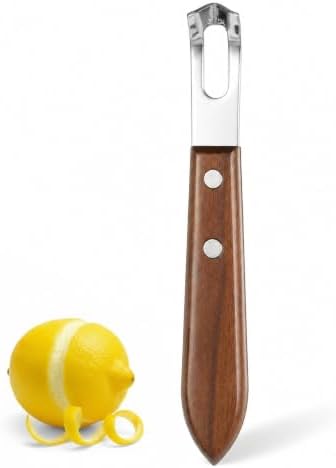
This channel knife is listed at 5.5 inches long, giving you a compact option for a bar cart or kitchen drawer. Its stainless steel blade is designed to make citrus twists and ribbons, while the walnut handle adds a polished, traditional look.
The product description presents it as a multi-use tool for oranges, lemons, and other citrus, with uses that include cocktail garnishes, desserts, and gourmet dishes. That makes it a practical match for someone who wants one small garnish tool for both drinks and food.
Its compact size is convenient for storage, but the listing does not describe a separate broad-peeling blade. If your main goal is a wide orange strip, a dedicated citrus peeler may be a better fit. The description also does not give specific cleaning or dishwasher guidance.
Pros:
- Compact 5.5-inch length is easy to store.
- Stainless steel blade is intended for citrus garnishes.
- Walnut handle gives it a bar-ready appearance.
- Suitable for cocktail and kitchen uses.
Cons:
- Channel-knife design is better for ribbons than wide peels.
- Detailed care instructions are not listed.
Verdict: Choose the Trinkrittey if compact storage and a walnut-handled channel knife are your priorities.
How to Choose a Bar Tool for Orange Peel
Decide between a channel knife and a citrus peeler
A channel knife is designed to cut a narrow ribbon from the citrus peel, which works well for decorative twists. A citrus peeler is the better direction if you want a smoother, broader strip. Think about the garnish you usually serve before choosing: the two tools can both handle citrus, but they shape the peel differently.
Look at the blade shape and material
Curved blades are common on channel knives and are intended to follow the surface of the fruit as you draw the tool along it. Stainless steel is listed for all five options here. If you want a tool described as minimizing pith, the A Bar Above peeler specifically highlights that aim; do not assume every channel knife will make the same cut.
Choose a handle that suits your grip and bar
Several options have wood or walnut handles, while the A Bar Above peeler highlights a contoured handle. A wood handle may appeal if you like a classic bar-tool look, while a shaped grip may be more important if you want a steady hold. Consider how the tool feels in your hand and how it will fit with your existing bar setup.
Consider where else you will use it
These tools are not limited to cocktails. The product descriptions also mention citrus prep for desserts, salads, seafood, and other dishes. If you plan to use a tool in the kitchen as well as at the bar, check whether its blade style suits those jobs too.
Check storage and care needs
A compact tool is convenient if you have limited drawer or bar-cart space. The Trinkrittey listing gives a specific length of 5.5 inches, while other descriptions emphasize compact storage without listing dimensions. Care instructions vary: one listing recommends rinsing and drying, and several do not provide detailed cleaning guidance. Check the product’s instructions before washing or storing it.
Frequently Asked Questions
What is the difference between a channel knife and a citrus peeler?
A channel knife is designed to cut narrow ribbons from citrus peel. A citrus peeler is generally the better choice when you want a wider, smoother strip. The right tool depends on the style of garnish you want to make.
Which type of bar tool is best for an Old Fashioned garnish?
Either a channel knife or citrus peeler can prepare an orange garnish. Choose a channel knife for a narrow ribbon or a peeler for a broader strip. The A Bar Above listing specifically describes its peeler for cocktail garnishes including Old Fashioneds.
Can I use these tools with lemons and limes?
The product descriptions identify several of these tools for use with lemons and limes as well as oranges. Check the individual listing for the specific fruits and uses it names.
Will a channel knife remove the bitter pith?
A channel knife is intended to cut a narrow strip from the surface of the fruit, but results depend on how you guide it. The A Bar Above peeler specifically describes minimizing pith; the other listings do not make the same claim.
Are these tools suitable for kitchen use?
Yes, several product descriptions list uses beyond cocktails, such as citrus ribbons for desserts and food presentation. Some also mention adding zest to dishes. Check that the tool’s cut style matches the kitchen task you have in mind.
How should I clean a citrus channel knife?
Follow the care instructions provided with the specific tool. One listing recommends rinsing and drying before storage. Since care details are not specified for every option, avoid assuming that a wood-handled tool is dishwasher safe.
Which option should I choose if I want a wide orange peel?
A citrus peeler is the more suitable style for broader strips. The channel knives in this list are intended for narrow ribbons, so consider the A Bar Above peeler if you prefer a smoother, wider garnish.
Final Recommendation
For narrow orange ribbons, the first channel knife is a straightforward, versatile pick with a curved stainless steel blade and wood handle. If you prefer smooth, broader strips and a contoured grip, consider the A Bar Above citrus peeler instead. Choose based on the cut you want: the right blade shape matters more than a decorative handle when you’re making a specific style of garnish.