
Choosing a bed for a dog with hip dysplasia means looking for steady cushioning, enough room to stretch out, and an entry your dog can manage comfortably. A supportive bed may make resting easier, but it does not treat hip dysplasia or replace veterinary care. The five options below offer different combinations of foam support, bolsters, washable covers, and low-entry designs, so you can compare them with your dog’s size and sleeping habits in mind.
Quick Comparison
| Bed | Support and design | Best suited for |
|---|---|---|
| EHEYCIGA Orthopedic Extra Large Dog Bed | Memory and egg-crate foam; three bolstered sides | Large dogs that like a sofa-style bed |
| Bedsure Orthopedic Dog Bed | Egg-crate foam; four bolsters and lowered entrance | Dogs that need a more accessible entry |
| KOPEKS Orthopedic Memory Foam Dog Bed | Seven-inch memory foam; separate headrest | Very large dogs needing a broad sleep surface |
| Lesure RealOrtho XL Dog Bed | Three-layer foam system; wide, low entry | Senior dogs that may benefit from an easier step-in |
| JOEJOY XL Orthopedic Dog Bed | Shredded memory foam blend; three bolstered sides | Dogs that like a soft, cozy sofa-style bed |
Our Picks: Best Beds For Dogs With Hip Dysplasia reviews
1. EHEYCIGA Orthopedic Extra Large Dog Bed: A Bolstered Bed With Two Foam Types
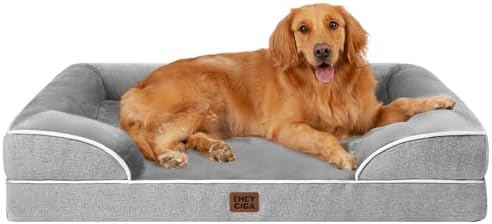
The EHEYCIGA combines memory foam and egg-crate foam in a sofa-style bed. The layered foam is intended to spread a dog’s weight across the sleeping surface, while the fleece top provides a soft place to settle. Its extra-large version measures 44 inches, which may give a large dog more room to rest, though it is still important to compare the bed’s usable sleeping area with your dog’s full length.
Three raised sides give a dog somewhere to lean or rest their head. This can suit dogs that curl up or like the feeling of a nest around them. The sides are not waterproof, however; the waterproof film protects the sleeping surface and bottom area rather than the whole bed.
The cover can be removed and machine washed separately in cold water on a delicate cycle. The foam core should not be machine washed or dried, and the bed needs time to expand after unpacking. Compared with the Bedsure, it has fewer bolstered sides and no stated lowered entrance, so consider whether your dog can step over the edge with ease.
Pros:
- Combines memory foam and egg-crate foam.
- Three bolstered sides provide places to rest the head or lean.
- Waterproof film helps protect the sleeping surface and bottom.
- Removable cover can be machine washed.
Cons:
- The sides are not waterproof.
- The foam core cannot be machine washed or dried.
Verdict: Choose the EHEYCIGA if your dog likes a cushioned, bolstered bed and you want an extra-large option, but look elsewhere if a low entrance is a priority.
2. Bedsure Orthopedic Dog Bed: A Bolster Couch With a Lowered Entrance

This 38-inch Bedsure bed uses high-density egg-crate foam and a four-sided bolster design. The bolsters give dogs several sides to lean against, while the lowered entrance is intended to make getting in and out easier than climbing over a full-height edge. That entry detail may be useful for a dog with limited mobility, though your dog’s size and stepping ability still matter.
The cover has a laminated waterproof layer and can be removed for machine washing. The bed also has a non-skid bottom, a flannel cover, and foam described as CertiPUR-US certified. Its four-sided bolster layout creates a more enclosed feel than the EHEYCIGA’s three-sided design, but it may leave less open space for dogs that prefer to sprawl.
Check the product’s measurements against your dog’s usual sleeping position before buying. The lowered entrance can help with access, but the product details do not give its height, so it may not be the right fit for every dog with mobility limits.
Pros:
- Egg-crate foam is designed to distribute weight and cushion joints.
- Four bolsters offer several places to rest or lean.
- Lowered entrance is designed for easier access.
- Removable, machine-washable cover with a waterproof layer.
Cons:
- The four-sided bolster shape may feel enclosed to dogs that like to stretch out.
- Its 38-inch size may not suit every large dog.
Verdict: The Bedsure is a good option to consider if your dog likes bolsters and would benefit from a lower step-in area, provided the bed’s size works for them.
3. KOPEKS Orthopedic Memory Foam Dog Bed: A Thick, Wide Option for Giant Breeds

The KOPEKS is a large memory-foam bed with a listed sleep surface measuring 50 by 34 inches and a seven-inch-thick foam base. A separate three-inch headrest gives your dog a raised place to rest their head. The generous surface and substantial foam depth make this a candidate for very large dogs, especially those that prefer to lie flat rather than curl into a compact sofa bed.
The removable suede cover has an anti-slip bottom, and a waterproof inner protector adds a layer between the cover and foam. The product description also notes a 12-month limited warranty covering certain material and workmanship defects, including abnormal foam collapse under normal use. The warranty excludes issues such as chewing damage and normal wear, so check its full terms before buying.
Unlike the Bedsure, the KOPEKS does not list a lowered entrance. Its thick base may be a drawback for a dog that has trouble stepping onto raised surfaces. The foam may also need two to three days to expand after delivery, with a longer wait possible in a colder room.
Pros:
- Large 50-by-34-inch sleep surface.
- Seven-inch memory-foam base and separate headrest.
- Waterproof inner protector and removable, washable cover.
- Anti-slip bottom and a limited warranty covering specified defects.
Cons:
- The thick base may be difficult for some dogs to climb onto.
- Needs time to fully expand after unpacking.
Verdict: Consider the KOPEKS if your dog needs a broad, thick sleeping surface and can comfortably step onto it; a lower-entry bed may be a better choice for dogs with more severe mobility limits.
4. Lesure RealOrtho XL Dog Bed: Layered Foam and a Wide, Low Entry

The Lesure RealOrtho uses a three-layer foam system. The product description says the memory foam contours, responsive foam adds rebound, and base foam provides support. It also has a wide, low entry and an L-shaped bolster, so it offers a mix of easier access and a place for your dog to rest their head without surrounding the whole sleep surface.
Other practical details include breathable mesh sides, a waterproof liner, and a non-slip base. The cover and integrated bolsters are machine washable after removing the foam base. This layout may appeal to a dog that needs a low opening but still likes some head support.
One limitation is that the quilted fabric is not scratch-resistant. If your dog regularly digs or scratches at bedding, the manufacturer cautions that this may not be the right bed. The vacuum-packed foam can also take up to 48 hours to settle into its intended shape.
Pros:
- Three-layer foam system with a supportive base.
- Wide, low entry may be easier to manage than a high-sided bed.
- L-shaped bolster provides a place to lean or rest the head.
- Waterproof liner, non-slip base, and machine-washable cover.
Cons:
- The quilted fabric is not scratch-resistant.
- The foam needs time to settle after unpacking.
Verdict: The Lesure is worth considering if access and a mix of cushioning and head support are priorities, but it is a poor match for dogs that dig at their beds.
5. JOEJOY XL Orthopedic Dog Bed: A Cozy Sofa Style With Shredded Foam

The JOEJOY has a three-sided bolster and a filling made from shredded memory foam blended with polyester. The sofa-style shape gives a dog a cushioned edge to lean against, while the top is described as rabbit fur and chenille. It comes in four listed size options, and the product description identifies it for large dogs up to 100 pounds. Confirm the exact size and usable sleeping area before choosing a version.
This bed may suit a dog that likes a soft, enclosed place to curl up. Its bolster design is similar to the EHEYCIGA, but its filling is a shredded foam blend rather than the EHEYCIGA’s memory-foam-and-egg-crate construction. The cover is removable and machine washable in cold water on a gentle cycle, and it can be tumble-dried on low heat.
The product description does not specify a waterproof liner or a non-slip base, so consider those needs if accidents or bed movement are concerns. It is vacuum-sealed for shipping and should be left to expand for 24 to 48 hours before you judge its fit and shape.
Pros:
- Three bolstered sides create a cozy sofa-style resting area.
- Shredded memory-foam blend is designed to cushion and distribute weight.
- Four size options are listed for different large breeds.
- Removable cover is machine washable and dryer-safe on low heat.
Cons:
- The product details do not specify a waterproof liner or non-slip base.
- The bolstered sides may not suit dogs that prefer to stretch out fully.
Verdict: Pick the JOEJOY if your dog prefers a soft, bolstered place to curl up and the available size fits; choose a bed with a stated waterproof layer if moisture protection is essential.
How to Choose a Bed for a Dog With Hip Dysplasia
Look for support that fits your dog’s size
A bed should be large enough for your dog to lie in their usual position without hanging off the edge. Foam type and thickness can affect how the bed feels, but product descriptions alone cannot tell you how a particular dog will respond. Check the bed’s measurements, then compare them with your dog’s length and the space they use when stretched out. A very large dog may need a wider surface and a base that is less likely to compress under their weight.
Consider how easily your dog can get in and out
Raised edges and thick foam can be harder to manage for a dog with limited mobility. A lowered or wide entry, such as the design on the Bedsure and Lesure, may be easier to step over than a taller bolster or base. Measure your dog’s comfortable step height if you can, and ask your veterinarian for guidance if you are unsure what level of access is appropriate.
Match the shape to your dog’s sleeping style
Bolsters can give dogs a place to lean or rest their head, and some dogs enjoy the enclosed feel of a sofa-style bed. Dogs that stretch out may do better with a broad, open sleep surface and fewer raised sides. Notice whether your dog curls up, sprawls, or changes positions often, then choose a shape that leaves room for those movements.
Check the cover, liner, and washing instructions
Removable, machine-washable covers make routine cleaning easier. A waterproof layer can help protect foam from spills or accidents, but check which parts are covered: the EHEYCIGA, for example, does not have waterproof sides. Also read the care instructions closely, since foam cores generally need different care from their covers.
Think about the floor beneath the bed
A non-slip base can help limit sliding on hard floors, which may be useful when a dog gets on or off the bed. If you plan to put the bed on a smooth surface, check whether the model has a grippy bottom. Keep the bed in a place with enough room for your dog to approach and turn without having to step around furniture.
Allow time for compressed foam to expand
Some beds arrive vacuum-packed and need time to regain their intended shape. Follow the product’s setup instructions and wait the stated period before deciding whether the bed feels or fits as expected. Avoid washing or using a foam core in a way the care instructions do not allow.
Use the bed as part of a veterinary care plan
A supportive resting place can be one part of your dog’s comfort setup, but it cannot diagnose or treat hip dysplasia. If your dog is painful, has trouble standing, or has a change in mobility, talk with your veterinarian. They can help you choose suitable care and advise whether a particular bed height or firmness is appropriate.
Frequently Asked Questions
Can a dog bed cure hip dysplasia?
No. A bed may provide a more comfortable place to rest, but it does not cure hip dysplasia or replace treatment. Ask your veterinarian about your dog’s symptoms and care options.
Is memory foam always the best choice for a dog with hip dysplasia?
Not necessarily. Memory foam is one option, but comfort depends on your dog’s size, sleeping style, mobility, and response to the bed. Compare the bed’s dimensions and construction, and discuss any concerns with your veterinarian.
Are bolsters helpful for dogs with hip problems?
They can provide a place to lean or rest the head, which some dogs may prefer. However, high sides may be harder to step over, and a dog that stretches out may need a more open surface. Consider both the bolster shape and the entry height.
Which bed in this list has a lowered entrance?
The Bedsure and Lesure descriptions specify a lowered or wide, low entry. The exact entry height is not listed here, so check the product details and consider your dog’s ability to step in and out.
How do I choose the right bed size?
Measure your dog while they are resting in their usual position, including when they stretch out. Compare that measurement with the product’s listed dimensions and leave enough room for your dog to change positions comfortably.
How should I clean an orthopedic dog bed?
Follow the instructions for the specific bed. Many models have removable covers that can be machine washed, but foam cores may not be washable or dryer-safe. Check whether a waterproof liner protects the foam, and let compressed foam expand as directed before use.
Final Recommendation
For a dog that needs a more accessible step-in, the Bedsure and Lesure are the most direct options to compare because both descriptions call out a lowered entry. The KOPEKS stands out for its broad, thick foam base, while the EHEYCIGA and JOEJOY offer sofa-style bolsters for dogs that like a cozy edge. Measure your dog, consider how easily they can enter the bed, and choose the construction that best matches their sleeping habits. For pain or worsening mobility, consult your veterinarian rather than relying on a bed alone.