
If you’re shopping for a bed for a toddler and a baby, safety comes before saving space: a baby should sleep in a separate, approved crib, bassinet, or play yard—not on either level of a bunk bed. Children under six should not use the upper bunk. The low-profile options below may suit families planning ahead for older children, but none is a baby sleep space. Compare mattress fit, guardrails, room clearance, and the maker’s age guidance before you buy.
Quick Comparison
| Bunk Bed | Standout Feature | Best For | Availability Note |
|---|---|---|---|
| JOYMOR Solid Wood Low Twin Over Twin Bunk Bed | Low design, reversible ladder, full-length upper guardrails | Families looking for a straightforward wood bunk with flexible ladder placement | Listed as available in the supplied product data |
| Max & Lily Fundamental Twin Low Bunk Bed | Low profile, 14-inch upper guardrails, metal support bar | Shoppers who value a simple design and strong stated capacity | Marked unavailable in the supplied product data |
| BTHFST Twin Over Twin Bunk Bed with Stairs | Storage stairs, drawers, and app- or remote-controlled LED lights | Families wanting built-in storage and stair access | Listed as available in the supplied product data |
Our Picks: Best Bunk Bed For Toddler And Baby reviews
JOYMOR Low Twin Bunk Bed: A Simple, Space-Saving Wood Frame
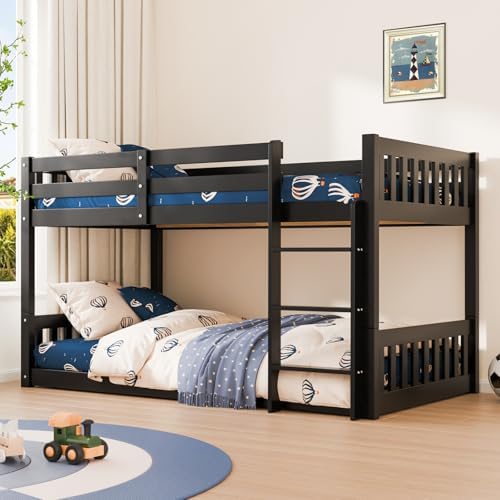
The JOYMOR is a low twin-over-twin bunk bed made with a solid pine frame and hardwood slats. Its lower profile is intended to suit rooms with less ceiling height and can make the upper bunk easier to reach than a taller design. It does not need a box spring, and the listing recommends standard twin mattresses between 4 and 6 inches thick.
The upper bunk has full-length guardrails, and the ladder can be fitted on either side to work with your room layout. The listing states a maximum load of 264.5 pounds but does not clarify whether that figure applies to one bunk or the whole bed. Check the manufacturer’s guidance for your intended use, and keep the mattress at least 5 inches below the top of the guardrails as directed.
This is the most straightforward choice here if you want a wood frame without integrated drawers or lighting. Its low design may be useful in a small room, but it does not make the top bunk appropriate for a young child. The baby still needs a separate infant sleep space, and children under six should stay off the upper bunk.
Pros:
- Low-profile design for rooms with limited ceiling height
- Reversible ladder offers more placement flexibility
- Full-length upper guardrails
- Includes assembly hardware, tools, and instructions
Cons:
- Recommended mattress thickness is limited to 4–6 inches
- The stated load limit is not clearly assigned to each bunk
Verdict: Choose the JOYMOR if you want a relatively simple, low wooden bunk and its mattress and weight specifications suit your needs; do not use it as a sleeping place for a baby or on the upper level for a child under six.
Max & Lily Fundamental: A Low Bunk with Taller Guardrails

The Max & Lily Fundamental is a solid-wood twin bunk with a streamlined lower bed that can be entered from multiple sides. Its listed dimensions are 80 inches long, 54.25 inches wide, and 49.25 inches high, giving you useful measurements to compare against your room before ordering. The design uses wooden slats and a metal support bar, and it does not require a box spring or bunkie board.
The listing describes the finish as clean and non-toxic and specifies 14-inch upper guardrails. It recommends a mattress between 5 and 8 inches thick. The stated capacity is 400 pounds, but the product information does not say how that limit is divided between bunks, so confirm the details with the manufacturer if load capacity is a deciding factor.
Compared with the JOYMOR, this model has taller stated guardrails and a broader recommended mattress range. Its simple shape may also be easier to fit into a room than a bunk with stairs and storage. However, the supplied product data marks it unavailable, so check the listing before making plans around this particular model.
Pros:
- Low overall height at 49.25 inches
- 14-inch upper guardrails
- Metal support bar paired with wooden slats
- Lower bunk has open access from multiple sides
Cons:
- Marked unavailable in the supplied product data
- The listing does not clarify how its stated capacity is divided between bunks
Verdict: This is worth considering if it becomes available and you want a low, simple bunk with taller stated guardrails, but verify the listing and capacity details before purchase.
BTHFST Twin Bunk with Stairs: Built-In Storage and LED Lighting

The BTHFST is a twin-over-twin bunk built around a staircase rather than a standard ladder. The stair unit includes six fabric drawers, while two larger pull-out drawers sit beneath the bed. The product description also mentions hanging organizers, making this the most storage-focused option in the comparison.
Its upper bunk has 13.4-inch guardrails, and the listing includes an anti-tip kit intended to anchor the bed to a wall. It also comes with app- and remote-controlled LED lighting with different colors and modes. Those features add convenience and customization, but the stairs, drawers, and lighting make this a more complex piece of furniture than either low-profile wood bunk above.
The stairs may be easier to climb than a vertical ladder for some children, but they do not change the age guidance for the upper bunk. The product information provided here does not include mattress thickness, overall dimensions, or a weight limit, so confirm those details and measure your room carefully before ordering. Keep in mind that the storage staircase may take up more floor space than a simple ladder.
Pros:
- Six stair drawers plus two larger under-bed drawers
- Stair access instead of a vertical ladder
- 13.4-inch upper guardrails
- Includes LED lights and a wall anti-tip kit
Cons:
- Staircase and storage may use more floor space than a ladder-style bunk
- Mattress fit, dimensions, and weight limit are not included in the supplied product details
Verdict: Pick the BTHFST if built-in storage and stair access matter most, but verify its missing size and mattress specifications and make sure the larger footprint fits your room.
How to Choose a Bunk Bed for a Family with a Toddler and Baby
Plan a Separate Sleep Space for the Baby
A bunk bed is not a substitute for an infant sleep product. Set up the baby in a separate crib, bassinet, or play yard intended for infant sleep, following its instructions and safe-sleep guidance. Do not place a baby on the top or bottom bunk, even if the lower bunk seems close to the floor.
Check Age Guidance for Both Bunks
Children under six should not use the upper bunk. A low-profile frame does not remove that restriction. For a toddler, consider whether a separate toddler bed or other age-appropriate sleep space is a better choice for now, and follow the bunk maker’s age and use instructions.
Match the Mattress to the Guardrails
Use the mattress size and thickness specified for the exact model. A mattress that is too thick can reduce the effective height of the guardrails, while a poor fit can leave gaps. The JOYMOR listing recommends a 4–6-inch mattress; Max & Lily recommends 5–8 inches. The supplied BTHFST details do not state a mattress thickness, so confirm it with the seller or manufacturer.
Measure the Room and Ceiling
Measure the bed’s floor area and the available ceiling height, including space above the upper mattress. Compare those measurements with the product’s full dimensions, not just its height. The Max & Lily listing gives dimensions; the supplied details for the other two models do not provide complete measurements. Allow room for the ladder or stairs, drawers, and safe access around the bed.
Look Closely at Guardrails and Bed Stability
Check that the guardrails run along the required sides of the upper bunk and that the mattress sits at the height specified by the maker. The JOYMOR listing says to keep the mattress top at least 5 inches below the top edge of its guardrails. Follow the assembly and anchoring instructions, and use an included anti-tip kit when required.
Compare Storage with Floor Space
A simple ladder bunk may be easier to fit into a small room, while stairs and built-in drawers can reduce the need for separate storage furniture. The BTHFST offers the most integrated storage, but its stair structure may occupy more room. Measure drawer and stair clearance so the bed will remain practical once furniture and toys are in place.
Confirm Capacity, Materials, and Assembly Details
Read the complete product listing and assembly instructions before buying. Capacity numbers may not explain whether they apply to one bunk or the whole frame, so ask the manufacturer if the description is unclear. Check what tools and hardware are included, whether the bed needs wall anchoring, and what support is offered for missing or damaged parts.
FAQs
Can a baby sleep in a bunk bed?
No. A bunk bed is not an infant sleep product. Use a separate crib, bassinet, or play yard designed for infant sleep and follow the product’s instructions and safe-sleep guidance.
Can a toddler use the top bunk?
No. Children under six should not use the upper bunk. A low bunk frame does not change this guidance. Check the manufacturer’s age requirements as well.
Is the lower bunk suitable for a baby?
No. The lower bunk is still part of a bunk bed and is not a replacement for a crib, bassinet, or play yard. Choose an infant sleep space made for that purpose.
Which of these beds has the simplest design?
The JOYMOR and Max & Lily models have simpler ladder-based designs. The JOYMOR listing also says its ladder can be installed on either side. The BTHFST adds stairs, drawers, organizers, and lighting.
Which model includes the most storage?
The BTHFST includes six fabric stair drawers and two larger under-bed drawers, plus hanging organizers. Check the bed’s dimensions and allow enough space to use the stairs and pull out the drawers.
What mattress thickness should I buy?
Follow the exact model’s mattress guidance. The JOYMOR recommends 4–6 inches, and the Max & Lily recommends 5–8 inches. The supplied BTHFST information does not specify a mattress thickness, so confirm it before buying.
Final Recommendation
For a family with both a toddler and a baby, plan on a dedicated infant sleep space for the baby and do not put a child under six on the upper bunk. For future use, the JOYMOR is the most straightforward low-profile wood option in this group. The Max & Lily is another simple low-bunk design, but its supplied listing data marks it unavailable. Choose the BTHFST if stairs and built-in storage are priorities, after confirming its dimensions and mattress requirements. In every case, follow the manufacturer’s instructions and age guidance.