
A burner plate, also called a heat diffuser or simmer plate, sits between a burner and your cookware to soften direct heat. It can help when your gas stove runs too hot on its lowest setting, especially for sauces, soups, and other dishes that need a gentle simmer. These five picks are cast-iron diffusers—not replacement burner caps or drip pans—so check the size and shape of your stove grates before choosing one.
Quick Comparison
| Product | Size or design | Stated compatibility | Best for |
|---|---|---|---|
| Heat Equalizer Cast Iron Heat Diffuser | 9.25-inch cast iron plate | Gas, electric, glass, and ceramic; listing information conflicts about induction | Everyday simmering and heat spreading |
| MARINOVA Two-Size Cast Iron Simmer Plates | 8.25-inch and 6.75-inch plates; removable handles | Gas and electric; not induction | Matching diffusers to different pots |
| Difalbech Elevated Cast Iron Heat Diffuser | Raised design; 9.45-inch bottom diameter | Gas, electric, and glass | Small pots and gentle simmering |
| Wanyous 9.5-Inch Cast Iron Heat Diffuser | Raised platform with matte enamel finish | Gas, electric, and propane; listing indicates availability may be limited | Low-and-slow cooking with a larger diffuser |
| Tcomenun 9.45-Inch Raised Simmer Plate | Raised, open cast-iron design | Gas, propane, and stable camp stoves | Simmering and warming on supported burners |
Our Picks: Best Burner Plates For Gas Stove reviews
Heat Equalizer: A Straightforward 9.25-Inch Cast-Iron Plate

The Heat Equalizer is a 9.25-inch cast-iron plate designed to spread heat beneath a pot or pan. Its simple, flat shape makes it a practical option if you want to temper a gas flame for simmering, defrosting, or slow cooking without adding a raised platform.
The maker describes a heat-collecting design intended to distribute warmth across cookware and reduce hot spots. Cast iron also retains heat, so the plate may take time to warm up and cool down. That steady heat can suit a long simmer, but it is less convenient when you want quick changes in temperature.
There is a compatibility detail worth checking before you buy: the product title mentions induction, while the description says it works with gas, electric, glass, and ceramic stoves but excludes induction. The detailed description is the clearer guidance, but confirm with the seller if you need induction compatibility. At 9.25 inches, also measure your grate and cookware rather than assuming it will fit every burner.
Pros:
- Cast-iron construction is designed to spread and retain heat.
- Useful for simmering, slow cooking, and defrosting.
- One-piece plate has a simple, compact design.
- Works with several listed stovetop types besides induction.
Cons:
- The listing gives conflicting information about induction use.
- A flat plate may not lift cookware as much as raised diffuser designs.
Verdict: Choose the Heat Equalizer if you want a simple cast-iron diffuser for gas-stove simmering and have confirmed that its flat size suits your cookware and grate.
MARINOVA: Two Plate Sizes for Different Cookware
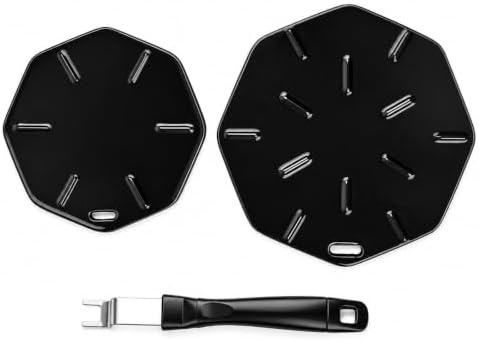
This MARINOVA set includes two cast-iron simmer plates, measuring 8.25 inches and 6.75 inches. Having two sizes gives you more flexibility than a single large diffuser, particularly if you often switch between a small saucepan and a medium pot.
The plates have a black enamel coating and come with removable stainless-steel handles for placement and removal. The handles are a useful design detail, but cast iron can become very hot during cooking. Follow the product instructions and use suitable heat protection; do not assume the handles will stay cool.
The set is listed for gas and electric stoves, not induction. Its main trade-off is that you get two separate plates rather than one larger, raised diffuser. If your priority is matching a plate to different pot sizes, the set is appealing; if you want a design that lifts cookware well above direct flame, consider one of the raised models instead.
Pros:
- Includes two sizes for small and medium cookware.
- Removable handles help with moving the plates.
- Enamel coating is described as easier to clean than bare cast iron.
- Designed for gentle simmering and low-heat cooking.
Cons:
- Not intended for induction stovetops.
- The set may be less suitable if you specifically want a raised platform.
Verdict: The MARINOVA set is a strong fit if you want two diffuser sizes for different pots and mainly cook on gas or electric ranges.
Difalbech: Raised Diffuser with a Small Flat Cooking Surface

The Difalbech uses a raised platform to keep cookware away from direct flame, with a cast-iron plate intended to buffer and spread heat. The listing gives a bottom diameter of 9.45 inches, a top diameter of 8.46 inches, and a height of 1.8 inches, so check the measurements against your burner grate before ordering.
Its 4.5-inch flat top is designed for smaller items such as milk pots and teapots. That can be useful if you frequently warm small amounts, but the compact top may not provide the same support area as the wider flat plates in this roundup. The maker lists it for gas, electric, and glass stoves.
The raised structure is aimed at gentle simmering and reducing direct flame exposure. It may be a better match than a flat diffuser if your main concern is a burner that stays too hot on low. As with any heavy cast-iron accessory, let it cool fully before handling and make sure it sits steadily on the grate.
Pros:
- Raised design separates cookware from direct flame.
- Small flat top is intended for milk pots and teapots.
- Cast iron and enamel treatment are designed for repeated high-heat use.
- Suitable for several listed stovetop types.
Cons:
- The 4.5-inch top may be too small for wider cookware.
- Its height and base dimensions require a careful fit check.
Verdict: Pick the Difalbech if you want a raised diffuser for gentle cooking and often use small pots that fit its compact top.
Wanyous: A Larger Raised Plate for Slow Simmering

The Wanyous diffuser has a raised platform and a thick cast-iron body with a matte enamel finish. Its listed size is about 9.5 inches, making it one of the larger options here. The maker says the raised structure helps lift cookware from direct flame and spread heat beneath the pot.
This design is aimed at slow simmering, sauces, rice, soups, and warming leftovers. It is listed for gas, electric, and propane stoves, and the description also mentions outdoor camp stoves. For any stove, stable support matters: measure your grate and check that the diffuser can sit securely before use.
One practical limitation is that the supplied product information marks this item as unavailable. Availability can change, so check the listing before making plans to buy it. If it is not available, the Tcomenun is a similar-sized raised option, while the Difalbech has a smaller flat top for compact cookware.
Pros:
- Raised platform is designed to reduce direct flame contact.
- Large cast-iron body suits low-and-slow cooking.
- Matte enamel finish is intended for repeated use.
- Listed for gas, electric, propane, and supported camp stoves.
Cons:
- The supplied listing information indicates it may be unavailable.
- Its larger size may not fit every burner grate.
Verdict: Consider the Wanyous if its raised, larger design matches your cookware and stove, but verify availability and fit first.
Tcomenun: A Raised Simmer Plate for Gas and Propane

The Tcomenun is a 9.45-inch raised cast-iron diffuser made to buffer direct flame and spread heat beneath cookware. Its open structure and center plate are intended to reduce concentrated heat, making it a useful style to consider for simmering sauces, soups, rice, and stews.
The listing describes it for gas stovetops, propane burners, and stable camp stoves with proper support. That wider use may appeal if you cook both indoors and outdoors, but it does not mean every portable burner or grate is a safe fit. Check the support surface and the diffuser’s dimensions before using it.
Compared with the Wanyous, the Tcomenun has a similar raised, roughly 9.5-inch format but is listed as available in the supplied product information. Its description gives fewer detailed dimensions, so measure your stove and cookware carefully. Like other cast-iron diffusers, it will be hot during use and should cool completely before handling.
Pros:
- Raised design is intended to reduce direct flame exposure.
- Listed for gas, propane, and stable camp stoves with proper support.
- Cast iron provides a sturdy support surface.
- Suitable for simmering, warming, and slow cooking.
Cons:
- Exact top and height measurements are not provided in the description.
- Camp-stove use depends on having stable, suitable support.
Verdict: The Tcomenun is a practical choice if you want a raised diffuser for gas or propane use and can confirm it sits securely on your burner.
How to Choose a Burner Plate for a Gas Stove
Confirm the product is a heat diffuser
“Burner plate” can refer to different stove parts. The products here are heat diffusers, which sit between the flame and the cookware. They are not replacement burner caps, grates, or drip pans. If you need to replace a stove part, check your stove’s make and model and shop for the correct component instead.
Measure the burner grate and cookware
Check the diffuser’s diameter and shape against your stove grate, then consider the bottom of the pot you plan to use. A plate that is too large may not sit securely; one that is too small may not support your cookware well. Raised models can have different top and bottom measurements, so look beyond the largest size listed.
Choose between a flat plate and a raised design
A flat plate is a simple way to add a heat-spreading layer beneath a pot. A raised diffuser is designed to lift cookware farther from direct flame, which may help when the lowest burner setting still feels too hot. Consider how much clearance your cookware and stove allow, and make sure the plate remains stable.
Match the plate to your cooking habits
Diffusers are most useful for gentle, steady cooking, such as simmering sauces or warming food. If you cook with several pot sizes, a set with multiple plates may offer more flexibility. If you mostly use one larger pot, a single larger diffuser may be more convenient. Cast iron retains heat, so allow time for it to warm up and cool down.
Check stove compatibility carefully
Do not assume that every diffuser works on every stovetop. Read the stated compatibility for your specific model. One product in this list has conflicting information about induction use, so confirm with the seller if induction matters to you. For outdoor burners, make sure the product is listed for that type of use and has stable support.
Consider handling and care
Cast iron gets hot and can stay hot after the burner is turned off. Look for features such as removable handles if they suit your routine, but use appropriate heat protection and follow the product’s instructions. An enamel finish may make cleaning easier, though you should still check the maker’s care guidance.
Frequently Asked Questions
What does a burner plate do on a gas stove?
A heat diffuser sits between the flame and your cookware to spread heat and soften direct flame contact. It is commonly used for low-and-slow cooking, such as simmering sauces or soups.
Is a heat diffuser the same as a burner cap or drip pan?
No. The products in this guide are cooking accessories that sit on the stove grate under cookware. Burner caps and drip pans are stove components, and a diffuser is not a replacement for either one.
Can I use a cast-iron diffuser on any stove?
No. Compatibility varies by product. Check the listing for your stove type, especially if you have an induction, glass, or ceramic cooktop. Also confirm that the diffuser sits securely on the surface or grate.
Can a diffuser prevent food from burning?
It is designed to spread heat and reduce direct flame exposure, which may help with scorching during gentle cooking. Results depend on your stove, cookware, recipe, and heat setting, so a diffuser does not replace normal cooking attention.
Should the diffuser be larger than the pot?
Not necessarily. The diffuser should fit your grate securely and support the cookware as intended. Compare the diffuser’s top and bottom measurements with both your burner and pot before buying.
How should I handle a cast-iron heat diffuser?
Assume it will be hot during and after cooking. Use suitable heat protection, keep it stable while in use, and let it cool completely before handling or cleaning. Follow the product’s care instructions.
Which option is best if I use several pot sizes?
The MARINOVA set includes two plate sizes, so it is the most flexible choice in this group for switching between smaller and medium cookware. Check that both sizes work with your stove and the pots you use most.
Final Recommendation
For most gas-stove users who want options for different cookware, the MARINOVA set stands out because it includes two diffuser sizes and removable handles. If you prefer a raised design for a low flame that still runs too hot, consider the Difalbech or Tcomenun after checking the dimensions and stability on your stove. Choose the Heat Equalizer for a simple flat plate, and verify its stovetop compatibility before ordering. In every case, measure first and use the diffuser only on a stable, compatible burner.