
A car alarm can make a break-in louder, more visible, and harder to carry out, but the right setup depends on how you park and how much installation you want to take on. These picks range from portable vibration alarms to a professionally more involved 12V system and a connected camera-and-tracking device. Compare their power, alerts, controls, and ongoing requirements before choosing one for your vehicle.
Quick Comparison
| Product | Best for | Key features | Power and setup |
|---|---|---|---|
| LNKERCO 2-Pack Motion Sensor Alarm | Two vehicles or two alarm positions | 108dB siren, warning light, adjustable volume | Magnetic mount; AAA batteries |
| LNKERCO 110dB Vibration Alarm | Adjustable sensitivity and simple alerts | 10 sensitivity levels, doorbell and vehicle-finding modes | Adhesive mount; AAA batteries not included |
| Mulcort Universal 12V Car Alarm | A more integrated alarm installation | Siren, sensors, wiring harness, two remotes | 12V system; wiring required |
| ELECTOP 120dB Vibration Alarm | Loud sound and visible alerts | 120dB siren, strobe, three volume levels | Portable unit with rechargeable battery |
| Keep 4G/LTE Car Alarm | App alerts, video, and GPS features | Camera, motion sensors, cellular connection | Cupholder installation; subscription required for connected features |
Our Picks: Best Car Alarm Systems For Anti Theft reviews
1. LNKERCO 2-Pack Motion Sensor Alarm: Best for Flexible Placement

This portable set includes two alarm units and one wireless remote. You can use the units in two vehicles or place them at separate positions in one vehicle. The magnetic mount makes placement and removal easier than a wired installation, and the remote can pair with multiple alarm units.
The alarm uses a two-stage response: a first vibration triggers a short warning, while another disturbance can activate the siren and flashing red light. You can choose among three volume levels, with a listed maximum of 108dB. The built-in motion sensor is described as designed to filter out some environmental vibrations, though no portable vibration alarm can guarantee a false-alarm-free experience in every parking spot.
This is a practical choice if you want a moveable deterrent for a car, motorcycle, or more than one vehicle. Keep in mind that a car’s sound insulation may muffle an alarm placed inside. The listing suggests placing one unit inside and one outside in that situation, so consider where you can securely position the second unit.
Pros:
- Two alarm units are included, with one remote for both.
- Magnetic mounting requires no drilling or wiring.
- Three sound levels and a flashing warning light offer more than one alert type.
- The main unit and remote use replaceable AAA batteries.
Cons:
- The alarm sound may be muffled inside a well-insulated vehicle.
- It is a portable deterrent, not a connected system with GPS or phone alerts.
Verdict: Choose this set if flexible placement and coverage for two vehicles matter more than app-based monitoring or a hardwired installation.
2. LNKERCO 110dB Vibration Alarm: Best for Adjustable Sensitivity

This compact vibration alarm focuses on simple, adjustable protection. Its 10 sensitivity levels let you tune how readily it responds to movement, which can be useful if the vehicle is parked near traffic or in a busy lot. The listing says the first vibration triggers a short alert and a second triggers a longer siren.
The alarm is rated at 110dB and comes with a wireless remote for arming and disarming. It also includes a doorbell mode and a vehicle-finding function, giving it some uses beyond theft deterrence. Installation uses non-marking adhesive rather than wiring, but the surface should be cleaned before mounting. The package does not include the two AAA batteries needed for the alarm.
Compared with the two-unit magnetic LNKERCO set, this model gives you more sensitivity settings but covers only one alarm position. Its adjustable response is helpful in theory, but you may need to experiment with the setting to suit your parking environment.
Pros:
- 10 sensitivity levels allow you to adjust the response to vibration.
- Wireless remote control can arm and disarm the alarm.
- Doorbell and vehicle-finding modes add extra functions.
- Adhesive mounting avoids a wired installation.
Cons:
- Two AAA batteries are not included.
- Adhesive placement is less convenient to move than a magnetic mount.
Verdict: This is a good fit if you want a portable alarm with fine-grained sensitivity adjustment and do not mind supplying batteries or using an adhesive mount.
3. Mulcort Universal 12V Car Alarm: Best for a Hardwired Setup

Unlike the portable vibration alarms, this Mulcort system is designed to connect to a vehicle’s 12V electrical system. The package includes a wiring harness, sensors, a built-in siren, and two remote controls. Its multi-level arming system is intended to provide a more integrated approach to vehicle security.
A wired system may be a better match if you want an alarm that becomes part of the vehicle rather than a device you place inside and remove. The trade-off is installation: the supplied description does not provide vehicle-specific fitment details or step-by-step installation guidance. Check the wiring requirements and compatibility with your vehicle before buying, and consider professional installation if you are not comfortable working with vehicle wiring.
This option does not list a siren volume, GPS tracking, or phone alerts. It is therefore better suited to shoppers who prioritize a conventional alarm-and-remote setup than those seeking the loudest listed siren or connected monitoring.
Pros:
- Designed as a 12V vehicle alarm rather than a stand-alone vibration device.
- Includes a wiring harness and sensors.
- Two remote controls are included.
- Built-in siren provides an audible alert.
Cons:
- Wiring makes installation more involved than magnetic or adhesive alarms.
- Vehicle-specific compatibility should be confirmed before purchase.
Verdict: Pick the Mulcort if you want a wired alarm system and are prepared to verify fitment and handle a more involved installation.
4. ELECTOP 120dB Vibration Alarm: Best for Sound and Strobe Alerts

The ELECTOP pairs a vibration sensor with a siren and a red strobe light. Its listed maximum volume is 120dB, with two lower settings available. The product description says light taps produce a warning and more serious disturbance activates the full alarm, giving it a staged response rather than relying on sound alone.
The ring-shaped strobe is designed to make the warning more visible, while the compact, cat-shaped housing gives the unit a distinctive look. The main unit has a rechargeable lithium-ion battery, and the remote uses a separate battery. As with other portable alarms, placement matters: a loud alarm inside a vehicle may be less noticeable from outside, and the light needs to be visible to serve its purpose.
Compared with the LNKERCO portable models, this one offers a higher stated maximum volume and a more prominent strobe feature. It does not provide the sensitivity-level range listed for the other LNKERCO alarm, so it may be less appealing if you want precise adjustment for a noisy parking area.
Pros:
- Three selectable volume levels, with a listed maximum of 120dB.
- Combines an audible siren with a flashing red light.
- Rechargeable main-unit battery reduces reliance on disposable batteries.
- Compact design is intended for portable use.
Cons:
- The description does not list multiple sensitivity settings.
- Soundproofing and placement can affect how well the alarm is heard outside the vehicle.
Verdict: Choose the ELECTOP if a loud siren and visible strobe are your priorities, and you are comfortable managing a portable unit’s placement and charging.
5. Keep 4G/LTE Car Alarm: Best for Connected Monitoring
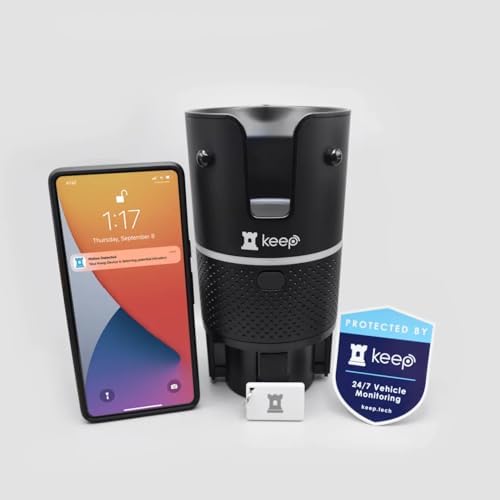
Keep takes a more connected approach than a basic vibration alarm. The unit combines a 1080p camera with 360-degree views, GPS, motion sensing, cellular connectivity, and two sirens. The product description says it can send alerts and video or pictures to a mobile phone through its app when it detects entry.
Installation is described as a cupholder setup: the device anchors in place and can be removed through the app. It is designed to arm and disarm automatically with its key fob. Unlike the other picks, its app, cellular connection, cloud storage, and related connected features require a subscription. Confirm the current plan details and service availability for your location before choosing it.
This system offers more monitoring features than the portable alarms, but it also brings more requirements. You need to be comfortable with an ongoing service plan, app-based setup, and a device that sits in the cabin. It is the strongest match for someone who wants alerts and video rather than only a local siren.
Pros:
- Combines a camera, GPS, motion sensors, and cellular connectivity.
- Can send mobile alerts and video or pictures through its app.
- Includes two sirens and flashing red lights.
- Automatic arming and disarming with the included key fob is designed to reduce manual steps.
Cons:
- Connected features require a subscription.
- More complex than a stand-alone alarm and depends on the app and cellular service.
Verdict: Choose Keep if you want connected alerts, video, and GPS features and are willing to manage a subscription; skip it if you only need a simple local alarm.
How to Choose a Car Alarm System for Anti-Theft
Decide Whether You Want Portable or Hardwired Protection
Portable alarms are generally simpler to place and move between vehicles. The LNKERCO and ELECTOP options use magnetic or adhesive mounting, so they do not require vehicle wiring. A 12V system such as the Mulcort is designed for a more integrated setup, but installation is more involved. Check your vehicle’s requirements and your comfort level with wiring before choosing a hardwired model.
Match the Alert to Where You Park
A siren may attract attention, but the vehicle’s location and sound insulation affect how noticeable it is. Consider whether the car is parked in a private garage, a shared lot, or on a busy street. A flashing light can add a visible cue, while a portable alarm placed deep inside a sound-insulated vehicle may be harder to hear outside.
Look for Sensitivity Controls
Vibration alarms need to respond to suspicious movement without sounding every time the vehicle is affected by ordinary activity nearby. The LNKERCO alarm with 10 sensitivity levels offers the most explicit adjustment range in this group. Other models describe staged alerts or motion filtering, but the product descriptions do not give the same level of sensitivity control. Think about how much traffic, foot traffic, or other movement surrounds your usual parking spot.
Consider Power and Maintenance
Battery-powered alarms avoid vehicle wiring but still need battery checks or charging. One LNKERCO model uses AAA batteries that are not included; the two-pack model also uses AAA batteries, while ELECTOP lists a rechargeable main-unit battery. The Mulcort connects to a 12V system. Keep the power source in mind if you want to avoid frequent upkeep or do not want to work with wiring.
Choose Between Local Alerts and Phone Monitoring
A basic alarm can sound locally, while a connected system can offer app alerts and other remote features. Keep adds cellular service, cloud storage, a camera, and GPS, but its connected features require a subscription. If you want those capabilities, check service coverage and subscription terms. If you only want a local sound or light deterrent, a simpler model may be a better fit.
Check Mounting, Visibility, and Vehicle Fit
Think about where an alarm can be mounted without blocking your view or getting in the way. Magnetic and adhesive models are easier to move, but placement affects how well their sound or warning light can be noticed. For a hardwired system, verify compatibility with your specific vehicle before purchasing. Do not assume that a product described as universal will fit every vehicle without checking its installation requirements.
Frequently Asked Questions
Can a car alarm stop a vehicle from being stolen?
An alarm can draw attention and may discourage a theft attempt, but it cannot guarantee that a vehicle will not be stolen. Treat it as one layer of security rather than a substitute for careful parking or other protective measures.
Are portable vibration alarms difficult to install?
The portable options in this guide use magnetic or adhesive mounting, so they do not require the wiring described for the Mulcort 12V system. Follow the product instructions and choose a position where the alarm can detect movement without being obstructed.
Will a loud alarm be heard outside my car?
Not always. Vehicle sound insulation can reduce how loud an alarm seems from outside. The LNKERCO two-pack listing specifically notes this issue and suggests placing one unit inside and one outside when appropriate.
Do these alarms include GPS tracking?
Keep lists GPS and connected app features. The other four products in this guide are described as local alarms and do not list GPS tracking.
Does the Keep system require a subscription?
Yes. Its description says a subscription is required for connected services such as 4G/LTE connectivity, cloud storage, mobile alerts, and related app features. Review the current plan terms before buying.
Which option is easiest to move between vehicles?
The LNKERCO two-pack uses magnetic mounts and is described for use across vehicles, while its remote can pair with multiple alarm units. The other portable alarms may also be easier to relocate than a hardwired system, but mounting and setup differ by model.
Final Recommendation
For flexible, no-wiring coverage, the LNKERCO two-pack is the most adaptable pick in this group, especially if you want to protect two vehicles or use two alarm positions. Choose the adjustable LNKERCO model for more control over vibration sensitivity, ELECTOP for a siren-and-strobe combination, and Mulcort if you prefer a wired 12V setup. Keep is the better fit for app alerts, video, and GPS, as long as you are comfortable with its subscription requirement. Whichever option you choose, confirm compatibility and placement needs before relying on it as part of your vehicle’s security plan.