
If you shoot video on a cinema camera, you already know how quickly a heavy body can wear down your arms and back. A shoulder mount rig moves that weight onto your shoulder, adds handles for steadier framing, and gives you a flat platform for accessories like monitors, batteries, and wireless receivers. Choosing the right one depends on your camera’s weight, the rod system you already own, and how you plan to shoot. This guide covers five shoulder rig options, compares them side by side, and explains what to look for before you buy.
Quick Comparison Table: Best Cinema Camera Rigs With Shoulder Mounts
| Product | Best For | Key Strength | Max Payload | Current Listing Status |
|---|---|---|---|---|
| NICEYRIG 15mm Shoulder Pad Support System with Base Plate | Mid-size cameras and DSLR-style setups | Versatile mounting points and quick tripod switch | 22 lb | Available |
| SmallRig HawkLock Shoulder Rig Kit for VCT-14 | Medium to large cinema cameras | Built-in VCT module and adjustable arm | 20 kg (44 lb) | Available |
| NICEYRIG 15mm Rod Rail Shoulder Rig Support System | Heavier rigs that need a sturdy base | ARRI rosette connections and optional riser plate | Not specified in listing | Currently unavailable |
| GOWE Offset Shoulder Pad for Blackmagic Cinema Camera | Blackmagic camera owners wanting an offset pad | Simple, adjustable offset design | Not specified in listing | Currently unavailable |
| NICEYRIG 15mm Shoulder Mount Easy Movie Making Kit | Single-operator shooters on a budget-friendly kit | Complete kit with shoulder pad and 15mm handle | 22 lb (recommended) | Currently unavailable |
Our Picks: Best Cinema Camera Rigs With Shoulder Mounts reviews
NICEYRIG 15mm Shoulder Pad Support System With Base Plate: A Flexible All-Around Rig
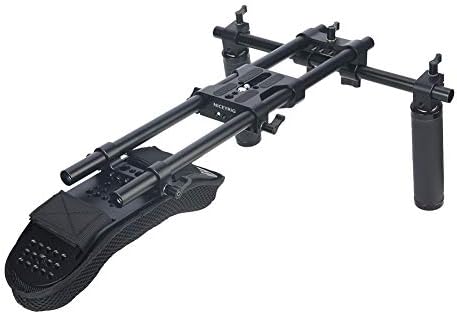
This NICEYRIG kit is a 15mm rod-based shoulder rig built around a base plate that attaches your camera to a shoulder pad. The listing names a wide range of compatible bodies, including Blackmagic Pocket Cinema Camera 4K, 6K, and 6K Pro models, Panasonic GH and G series cameras, Canon C100, C200, and C300, Sony FS5, FS7, and F55, and RED and Blackmagic URSA Mini systems. The stated maximum payload is 22 lb, which makes it a practical match for mid-weight cinema bodies and larger mirrorless or DSLR rigs.
The strongest part of this design is its mounting flexibility. The cheese plate offers plenty of room and includes both 1/4-inch and 3/8-inch threaded holes, so you can add counterweights, V-mount batteries, or a magic arm without rethinking the whole setup. The base plate also uses two wingnuts for quick release, which lets you move the camera from the shoulder system to a tripod with minimal fuss. For run-and-gun work, where you often switch angles in a few seconds, that quick change matters a lot.
Build quality is where you can see the value. The rig uses an aluminum alloy structure that feels solid without adding much bulk. The handle grips are made of cow leather and mount on the 15mm rail, giving you a comfortable hold and a steady point of control. In everyday use, many owners appreciate how the weight is spread across the shoulder pad, which helps reduce fatigue during longer shoots. Still, a rig with this many accessory points can get front-heavy if you stack a large monitor and battery on the arm, so balance should be checked before each shoot.
Compared with the SmallRig option below, this NICEYRIG kit is less specialized but more generic. It does not include a built-in VCT module, so you will not get the same one-second switch between shoulder and tripod modes. It is a good pick if you want a dependable, adaptable base for a variety of cameras and do not need the premium features of a purpose-built system.
Pros:
- Wide compatibility list covering many popular cinema and mirrorless bodies
- Cheese plate with both 1/4-inch and 3/8-inch holes for flexible accessory mounting
- Quick-release wingnuts make switching to a tripod straightforward
- Aluminum alloy build keeps the rig sturdy without excessive weight
Cons:
- Without a built-in tripod module, switching setups takes more steps than a dedicated system
- Heavier accessories can shift the balance, so you may need to adjust counterweights
Verdict: This is a solid, versatile shoulder rig for shooters who use a range of cameras and want room to grow. If your camera sits within the 22 lb payload and you value accessory options over advanced quick-change features, this kit deserves a close look.
SmallRig HawkLock Shoulder Rig Kit: Built for Heavier Cinema Setups

The SmallRig HawkLock kit is designed for medium to large cinema cameras, and its listing names models such as the Sony FX6 and FX9 and Canon C400, C70, and C80. It is built around a VCT module that allows you to switch between shoulder-mounted and tripod modes. The listing describes this change as taking about one second, and the kit is meant to be assembled and adjusted without tools. Its maximum load is 20 kg, or 44 lb, which is a clear step up in capacity from many entry-level shoulder systems.
What sets this kit apart is its adjustability. The telescopic arm moves left and right by about 50 mm, and the shoulder pad slides side to side. That range helps you find a comfortable position regardless of your body size, and it helps keep the pad from blocking your view. The dual quick-release plate offers up to about 185 mm of front-to-back adjustment, which makes it easier to balance a long lens or a heavy accessory without changing the whole rig. The base can also be adjusted vertically to suit different lens sizes.
Expansion is another strength. You get 1/4-inch-20 locating holes, 1/4-inch-20 threaded holes, and 15mm rod clamps, so you can add a monitor, V-mount battery, or follow focus unit. The built-in standard ARRI rosette and rotating module also let you swap handles to suit your preferred grip. In practice, many operators appreciate this kind of modularity because it lets one rig grow with their production needs instead of forcing a new purchase every time a project changes.
The trade-off is complexity. A kit with this many adjustment points takes longer to learn than a simpler rig, and beginners may need a few sessions to set the arm length, pad position, and balance with confidence. It is also a heavier and more deliberate system, so it suits planned shoots and professional setups better than quick, lightweight handheld work.
Pros:
- Built-in VCT module makes switching between shoulder and tripod modes quick
- High 20 kg (44 lb) load capacity suits larger cinema bodies
- Adjustable arm and shoulder pad help fit a wide range of body types
- Multiple mounting points support monitors, batteries, and follow focus systems
Cons:
- Many adjustment points create a learning curve for new users
- The system is bulkier than simpler rigs, which may feel excessive for lightweight cameras
Verdict: For owners of medium to large cinema cameras who want precise control and an efficient tripod switch, this is one of the most capable options in this lineup. Buyers with smaller cameras or limited budgets may find a simpler rig more practical.
NICEYRIG 15mm Rod Rail Shoulder Rig: A Sturdy Base for Heavier Rigs

This NICEYRIG rod rail system is aimed at people who run heavier camera setups and need a base that feels planted. Its main structure is aluminum alloy with an M6 thread ARRI standard rosette connection, and the listing describes it as solid enough to hold a full rig. The compatibility list includes Canon C100, C200, and C300, Sony FS5, FS7, and F55, RED DSMC2, and several Sony Alpha models, among others.
A notable feature is the pair of ARRI standard rosette adapters on the 15mm rod baseplate. These let you attach rosette-mount rail handles or extension arms directly, which is useful if you already own rosette-based accessories. The listing also mentions an optional Niceyrig Riser Plate 403 for situations where you need extra height or a different camera position. The shoulder pad includes a large cheese plate with 1/4-inch and 3/8-inch threaded holes, giving you room for counterweights, V-mount batteries, and articulating arms.
Ergonomics appear to be a focus as well. The shoulder pad is shaped for comfort during long shoots, and the design aims to take pressure off your shoulder while you keep the camera steady. Experienced operators often value this kind of stable, predictable structure because it helps keep framing consistent during extended takes.
The main drawback is that the listing does not state a specific maximum payload, so you will need to confirm the rig’s limits against your camera and accessory weight. It is also currently listed as unavailable, which means you may need to check back or compare it with the other options here. Compared with the HawkLock kit, this system is more focused on rosette compatibility and heavier base support than on quick-change features.
Pros:
- Sturdy aluminum alloy structure suited to heavier camera rigs
- Two ARRI rosette adapters allow direct attachment of compatible handles and arms
- Optional riser plate adds flexibility for camera positioning
- Large cheese plate offers plenty of room for accessories
Cons:
- The listing does not specify a maximum payload, so you must verify capacity yourself
- Currently listed as unavailable, which limits immediate purchase
Verdict: If you need a sturdy rosette-based rig for a heavier cinema body and already use ARRI-style accessories, this is a strong candidate. Because the payload is not stated and stock is limited, confirm both before you commit.
GOWE Offset Shoulder Pad for Blackmagic Cinema Camera: A Focused Accessory Option

The GOWE offset shoulder pad is a narrower product than the other picks in this list. Its listing describes it as an adjustable offset shoulder pad intended for Blackmagic cameras, and the package is described as a single piece. Unlike a complete rig, it does not appear to include a base plate, handles, or a rod system, so it works as a targeted accessory rather than a full setup.
An offset pad is useful when you want the camera positioned away from your face or shoulder line, which can help with framing and comfort. For Blackmagic owners who already have a rod system or base, a dedicated offset pad can be a simpler and less expensive upgrade than replacing the whole rig. The adjustable design gives you some control over placement, though the listing does not give detailed measurements or adjustment ranges, so you should check fit before buying.
The biggest limitation is the lack of detail in the product information. Without a stated payload, material breakdown, or compatibility list beyond Blackmagic cameras, you will need to confirm that the pad matches your camera body and existing mounts. It is also listed as currently unavailable, which further narrows its immediate usefulness. For shooters who want a complete, documented shoulder system, one of the other options here will likely be a better starting point.
Pros:
- Focused design for Blackmagic cameras
- Adjustable offset helps with camera placement and comfort
- Simple, single-piece accessory that may be easier to add to an existing rig
Cons:
- Listing offers limited specifications, making fit and capacity harder to confirm
Verdict: This pad suits Blackmagic owners who already have a working rig and need an offset upgrade. Because the product details are sparse and availability is limited, verify compatibility carefully before you buy.
NICEYRIG 15mm Shoulder Mount Easy Movie Making Kit: A Complete Starter Setup

This NICEYRIG kit is designed as a complete, ready-to-build shoulder system. It includes a 15mm shoulder pad, a cheese plate for mounting your camera, and a 15mm rod handle, all intended to be assembled through standard 15mm rod mounts. The listing positions it as a single-hand support rig, which means you can keep one hand free for focus, audio, or other tasks while the other steadies the camera. It is compatible with FS7, FS5, FX6, and FX9 cameras, along with several Panasonic and Sony camcorders and DSLR or mirrorless bodies, and it lists a recommended maximum payload of 22 lb.
The shoulder pad uses a curved shape designed to sit comfortably on your shoulder. The listing identifies it as an S485 pad, which is meant to improve comfort during extended filming. The cheese plate attaches with a 1/4-inch-20 screw, and the kit leaves room for accessories such as V-mount batteries, counterweights, and wireless gear. For people who are new to shoulder rigs, having a complete set of parts in one package can simplify the buying process.
The handle is one of the more thoughtful parts of the kit. It is made of cow leather, which the listing describes as a natural material that helps with grip and comfort. The handle rotates 360 degrees on the rod, giving you flexibility in how you hold the camera. Many users find that a comfortable grip makes it easier to keep shots steady over time, especially during handheld walking shots or quick repositioning.
The limitations are typical for an all-in-one kit. A combined package means you are trusting the included components to suit your exact needs, so you may later want upgraded rods, longer arms, or a different pad. The kit is also currently listed as unavailable, so check stock before planning a purchase. For a budget-conscious shooter who wants a simple, functional setup, though, it is a logical choice.
Pros:
- Complete kit with shoulder pad, cheese plate, and 15mm handle in one package
- Single-hand support design keeps your other hand free
- Curved shoulder pad and rotating leather handle aim for comfort during longer shoots
- Recommended 22 lb payload suits many mid-weight cameras
Cons:
- Bundled components may need upgrading as your gear or shooting style grows
- Currently listed as unavailable, so immediate purchase may not be possible
Verdict: This kit is a practical starting point for shooters who want an all-in-one shoulder rig without assembling parts from several brands. If it is in stock and your camera fits within the 22 lb recommendation, it offers a balanced, approachable setup.
How to Choose the Right Shoulder Mount Rig for Your Cinema Camera
Start With Your Camera Weight and Payload Limit
Your camera’s weight, plus lenses, batteries, monitors, and microphones, determines how much load your rig must handle. Add up the full setup before you shop, then compare that total with the rig’s stated maximum payload. A system rated for 22 lb may feel comfortable with a mid-size cinema body but struggle with a heavy zoom and large monitor. Leave some margin below the rated limit, since accessories tend to grow over time. When a listing does not state a payload clearly, treat that as a reason to ask questions before buying rather than assuming the rig will handle your setup.
Match the Rod System to Your Existing Gear
Most shoulder rigs in this category use 15mm rods, which is a common standard for cinema accessories. If you already own handles, arms, or monitor brackets, check whether they use 15mm rod clamps or a different connection, such as ARRI rosettes. A rig that matches your current accessories can save money and reduce the need for adapters. Adapters are sometimes necessary, but each one adds a point of potential wobble and extra weight. Choosing a rig that fits your existing rod system keeps the setup cleaner and more stable.
Evaluate the Shoulder Pad and Fit
The shoulder pad is where comfort is decided. Look for a pad that spreads weight across your shoulder rather than concentrating pressure on one point. Adjustable pads are especially helpful because body shapes vary, and a pad that sits well on one operator may feel awkward for another. Some rigs also allow side-to-side or front-to-back adjustments, which can help you keep the viewfinder or monitor clear of your face. If you plan to shoot for long periods, comfort may matter more than any single feature on the spec sheet.
Consider Balance and Mounting Points
A good shoulder rig should feel balanced when the camera is mounted. Cheese plates with multiple 1/4-inch and 3/8-inch holes give you more places to add accessories without redesigning the setup. Think about where your battery, monitor, and wireless receiver will sit. If you add weight far in front of or behind your shoulder, the rig may tilt or pull on your body. Counterweights and adjustable arms can correct this, but a rig with flexible mounting points makes balancing much easier from the start.
Think About Quick Release and Tripod Switching
If you shift between handheld and tripod shooting during the same session, quick release becomes important. Wingnut-style releases and built-in tripod modules can save time, especially on run-and-gun shoots where setups change often. Dedicated systems with built-in modules tend to be faster but may cost more and take longer to learn. Simpler quick-release plates work well if your changes are occasional. Decide how often you will switch modes, then choose the system that fits your workflow.
Assess Handle and Grip Comfort
Handles affect control, stability, and fatigue. Rotating handles can help you find a natural grip angle, while leather or padded grips often feel more comfortable during long takes. Consider whether you need one handle or a pair, and whether you plan to use a single-hand setup for gimbal-style movement or a two-hand setup for maximum stability. Handles that mount on rods should be tightened securely so they do not shift during movement.
Look at Build Quality and Materials
Aluminum alloy is common in shoulder rigs because it offers a good balance of strength and weight. A well-built rig should feel firm when assembled, with no excessive flex in the base or arm. Pay attention to threaded holes, clamps, and locking points, since these areas take the most stress. Durability matters if you travel often or work in tough conditions, so choose a rig that feels robust enough for your shooting environment.
Check Availability and Plan Ahead
Some products in this category may be temporarily unavailable, and stock can change without much notice. If you need a rig for an upcoming project, check current listing status before you plan your shoot around a specific model. It can also help to have a backup option in mind, such as a similar rig with comparable payload and mounting features. Planning ahead prevents delays and keeps your production on schedule.
Frequently Asked Questions About Cinema Camera Shoulder Rigs
What is a shoulder mount rig used for?
A shoulder mount rig supports your camera on your shoulder while giving you handles, mounting points, and balance control. It helps reduce arm fatigue and can make handheld shots steadier. Many shooters use these rigs for documentary work, run-and-gun filming, and extended handheld sequences where a tripod is impractical.
How much weight can a shoulder rig handle?
Payload capacity varies by model. Some rigs in this list state a maximum load of 22 lb, while the SmallRig HawkLock kit lists 20 kg, or 44 lb. Others do not clearly publish a payload figure. Always add up your camera, lens, battery, and accessories, then choose a rig with a comfortable margin below its rated limit.
What is the difference between a 15mm rod system and an ARRI rosette?
A 15mm rod system uses round rails that accept clamps for handles, arms, and accessories. An ARRI rosette is a standardized connection point that attaches handles and arms directly to a compatible base. Rosettes are common in professional setups, while 15mm rods are widely used across many budget and mid-range rigs. Check which connection your existing gear uses before you buy.
Can I use a shoulder rig for a DSLR or mirrorless camera?
Many shoulder rigs are designed for cinema cameras but also accept DSLR and mirrorless bodies. Some NICEYRIG listings specifically mention DSLR and mirrorless compatibility. Check the camera list and payload before buying, since lighter bodies may not need the same heavy-duty support that larger cinema cameras require.
Is a built-in tripod module worth it?
A built-in tripod module is worth considering if you switch between handheld and tripod shooting often. It saves time and reduces the number of parts you must assemble. If your shoots are mostly handheld or you rarely change setups, a simpler rig may give you the same results at a lower complexity level.
Do I need a riser plate or offset pad?
A riser plate raises the camera for better positioning, while an offset pad moves the camera away from your body line. Both can improve framing and comfort, but you may not need either one. Consider your typical shooting style, your height, and how the camera sits when you look through the viewfinder or monitor. Testing the fit before a long shoot is always a good idea.
Which shoulder rig is the best overall choice?
For most shooters with medium to large cinema cameras, the SmallRig HawkLock kit stands out because of its built-in tripod switch, high payload, and flexible adjustments. For those who want a versatile all-around base at a more approachable setup, the NICEYRIG 15mm Shoulder Pad Support System with Base Plate is a practical choice. The right pick depends on your camera, your budget, and how often you switch between handheld and tripod shooting.
Final Recommendation
Choosing a cinema camera shoulder rig comes down to matching payload, mounting options, and comfort to the way you shoot. The SmallRig HawkLock kit offers the most advanced features for medium to large cameras, while the NICEYRIG 15mm Shoulder Pad Support System with Base Plate delivers strong versatility and accessory room for a wide range of bodies. If you want a sturdy rosette-based base, the NICEYRIG 15mm Rod Rail system is worth considering once it is back in stock. The GOWE offset pad and the NICEYRIG Easy Movie Making Kit serve more specific needs, so check their listing details and availability before you decide. Measure your full camera setup, confirm compatibility, and choose the rig that keeps you steady and comfortable through your longest shoots.