
Kitchen cabinets collect cooking grease, fingerprints, and food splashes, but the wrong cleaner can leave a film or harm a finish. The best choice depends on your cabinet material and the kind of buildup you need to remove. These five options include spray cleaners, a foaming formula, and cabinet creams, with different tools and surface claims to consider.
Quick Comparison
| Product | Format | Best suited for | Standout feature |
|---|---|---|---|
| FORTIVO Kitchen Cabinet Cleaner | Spray kit | Everyday cleaning on finished wood, painted, and laminate cabinets | Includes a detail brush |
| Final Touch Kitchen Cabinet Cleaner and Degreaser | Spray kit | Grease and grime around handles and stove areas | 32-ounce bottle and detail brush |
| Parker & Bailey Kitchen Cabinet Cream Wood Cleaner | Cream | Cleaning and conditioning wood cabinets | Made for cleaning and restoring wood surfaces |
| Parker & Bailey Kitchen Cabinet Cream | Cream | Cleaning and conditioning painted, laminate, and wood cabinets | Multi-surface cream formula |
| 812 Foaming Cabinet & Countertop Cleaner | Foaming spray | Targeted cleaning on cabinets and compatible kitchen surfaces | Foam clings to vertical surfaces |
Our Picks: Best Cleaning Products For Kitchen Cabinets reviews
1. FORTIVO Kitchen Cabinet Cleaner: A Spray Kit for Routine Care

FORTIVO is an everyday cabinet cleaner sold as a kit with an 8-ounce bottle and a precision cleaning brush. Its spray format suits quick wipe-downs, while the brush is intended for more focused scrubbing around grooves and other detailed areas.
The product is described for finished wood, painted, and laminate surfaces, as well as vanities, trim, and sealed furniture. The directions offer two ways to use it: spray onto a towel for a touch-up or pair it with the brush for tougher grime. That flexibility makes it a practical option for a kitchen that needs regular light cleaning rather than a large-volume supply.
The main trade-off is bottle size. An 8-ounce bottle may be less convenient for someone cleaning a large kitchen or tackling widespread, built-up grease. As with any cabinet cleaner, check the care instructions for your finish and test a hidden spot before using it across a large area.
Pros:
- Includes a precision cleaning brush.
- Can be used for both quick wipe-downs and targeted scrubbing.
- Described for wood, painted, laminate, and other finished surfaces.
Cons:
- The 8-ounce bottle is smaller than the other spray kit listed here.
- Requires extra care to confirm compatibility with your specific finish.
Verdict: Choose FORTIVO if you want a compact spray-and-brush kit for routine cabinet upkeep across several finished surfaces.
2. Final Touch Cabinet Cleaner: A Larger Kit for Greasy Areas

Final Touch is a spray cleaner and degreaser designed for cooking residue, fingerprints, and sticky buildup. The 32-ounce kit also includes a soft detail brush sized for recessed panels, corners, and grooves. The product description says to spray, brush, and wipe, with no rinsing required.
This kit is a strong match for cabinets near the stove or around frequently handled doors, where grease can collect in hard-to-reach details. It is described for wood, painted, white, and laminate cabinets, and the plant-derived formula is listed as low odor. Those claims may appeal if you want a larger supply and a brush in the same package.
A larger bottle is useful for cleaning more of the kitchen, but this is still a product you should use according to its label and your cabinet maker’s care guidance. The inclusion of a brush can help with grooves, though it also means you should avoid scrubbing delicate finishes too aggressively.
Pros:
- Includes a 32-ounce bottle and a soft detail brush.
- Designed to address grease, fingerprints, and sticky buildup.
- Described for wood, painted, white, and laminate cabinets.
- Product information specifies a no-rinse application.
Cons:
- May be more than you need for occasional small touch-ups.
- Brush pressure should be kept gentle on sensitive finishes.
Verdict: Final Touch is the better fit if you need a larger spray kit for greasy areas and want a detail brush for cabinet grooves.
3. Parker & Bailey Wood Cleaner: A Cream for Cleaning and Conditioning

This Parker & Bailey product is a cabinet cream intended to remove grease, food stains, and grime while conditioning wood. The product description also positions it as a wood polish for furniture, tables, chairs, and shelving, giving it uses beyond the kitchen.
A cream is applied with a cloth rather than sprayed directly onto the cabinet. That approach can be useful when you want to control how much product goes on a door or trim piece. The formula is described for wood, laminate, and painted surfaces, and is promoted as a way to revive the appearance of dull or dry wood without sanding or refinishing.
Because this cleaner is also presented as a conditioner and polish, it may suit someone looking for more than a quick degreasing spray. It does involve applying and buffing with cloths, so it may take more hands-on effort than a spray-and-wipe product. Follow the label directions and test an inconspicuous spot first, especially on older or unusually finished cabinetry.
Pros:
- Combines cleaning with a conditioning approach for wood.
- Product description lists uses on wood, laminate, and painted surfaces.
- Can also be used on several types of wood furniture.
Cons:
- Applying and buffing with cloths takes more effort than a quick spray.
- Those seeking a simple daily degreaser may prefer a spray formula.
Verdict: Pick this cream if you want a wood-focused cleaner that is also intended to condition and revive the appearance of cabinetry.
4. Parker & Bailey Cabinet Cream: A Multi-Surface Conditioning Option
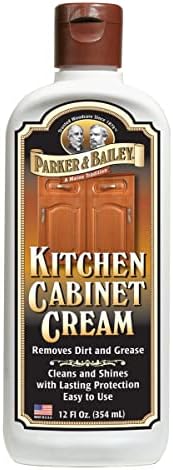
This cabinet cream is designed to clean, revive, and condition painted, laminate, white, and natural wood cabinet surfaces. It is applied with a damp cloth, then the cloth is rinsed as needed to remove dirt. For a final buff, the product directions call for a clean, dry cloth.
The cream format gives you control over how much you apply, which can be helpful for spot cleaning and working on individual doors. The product description says it contains no wax, silicone, petrochemicals, or harmful solvents, and describes it as low odor. Its multi-surface claims make it a flexible choice for homes with more than one cabinet finish.
This option is not quite as convenient as a ready-to-spray cleaner: you need damp and dry cloths, and heavier buildup may take additional cleaning. It is also worth separating it from the wood-focused Parker & Bailey cream above: this version emphasizes broad cabinet-surface use, while the other is more specifically described as a wood cleaner and restorer.
Pros:
- Described for painted, laminate, white, and natural wood surfaces.
- Can clean, condition, and revive cabinet finishes.
- Directions provide a clear damp-cloth and dry-buff method.
- Product information describes the formula as low odor.
Cons:
- Requires cloths and a buffing step, rather than a simple spray-and-wipe routine.
- Heavy buildup may need repeated cleaning.
Verdict: Choose this cream if you want one cloth-applied product for several cabinet finishes and do not mind the extra buffing step.
5. 812 Foaming Cleaner: Clinging Foam for Cabinets and Counters

812 is a foaming cleaner for cabinets, countertops, backsplashes, and other compatible kitchen surfaces. Its 24-fluid-ounce bottle dispenses foam that is designed to cling to vertical surfaces while it works on grease, fingerprints, and everyday grime. The stated use is straightforward: spray, allow the foam to work, and wipe away the mess.
The clinging format is useful when you want to target a specific area, such as a cabinet door or the space around a handle, without a thin liquid running down the surface as quickly. The product is also described for quartz and granite countertops, making it a versatile option for kitchens with compatible surfaces.
Compared with the other products here, 812 focuses on everyday kitchen cleaning rather than wood conditioning or restoration. Its broad surface claims do not mean every finish is suitable, so check the label and the surface maker’s care instructions before using it on cabinets or counters. Test a small hidden area first if you are unsure.
Pros:
- Foam is designed to cling to vertical cabinet surfaces.
- Targets grease, fingerprints, spills, and everyday buildup.
- Also described for compatible countertops and backsplashes.
- Comes in a 24-fluid-ounce bottle.
Cons:
- It is not described as a wood conditioner or restorer.
- Compatibility should be confirmed for each surface and finish.
Verdict: Go with 812 if you want a clinging foam for targeted everyday cleaning on cabinets and compatible kitchen surfaces.
How to Choose a Kitchen Cabinet Cleaner
Match the cleaner to your cabinet finish
Start by identifying whether your cabinets are finished wood, painted, laminate, or another material. Product descriptions often name the surfaces a cleaner is intended for, but those claims are not a substitute for your cabinet maker’s care instructions. When in doubt, test the product on a small, hidden spot and let the area dry before cleaning the rest.
Choose a format that fits the mess
Sprays are convenient for routine wipe-downs, while creams offer a more controlled, cloth-applied approach. A foaming cleaner can be useful on vertical surfaces where you want the product to stay in a targeted area. For buildup in grooves and recessed panels, a kit with a detail brush may be more practical than a cleaner alone.
Consider whether you need degreasing or conditioning
If your main issue is sticky residue around the stove or handles, look for a product described as a degreaser. If you want to clean and condition wood at the same time, a cabinet cream may be a better fit. Keep in mind that conditioning products usually call for more steps, such as applying with a cloth and buffing afterward.
Check the bottle size and cleaning tools
Think about how much surface area you need to clean and whether you will use the product regularly. A smaller bottle may be enough for occasional spot cleaning, while a larger bottle can be more convenient for a full kitchen. A brush can help reach corners and grooves, but use a light touch to avoid scuffing a finish.
Read the directions before applying
Follow the product label for where and how to apply the cleaner, whether it needs to be wiped or buffed, and whether rinsing is required. Do not assume a product is suitable for every surface just because it has broad multi-surface claims. Use a clean cloth and avoid soaking cabinet edges, seams, or unfinished areas.
Frequently Asked Questions
What is the best type of cleaner for greasy kitchen cabinets?
For grease and sticky buildup, consider a product specifically described as a cabinet degreaser, such as Final Touch or FORTIVO. Follow its directions and test it on a hidden area first, especially if your cabinets have a delicate or unfamiliar finish.
Can I use the same cleaner on wood and painted cabinets?
Some products in this guide are described for both wood and painted surfaces, but not every cleaner is right for every finish. Check the label and cabinet care instructions, then test a small inconspicuous area before treating the full surface.
Is a spray or a cream easier to use?
A spray is usually the more direct choice for quick wipe-downs. A cream is applied with a cloth and may involve additional buffing, but it can suit shoppers looking for a product that also conditions or revives a finish.
Do I need a brush to clean cabinet doors?
A brush is not necessary for every job, but it can help reach recessed panels, corners, and grooves. Use a soft brush and gentle pressure, and avoid scrubbing hard enough to mark the finish.
Should I rinse cabinet cleaner after using it?
Follow the specific product directions. Final Touch is described as a no-rinse cleaner, while the Parker & Bailey Cabinet Cream directions describe wiping with a damp cloth and buffing with a clean, dry cloth. Do not assume the same method applies to every product.
Can these products be used on countertops too?
Some are described for additional surfaces. The 812 cleaner is listed for compatible countertops, including quartz and granite, while other products mention uses on furniture, trim, or vanities. Confirm that the cleaner is suitable for the exact surface before applying it.
Final Recommendation
For a larger kit aimed at greasy cabinet areas, Final Touch stands out for its 32-ounce bottle and included detail brush. FORTIVO is a more compact choice for everyday cabinet care, while the Parker & Bailey creams are better suited to shoppers who want a cloth-applied cleaner with conditioning claims. If you want foam that stays on vertical surfaces and can also be used on compatible kitchen counters, consider 812. Whichever you choose, match the cleaner to your finish, follow the label, and test it in a hidden spot first.