
The best cooking pots for an electric stove should match your burner type, hold heat steadily, and suit the meals you make most. This list includes stainless steel pots for everyday cooking and larger batches, plus glass options that let you watch food as it simmers. Check each pot’s size and care instructions before you buy, especially if you have a glass-top or induction stove.
Quick Comparison
| Product | Best For | Material | Electric-Stove Compatibility | Capacity |
|---|---|---|---|---|
| VEVOR 21-Quart Stainless Steel Stock Pot | Large batches | 304 stainless steel | Electric, ceramic, induction, and gas | 21 qt |
| XFOKON 1.5-Liter Glass Cooking Pot | Small portions and simmering | Borosilicate glass | Electric and infrared; low to medium heat | 1.5 L |
| ZUFRIEDENIA 2-Liter Glass Pot | Small meals and food monitoring | High-borosilicate glass | Electric and gas | 2 L |
| Aufranc 6-Piece Stainless Steel Pot Set | Everyday cooking in several pot sizes | Stainless steel with aluminum-core bases | Electric, induction, and gas | 2 qt, 2.6 qt, and 3.7 qt pots |
| XCTFWKzK 2-Liter Glass Cooking Pot | Small stovetop meals and clear viewing | Borosilicate glass | Electric and coil-based; not induction | 2 L |
Our Picks: Best Cooking Pots For Electric Stove reviews
VEVOR 21-Quart Stainless Steel Stock Pot for Large Batches

This 21-quart stock pot is the largest option here, built for cooking soup, stew, noodles, or other meals for a group. Its 304 stainless steel body is designed for food contact, and the glass lid lets you check on the contents without lifting it.
A multi-layer composite base is intended to spread heat across the bottom, which is useful when simmering a large pot on an electric burner. The pot works on electric and ceramic stoves, as well as induction and gas, so it can suit different kitchen setups.
Reinforced welded handles provide a place to grip the pot, but a full 21-quart stockpot will still be heavy and awkward to move. Its large size also makes it a poor match for a small burner or a kitchen with limited storage. Choose it for batch cooking rather than everyday small portions.
Pros:
- Large capacity for group meals and batch cooking
- Compatible with electric, ceramic, induction, and gas stoves
- Multi-layer base is designed for even heating
- Glass lid and welded handles add practical convenience
Cons:
- Large size may be difficult to store or handle when full
- May be oversized for small burners and routine cooking
Verdict: Choose the VEVOR if you regularly cook for a crowd and have an electric burner large enough to accommodate its base.
XFOKON 1.5-Liter Glass Pot for Gentle Simmering
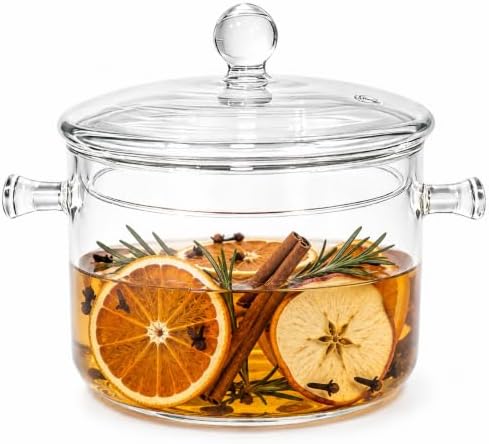
The XFOKON is a compact, 1.5-liter cooking pot made from 3.5 mm borosilicate glass. Its transparent body and lid make it easy to keep an eye on soup, tea, pasta, or a gentle stovetop simmer without repeatedly removing the cover.
The pot is listed as suitable for electric and infrared stoves, with low-to-medium heat recommended. It is also described as oven, microwave, refrigerator, and dishwasher safe. Its heat-resistant glass and anti-scald handles make it a flexible small-pot option, but it needs more careful handling than stainless steel.
Glass can be vulnerable to sudden temperature changes, so avoid moving the pot straight from a cold setting to a hot burner. Its modest capacity is best for one or a few servings, not family-size batches. This is also not listed as induction compatible, so check your stove type before ordering.
Pros:
- Clear body and lid make food easy to monitor
- Compact capacity suits small meals and simmering
- Listed for electric and infrared stoves
- Dishwasher, oven, and microwave safe according to the product details
Cons:
- Requires low-to-medium heat and careful temperature changes
- Not listed for induction cooktops
Verdict: The XFOKON is a useful small glass pot if you want visibility while cooking and are comfortable following its careful heat guidance.
ZUFRIEDENIA 2-Liter Glass Pot for Small Everyday Meals

This 2-liter pot is made from high-borosilicate glass and has a clear body and lid. The transparent design is handy when you want to watch vegetables, eggs, pasta, broth, or a small stew as it cooks. The product details list a temperature range from 0°F to 400°F.
It is described as safe for electric and gas stovetops, as well as for use in an oven, microwave, refrigerator, and dishwasher. At 2 liters, it offers more room than the XFOKON but is still intended for modest portions rather than large family meals. The pot’s thicker handle and decorative heart-shaped lid give it a distinctive look.
As with other glass cookware, handle it carefully and avoid sudden temperature shifts. The product details do not specify induction compatibility. If your electric stove has a glass surface, use care when setting down or moving glass cookware to help avoid bumps or scratches.
Pros:
- 2-liter capacity suits small meals and sides
- Clear body and lid allow you to monitor cooking
- Listed as compatible with electric stoves
- Dishwasher-safe design simplifies cleanup
Cons:
- Not listed as induction compatible
- Glass needs careful handling and gradual temperature changes
Verdict: Consider the ZUFRIEDENIA if a small, transparent pot appeals to you and your cooking habits suit glass cookware.
Aufranc Stainless Steel Pot Set for Everyday Cooking

This set includes three stainless steel pots with lids: 2-quart, 2.6-quart, and 3.7-quart sizes. That range gives you options for heating a small portion, cooking a side dish, or preparing a larger meal without relying on one oversized pot.
The pots have a three-ply base with a thick aluminum core, designed to distribute heat across the bottom. They are listed as compatible with electric, induction, and gas stoves. Tempered glass lids have steam vents, and the product details describe the pots as dishwasher safe and scratch resistant.
Unlike the glass-only options, this set offers multiple cooking sizes and stainless steel construction. The tradeoff is that it does not include a stockpot-sized vessel, so it is not the pick for very large batches. The listing calls it a six-piece set, but the described cookware consists of three pots and their lids.
Pros:
- Three pot sizes cover a range of everyday portions
- Three-ply bases with aluminum cores are designed for even heat distribution
- Compatible with electric, induction, and gas stoves
- Tempered glass lids have steam vents
Cons:
- Largest pot is 3.7 quarts, which may not suit batch cooking
- Does not include a large stockpot
Verdict: The Aufranc set is a practical choice if you want several stainless steel pot sizes for regular electric-stove cooking.
XCTFWKzK 2-Liter Glass Pot for Coil and Electric Stoves

This 2-liter borosilicate glass pot is sized for smaller servings of pasta, soup, eggs, or vegetables. Its clear body and lid let you watch the food as it cooks, while a wooden carrying handle is intended to help with handling.
The product details list it as safe for electric and coil-based stoves, as well as gas, microwave, oven, and freezer use. It is not suitable for induction cooktops. The stated heat range is 0°F to 400°F, and the instructions recommend adding water and preheating on low heat for three minutes.
That preheating step and the warning against induction make this pot less flexible than the stainless steel picks. Glass also calls for care when moving it or changing its temperature quickly. It may suit someone who values a transparent cooking vessel, but stainless steel is the more straightforward choice for frequent, varied stovetop use.
Pros:
- Clear body and lid provide a view of the food
- 2-liter capacity suits small meals and sides
- Listed for electric and coil-based stoves
- Smooth glass surface is described as easy to clean
Cons:
- Not compatible with induction cooktops
- Requires low-heat preheating and careful handling
Verdict: Choose this pot for small meals on a standard electric or coil stove if you are willing to follow its preheating and handling instructions.
How to Choose Cooking Pots for an Electric Stove
Confirm Your Stove Type
“Electric stove” can mean a coil burner, a smooth ceramic or glass surface, or an induction cooktop. They do not all work with the same cookware. Check the product’s compatibility details against your stove: the VEVOR and Aufranc options are listed for induction, while the XCTFWKzK glass pot is not. The XFOKON is listed for electric and infrared stoves, and the ZUFRIEDENIA is listed for electric use.
Match the Pot Size to Your Burner and Meals
A pot should suit both the amount you cook and the burner you plan to use. The 21-quart VEVOR is intended for large batches, while the 2-liter glass pots and the Aufranc set are better matched to smaller meals and everyday portions. If the pot is much larger than your burner, the heat may not reach the full base as evenly as you want.
Choose a Material You Will Use Comfortably
Stainless steel is a practical option if you want durable cookware for routine stovetop use. The VEVOR has a multi-layer base, and the Aufranc pots have aluminum-core bases designed to spread heat. Glass pots let you see the food as it cooks, but they need more careful handling and protection from sudden temperature changes.
Look at the Base and Heat Guidance
Electric burners retain heat, so use the heat settings recommended for your cookware rather than assuming every pot should be heated the same way. The glass options specify low or gradual heating instructions. For stainless steel, a layered or aluminum-core base can help distribute heat, but your burner size and cooking habits still matter.
Consider Capacity, Storage, and Handling
A large stockpot is useful for group meals but takes up more cupboard space and is harder to lift when full. Smaller pots are easier to store and suit daily portions, though they cannot replace a large soup pot. Think about how much food you usually cook and whether you can safely handle the pot at capacity.
Check the Lid and Cleaning Instructions
A lid helps retain heat and lets food cook covered; clear lids can also make it easier to monitor a simmer. Check whether the lid has a steam vent and whether the pot is dishwasher safe if easy cleanup matters to you. Use the care guidance for the specific material, especially for glass cookware.
Frequently Asked Questions
Can I use any cooking pot on an electric stove?
No. Check the cookware’s stated compatibility and match it to your specific stove. Standard electric burners and induction cooktops use different requirements, so a pot listed for electric use is not automatically induction compatible.
Which pot on this list is best for cooking large batches?
The VEVOR stock pot has a 21-quart capacity and is described as suitable for meals for 12 to 16 people. Its size makes it better suited to group cooking than small everyday portions.
Are glass pots suitable for electric stoves?
The glass pots in this list are described as compatible with certain electric stoves. Follow each product’s heat instructions, avoid sudden temperature changes, and confirm whether the pot suits your particular burner type.
Can I use these glass pots on induction?
The glass pots are not listed as induction compatible. The VEVOR stainless steel stockpot and Aufranc set are listed for induction, in addition to electric use.
What size pot is best for everyday cooking?
It depends on your usual portions. The Aufranc set offers 2-quart, 2.6-quart, and 3.7-quart pots, while the 2-liter glass options are sized for smaller meals and sides. Consider your recipes and storage space before choosing.
How should I handle glass cookware on a stovetop?
Follow the product’s instructions, use the stated heat range, and avoid sudden temperature changes. Some of the listed glass pots specify gradual preheating or low-to-medium heat. Handle the pot carefully, especially when it is hot.
Which option is the most versatile for different meals?
The Aufranc set offers three pot sizes and is listed for electric, induction, and gas stoves, making it a flexible choice for several everyday tasks. For very large batches, the VEVOR stockpot has far more capacity.
Final Recommendation
For most homes looking for cooking pots for an electric stove, the Aufranc set offers the most useful range of everyday sizes, while the VEVOR is the clear fit for large-batch cooking. Choose one of the glass pots if seeing food as it simmers is important and its heat guidance suits your stove and cooking style. Before ordering, confirm compatibility with your exact burner type and check that the pot’s capacity fits your needs.