
If you buy coffee creamer or milk in small amounts, a dedicated container with a lid can make your fridge tidier and your mornings smoother. A good pitcher keeps dairy sealed against odors, pours without dribbling down the side, and fits on a fridge door shelf without crowding your other items. The right choice depends on how much you use, how often you wash it, and whether you want a stylish piece for the counter or a practical container for storage. This guide looks at five glass options with lids and explains where each one fits best, so you can choose with confidence.
Quick Comparison: Five Fridge-Friendly Creamer Containers
| Product | Capacity | Material | Sealing and Pouring | Best For |
|---|---|---|---|---|
| OXO Good Grips Glass Creamer | 12 oz | Glass | Drip-free spout, two silicone seals | Tidy pouring at the table |
| KITCHENDAO Glass Creamer with Lock Mechanism | 12 oz | Borosilicate glass | Sliding lock, silicone sealing plug, drip-free spout | Security-minded daily use |
| Creamer Pitcher Jar with Lid, 2 Pack | 32 oz (1 quart) | Soda-lime glass | Silicone seal, flip-cap pour spout, handle | Large batches and cold brew |
| kitchentoolz 12 Oz Square Glass Milk Bottle | 12 oz | Thick glass | Tamper-proof cap and snap-on pouring lid | Compact storage and serving |
| kitchentoolz 16 oz Glass Milk Bottle with Pour Spout | 16 oz (pint) | Thick glass | Tamper-evident cap and snap-on pouring spout | Fridge door storage and portioning |
Our Picks: Best Creamer Container With Lid For Fridge reviews
OXO Good Grips Glass Creamer: A Clean, Controlled Pour

The OXO Good Grips Glass Creamer is a 12 oz glass pitcher built around a drip-free spout. It is designed for people who want to pour cream into a cup without a trail of drips running down the side. Two silicone seals work together to help keep the contents fresh while the container sits in the refrigerator. The glass body lets you see how much cream is left, which makes it easier to plan a restock before you run out in the middle of a busy week.
In everyday use, the spout is the main selling point. Many owners appreciate that a steady, controlled pour lands exactly where they aim it, which matters most when you are topping off a mug in a hurry. The handle is comfortable to hold, and the overall shape feels balanced even when the pitcher is full. The silicone seals are a practical touch, though they do need to be seated correctly each time you close the lid. A quick check before you put the container back in the fridge prevents leaks and keeps the cream from picking up strong odors.
The main limitation is cleaning. This model is listed as hand wash only, so it will add a few minutes to your routine each day. The silicone pieces also need to be rinsed well so they do not hold onto residue. If you prefer to load everything into the dishwasher, another option on this list may suit you better. Among the five choices, this one is the most refined for countertop use, but it is less convenient for households that want the easiest possible cleanup.
Pros:
- The drip-free spout gives a clean, precise pour.
- Two silicone seals help protect the contents in the refrigerator.
- The glass body is attractive enough to sit on the counter at breakfast.
- BPA-free construction is listed in the product details.
Cons:
- Hand wash only, which adds effort to daily cleanup.
Verdict: This is a strong pick for anyone who values a tidy pour and a polished look. If you are willing to hand wash and want a 12 oz container for daily coffee creamer, it is a dependable choice. Households that want dishwasher convenience should look elsewhere on this list.
KITCHENDAO Glass Creamer: A Lock That Adds Security

The KITCHENDAO Glass Creamer is a 12 oz pitcher that uses a sliding lock mechanism. A stainless steel block slides across the opening to hold the lid in place, and a built-in silicone sealing plug adds another layer of protection. The product is made from borosilicate glass and is described as BPA-free. Its drip-free spout is meant to keep pours clean and controlled, so it works well for both coffee and milk.
The locking feature is what sets this model apart. Lids on simple pitchers can sometimes pop loose when they are jostled in a crowded fridge. A sliding lock gives you more confidence that the container will stay closed in a bag, a lunch cooler, or on a shelf with other items. Some users report that the lock is easy to operate with one hand, which is helpful when you are holding a mug or juggling groceries. The borosilicate glass is also a sensible material choice for a container that may see temperature changes.
There are trade-offs. The lock adds a few more parts to clean, and you need to make sure the plug and sliding block are dry and seated before you put the pitcher away. The product is listed as dishwasher safe, which is a clear advantage over the hand-wash-only model above. Still, a lock mechanism means more crevices to check. Buyers who want the simplest possible design may prefer a plain lid, but anyone who transports creamer or keeps it in a shared fridge will likely appreciate the extra security.
Pros:
- The sliding lock keeps the lid secure during storage and transport.
- Borosilicate glass is a durable material choice for a container used often.
- The product is listed as dishwasher safe, which simplifies cleanup.
- The drip-free spout supports neat pouring.
Cons:
- The lock mechanism adds parts that need careful cleaning and drying.
Verdict: This is an excellent choice for households that want extra peace of mind about leaks and accidental openings. If you carry creamer to work or share a refrigerator, the locking design is a meaningful benefit. It is a practical 12 oz option that balances security with easy cleaning.
Creamer Pitcher Jar with Lid, 2 Pack: Large-Batch Storage

This two-pack set offers 32 oz (1 quart) of capacity per jar, which is a noticeably larger size than the other options here. Each jar uses a silicone seal and a flip-cap pour spout, and a handle makes it easier to lift when full. The wide mouth is designed for simple filling and cleaning. Because the product is sold as a pair, it can serve several purposes at once, such as one jar for creamer and another for cold brew or iced tea.
This set suits people who go through a lot of dairy or who prepare drinks in batches. Many owners appreciate having enough volume to make a week of cold brew in one go, and the wide opening makes it easier to add ice, spices, or coffee grounds. The silicone seal is a useful feature for keeping liquids from leaking when the jar tips in the fridge. The handle is a practical addition, especially when the jar is heavy with liquid.
The larger size comes with trade-offs. A 32 oz jar takes up more room on a fridge shelf, and it may be too big for a fridge door. The glass used here is soda-lime, which is common for jars but is generally less resistant to sudden temperature changes than borosilicate. Pour the contents with care, and avoid placing a cold jar in hot water. For someone who only needs a small amount of creamer each day, this set may be more capacity than necessary. It works best for households that value volume over compactness.
Pros:
- The 32 oz capacity suits batch drinks and larger households.
- Two jars give you flexibility for different beverages.
- The silicone seal and flip-cap spout help limit leaks.
- The handle and wide mouth make filling and pouring easier.
Cons:
- The large size takes up more fridge space than smaller containers.
Verdict: This is the best value for people who need a lot of liquid storage. If you make cold brew, store breast milk, or go through creamer quickly, the two-pack format is hard to beat. If your fridge space is limited or you only need a small daily portion, choose one of the 12 oz or 16 oz options instead.
kitchentoolz 12 Oz Square Glass Milk Bottle: Compact and Versatile
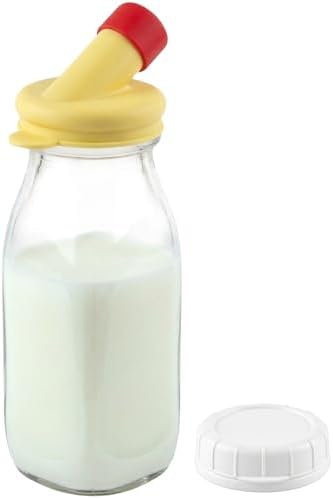
The kitchentoolz 12 oz Square Glass Milk Bottle is a compact glass bottle that comes with two lids. One is a tamper-proof cap with a security ring, and the other is an easy snap-on pouring lid with an end cap. The square, carafe-style shape is slim and stands neatly in a refrigerator door or on a shelf. The product is listed as made in the USA, BPA-free, and dishwasher safe, with thick glass intended for everyday use.
The two lids give you real flexibility. The tamper-proof cap is a good choice for storage, while the snap-on pour lid is handy when you want to serve milk or creamer at the table. Many users find the slim neck easy to grip, which helps with pouring and refilling. The square shape also makes better use of shelf space than a round pitcher of similar volume. Because the bottle is small, it works well for individual servings, lunch boxes, or meal prep.
The 12 oz size is a limitation for heavy users, who may refill the bottle several times a day. The bottle is also useful beyond creamer, which is a plus, but the lids are not as wide as those on a pitcher, so scooping or cleaning can take a bit more care. Because the design leans toward a bottle rather than a pitcher, you may find it less convenient for sharing a large amount of liquid at once. It is a sensible choice for a single person or a small household that wants compact storage.
Pros:
- Two lids offer both secure storage and easy pouring.
- The square shape fits neatly on fridge shelves and in door storage.
- Made in the USA and listed as dishwasher safe.
- The slim neck supports a comfortable grip.
Cons:
- The 12 oz capacity may need frequent refilling for heavier daily use.
Verdict: This is a smart choice for compact storage and light daily use. If you want a bottle that works for creamer, milk, or sauces and does not take up much room, it is a practical option. Households that go through a lot of liquid should consider a larger size.
kitchentoolz 16 Oz Glass Milk Bottle: A Pint-Sized Fridge Staple

The kitchentoolz 16 oz Glass Milk Bottle is a pint-sized glass container with two lids. It includes a tamper-evident sealing cap for storage and a snap-on pouring spout for serving. The product is made in the USA from crack-resistant, BPA-free glass and is dishwasher safe. Its compact footprint is designed to fit a fridge door or shelf, and it can hold creamer, half and half, milk, or other chilled liquids.
The 16 oz size is a good middle ground. It holds more than the 12 oz bottle, so you refill less often, yet it is still small enough to store easily. The snap-on spout makes pouring simple, and the tamper-evident cap gives you a visible sign that the container has been opened. Many owners appreciate the pint size for portioning dairy, since it is easy to tell how much remains. The bottle also works as a travel container or a juice bottle, which adds value beyond the morning coffee routine.
The main drawback is that the bottle is not as wide-mouthed as a pitcher, so it can be a little harder to clean thoroughly by hand. Its tamper-evident cap is effective for signaling use but is not designed for heavy-duty sealing. If you want a container that doubles as a serving pitcher, a larger or wider design may be better. For everyday fridge storage, however, this bottle is practical, dishwasher friendly, and simple to use.
Pros:
- The 16 oz size balances capacity with fridge-friendly dimensions.
- Two lids cover both storage and pouring needs.
- Made in the USA and listed as dishwasher safe.
- Versatile enough for creamer, milk, juice, and travel use.
Cons:
- The narrower opening can make hand cleaning take a little more effort.
Verdict: This is a well-rounded choice for most people who want a simple, fridge-friendly container for creamer or milk. It holds enough for several days of use while staying compact. If you want the best all-around balance of size, storage, and pouring, this is a strong pick.
How to Choose the Right Creamer Container With Lid for Your Fridge
Choosing a creamer container may seem simple, but a few details can make a big difference in your daily routine. The best option for you depends on how much you use, how you store your fridge, and how much time you want to spend cleaning. The sections below walk through the factors that matter most, so you can narrow the list before you buy.
Capacity and How Often You Refill
Start by thinking about how much creamer or milk you use in a typical week. A 12 oz container is usually enough for one or two people who take a small amount in coffee each day. A 16 oz bottle gives you more room and means fewer refills, which is helpful if you also use milk for cereal or cooking. Larger jars, such as 32 oz options, are better for households that make cold brew or go through dairy quickly. Keep in mind that a bigger container takes up more fridge space, so match the size to your real habits rather than buying the largest option available.
Seal Quality and Leak Protection
A lid that seals well protects the contents from air and odors, and it helps prevent spills when the container is tipped or bumped. Look for designs that use silicone seals or locking mechanisms, since these tend to hold their shape and grip well over time. A tamper-evident cap is useful when you share a fridge, because it shows whether someone has already opened the container. Remember that no lid is completely foolproof, so store the container upright and check that the seal is seated before you close the fridge door.
Pour Spout Design
The pour spout affects how clean your mornings feel. A drip-free spout gives you a controlled stream that lands in your cup rather than running down the side. A snap-on pouring lid is convenient when you want to serve milk or creamer at the table, while a flip-cap spout suits people who pour often. If you usually pour into a mug one-handed, pay attention to the size and shape of the spout and the weight of the container when it is full.
Glass Type and Durability
Most containers in this category use glass, which is a good choice because it does not hold onto odors and is easy to clean. Borosilicate glass is generally more resistant to temperature changes than standard soda-lime glass, so it may be a better fit for people who move containers between the fridge and warmer areas. Thick glass tends to feel sturdier in daily use. Whatever material you choose, avoid sudden temperature shocks, such as placing a very cold container under hot water, since this can increase the risk of cracking.
Cleaning and Dishwasher Compatibility
Cleaning is one of the biggest day-to-day factors. Some containers are dishwasher safe, while others are listed as hand wash only. If you wash dishes after every meal, a dishwasher-safe container will save you time. If you prefer hand washing, a container with a wide mouth is easier to reach inside and scrub. Pay attention to lids and seals as well, since these small parts can trap residue if they are not rinsed thoroughly. Drying every piece before storing it also helps keep the container fresh.
Fridge Fit and Footprint
Think about where the container will live before you buy. A square or slim bottle can fit in a fridge door or on a crowded shelf, while a wide pitcher may need its own space. Measure the area you plan to use, especially if you keep other condiments and dairy products in the same spot. A compact shape can help you see everything in your fridge at a glance, which reduces waste and makes it easier to keep track of what you have.
Frequently Asked Questions
Is glass a good material for storing creamer in the fridge?
Yes, glass is a popular choice because it does not absorb odors or flavors, and it is easy to see how much liquid remains. It also tends to be easier to clean than some plastics. Just handle it with care, since glass can break if dropped or exposed to rapid temperature changes.
What is the difference between borosilicate glass and standard glass for a creamer container?
Borosilicate glass is generally more resistant to thermal shock, which means it handles temperature changes better than many standard glass options. For a creamer container that moves between the fridge and the counter, this can be a useful advantage. Either type can work well with normal care.
Can I put a glass creamer container in the dishwasher?
Some containers are listed as dishwasher safe, while others are hand wash only. Check the product details before you wash. Even when a container is dishwasher safe, you may want to place silicone seals and small lid parts on the top rack so they are cleaned thoroughly and do not shift during the cycle.
How long does refrigerated creamer stay fresh?
Storage time depends on the product, its expiration date, and how often you open the container. Once opened, creamer and milk should be kept cold and used within the time listed on the packaging. A tight-sealing lid helps protect the contents, but it does not extend shelf life beyond what the dairy product itself allows.
Which size is best for a daily coffee routine?
For most people who use creamer in one or two cups a day, a 12 oz or 16 oz container is a practical size. These sizes are easy to store and refill without taking up too much fridge space. Larger jars are better suited to batch drinks, cold brew, or households that go through dairy quickly.
Can these containers be used for things other than creamer?
Yes, many of these containers are designed for multiple uses. They can hold milk, juice, cold brew, sauces, syrups, or other chilled liquids. Before storing anything other than dairy, make sure the contents are suitable for the container and that the lid is sealed properly.
Which creamer container is the best overall choice?
For most households, the kitchentoolz 16 oz Glass Milk Bottle offers the best balance of size, pouring convenience, and fridge fit. If you want a more polished counter piece, the OXO Good Grips Glass Creamer is a strong option. Choose the 32 oz two-pack if you need large-batch storage.
Final Recommendation
Each of these five containers has a clear strength. The OXO Good Grips Glass Creamer stands out for its clean, controlled pour, while the KITCHENDAO model adds a secure locking mechanism. The 32 oz two-pack is the best choice for large volumes, and the kitchentoolz 12 oz bottle is ideal for compact storage. For most people, the kitchentoolz 16 oz Glass Milk Bottle offers the most balanced combination of size, dishwasher convenience, and everyday usefulness. Consider how much you use, how you clean, and how much room you have in your fridge, and the right choice should be easy to identify.