
Choosing the best drill bit for granite rock depends on the hole you need and the tool you plan to use. Diamond bits are suited to clean, round holes in hard stone, while a carbide-tipped masonry bit is better matched to smaller anchor-style holes made with a hammer drill. Below, we compare five options and explain what to check before drilling.
Quick Comparison
| Product | Type | Best suited for | Key consideration |
|---|---|---|---|
| DKIBBITH 10-Pack Dry Diamond Drill Bit Set | Dry diamond bits | Several small holes in granite, tile, or stone | Built-in wax lubricant; let the bit cool between holes |
| Semderm 10-Piece Diamond Hole Saw Set | Diamond hole saws | Round holes across a range of sizes | Water is recommended to extend bit life |
| BRSCHNITT 1 3/8-Inch Diamond Core Bit | Threaded diamond core bit | Larger holes in granite or marble | 5/8-11 thread; designed for an angle grinder |
| Diablo SPEEDemon Granite Carbide Hammer Bit | Carbide-tipped masonry bit | Smaller holes in stone, masonry, or concrete | For hammer or rotary drilling applications |
| OSTEK 1-3/8-Inch Diamond Core Bit | Electroplated diamond core bit | Core drilling in stone or granite | Listing availability is shown as unavailable |
Our Picks: Best Drill Bit For Granite Rock reviews
DKIBBITH Dry Diamond Set: A Versatile Pick for Smaller Holes

This 10-piece set uses diamond-coated bits for drilling holes in materials such as granite, marble, porcelain, ceramic, and glass. Its sizes run from 3/16 inch to 1/2 inch, making it a practical option when you need a choice of smaller hole diameters rather than one large opening.
The bits have round shanks intended to fit many common drills, and side flutes help clear debris. The maker describes the set as a dry-drilling design with wax lubricant inside each bit. That can be convenient where water is difficult to use, but the bit still needs time to cool between holes, as the product instructions advise.
Compared with the larger core bits below, this set is better suited to smaller holes and varied jobs. It is not the choice for a 1-inch-plus opening, and you should check that your drill’s shank grip and operating instructions match the bit before starting.
Pros:
- Includes multiple sizes for small-hole tasks.
- Diamond cutting surfaces are intended for hard materials, including granite.
- Round shanks fit many popular electric drills.
- Wax lubricant supports dry drilling; a storage case is included.
- Not designed for larger core holes.
- Needs cooling time between holes despite its dry-drilling design.
- Ten sizes cover a broad range of hole diameters.
- Diamond coating is intended for hard surfaces such as granite and marble.
- Suitable for several materials beyond stone.
- Water lubrication is recommended to help extend bit life.
- Requires water during drilling for the recommended use.
- A set of hole saws may be less useful if you only need one specific large opening.
- 1 3/8-inch diameter is suited to larger openings.
- Designed for granite, marble, and other hard materials.
- Laser-welded segments are intended to help keep segments attached during drilling.
- Water can help cool the bit and prolong its life.
- Requires a compatible 5/8-11 angle grinder setup.
- One diameter offers less flexibility than a multi-size kit.
- Carbide-tipped design is intended for masonry and stone.
- Works with hammer or rotary drilling applications.
- U-flute design is intended to clear dust faster.
- Useful 3/8-inch size for smaller holes.
- Not a hole saw and not suited to wide core openings.
- Its hammer-drill format is different from the diamond bits in this guide; check tool and material instructions before use.
- 1 3/8-inch diameter targets larger core holes.
- Diamond electroplating is intended for stone and granite.
- Product details list both dry and wet drilling.
- Side protection is included in the product description.
- Only one diameter is listed.
- Availability is listed as unavailable in the supplied product data.

ul>
Cons:
Verdict: Choose the DKIBBITH set if you need several small hole sizes and prefer a dry-drilling design with built-in wax lubricant.
Semderm Diamond Hole Saw Set: A Range of Sizes for Wet Drilling

Semderm’s 10-piece set is made up of diamond hole saws for materials including granite, marble, porcelain, ceramic, and glass. The listed sizes range from 1/4 inch to 1-1/5 inches, giving you more options for larger openings than the DKIBBITH set.
The product description calls for adding water while drilling to help extend bit life and improve the drilling experience. That makes this set a better fit for a wet-drilling setup than for someone who needs to avoid water around the work area. Its nickel-plated carbon-steel body is described as corrosion resistant, but the cutting surface and the drilling method matter most when working through hard granite.
Compared with the single-size BRSCHNITT and OSTEK core bits, Semderm offers more size flexibility in one kit. Before buying, confirm that the size you need is included and that your drill can securely hold the bit’s shank.
Pros:
Cons:
Verdict: Pick the Semderm set if you want multiple hole-saw sizes and can keep the bit wet while drilling.
BRSCHNITT 1 3/8-Inch Core Bit: For a Larger Granite Opening
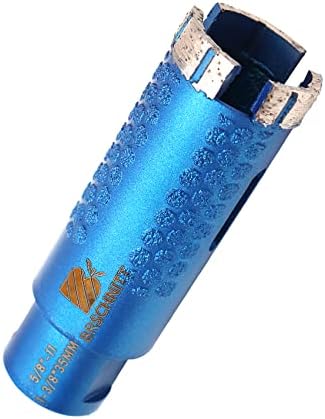
This single 1 3/8-inch diamond core bit is intended for larger holes in granite, marble, hard stone, reinforced concrete, brick, and block. Its listed working length is 80 mm, and its 5/8-11 threaded connection is designed for an angle grinder. Check that thread and your grinder’s specifications match before ordering; this is not a typical round-shank bit for a standard drill.
The bit uses laser-welded segments, and the description says water can prolong its life. It specifically recommends enough water when drilling thick granite to help cool the bit. That advice is important for a core bit working through a substantial thickness of stone: plan for cooling and debris removal rather than treating it like an ordinary wood bit.
Unlike the multi-size kits, this option is aimed at a single, relatively large hole. It may suit a countertop or other stone project where that diameter is right, but it is excessive for small fastener holes. The angle-grinder requirement also narrows who can use it.
Pros:
Cons:
Verdict: Choose the BRSCHNITT bit when you need a 1 3/8-inch hole and have a compatible grinder and a plan for cooling the bit.
Diablo SPEEDemon Carbide Bit: A Hammer-Drill Option for Smaller Holes

Unlike the diamond hole saws in this list, the Diablo SPEEDemon is a 3/8-inch carbide-tipped masonry bit. It is listed for concrete, masonry, and stone and is designed for hammer or rotary drilling applications. Its 6-inch length and 3/8-inch diameter make it a more natural match for a smaller hole than for a wide opening in a granite slab.
The product description highlights a U-flute design intended to move dust away from the cutting area and a carbide tip built for impact and heat. Those features point to a masonry-style drilling task, such as making a smaller hole, rather than cleanly coring out a large circle. For a specific granite installation, check the bit and tool instructions to confirm that the material and drilling mode are appropriate.
This is the most distinct option in the group: it may be a better fit than a diamond hole saw when you need a smaller masonry hole and have a compatible hammer drill. It will not replace a diamond core bit when the job calls for a wider, round opening.
Pros:
Cons:
Verdict: Consider the Diablo for smaller masonry-style holes when its carbide tip and hammer-drill format match your tool and project.
OSTEK 1-3/8-Inch Core Bit: A Single-Size Stone Drilling Option

The OSTEK is a 1 3/8-inch electroplated diamond core bit made for stone and granite. The supplied product details list it for dry or wet drilling and describe side protection. They also give a suggested speed range and estimated drilling time and hole life, but actual results can vary with the stone, tool, technique, and cooling conditions.
This is a single-size option, so it makes the most sense when that diameter matches your project. Its listed dry-or-wet capability offers flexibility, though the exact operating instructions should guide your setup. The product data provided for this guide shows its availability as unavailable, so check the listing before choosing it over an available alternative.
Compared with the BRSCHNITT bit, the OSTEK is also 1 3/8 inches but is described as electroplated and does not list the same threaded connection details. Do not assume the mounting style is interchangeable; verify the listing and tool compatibility first.
Pros:
Cons:
Verdict: The OSTEK may suit a project requiring a 1 3/8-inch core hole, but confirm its availability and mounting compatibility before relying on it.
How to Choose a Drill Bit for Granite Rock
Match the bit type to the hole
For a round opening, look for a diamond hole saw or core bit sized to the hole you need. The DKIBBITH and Semderm sets offer several smaller sizes, while the BRSCHNITT and OSTEK are both listed at 1 3/8 inches. For a smaller masonry-style hole, a carbide-tipped bit such as the Diablo may be a better match. A core bit and a masonry bit are not interchangeable tools for every job.
Check your drill and the bit connection
Confirm that your tool can accept the bit’s shank or thread before you buy. The DKIBBITH set uses round shanks, and the BRSCHNITT listing specifies a 5/8-11 thread for an angle grinder. The Diablo is designed for hammer or rotary drilling applications. For the other options, check the product listing and your tool manual for the connection and operating requirements.
Plan for cooling and water
Heat can affect a bit’s working life, so follow the product’s cooling instructions. Semderm recommends adding water, and BRSCHNITT advises using enough water when drilling thick granite. DKIBBITH describes its bits as dry-drilling bits with wax lubricant inside and advises letting them cool between holes. Choose a method that fits both the bit instructions and your work area.
Choose a size that fits the job
Measure the opening you need before selecting a bit. Small holes for fasteners call for a different bit than larger openings for fittings or other hardware. A multi-size set can be useful if you have several hole diameters to make, while a single-size core bit may be simpler when one larger opening is all you need.
Consider the stone thickness and setup
Granite thickness affects how long a cut takes and how much cooling may be needed. The BRSCHNITT product details specifically recommend water for thick granite. Check the bit’s listed working length and the tool’s instructions, and avoid assuming that a bit will work well through stone thicker than its intended range.
Use the right approach for the material
Granite is hard and can be damaged by a poor match between the bit, tool, and drilling method. Read the bit instructions, secure the workpiece, and follow the tool manufacturer’s guidance. If the bit or tool instructions do not clearly cover your granite and drilling setup, confirm compatibility before beginning.
Frequently Asked Questions
What type of drill bit is best for granite?
For round holes in granite, a diamond hole saw or core bit is generally the most appropriate type among these options. For smaller masonry-style holes, a carbide-tipped bit may fit the task. The right choice depends on the hole diameter and the tool required by the bit.
Can I use a regular drill with a diamond bit?
It depends on the bit’s connection and the drill. The DKIBBITH set has round shanks intended for many popular electric drills, while the BRSCHNITT core bit has a 5/8-11 thread for an angle grinder. Always verify the connection and operating instructions first.
Should I use water when drilling granite?
Follow the instructions for your specific bit. Semderm recommends water, and BRSCHNITT says water can help prolong the bit’s life, especially in thick granite. DKIBBITH describes its bits as dry-drilling bits with built-in wax lubricant and advises cooling the bit between holes.
Can a hammer drill bit make a large hole in granite?
A carbide-tipped masonry bit such as the Diablo is intended for smaller masonry-style holes, not large round openings. For a wider hole, choose a diamond core bit or hole saw sized for the opening you need, and check that your tool is compatible.
Which option is best for a 1 3/8-inch hole?
The BRSCHNITT and OSTEK options are both listed at 1 3/8 inches. BRSCHNITT specifies a 5/8-11 thread for an angle grinder. The supplied data lists OSTEK as unavailable, so check its listing and confirm its mounting style before choosing it.
Can I use a tile drill bit on granite?
Some diamond bits in this guide are listed for both tile and granite, including the DKIBBITH and Semderm sets. Confirm that the selected size, bit design, and tool are suitable for your particular granite drilling task.
Final Recommendation
For a flexible set of smaller dry-drilling bits, the DKIBBITH set is the most versatile choice in this group. Choose Semderm if you want more hole-saw sizes and can use water, or the BRSCHNITT if you need a 1 3/8-inch opening and have a compatible angle grinder. For smaller masonry-style holes, consider the Diablo carbide bit after checking your tool instructions. Match the bit to your hole size and setup before drilling.