
If your tap water leaves white crust on faucets, cloudy spots on glassware, or a chalky taste in your coffee, you are likely dealing with hard water. Hard water contains higher levels of dissolved minerals, mainly calcium and magnesium. These minerals don’t pose the same concerns as contaminants like lead, but they do affect taste, appliance life, and how pleasant your water feels to drink. Choosing a drinking water filter for hard water takes a bit more thought than picking a standard carbon filter. Many under-sink carbon filters are designed to improve taste and reduce chlorine, sediment, and some metals, but they generally do not soften water. If hardness is your main concern, you need to look at systems that use ion exchange or reverse osmosis. The five products below cover a range of approaches, from budget-friendly under-sink cartridges to countertop reverse osmosis and pitcher-style dispensers, so you can match a filter to your water and your daily routine.
Quick Comparison Table
| Product | Type | Key Stated Features | Best For |
|---|---|---|---|
| ICEPURE WFS5300A Under-Sink Water Filter System | Under-sink carbon filter | NSF/ANSI 42 and 372, 22,000-gallon capacity, 0.5 micron outer layer | Taste and chlorine improvement with long filter life |
| DREO Reverse Osmosis Water Filter System Countertop | Countertop reverse osmosis | 0.0001 μm RO membrane, NSF/ANSI 58 tested, real-time TDS readout, auto-fill pitcher | Broadest mineral reduction for hard water |
| PUREPLUS Under Sink Water Filter System | Under-sink carbon filter | NSF/ANSI 42 and 372, 22,000-gallon capacity, quick-connect design | Budget-minded buyers who want taste improvement |
| Waterdrop 15UA Under Sink Water Filter System | Under-sink multistage filter | IAPMO certified to NSF/ANSI 42 and 372, push-to-connect fittings, 24-month service life | Easy setup and multistage filtration |
| ZeroWater 22-Cup Water Filter Dispenser | Pitcher with ion exchange | 5-stage filter, built-in TDS meter, IAPMO certified for several contaminants | No-installation option for apartments and renters |
Our Picks: Best Drinking Water Filter For Hard Water reviews
ICEPURE Under-Sink Filter for Everyday Drinking Water

The ICEPURE WFS5300A is an under-sink carbon filter that connects to your cold water line. It is built for people who want cleaner-tasting water at the tap without adding a countertop appliance. The listing highlights NSF/ANSI 42 for chlorine, taste, and odor reduction, NSF/ANSI 372 for lead-free construction, and a rated capacity of 22,000 gallons. The company also states that the filter is designed to keep beneficial minerals in the water, which is a useful detail if you want better taste without stripping everything out.
The main appeal here is the installation. The listing describes a plug-and-play setup that connects directly to a faucet with a 1/2-inch or 3/8-inch female NPT thread, so you do not need to drill a hole in your countertop. In everyday use, owners tend to appreciate how quickly the cartridge swaps out, which keeps maintenance from becoming a chore. The stated tested flow rate of 2.5 GPM at 60 PSI is strong for an under-sink unit, so filling a pot or a pitcher doesn’t feel like a long wait.
Hard water is where you need to set expectations. This is a carbon-based filter, and the product information does not claim it reduces hardness minerals. That means you may still notice scale on your kettle or fixtures, even though the water tastes cleaner. It works best for buyers whose main issue is chlorine taste, odor, or sediment, and who want to keep a moderate level of minerals in the water. Compared with the RO and ion exchange options on this list, it addresses taste more than mineral content. The cold-water-only restriction also means it covers drinking and cooking water, but it won’t help with hot water used for showers or dishwashing.
Pros:
- Plug-and-play installation with no countertop hole required
- Strong stated flow rate for an under-sink system
- Long rated filter life of 22,000 gallons
- Holds NSF/ANSI 42 and 372 certifications for taste and lead-free materials
Cons:
- Does not claim to reduce hardness, so scale may still appear on fixtures
- Cold water line only and requires a compatible faucet thread
Compared with the PUREPLUS option below, this ICEPURE model is very similar in certifications and capacity, so the choice often comes down to fit and how you prefer to handle installation. It is a solid pick if your water tastes off but is not extremely mineral-heavy.
DREO Countertop Reverse Osmosis System for Broad Mineral Reduction
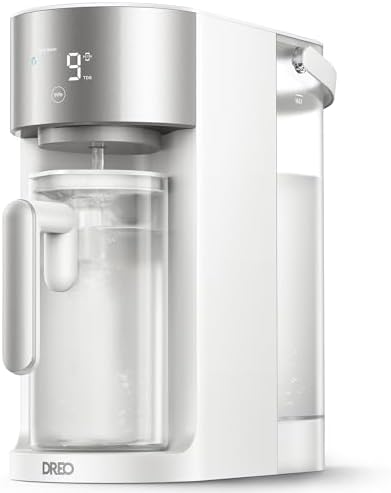
The DREO is a countertop reverse osmosis system, and among the five products here it is the most likely to address hard water directly. Reverse osmosis pushes water through a very fine membrane that rejects most dissolved solids, and the minerals that cause scale are among them. The listing describes a 0.0001 μm RO membrane, reports testing by SGS against NSF/ANSI 58, and claims reductions for lead, hexavalent chromium, chlorine, PFOS, PFOA, and a high percentage of fluoride under laboratory conditions. It also includes a real-time TDS display that shows both raw and filtered water levels, which helps you see the system working.
Setup is more involved than an under-sink cartridge, but the unit is designed to sit on a counter without modifying your plumbing. The listing gives a compact footprint of about 14.5 by 6.7 by 13.4 inches, and it pairs a 3-liter tank with a 1.1-liter pitcher, which suits one or two people. Some users report that the auto-fill pitcher is convenient for refilling without monitoring the level, and the self-flushing feature helps keep the internal tubing fresh between uses. The listing also gives a pure-to-drain ratio of 3:1, which is a practical point for anyone worried about water waste.
The trade-offs are real. RO systems produce less filtered water per hour than under-sink cartridges, so you will be waiting to refill the tank during heavy use. The filter is also rated at about 265 gallons, which is much shorter than the under-sink options, so you will replace cartridges more often. Because RO strips out most minerals, some people prefer the flavor of water with some mineral content, and you may want to think about that if taste is your main concern. For hard water, though, this is the most thorough option in this group.
Pros:
- Reverse osmosis membrane is well suited to reducing hard water minerals
- Real-time TDS display makes filter performance easy to check
- Countertop design requires no installation under the sink
- Lower waste ratio than many RO systems
Cons:
- Shorter stated filter life means more frequent cartridge changes
- Slower output and a small tank may not keep up with larger households
Next to the under-sink options, the DREO trades capacity and convenience for much stronger mineral reduction. If scale is your biggest problem, it deserves the top spot on your list.
PUREPLUS Under-Sink Filter with Long Filter Life

The PUREPLUS under-sink system is a carbon-based filter aimed at buyers who want improved taste and chlorine reduction at a lower daily cost. The listing describes a six-in-one composite filter with a filtration accuracy of up to 0.5 microns, and it carries NSF/ANSI 42 and 372 certification through IAPMO. It also claims a 22,000-gallon capacity and a flow rate of up to 2.5 GPM at 60 PSI, which puts it on par with the ICEPURE model in both certifications and output.
The quick-connect design is one of the standout features. The listing says it shortens installation and reduces the chance of leaks, and many owners find that the hoses seat quickly when pushed in firmly. The description notes that the filter keeps minerals in the water and does not change TDS, which is useful if you prefer your water to keep some mineral content. It is a cold-water-only system, so you should connect it to the cold line and use a compatible faucet thread.
For hard water, this filter has the same limitation as other carbon systems. It is designed to improve taste, odor, and chlorine, not to soften water, so scale on appliances may continue. The listing also points buyers to a separate RO system if they want to remove TDS, which confirms that this unit is not meant as a mineral-reduction solution. Its real strength is value. Based on the stated capacity, the per-gallon cost is low, which makes it a sensible choice for a household that drinks a lot of tap water and does not need heavy mineral removal.
Pros:
- Quick-connect fittings speed up installation
- Stated 22,000-gallon capacity supports long replacement intervals
- NSF/ANSI 42 and 372 certifications through IAPMO
- Keeps minerals in the water, which suits buyers who prefer a natural taste
Cons:
- Does not reduce hardness, so it will not prevent scale buildup
- Cold water only, and some buyers may need a separate adapter for their faucet
Against the ICEPURE model, this unit offers nearly the same features and capacity, so the decision often comes down to pricing and which installation style you find easier. It is a practical choice for everyday drinking water, but it is not the right answer if hard water scale is your main issue.
Waterdrop 15UA Under-Sink Filter with Multistage Filtration

The Waterdrop 15UA is an under-sink multistage filtration system designed for cold municipal water. The listing describes a design that targets PFOA and PFOS, lead, chlorine, heavy metals, and sediment, and it is certified by IAPMO to NSF/ANSI 42 and 372 for taste, odor, and lead-free materials. The company also emphasizes a larger filtration surface area intended to reduce clogging, which is a thoughtful touch for a filter that needs to run for two years.
Installation is one of this model’s strongest points. The listing describes push-to-connect fittings and a setup time of under three minutes, with no plumber required. It includes a 3/8-inch direct-connect hose and a converter fitting for 1/2-inch or 3/8-inch cold supply lines. The filter change is described as quick, which helps keep the system convenient over time. Owners who want a no-fuss option often find that the fittings are simple to work with, though it still helps to check your shutoff valve and faucet type before you start.
The flow rate is the main drawback. The listing gives a tested full flow of 0.75 GPM at 60 PSI, which is much slower than the 2.5 GPM claimed by the ICEPURE and PUREPLUS units. In practice, this means longer waits when filling a large pitcher or cooking pasta, although it may still be fine for drinking water. Like the other carbon systems, it does not claim to reduce hardness, so it will not solve scale problems. It is best suited to buyers who want simple, multistage filtration for drinking and cooking water and are not worried about hardness.
Pros:
- Push-to-connect fittings make installation fast
- Multistage design targets a wide range of contaminants
- IAPMO certified to NSF/ANSI 42 and 372
- Includes an adapter for both 1/2-inch and 3/8-inch cold lines
Cons:
- Stated flow rate is much slower than the other under-sink options
- Does not claim to reduce hard water minerals
Compared with the ICEPURE and PUREPLUS models, the Waterdrop is less impressive on flow but offers an easy installation and a thoughtful design. It is a good middle-ground choice if setup convenience matters more to you than speed at the tap.
ZeroWater 22-Cup Dispenser with Built-In TDS Meter
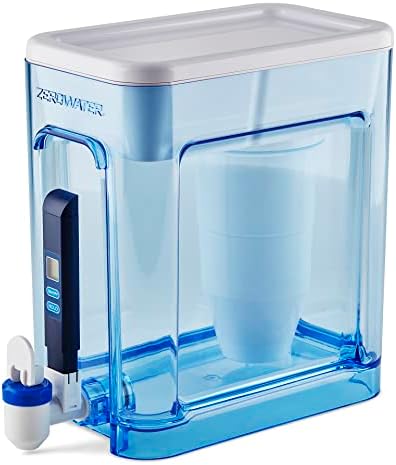
The ZeroWater 22-cup dispenser is a pitcher-style system that requires no plumbing. It uses a five-stage filter with ion exchange technology, and the listing states that it removes virtually all total dissolved solids for purer-tasting water. Ion exchange works differently from carbon, since it swaps dissolved minerals for other ions, so it is one of the more relevant technologies for hard water on this list. The product is also IAPMO certified to reduce PFOA and PFOS, lead, chromium, and mercury.
The built-in TDS meter is the feature that sets this dispenser apart. You can check the dissolved solids level before pouring, which helps you know when the filter is nearing the end of its life. The listing says to change the filter when the meter reads 006, which gives you a clear and simple replacement cue. For apartment dwellers, renters, or anyone who cannot modify their plumbing, the dispenser is an easy way to start filtering water right away. It is also a practical option for keeping a fridge pitcher stocked with filtered water for daily use.
The limitations are mostly about convenience and volume. A pitcher needs to be refilled, and the 22-cup capacity may feel small for a larger household that drinks a lot of water. Filtering also takes time, so this is not the choice for cooking or washing. Some users find the filter replacements an ongoing expense, and the TDS-based approach means you need to pay attention to the meter to get the most out of it. For a single person or a couple who mainly want better drinking water, this is a strong option for hard water, especially given its ion exchange design.
Pros:
- No installation or plumbing changes required
- Ion exchange technology is well suited to reducing dissolved minerals
- Built-in TDS meter shows filter status and water quality at a glance
- IAPMO certified for several contaminants including lead and PFOA/PFOS
Cons:
- Pitcher capacity and slow filtering may not suit larger households
- Ongoing filter replacement adds to the long-term cost
Compared with the under-sink systems, the ZeroWater dispenser gives up volume and speed in exchange for simplicity and strong mineral reduction. It is the easiest option on this list to try, especially if you are not ready to commit to plumbing work.
How to Choose the Right Drinking Water Filter for Hard Water
Understand What Hard Water Does to Your Water
Before you shop, it helps to know what you are trying to fix. Hard water contains dissolved calcium and magnesium, which give water its mineral taste and cause scale to form on kettles, coffee makers, showerheads, and faucets. Scale is mostly a household maintenance problem, but it can also make water taste flat or chalky. A drinking water filter may improve the taste of hard water, yet not every filter reduces the minerals that cause scale. Start by deciding whether your main concern is taste, appliance buildup, or general contaminant reduction. That decision will narrow your options quickly and keep you from buying a filter that solves a different problem than the one you have.
Know the Difference Between Carbon and Ion Exchange or Reverse Osmosis
Carbon filters are the most common type of under-sink cartridge, and they do a good job with chlorine, odor, and many taste issues. They are typically less effective at removing the dissolved minerals responsible for hardness. Ion exchange systems swap certain dissolved ions for others, which can reduce hardness and total dissolved solids. Reverse osmosis forces water through a fine membrane that rejects most dissolved solids, including the minerals that cause scale. When you compare products, look at the stated technology rather than just the certifications. A filter can carry strong certifications for lead or chlorine and still leave hardness minerals in your water, so the technology behind the filter matters as much as the logo on the box.
Consider Installation Style and Where the Filter Will Sit
Your kitchen layout and comfort level with plumbing should guide your choice. Under-sink systems require a connection to the cold water line and some room in the cabinet, and they usually need a compatible faucet thread. Countertop reverse osmosis units avoid plumbing work but take up counter space and require you to manage a tank. Pitchers and dispensers need no installation at all, though they limit how much water you can filter at once. If you rent, you may prefer a system you can take with you. If you own your home and have a dedicated space, an under-sink system can deliver a steady supply without much daily effort.
Match Flow Rate and Capacity to Your Household
Flow rate affects how long you wait for filtered water, which matters most when you fill large pots or pitchers. Under-sink systems in this group list flow rates that range from quite strong to much slower, so check the stated numbers before you buy. Filter capacity tells you how long a cartridge lasts before replacement. A higher rated capacity usually means fewer changes and lower long-term cost, but you should also consider how much water your household uses each day. A single person may be fine with a small pitcher, while a family that cooks and drinks a lot of water may need a faster under-sink unit with a larger rated capacity.
Factor in Ongoing Maintenance and Replacement Costs
The upfront price of a filter is only part of the cost. Replacement cartridges, shorter filter lives, and the frequency of changes all add up over time. Reverse osmosis systems often use filters with lower rated capacities, which means more frequent purchases. Pitcher systems may require regular cartridge changes that are easy to forget. Look for a filter that tells you when it needs replacing, such as a TDS meter or a clear change indicator, and set a reminder on your phone. Calculating cost per gallon can also help you compare options fairly, since it reveals which system is truly economical over its lifespan.
Verify Certifications and Water Safety Claims
Certifications help you separate tested claims from marketing language. Look for NSF/ANSI standards that match the contaminants you care about, such as NSF/ANSI 42 for taste, odor, and chlorine, NSF/ANSI 372 for lead-free materials, and NSF/ANSI 58 for reverse osmosis systems. Some products list certifications through IAPMO, which is also a recognized testing body. Read the certification details carefully, because a certification for one contaminant does not mean the filter removes every substance. If you have a specific water quality concern, consider getting a local water test so you know exactly what your water contains before choosing a filter.
Frequently Asked Questions
Will a carbon filter soften hard water?
Most standard carbon filters are designed to improve taste, reduce chlorine, and capture some sediment and other contaminants. They generally do not remove the calcium and magnesium that make water hard. If your main goal is to reduce scale, look for a reverse osmosis or ion exchange system instead. Carbon filters can still make hard water taste better, but they are not the best tool for mineral reduction.
Is reverse osmosis the best option for hard water?
Reverse osmosis is one of the most thorough methods for reducing dissolved minerals, including those that cause scale. It is a strong choice for hard water when mineral reduction is your priority. The trade-offs include slower output, more frequent filter changes in some models, and water that may taste different because it contains fewer minerals. Many buyers find the taste change is an improvement, but it depends on personal preference.
Do under-sink filters work with both hot and cold water?
Most under-sink systems in this group are designed for cold water only. Connecting them to a hot line can damage the filter and void any warranty. Always check the product specifications and connect the system to the cold supply line. If you need filtered hot water, you would typically heat filtered cold water rather than filter hot water directly.
How do I know when to replace my filter?
Replacement timing depends on the product. Some under-sink filters list a rated gallon capacity and a recommended service life, which may be measured in gallons or months, whichever comes first. Pitcher systems may include a TDS meter or indicator that tells you when the filter needs changing. Set a reminder based on the manufacturer’s guidance, and follow the replacement instructions for your specific model to keep your water quality consistent.
Can a filter remove scale that has already formed?
No. A drinking water filter prevents new mineral buildup from forming in the water you filter, but it does not remove scale that has already built up in your kettle, coffee maker, or faucet. To remove existing scale, you will need to clean the affected appliances with a descaling solution or a mild acid such as white vinegar, following the manufacturer’s instructions. Once the buildup is gone, a filter can help reduce new deposits in the water you drink and cook with.
Do I need a plumber to install an under-sink filter?
Many under-sink systems in this group are designed for do-it-yourself installation with push-to-connect or quick-connect fittings. You will still need to shut off the water supply, check your faucet thread size, and make sure the connections are secure to avoid leaks. If your cabinet space is tight or your plumbing is unusual, a plumber can handle the job. Read the instructions carefully before you start, and keep a towel handy for any minor drips.
Is a pitcher filter enough for a family?
A pitcher can work for one or two people who mainly need filtered water for drinking. For a larger household, the small capacity and slower filtering time can be frustrating, and the pitcher will not supply water for cooking in large amounts. If you have a family, an under-sink system or a larger countertop unit will usually be more practical because it provides a steady supply without constant refilling.
Final Recommendation
If hard water scale is your biggest frustration, the DREO countertop reverse osmosis system is the strongest choice in this group because reverse osmosis addresses dissolved minerals more directly than carbon filtration. It requires more counter space and more frequent filter changes, but it offers the most thorough mineral reduction. For buyers who want a no-installation option and better mineral reduction on a smaller scale, the ZeroWater 22-cup dispenser is a practical choice. If your goal is improved taste, chlorine reduction, and a convenient under-sink setup, the ICEPURE WFS5300A and PUREPLUS systems are solid options with strong certifications and high rated capacities. The Waterdrop 15UA is a good pick if you value easy installation, though its slower flow may test your patience. Match the technology to your water problem, and you will end up with a filter that truly fits your home.