
Monster Jam shows combine loud engines, crowd noise, and long stretches of sound, so comfortable hearing protection can make the event easier for kids and adults to enjoy. Over-ear earmuffs are simple to put on and take off, but they need to fit snugly over the ears to work as intended. Our picks include child-focused options, a two-pair set, and higher-rated models for family use. Keep in mind that earmuffs reduce noise rather than silence it, and the protection you get depends on fit.
Quick Comparison: Best Ear Muffs For Monster Jam
| Product | Listed rating | Best for | Notable feature |
|---|---|---|---|
| Dr.meter Kids Ear Protection | SNR 27.4 dB / NRR 21 dB | Kids and family outings | Foldable, adjustable design |
| Dr.meter Kids Ear Protection 2-Pack | SNR 27.4 dB / NRR 20 dB | Two children or a spare pair | Two pairs in one set |
| iClever EM01 | SNR 29 dB | Kids ages 5 and up | Adjustable arms and padded cups |
| Dr.meter FM-1B | SNR 31 dB / NRR 26 dB | Adults and children | Foldable, higher listed attenuation |
| Dr.meter 34 dB Ear Muffs | SNR 34 dB / NRR 28 dB | Family use and louder settings | Soft padding and breathable headband |
SNR and NRR are different rating systems, so the numbers should not be compared as if they were measured on the same scale. Check the product details and fit before choosing.
Our Picks: Best Ear Muffs For Monster Jam reviews
1. Dr.meter Kids Ear Protection: A Straightforward Pick for Young Fans

This Dr.meter model is designed with children in mind and is specifically described for noisy events such as monster truck shows. It has an adjustable headband, memory-foam cores, and PU leather padding. The cups fold for easier packing, which is useful when you are carrying other event gear.
The listed rating is SNR 27.4 dB and NRR 21 dB. Its description also notes ANSI and CE certifications. These earmuffs reduce noise; they do not block every sound. That can help a child remain aware of a parent’s voice, but the fit still matters: the cushions should cover both ears without hair, hat edges, or glasses arms breaking the seal.
The snug fit may feel tight at first, according to the product details. The manufacturer suggests stretching the earmuffs over the package box or a size 3 soccer ball for a few hours to loosen them. This is a reasonable adjustment to consider before the event, rather than waiting until you are in the arena. Compared with the two-pack, this is the simpler choice if you need one pair and want a child-focused model.
Pros:
- Adjustable headband for different head sizes
- Memory-foam padding with PU leather covers
- Folds down for storage and travel
- Listed with ANSI and CE certifications
Cons:
- May feel tight when first worn
- Noise reduction depends on a good seal and does not eliminate sound
Verdict: Choose this pair if you want a foldable, child-focused option with a listed NRR of 21 dB and are willing to check the fit before show day.
2. Dr.meter Kids Ear Protection 2-Pack: Convenient for Two Children

This set is a practical option for families who need hearing protection for two children, or want a spare pair to keep in a car or event bag. The listed features include an adjustable headband, memory-foam cores, PU leather padding, and a foldable design. The product description gives an SNR of 27.4 dB and an NRR of 20 dB.
Its construction and fit features are similar to the single-pair Dr.meter model above, but the set makes it easier to outfit siblings without buying pairs separately. The manufacturer also lists ANSI and CE certifications. As with any earmuff, check that each child’s ears are fully inside the cups and that the padding rests evenly against the head.
A two-pack is less useful if only one person needs protection, and the two children may not find the same fit equally comfortable. The listed NRR is also slightly different from the single-pair option, so compare the product details rather than assuming the models are identical. This is a good value in convenience, not a reason to skip fit checks.
Pros:
- Includes two pairs for siblings or a spare
- Adjustable headbands accommodate different head sizes
- Foldable design is easier to pack
- Padding is described as memory foam with PU leather
Cons:
- May be unnecessary if only one pair is needed
- Listed NRR is 20 dB, so compare ratings carefully with other choices
Verdict: Pick the two-pack when you need protection for two children or prefer to keep a backup pair on hand.
3. iClever EM01: An Adjustable Option for Kids Ages 5 and Up
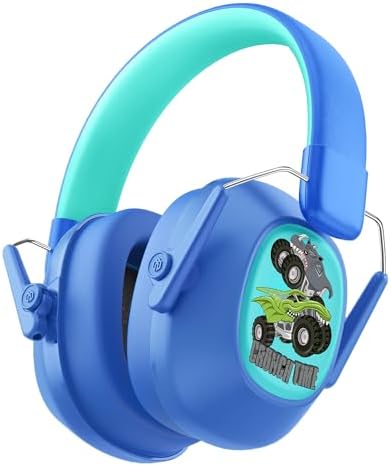
The iClever EM01 is a foldable earmuff for children and adults, with the manufacturer specifying use for ages 5 and up. Its listed SNR is 29 dB, and the description says it is certified to ANSI S3.19-1974 and CE EN 352-1. The ear cushions use thick sound-absorbing sponge with a leather covering, while telescoping arms provide room to adjust the fit.
The adjustable arms extend to accommodate growing children, which may make this a useful choice if you want a pair that can fit for more than one season. The description also highlights a pivot design without holes at the joints, intended to reduce the chance of hair getting caught. The earmuffs fold for travel, but you should still check that they sit evenly on the wearer’s head.
Unlike the Dr.meter options that list both SNR and NRR, this product description provides an SNR figure. That makes a direct comparison with NRR-rated products difficult. The stated age guidance also makes this a less obvious pick for toddlers. For younger children, prioritize a secure, comfortable fit and follow the manufacturer’s age guidance.
Pros:
- Listed for children ages 5 and up as well as adults
- Telescoping arms allow fit adjustment as a child grows
- Thick padded cups and a foldable design
- ANSI and CE certifications are listed
Cons:
- Age guidance may not suit toddlers
- Only an SNR figure is provided in the supplied product details
Verdict: Consider the EM01 for a school-age child who needs an adjustable, foldable pair, especially if the specified age range fits your family.
4. Dr.meter FM-1B: A Higher-Rated Choice for Adults and Kids

The FM-1B is designed for adults and children and has a listed SNR of 31 dB and NRR of 26 dB. Its adjustable headband, ABS shells, layered acoustic foam, and memory-foam padding make it a more protection-focused choice than the child models above. The product description also lists ANSI and CE certifications and says the earmuffs fold for storage.
This model is described for several loud settings, including monster truck races, work, and outdoor tasks. That broad use may suit a parent who wants one pair for events and other noisy activities. But it is not presented as a specialized children’s fit, so check the headband adjustment and cup coverage carefully if a child will wear it.
The higher listed NRR sets it apart from the first two Dr.meter options, though numbers from different rating systems should not be compared directly. The design may also feel snug on first use; the manufacturer suggests stretching it over its packaging or a size 3 soccer ball for a few hours. It folds smaller for carrying, but the supplied details do not describe a specific carrying pouch for this model.
Pros:
- Listed SNR 31 dB and NRR 26 dB
- Adjustable fit for adults and children
- Memory-foam padding and layered acoustic foam
- Foldable for storage and transport
Cons:
- May feel tight before the headband loosens
- Fit should be checked closely on smaller children
Verdict: The FM-1B is a sensible family option if you want a higher listed NRR than the child-focused Dr.meter models and can confirm a comfortable fit.
5. Dr.meter 34 dB Ear Muffs: The Most Protective Listed Rating Here

This Dr.meter model has the highest listed ratings in this selection: SNR 34 dB and NRR 28 dB. It is designed for adults but described as suitable for kids as well. Its features include memory foam, PU leather padding, a breathable TPE headband, and an adjustable fit that extends by 4 cm. The product details also list ANSI and CE certification.
The larger high-density foam and shaped contours are intended to improve the seal around the ears. A secure seal is important at a loud event, but thick padding alone cannot make a poorly fitted earmuff protective. The breathable headband is also described as compatible with caps and glasses; if you wear either, check that they do not push the cushions away from your head.
This is the strongest listed NRR option among the five, but it may be more than you need for occasional use, and it is important not to treat the rating as a guarantee of complete silence. Its adult-oriented design may also be bulkier for a small child than a dedicated kids’ model. Compare the fit, age suitability, and rating information before making it your family’s default pair.
Pros:
- Highest listed rating in this selection at NRR 28 dB
- Soft memory-foam and PU leather padding
- Breathable headband with adjustable fit
- Designed for family use and listed with ANSI and CE certification
Cons:
- Adult-oriented design may not fit smaller children as well
- Does not eliminate sound, and fit remains essential
Verdict: Choose this model if you want the highest listed NRR among these picks and can confirm that its larger design fits the wearer securely.
How to Choose Ear Muffs for Monster Jam
Start with the wearer’s age and head size
A child’s earmuffs need to cover the ears fully without slipping, pinching, or leaving gaps. Look for an adjustable headband and check any age guidance provided by the manufacturer. If more than one person will use the same pair, make sure the range of adjustment works for each wearer rather than assuming one size fits everyone.
Understand the listed noise-reduction rating
Some products list an NRR, while others list an SNR or both. These are different rating systems, so do not compare their numbers as if they were measured the same way. Use the rating as one part of your decision, alongside the product’s fit, certification information, and intended use. Earmuffs reduce noise; they do not make a loud venue quiet or completely block sound.
Check the seal around each ear
The cushions should sit flat against the head and surround the ears. Hair, hats, and glasses can interfere with the seal, so check the fit with anything the wearer plans to use at the event. If the earmuffs press too hard or the wearer keeps taking them off, they may not provide consistent protection. Try them on before leaving home so you have time to adjust.
Balance padding with comfort
Soft padding and a headband that does not create uncomfortable pressure can help make earmuffs easier to wear through a long event. A snug fit is needed, but excessive tightness can make a child reluctant to keep them on. If the manufacturer provides a fit-adjustment tip, follow its instructions and check the fit again afterward.
Consider portability and how many pairs you need
Foldable models take up less room in a backpack or car, while a two-pack can be handy for siblings or as a spare. Think about whether you want one pair to use at other noisy activities, too. Some models in this selection are described for concerts, sports, fireworks, or work settings, but always follow the product’s age guidance and make sure the earmuffs fit the person using them.
Use hearing protection consistently
Bring the earmuffs before entering the loud area and help children put them on correctly. Check their position during the event, especially after they move around or adjust the headband. If the fit is interrupted, reposition the cups so they cover the ears again. Earmuffs are one part of managing noise exposure, not a substitute for sensible breaks or adult supervision.
Frequently Asked Questions
Are earmuffs a good choice for a child at Monster Jam?
They can be a convenient option because they fit over the ears and are easy to remove. Choose a pair that matches the child’s age and head size, and confirm that the cushions fully surround the ears without gaps.
Do these earmuffs completely block the sound of monster trucks?
No. The product descriptions state that the earmuffs reduce noise rather than mute it. The amount of reduction depends in part on how well they fit, and the wearer may still hear engines, announcements, and other sounds.
What is the difference between SNR and NRR?
SNR and NRR are ratings from different systems. They should not be compared directly as if the numbers use the same test method. When choosing between products, note which rating is provided and consider fit and certification details as well.
Can a toddler wear any of these models?
Not necessarily. Check the manufacturer’s age guidance and confirm the earmuffs fit the toddler’s head securely. The iClever EM01 is specified for ages 5 and up; other products are described for children, but their fit should still be checked on the individual child.
Can a child wear a hat or glasses with earmuffs?
Items between the cushions and the head can affect the seal. Try the earmuffs with the hat or glasses the child plans to wear and check that the cups still sit flat around both ears. The Dr.meter 34 dB model is described as compatible with caps and glasses, but fit should still be verified.
Which option is best if I need two pairs?
The Dr.meter Kids Ear Protection 2-Pack is the direct choice when you need two pairs in one set. It may also be useful to keep one pair as a spare, but compare the listed NRR and fit details with the other models before deciding.
Final Recommendation
For a child-focused single pair, the Dr.meter Kids Ear Protection offers adjustable sizing, foldable storage, and listed ANSI and CE certifications. Families who need two pairs can consider its two-pack. If you want the highest listed NRR in this selection, the Dr.meter 34 dB model stands out, provided it fits the wearer well. Whichever you choose, try the earmuffs on before the event and make sure they stay snug over both ears.