
Elbow discomfort can make bench presses, overhead work, and other lifts harder to manage. The right brace may offer compression or support during training, but it cannot diagnose or cure tendonitis—and a brace that is too tight or used to push through worsening pain can create more problems. These picks range from light compression sleeves to adjustable wraps, so you can compare their designs and choose the kind of support that fits your workouts.
Quick Comparison
| Product | Support style | Best suited for |
|---|---|---|
| CYCLXY Arm & Elbow Compression Sleeves | Knitted compression sleeve | General training and lighter compression |
| Nordic Lifting Elbow Compression Sleeves | Flexible compression sleeve | Gym workouts and varied activities |
| Gymreapers 5MM Elbow Sleeves | Neoprene compression sleeve | Heavy pressing and strength training |
| Gymreapers Weightlifting Elbow Wraps | Adjustable wrap with hook-and-loop closure | Customizable support for pushing lifts |
| Jaffick Weightlifting Elbow Brace | Sleeve with dual adjustable straps | Lifters who want adjustable compression |
Our Picks: Best Elbow Brace For Tendonitis Weightlifting reviews
CYCLXY Compression Sleeves: A Flexible Pick for General Training

The CYCLXY set includes a pair of knitted elbow sleeves designed to apply even compression around the elbow and nearby muscles. The brand describes the fabric as breathable and flexible, with a 3D-knit design intended to wrap the joint without greatly limiting movement.
That flexible construction makes these a reasonable option if you want a sleeve for mixed activities such as weightlifting, basketball, or work at a computer. Compared with thicker neoprene sleeves and adjustable wraps, a knitted sleeve is the simpler choice for general compression rather than a highly adjustable level of support.
Fit is important: compression should feel snug, not restrictive. The supplied product details do not give sizing measurements, so check the listing’s size information before ordering. These sleeves also do not provide the same wrap-based adjustment as the Gymreapers wraps or Jaffick brace.
Pros:
- Sold as a pair.
- Flexible knitted design is intended to preserve movement.
- Listed for weightlifting and several other activities.
Cons:
- No adjustable strap for changing compression during a workout.
- Check the listing for sizing details before choosing a fit.
Verdict: Choose CYCLXY if you want a straightforward pair of flexible sleeves for general training rather than a wrap or a thick lifting sleeve.
Nordic Lifting Compression Sleeves: A Versatile Gym Option

Nordic Lifting’s sleeves are made for compression and joint support during strength training, powerlifting, and other activities. The product description emphasizes a snug but flexible fit intended to support the elbow without restricting its range of motion.
This design may suit you if you move between lifting and other sports and prefer a sleeve over a strap that needs wrapping. The listing title specifies a Large size, so confirm that the selected size and available options fit your measurements before buying. The provided details do not state a material or thickness, so there is less information here for comparing warmth or fabric feel against the Gymreapers neoprene sleeves.
As with any compression sleeve, a close fit is useful only if it remains comfortable and does not cause numbness, tingling, or changes in hand color. This is a general support option, not a targeted treatment for the cause of elbow pain.
Pros:
- Designed for lifting, powerlifting, and other activities.
- Flexible fit is intended to allow a full range of motion.
- Sleeve design is quick to put on and take off.
Cons:
- The supplied details do not specify material or sleeve thickness.
- The title identifies a Large size, so check size options carefully.
Verdict: Nordic Lifting is worth considering if you want a flexible sleeve for varied workouts and can confirm the available size is right for you.
Gymreapers 5MM Elbow Sleeves: Support for Heavy Pressing

These Gymreapers sleeves use 5 mm neoprene and are designed for lifting movements such as bench presses, overhead lifts, and other heavy pushing exercises. The brand positions the material as a way to add compression, warmth, and joint stability while allowing movement.
Compared with the lighter knitted CYCLXY sleeves, the thicker neoprene construction is more focused on strength training. It may appeal to lifters who want a supportive feel during pressing work, though that added structure can feel warmer or more noticeable than a lighter sleeve. The product description says the design is intended to stay in place through training, but proper sizing is still essential.
These sleeves offer steady compression rather than the adjustable tension of a wrap. They may support a training routine, but they should not be used to ignore pain or keep lifting through symptoms that are getting worse.
Pros:
- 5 mm neoprene construction is designed for compression and warmth.
- Made with pressing and strength-training movements in mind.
- Flexible sleeve design leaves the hands free and avoids wrap adjustments.
- Reinforced stitching is listed as a durability feature.
Cons:
- Thicker neoprene may feel warmer than a knitted sleeve.
- Compression cannot be adjusted as precisely as with a wrap or strap.
Verdict: Pick the Gymreapers 5MM sleeves if your main priority is a supportive neoprene sleeve for pressing and heavy strength work.
Gymreapers Elbow Wraps: Adjustable Support for Pushing Movements

Unlike a pull-on sleeve, this pair uses 40-inch polyester-and-elastic wraps with a hook-and-loop closure. You wind each wrap around the arm and secure it, allowing you to adjust how snug it feels for the session. The brand recommends wrapping below the elbow and overlapping each layer.
This adjustable design may work well for bench presses, dumbbell presses, and other pushing exercises when you want more control over the fit. It takes more time to put on than a sleeve, and getting a comfortable, even wrap takes some practice. If you wrap too tightly, the support can become uncomfortable or restrict movement.
These wraps are less suited to someone looking for simple, all-day compression or support that is quick to put on between exercises. They are a training aid, not a medical brace for diagnosing or treating tendonitis.
Pros:
- Hook-and-loop closure lets you adjust the fit.
- 40-inch length allows wrapping above and below the elbow.
- Designed for bench press, dumbbell press, and other pushing lifts.
Cons:
- Requires more setup than a pull-on sleeve.
- Too-tight wrapping can restrict movement or feel uncomfortable.
Verdict: Choose these wraps if adjustability matters more to you than quick, simple use and you are willing to learn a comfortable wrapping technique.
Jaffick Adjustable Elbow Brace: A Strap-Based Fit for Lifting
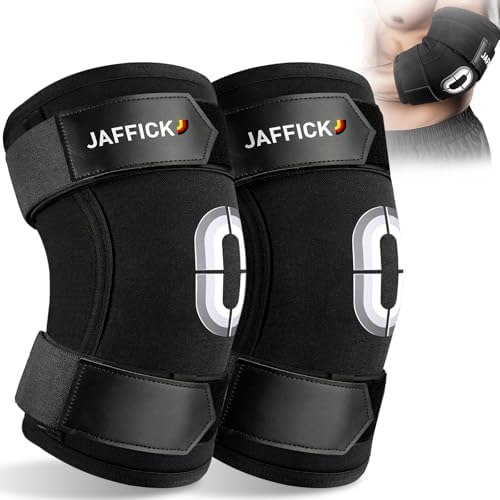
The Jaffick brace combines a sleeve with dual adjustable compression straps. Its product description lists SBR material and use for lifts such as presses and snatches. The straps offer a way to change the fit, which sets it apart from fixed-compression sleeves like the CYCLXY and Nordic Lifting options.
Adjustable straps can be useful if you want to fine-tune how snug the brace feels, but they also add setup steps. The product information advises measuring with the arm straight and checking the size chart; follow the chart rather than sizing down automatically. The description makes strong performance claims, but the supplied details do not provide evidence to confirm specific percentages or medical effects, so they should not be treated as proven results.
This may suit lifters who prefer a more adjustable design and do not mind securing straps before training. If you want a simple sleeve that pulls on quickly, one of the other options may be easier to use.
Pros:
- Dual adjustable straps allow changes to the fit.
- Listed for weightlifting and several gym activities.
- Includes size-selection guidance to help you choose a fit.
Cons:
- Straps take more time to adjust than a basic sleeve.
- Claims about reducing tendon strain or swelling are not established by the supplied product details.
Verdict: Consider the Jaffick brace if you want adjustable strap compression, while treating its medical and performance claims with caution.
How to Choose an Elbow Brace for Tendonitis and Weightlifting
Match the Support Style to Your Lifts
A sleeve offers simple, consistent compression and is easy to put on. A wrap or strap-based brace lets you adjust the fit, but takes more time to secure and can feel restrictive if tightened too much. Think about whether you want general support throughout a workout or adjustable compression for particular lifts.
Consider Material and Warmth
Material affects how a brace feels during training. The Gymreapers 5MM sleeves use neoprene and are designed to provide warmth and compression. CYCLXY describes its knitted sleeves as breathable and flexible. The supplied details for Nordic Lifting do not identify a material, so check the product listing if fabric type is a deciding factor.
Get the Fit Right
A brace should feel secure without causing numbness, tingling, unusual pressure, or changes in hand color. Check the product’s size chart and measure as directed. For adjustable wraps or straps, start with a comfortable fit rather than pulling them as tightly as possible.
Think About Range of Motion
Weightlifting calls for different elbow movement across presses, pulls, and accessory exercises. A brace that feels supportive on one lift may be cumbersome on another. If the product restricts your movement or changes your form, loosen it or stop using it for that exercise.
Use a Brace as Support, Not a Fix
Compression gear may make training feel more comfortable, but it does not identify the cause of elbow pain or guarantee tendonitis relief. Avoid using a brace to push through worsening symptoms. If pain is persistent, severe, or affecting everyday activities, seek advice from a qualified health professional before continuing to lift.
Frequently Asked Questions
Can an elbow brace cure tendonitis?
No brace in this list is shown to cure tendonitis. A sleeve or wrap may provide compression or support, but it does not replace an assessment or care plan from a qualified health professional.
Which type is better for weightlifting: a sleeve or a wrap?
It depends on what you value. Sleeves are quicker to put on and provide a consistent fit. Wraps and adjustable straps offer more control over tightness but need more adjustment and can restrict movement if secured too tightly.
Are thicker neoprene sleeves always better?
No. A thicker sleeve may feel warmer and more supportive, but it may also feel more noticeable during training. Choose based on fit, comfort, and the type of support you prefer—not thickness alone.
Should an elbow brace feel tight?
It should feel secure, not painful or restrictive. Remove or loosen it if you notice numbness, tingling, unusual pressure, or changes in hand color.
Can I wear an elbow brace for every workout?
Follow the product’s use guidance and pay attention to how your elbow feels. A brace should not be a reason to continue a lift that causes pain or to ignore symptoms that are getting worse.
What is the best option for heavy pressing?
The Gymreapers 5MM sleeves are specifically described for heavy pressing and strength training. If you prefer adjustable tension, the Gymreapers wraps or Jaffick brace offer a more adjustable design, with extra setup.
Final Recommendation
For a weightlifting-focused sleeve, the Gymreapers 5MM Elbow Sleeves are the clearest match for heavy pressing and strength training. If you prefer a simpler, flexible sleeve for different activities, consider CYCLXY; if adjustable support is your priority, compare the Gymreapers wraps with the Jaffick brace. Whichever you choose, prioritize a comfortable fit and do not use compression gear to push through worsening elbow pain.