
A worn porcelain sink can often be refreshed without replacing the whole fixture, but the right coating depends on the job. For a full-surface makeover, choose a tub-and-tile refinishing kit made for porcelain and sinks. For a small chip or scratch, a touch-up product is a better fit. These four options include two-part kits, an aerosol coating, and a spot-repair paint, with different application and curing times to consider.
Quick Comparison
| Product | Best For | Application | Water Exposure |
|---|---|---|---|
| Rust-Oleum Tub & Tile 2-Part Refinishing Kit | Full sink refinishing | Brush or short-nap roller; two coats | Wait 3 days |
| SENVEN 2-Part Tub and Tile Refinishing Kit | Versatile refinishing with stated coverage | Two-part coating; two or more coats may be needed | Fully cure for 7 days |
| Rust-Oleum Tub & Tile Refinishing Spray | Spray application on larger surfaces | Two or three light coats | Wait 3 days |
| Rust-Oleum Tub & Tile Touch-Up Repair Paint | Small chips and scratches | Two-part spot repair | Wait 24 hours |
Our Picks: Best Epoxy Paint For Porcelain Sink reviews
1. Rust-Oleum Tub & Tile 2-Part Kit: Best Overall for Refinishing a Sink

This two-part epoxy acrylic kit is designed to renew porcelain, ceramic, fiberglass, acrylic, cast iron, and steel tubs and sinks. You combine the base and activator before applying the coating, so it is intended for a planned refinishing project rather than a quick spot repair.
For a sink, the brush or short-nap roller application gives you control around the basin and its edges. The instructions call for two coats to create an even, porcelain-like appearance. It dries to the touch in an hour and can be recoated after at least an hour, but the sink must remain out of water for three days while the finish cures.
This is the strongest all-around choice in this group if you want a two-part coating made for a complete sink refresh. Its main trade-off is the preparation and waiting time that come with a full refinishing job. A spray may be easier for some larger surfaces, while the touch-up paint is more appropriate for isolated damage.
Pros:
- Made for porcelain sinks and several other bathroom surfaces
- Two-part formula is designed for adhesion and color retention
- Can be applied with a fine-bristle brush or short-nap roller
- Touch-dry and recoat times are clearly stated
Cons:
- Requires mixing the two parts before use
- Needs three days to cure before water exposure
Verdict: Choose this kit for a full porcelain sink refresh if you can apply two coats carefully and leave the sink unused during the three-day cure.
2. SENVEN 2-Part Kit: A Flexible Option with Stated Coverage

SENVEN’s two-part epoxy acrylic coating is listed for sinks, tubs, countertops, floors, backsplashes, and other surfaces. The kit is white with a semi-gloss finish. Its listed coverage is 25–30 square feet per coat from a 17.6-ounce bottle, though the product description recommends two or more coats for dark tiles.
The brand describes the formula as low odor and says accidental drips can be wiped with water. It also lists tile, wood, glass, ceramics, acrylic, and marble among suitable materials, and says cast iron tubs with porcelain enamel can be painted. It is not listed as suitable for artificial marble, metal, or powdery or peeling surfaces, so check the material and condition of your sink before choosing it.
The timing is important: the surface is described as ready for use after 24–36 hours once dry to the touch, but the coating is not fully cured until seven days. The longer cure makes this a less convenient option if you need your sink back quickly. Compared with the Rust-Oleum two-part kit, it offers a specific coverage estimate and semi-gloss finish, but the supplied details give less guidance on the application tool.
Pros:
- Listed for sinks and several other household surfaces
- Provides a coverage estimate per coat
- Low-odor formula and water cleanup are stated features
- Semi-gloss finish works for shoppers who prefer less shine than gloss
Cons:
- Full cure takes seven days
- Not suitable for metal, artificial marble, or powdery or peeling surfaces, according to the product description
Verdict: Consider SENVEN if its listed surface compatibility and semi-gloss finish suit your sink, and you can allow a full seven days for curing.
3. Rust-Oleum Refinishing Spray: Best for Spray Application
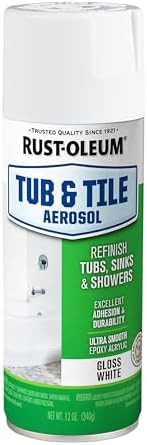
This one-step acrylic epoxy comes in an aerosol can and is designed to refresh tubs, sinks, showers, and ceramic tile. Its spray format may suit a broad surface where you want to apply several thin coats rather than work with a brush or roller.
The product calls for two to three light coats applied horizontally and vertically. It dries to the touch in 15 minutes and can be recoated at any time, according to the product details. Those quick surface-dry times do not mean the sink is ready for water: the coating needs three days to cure before water exposure.
Because it is sprayed, careful setup matters. Protect nearby surfaces and follow the product label’s directions for application and ventilation. Compared with the two-part Rust-Oleum kit, this option avoids mixing, but it gives you less direct control than brushing around tight edges. It is also not the spot-repair choice for a single small chip.
Pros:
- One-step aerosol application with no two-part mixing
- Listed for sinks, tubs, showers, and ceramic tile
- Allows two or three light coats
- Dries to the touch quickly
Cons:
- Requires care to protect surrounding areas during spraying
- Still needs three days before water exposure
Verdict: Pick this spray if you prefer aerosol application and can protect the area well, but choose a brush-on kit if you want more control over a small sink basin.
4. Rust-Oleum Touch-Up Repair Paint: Best for Small Chips and Scratches

This two-part epoxy acrylic paint is made to repair minor chips, scratches, dents, and other small defects. The product is listed for porcelain, ceramic, fiberglass, acrylic, cast iron, and steel surfaces, including sinks. It is a repair coating, not a product for refinishing an entire sink.
You combine Part A and Part B before application. For deeper damage, the product description says additional layers can be applied after 10 minutes. The repair needs 24 hours to dry before water exposure, which is a shorter wait than the three-day cure listed for the full-surface Rust-Oleum products.
This is the most focused choice in the group: it is useful when the rest of your sink looks acceptable and you only need to address a small damaged area. It is not the right pick if the finish is worn across a large part of the basin. As with any spot repair, the finished patch may be noticeable if its color or gloss differs from the surrounding surface.
Pros:
- Designed specifically for small chips, scratches, and defects
- Listed for porcelain and ceramic, as well as other fixture materials
- Additional layers can be applied after 10 minutes for deeper damage
- Water exposure is allowed after 24 hours, according to the product details
Cons:
- Not intended for refinishing a whole sink
- Requires mixing two parts before application
Verdict: Choose this repair paint for isolated damage; for widespread wear or a full color refresh, use a refinishing kit instead.
How to Choose Epoxy Paint for a Porcelain Sink
Decide Whether You Need a Full Refinish or a Spot Repair
Start by looking at how much of the sink is damaged. A refinishing kit is the better match for broad wear or a full-surface makeover. A touch-up paint is designed for small chips and scratches, not for coating an entire basin. Using a spot repair across a large area may leave an uneven-looking result.
Check That the Product Lists Your Sink Material
“Porcelain sink” can describe different underlying materials and finishes. Check the product details and label for your specific surface before buying. The products here list porcelain or ceramic compatibility, but SENVEN excludes some materials and surfaces, including metal and peeling or powdery substrates. Do not assume every coating works on every sink.
Choose the Application Style You Can Control
A brush or short-nap roller can help you work carefully around a basin’s edges, while an aerosol can offers a spray-on method for larger surfaces. A brush-on two-part kit requires you to combine the components, and the spray requires you to protect surrounding areas. Choose the method that fits your workspace and comfort level, and follow the label for preparation and application.
Compare the Finish and Number of Coats
The Rust-Oleum refinishing kit and spray are gloss white. SENVEN is listed as white semi-gloss. The two-part Rust-Oleum kit calls for two coats, while its spray calls for two to three light coats. SENVEN recommends two or more coats for dark tiles. Consider how much of the sink you plan to cover and how closely the new finish should match the existing one.
Plan Around the Full Cure Time
Dry-to-touch time and recoat time are not the same as the time before water exposure. The products in this guide specify cure or wait periods ranging from 24 hours to seven days. Plan to keep the sink out of use for the full period stated on the product label. Rushing this step can interfere with the finish.
Prepare the Surface and Follow the Label
Surface condition matters: SENVEN, for example, is not listed for powdery or peeling substrates. Before starting, read the instructions for cleaning, surface preparation, mixing, and application. Also follow the product’s safety directions, especially when working indoors or using a spray. Careful preparation and patience are part of getting an even result.
Frequently Asked Questions
Can I use epoxy paint on a porcelain sink?
Yes, if the product is designed for porcelain or ceramic and is appropriate for your sink’s condition. Check the label for compatible surfaces and follow its preparation and curing instructions.
Which product is best for refinishing an entire sink?
The Rust-Oleum Tub & Tile 2-Part Refinishing Kit is the best fit in this group for a full sink refresh. It is listed for porcelain sinks and calls for two coats, with three days of curing before water exposure.
Which option should I use for a small chip?
The Rust-Oleum Tub & Tile Touch-Up Repair Paint is designed for small chips, scratches, and defects. It is not intended to refinish an entire surface.
How long should I wait before using the sink?
Follow the exact product instructions. The products here list 24 hours before water exposure for the touch-up paint, three days for both Rust-Oleum refinishing products, and seven days for SENVEN’s full cure.
Is spray paint or brush-on epoxy better for a sink?
Neither method is best for every project. A spray can be convenient for broader coverage, while a brush or roller gives you a hands-on way to coat the basin and edges. Consider your workspace, the size of the area, and the product’s application instructions.
Can I paint over a peeling or damaged finish?
Do not coat a surface without checking the product’s preparation directions. SENVEN specifically lists powdery or peeling substrates as unsuitable. A coating may not give a dependable result if the existing surface is loose or in poor condition.
Will a touch-up repair blend in perfectly?
A spot repair may be visible if its color or gloss does not match the surrounding finish. For widespread wear, a full-surface refinishing product is more appropriate than trying to cover a large area with touch-up paint.
Final Recommendation
For most full-sink projects, the Rust-Oleum Tub & Tile 2-Part Refinishing Kit is the most balanced pick because it is made for porcelain sinks, uses a brush or roller, and provides a clear two-coat process. Choose the Rust-Oleum touch-up paint for a small defect, the spray if you prefer aerosol application, or SENVEN if its semi-gloss finish and listed surface compatibility fit your project. In every case, check the label and allow the full cure time before using the sink.