
If you have ever opened a freezer drawer to find a gasket that has gone stiff, or wondered whether the sealant holding a container lid together will hold up in sub-zero temperatures, you already know how important the right product is. Silicone sealant is a practical choice for freezer-related projects because it stays flexible across a wide temperature range and resists moisture. But not every silicone sealant is made for food-adjacent use, and not every label tells you what you need to know about cold temperatures. This guide looks at five food grade silicone sealants from the supplied product data, explains what each one offers, and helps you decide which option fits your project. Where the listings are silent on freezer performance, we say so, so you can confirm details with the manufacturer before you commit.
Quick Comparison Table
| Product | Brand | Color | Size | Listed Temperature Range | Standout Trait |
|---|---|---|---|---|---|
| Silicone RTV 4500 Food Contact Safe High Strength Silicone Sealant, Clear (2.8 FL. Ounce) | Silco Incorporated | Clear | 2.8 fl. oz. | Up to 350°F listed | Food contact safe with clear finish |
| Food Grade NSF FDA RTV Silicone Sealant Adhesive Clear 10.3oz (1) (10.3 Ounce Tube) | Sil-Bond | Clear | 10.3 oz. | Up to 350°F listed | Largest tube in the group |
| White Food Grade Silicone Sealant – 2.8 oz Squeeze Tube | Gordon Glass Co. | White | 2.8 oz. | Not specified in listing | Listed freeze-thaw resistance |
| Food Grade NSF RTV Silicone Sealant Adhesive White 2.8 Ounce (1) | Sil-Bond | White | 2.8 oz. | Up to 350°F listed | NSF approved with screw-on nozzle |
| Silicone RTV 4500 Food Contact Safe High Strength Silicone Sealant, Clear (2.8 FL. Ounce) – 2 Pack | Sil-Bond | Clear | 2 x 2.8 fl. oz. | -65°F to +350°F | Widest listed temperature range |
Our Picks: Best Food Grade Silicone Sealant For Freezer reviews
Silicone RTV 4500 Food Contact Safe High Strength Sealant in Clear, Single Tube

This clear RTV silicone from Silco Incorporated is a straightforward, single-tube option for people who want a food contact safe sealant with a transparent finish. The product is labeled as food contact safe and rated for high temperatures up to 350°F. Its listing also describes it as impervious to all weather conditions, able to bond to most surfaces, and suitable for sealing or forming gaskets. It cures on its own once exposed to air, so there is no mixing step to worry about.
The clear color is one of its strongest practical advantages. Because it blends into most surfaces, it works well for visible seals, such as a lid rim, a clear storage container edge, or a glass joint where a white or gray bead would look out of place. The 2.8 fluid ounce tube is a sensible size for small repairs and gasket work. It is not designed for large-scale projects, but that is exactly the point for a homeowner who needs to fix one leaking seam.
Some users report that the sealant feels sturdy once cured, which fits the high-strength claim in the product name. Many owners appreciate that it can be applied to a range of materials, which saves them from buying separate products for different surfaces. In our analysis, its biggest limitation is that the listing does not state a low-temperature rating or any freezer-specific performance data. If your freezer project depends on cold tolerance, you will need to confirm that detail directly with the manufacturer before you rely on it.
Compared with the other options here, this product is a strong general-purpose pick for small, precise jobs. It is less attractive if you need a large volume, and it lacks the wide listed temperature range found in the two-pack option.
Pros:
- Food contact safe labeling with a clear finish that blends into most surfaces
- Listed high-temperature rating of 350°F
- Self-curing formula that requires no mixing
- Bonds to a wide range of surfaces, making it useful for varied household repairs
Cons:
- The listing does not include a low-temperature or freezer-specific rating
- The 2.8 fluid ounce tube is too small for larger projects
Verdict: This is a solid, clear-finish choice for small food-safe sealing and gasket repairs. If your freezer project needs verified cold-temperature performance, confirm that detail with the manufacturer before you buy.
Sil-Bond Clear NSF and FDA Listed Sealant in a 10.3 Ounce Tube
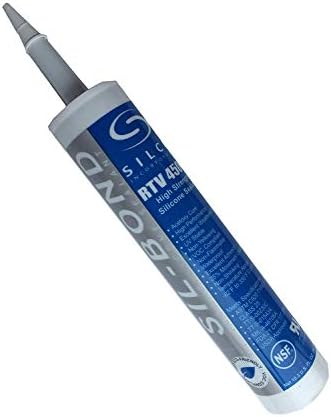
Sil-Bond’s clear 10.3 ounce tube is the largest option in this group, and that size changes how you should think about it. This product is built for people who expect to do more than one small repair. The title highlights both NSF and FDA food grade references, and the listing describes a 350°F high-temperature rating along with the same general silicone performance traits as the other clear option: weather resistance, surface bonding, and gasket-forming ability.
The larger tube is the main design difference. Instead of a small squeeze tube, you get enough material to seal several containers, refresh an entire gasket, or handle a larger workshop or kitchen project. The description notes that it dries quickly, which is useful when you want to keep a repair moving without waiting long between steps. A tube this size is typically used with a standard caulking gun, so plan on that tool if you do not already own one.
Some owners appreciate that the bigger quantity reduces the need to reorder mid-project. Others find that a 10.3 ounce tube is more than they need for a single freezer gasket or a quick seal. In our view, the value of this product depends almost entirely on how much work you plan to do. Like the other products here, the listing does not specify a freezer-rated low temperature, so verify that point before you apply it to anything that will live in very cold conditions.
Between the two clear options, this one suits buyers who value volume. The smaller 2.8 ounce tube is better for quick, precise fixes.
Pros:
- Generous 10.3 ounce volume that covers multiple projects
- Clear finish with NSF and FDA references in the product title
- Listed 350°F high-temperature rating
- Described as drying quickly, which helps keep projects on schedule
Cons:
- Likely requires a caulking gun, which adds to the setup cost if you do not own one
- Excessive for small, one-time repairs
Verdict: If you need a clear food grade sealant for repeated or larger projects, this 10.3 ounce tube offers the best volume in the group. For a single small fix, a smaller tube will make more sense.
Gordon Glass White Food Grade Sealant in a Squeeze Tube

Gordon Glass Co. offers this white food grade silicone sealant in a 2.8 ounce squeeze tube. It is a one-part, moisture-curing RTV silicone, which means it cures by reacting with humidity in the air rather than through a mixing process. The listing puts the most emphasis on durability: it describes resistance to weathering, ozone, ultraviolet radiation, freeze-thaw conditions, and airborne chemicals. For a freezer-focused buyer, the freeze-thaw mention is the most relevant detail in this entire group.
The product also lists strong adhesion to glass, metal, porcelain, ceramic, wood, most plastics, and many other nonporous surfaces. That range makes it a useful choice for a variety of household surfaces, especially if your project involves more than one material. The white color is a practical choice when you want a seal to stand out as a clean, neat line rather than disappear into a clear container.
Some users report that the squeeze tube format is easy to handle for small jobs, and many owners appreciate that it does not require special equipment. Still, the listing does not provide a specific temperature rating, and that gap matters if you plan to use it in a freezer. Freeze-thaw resistance suggests good cold-weather behavior, but it is not the same as a documented minimum operating temperature. Treat that claim as a promising starting point, not a guarantee.
Compared with the Silco and Sil-Bond options, this product is best for buyers who want a white finish and freeze-thaw durability language, and who are comfortable checking the temperature details separately.
Pros:
- Listed resistance to freeze-thaw conditions, along with weathering and UV exposure
- Broad adhesion to glass, metal, ceramic, wood, and most plastics
- One-part, moisture-curing formula that needs no mixing
- White color that creates a clean, visible seal line
Cons:
- No specific temperature range is listed, which makes freezer suitability harder to confirm
Verdict: A reasonable pick for white-finish sealing where freeze-thaw durability matters. Because the listing lacks a clear temperature rating, confirm its suitability for freezer use before you rely on it for food-contact applications.
Sil-Bond NSF Approved White Sealant With Screw-On Nozzle

This white Sil-Bond sealant is the NSF approved option in the white category. It comes in a 2.8 fluid ounce tube with a screw-on nozzle, and the listing describes a 350°F temperature rating. The NSF approval is the main reason to consider it, since it signals that the product has been evaluated against recognized food safety standards. Always check the certification details on the packaging for the exact scope of approval.
The screw-on nozzle is a practical detail. It gives you more control over where the bead goes than a wide-open tube, which helps when you are working in tight spaces, such as the edge of a container lid or a small gasket channel. The 2.8 ounce size fits small, targeted repairs well, and it is easy to store once the job is done.
In everyday use, many owners appreciate that a screw-on nozzle reduces mess and makes it easier to resume a project later. Some users note that the listing is brief and does not cover adhesion surfaces or weather resistance in detail the way some competing listings do. That means you may need to read the packaging or manufacturer documentation to get the full picture before you start. Because the product lacks a stated low-temperature rating, freezer use should be verified with the manufacturer.
Compared with the other white option, this product stands out for its NSF approval and nozzle design. The Gordon Glass product offers more detail about durability and adhesion, but this one is easier to justify if certification is your top priority.
Pros:
- NSF approved, which is a meaningful certification for food-adjacent projects
- Screw-on nozzle offers better control for precise beads
- Listed 350°F high-temperature rating
- Compact 2.8 ounce size suits small repairs
Cons:
- The listing offers limited detail on adhesion, weather resistance, and low-temperature performance
Verdict: A good choice if NSF approval and a white finish are your priorities. Read the certification details and confirm freezer suitability before you buy for cold-temperature use.
Sil-Bond Clear Silicone Sealant Two-Pack With Wide Temperature Range

This two-pack of clear silicone sealant from Sil-Bond is the most complete option on paper for cold-temperature projects. The listing gives a temperature range of -65°F to +350°F, which is the only specific low-temperature rating among the five products. Since a standard home freezer typically runs around 0°F, that low rating provides a meaningful margin. The product is also described as 100% silicone, UV stable, non-yellowing, non-flammable, VOC compliant, and USDA approved.
The clear, non-yellowing finish helps keep a seal looking clean over time, which matters in a kitchen or food storage area where appearance counts. The listing also notes excellent adhesion and non-shrinking behavior, two qualities that help a gasket or seam hold its shape. Because it is a two-pack, you get twice the material of the standard 2.8 ounce tube, which makes it a sensible choice for repeat projects or for keeping a spare on hand.
Many owners appreciate that the wide temperature range removes some of the guesswork that comes with other listings. Some users may find two tubes more than they need for a single repair, and the pack offers the most value when you actually use both. The USDA approval is also worth reading closely on the packaging to understand exactly what it covers in your specific use.
Compared with the single-tube options, this two-pack delivers the strongest documented temperature range and the best combination of clarity, volume, and listed certifications. For buyers focused specifically on freezer use, it is the most convincing choice here.
Pros:
- Listed temperature range of -65°F to +350°F, the widest in this group
- Clear, non-yellowing, and UV stable finish for long-lasting appearance
- USDA approved and described as non-flammable and VOC compliant
- Two-pack format offers good value for repeat projects
Cons:
- Two tubes may exceed the needs of a single small repair
Verdict: For freezer-related projects, this two-pack offers the most documented cold-temperature rating in the group, along with a clear finish and useful certifications. It is the top recommendation for buyers who want the strongest listed specifications.
How to Choose the Right Food Grade Silicone Sealant for a Freezer
Understand What Food Grade Really Means
The phrase “food grade” appears on many silicone products, but it does not always mean the same thing. Some listings say food contact safe, others reference NSF or FDA, and some mention USDA approval. Before you buy, read the packaging and manufacturer documentation to see which certification is listed and what it covers. A sealant that is labeled food contact safe for one use may not be intended for every kitchen or freezer application, so match the claim to your specific project.
Check the Temperature Rating Carefully
Temperature ratings are the most important factor for freezer use, and they are easy to overlook. Several products in this group list a high-temperature limit of 350°F, which is useful for heat resistance but does not tell you how the sealant behaves in cold conditions. The Silco-based and Sil-Bond two-pack options with listed low-end ratings give you more confidence in cold settings. If a listing does not show a low-temperature figure, ask the manufacturer for that data before you rely on the product in a freezer.
Consider Color and Visibility
Clear sealants blend into glass, plastic, and most container surfaces, which makes them a good fit for visible seals on food storage gear. White sealants create a more distinct line and can make it easier to spot where the bead is, which helps during application and later inspection. Choose the color that matches the look you want and the way you will check the seal over time.
Match the Tube Size to the Job
A 2.8 fluid ounce tube is a good size for small, targeted repairs such as a single gasket or one container lid. A 10.3 ounce tube makes more sense if you plan to seal several items, repeat the project, or keep material on hand for future fixes. Larger tubes usually require a caulking gun, so factor in the cost and convenience of that tool. Buying the right size prevents waste and keeps your project manageable.
Think About Application Control
How the sealant comes out of the tube affects how neat your finished bead will look. A screw-on nozzle gives you more control over placement, which helps in tight spaces like a narrow gasket channel. A squeeze tube is simpler for quick jobs but can be harder to control on small surfaces. Consider the geometry of your project and choose a delivery style that lets you apply the bead precisely.
Prepare Surfaces and Allow Proper Curing
Silicone sealants bond best to clean, dry surfaces. Remove old sealant, dust, grease, and moisture before you apply a new bead. Most one-part RTV silicones cure by reacting with moisture in the air, so ventilation and humidity affect curing time. Allow the sealant to cure fully before placing food-contact items against it or returning the sealed item to the freezer. Check the manufacturer’s directions for cure time, since the listings in this group do not all state it.
Balance Certification, Performance, and Practical Needs
The best choice is the one that matches your priorities. If cold-temperature performance is your main concern, look for documented low-temperature ratings first. If certification matters most, check the specific approval and its scope. If appearance and convenience come first, consider color, tube size, and nozzle style. Weighing these factors together will help you choose a product that works for your freezer project and your peace of mind.
Frequently Asked Questions
Is food grade silicone sealant safe to use inside a freezer?
Some food grade silicone sealants are designed for applications that include cold conditions, but the answer depends on the specific product. Look for a documented low-temperature rating, and confirm with the manufacturer that the sealant is suitable for freezer use. Do not assume that a high-temperature rating alone means the product performs well when frozen.
How long should silicone sealant cure before it touches food?
Cure time varies by product, humidity, and temperature. Follow the manufacturer’s directions and allow the sealant to cure fully before placing it in contact with food or returning a sealed item to the freezer. Some listings in this group do not state cure time, so check the packaging or product documentation before you start.
Can I use clear sealant instead of white for food storage projects?
Yes, clear sealant is a practical choice for food storage projects because it blends into glass, plastic, and most container surfaces. White sealant is easier to see against dark surfaces and may help you spot gaps during inspection. Choose the color that fits your project and your preference for visibility.
Do I need a caulking gun for these sealants?
Smaller tubes, such as the 2.8 fluid ounce options, can often be squeezed by hand. Larger tubes, like the 10.3 ounce option, typically require a caulking gun for controlled application. Check the packaging for the tube format before you buy so you have the right tools ready.
What surfaces work best with silicone sealant?
Silicone sealants generally bond well to clean, dry, nonporous surfaces such as glass, metal, ceramic, and many plastics. Some products also list adhesion to wood and other materials. Always clean the surface thoroughly before applying sealant, and test a small area first if you are working with an unfamiliar material.
Which option is the best overall pick for freezer projects?
Based on the supplied product data, the two-pack Sil-Bond clear sealant offers the widest listed temperature range, from -65°F to +350°F, along with food-related certification references. For buyers who want a single small tube, the clear Silco option is a strong general choice, provided you confirm its cold-temperature performance with the manufacturer.
Final Recommendation
If your main goal is a food grade silicone sealant for freezer-related use, the two-pack Sil-Bond clear sealant is the strongest option in this group. Its listed temperature range of -65°F to +350°F is the only documented low-temperature rating among the five products, and its clear, non-yellowing finish and USDA approval make it a practical choice for food storage projects. For small, one-time repairs, the single-tube Silco clear sealant is a sensible alternative, while the larger 10.3 ounce Sil-Bond tube suits buyers planning multiple projects. Whichever product you choose, confirm its cold-temperature suitability and cure requirements with the manufacturer before you put it to work in your freezer.