
Finding the best food safe sealant for glass means balancing food-contact suitability with a dependable seal and a sensible tube size. The options below are clear silicone sealants described as food-contact safe, but they differ in package size and listed features. Before using any sealant on a food container, check its label for approved applications and follow its instructions for surface preparation and curing.
Quick Comparison
| Product | Size or pack | Notable details | Best for |
|---|---|---|---|
| Silicone RTV 4500 Clear Sealant | 2.8 fl. oz. | Food-contact safe; listed for use up to 350°F | Small repairs and one-off jobs |
| Sil-Bond Food Grade RTV Silicone | 10.3 oz. | Food-grade, NSF/FDA wording in product title; listed for use up to 350°F | Larger jobs needing more sealant |
| Silicone RTV 4500, 2-Pack | Two 2.8 fl. oz. tubes | Waterproof, UV stable, non-yellowing; listed range of -65°F to 350°F | Repeat projects and keeping a spare |
| Silicone RTV 4500, 4-Pack | Four 2.8 fl. oz. tubes | Clear, waterproof, food-contact safe | Several sealing jobs |
| Silicone Food Contact Safe Sealant, 4-Pack | Four 2.8 fl. oz. tubes | Clear, high-strength formula; squeeze-tube application | Multiple container or surface repairs |
Our Picks: Best Food Safe Sealant For Glass reviews
1. Silicone RTV 4500 Clear Sealant: Best for a Small Repair

This 2.8-ounce tube of clear RTV silicone is a practical starting point for a modest glass-sealing job. Its listing describes it as food-contact safe, self-curing, and suitable for sealing or making gaskets. It is also listed for use up to 350°F.
The clear finish can be less noticeable around a glass edge than a colored sealant. The small tube is easier to choose when you have one repair in mind and do not want to buy a larger package. The listing says it bonds to most surfaces, though the exact bond on your glass depends on the surface and application.
As with any silicone sealant, treat this as a flexible seal, not a substitute for a structural glass adhesive. Clean and prepare the surfaces as directed on the package, and allow the sealant to cure fully before putting the item into service. The main limitation is the modest amount: it may not be the best fit for many containers or a long bead.
Pros:
- Compact tube for a small repair
- Clear finish suits visible glass seams
- Listed as food-contact safe
- Described for sealing and gasket-making
Cons:
- Less material than the larger tube and multipacks
- Does not replace a structural glass-bonding adhesive
Verdict: Choose this single tube for a limited glass-sealing task when you want a clear, food-contact-safe silicone and do not need a large supply.
2. Sil-Bond Food Grade RTV Silicone: Best for Larger Jobs
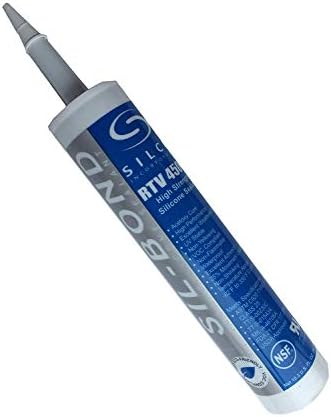
This clear silicone comes in a 10.3-ounce tube, making it the largest single package in this group. The product title includes food grade and NSF/FDA wording, and its description identifies it as food-contact safe. It is also described as self-curing and suitable for sealing or creating gaskets.
The larger tube makes sense when you expect to apply a longer bead or work on several items. Its listing also says it bonds to most surfaces and is suitable for use up to 350°F. For a glass project, the extra volume is useful only if you can apply the bead neatly and store any remaining sealant as directed on the package.
One important check: certification language can depend on the specific product and intended use. Confirm the product documentation and label match your application, especially if the cured seal will contact food or drink. Compared with the smaller RTV 4500 tube, this option offers more sealant but may be more than a single small repair requires.
Pros:
- Largest single tube among these picks
- Clear silicone for visible seams
- Listed as food-contact safe and self-curing
- Described for sealing and gasket-making
Cons:
- May be excessive for a minor repair
- Check the label and documentation for your exact food-contact use
Verdict: Pick this 10.3-ounce tube if you need more sealant for a larger job and have confirmed its labeling suits your intended application.
3. Silicone RTV 4500 Two-Pack: Best for Repeat Projects

This option provides two 2.8-ounce tubes of clear RTV 4500 silicone. The product description lists food-contact suitability, waterproof performance, UV stability, and a temperature range from -65°F to 350°F. It also describes the formula as non-yellowing and non-shrinking.
Two separate tubes can be more convenient than one large tube if you want to keep one sealed for a later project. The stated weatherability and UV stability may also matter when a glass seal is exposed to outdoor conditions. For an indoor glass container, those features may be less important than correct surface preparation and a complete cure.
This is a stronger value in quantity than a single small tube if you have more than one job planned. But it is still a silicone sealant rather than a replacement for a rigid glass adhesive. The product description supplies useful performance claims, but you should rely on its package instructions for application limits and food-contact details.
Pros:
- Two small tubes for separate or repeat jobs
- Listed temperature range extends from -65°F to 350°F
- Described as waterproof, UV stable, and non-yellowing
- Clear and listed as food-contact safe
Cons:
- More material than needed for a single tiny repair
- Silicone flexibility may not suit a rigid bonding job
Verdict: Choose the two-pack if you expect repeat repairs and want the listed weather and temperature features in separate, smaller tubes.
4. Silicone RTV 4500 Four-Pack: Best for Several Sealing Jobs

This pack includes four 2.8-ounce tubes of clear RTV 4500 silicone. The supplied description calls it waterproof and food-contact safe, with high strength and adhesion. A multipack can suit a household or workspace with several sealing tasks, while the smaller tubes let you work with one tube at a time.
Clear silicone is a sensible choice when you want a seam to be less visually prominent on glass. The listing also describes the sealant as suitable for waterproofing and sealing projects. Those details make it a reasonable option for repeated jobs, but they do not establish that every glass item or food-contact setup is appropriate.
The tradeoff is quantity. If you only need one short bead, the other single-tube choices are more straightforward. Check the tube directions for storage, curing, and food-contact conditions; do not assume a sealed item is ready for use immediately after application.
Pros:
- Four separate tubes for multiple projects
- Clear finish can blend with glass
- Described as waterproof and food-contact safe
- Useful when you want to keep unopened tubes for later jobs
Cons:
- Too much product for many one-time repairs
- Application and curing instructions still need to be checked for each use
Verdict: This four-pack is a practical choice if you already have several sealing jobs planned and want individual small tubes rather than one larger container.
5. Silicone Food Contact Safe Sealant Four-Pack: Best for Simple Multipurpose Sealing

This four-pack contains clear, high-strength silicone in 2.8-ounce squeeze tubes. Its description highlights food-contact suitability, water resistance, and easy application. The clear formula is intended to maintain visibility through or around the sealed area, which can be helpful for glass containers and surfaces.
The squeeze-tube format is straightforward for small applications, though a steady hand is still important for a neat bead. Four tubes make this a better fit for recurring tasks than a one-time repair. The listing gives a water-resistance level, but does not provide enough detail to determine how that rating applies to every project, so check the packaging before relying on it for a specific exposure.
Compared with the RTV 4500 multipack, this listing focuses on easy application and container sealing rather than detailing a temperature range or UV stability. That makes it a simpler option when those extra specifications are not central to your decision.
Pros:
- Four clear 2.8-ounce tubes
- Described as food-contact safe and high strength
- Squeeze tubes suit smaller applications
- Water resistance is listed as a feature
Cons:
- May be unnecessary for a single small job
- Temperature and UV details are not provided in the supplied description
Verdict: Consider this multipack for repeat container and surface sealing when you value a clear squeeze-tube format and do not need the extra specifications listed for the RTV 4500 two-pack.
How to Choose a Food Safe Sealant for Glass
Confirm the Exact Food-Contact Use
“Food-contact safe” does not automatically mean every use is covered. Check the product label and documentation for whether the cured seal is suitable for your specific application, such as a seam near food or a container that holds liquid. If the wording is unclear, contact the manufacturer before applying it.
Choose a Silicone Sealant for the Right Job
These products are silicone sealants intended for sealing or gasket-making. Silicone can form a flexible seam, but that is different from a rigid structural bond. If you need to join glass pieces so they carry weight or resist force, select a product specifically intended for that type of glass bonding rather than assuming a sealant will do the job.
Check Temperature and Exposure Needs
Temperature limits vary by listing. The first two products are described for use up to 350°F, while the RTV 4500 two-pack lists a range from -65°F to 350°F. Other options emphasize waterproofing or water resistance without the same temperature details in the supplied descriptions. Match the product’s label to the conditions your sealed glass will face.
Think About Tube Size and Project Count
A 2.8-ounce tube can be a sensible amount for a small repair. The 10.3-ounce tube is a better fit when you expect to use more material in one project. Multipacks offer several smaller tubes for repeat jobs, but only make sense if you can use and store them according to the package directions.
Consider How Visible the Finished Seam Will Be
All five options are described as clear, which can help a seal blend into glass. Clear does not mean invisible: bead size, application, surface condition, and curing can affect the finished look. If appearance matters, plan a careful, even application and follow the label’s preparation instructions.
Prepare the Glass and Allow the Sealant to Cure
Follow the package directions for cleaning, application, ventilation, and cure time. Do not put a newly sealed food container into use until the product has cured as directed. Keep food and drink away from uncured sealant, and do not use the item if the instructions do not support your intended application.
Frequently Asked Questions
Can I use these sealants on glass that touches food?
The supplied product descriptions identify these options as food-contact safe, but the exact permitted use can vary. Read the package and product documentation to confirm the sealant is appropriate for the specific food-contact area and conditions.
Is clear silicone sealant invisible on glass?
No. Clear silicone may blend in better than a colored product, but the bead can still be visible. Applying an even, controlled line can help create a neater finish.
Can silicone sealant repair a cracked glass dish?
A sealant may be intended to seal a seam, but that does not make cracked glass safe or structurally sound. Do not rely on sealant to restore a damaged dish that could break, leak, or cause injury.
How long should I wait before using a sealed container?
Use the cure time stated on the product label. The supplied descriptions do not give a specific curing time for every product, so avoid guessing or putting the container into service before the manufacturer’s instructions allow.
Which option is best for a single small repair?
The single 2.8-ounce RTV 4500 tube is the most straightforward choice for a limited job. The best fit still depends on whether its label supports your intended use and whether its listed features match the conditions.
Which product provides the most sealant in one tube?
The Sil-Bond Food Grade RTV Silicone is listed as a 10.3-ounce tube, making it the largest single package here. Choose it when you have a larger job rather than simply buying more than you need.
Final Recommendation
For a small glass-sealing job, the single 2.8-ounce Silicone RTV 4500 is the simplest place to start. If you need more material in one tube, consider the 10.3-ounce Sil-Bond option after checking its food-contact documentation. For repeat projects, the two- or four-tube packs provide more separate tubes. Whichever you choose, verify the intended use, prepare the glass as directed, and wait for the full stated cure before using the sealed item.