
The right gas line for an outdoor fire pit needs to match your burner’s connection size, fuel type, and gas-flow requirements. A line that is too short, too small, or fitted with the wrong ends may not work with your setup. These five options range from a large-diameter 36-inch connector to compact lines for compatible burners. Check your fire pit’s manual and connection specs before choosing, and have gas connections installed or checked by a qualified professional.
Quick Comparison
| Product | Length and size | Notable details | Best for |
|---|---|---|---|
| Midwest Hearth 3/4 Whistle Free Gas Flex Line | 36 in; 3/4-in ID | Stainless steel; 3/4-in MIP to 3/4-in FIP | Setups that specify 3/4-inch fittings |
| Alloxity 3/8-Inch Flex Gas Line Kit | 12 in; 3/8-in OD | Coated stainless steel; CSA certified; fittings included | Short connections for compatible burners under 90,000 BTU |
| Dreffco High-Capacity Gas Flex Line | 24 in; 1/2-in size listed | Corrugated stainless steel with black finish | Projects needing a flexible, non-whistle line |
| Midwest Hearth 18-Inch Stainless Flex Line | 18 in; 3/8-in ID | 1/2-in flare nuts; stainless steel | Compatible setups using 1/2-inch flare connections |
| Stanbroil 3/8-Inch by 36-Inch Flex Gas Line Kit | 36 in; 3/8-in OD, 1/4-in ID | Coated stainless steel; CSA certified; fittings included | Compatible burners under 90,000 BTU needing extra reach |
Our Picks: Best Gas Line For Outdoor Fire Pit reviews
Midwest Hearth 36-Inch Line: Best for 3/4-Inch Connections

This Midwest Hearth flex line is the largest-diameter option in this roundup. It measures 36 inches and has a 3/4-inch inside diameter, with 3/4-inch MIP and FIP fittings. That combination makes it a candidate for fire pit setups that specifically call for those connection sizes.
The stainless steel construction is intended for indoor or outdoor gas appliances, and the multi-pattern corrugation is designed to disrupt vibrations that can cause whistling. It is listed for both natural gas and propane appliances, but that does not mean it will suit every system: your appliance and supply setup must call for compatible fuel, line size, and fittings.
Its larger size is a practical advantage only when your fire pit requires it. Compared with the 3/8-inch options here, this line has different fittings and a larger stated inside diameter, so it is not a simple upgrade or substitute. Confirm the appliance specifications rather than choosing based on diameter alone.
Pros:
- 36-inch length provides routing flexibility where the setup needs it.
- 3/4-inch inside diameter and matching MIP-to-FIP fittings are clearly specified.
- Stainless steel construction is intended for durability.
- Designed to help reduce whistling and listed for NG or LP appliances.
Cons:
- Its 3/4-inch fittings will not suit fire pits designed for smaller connections.
- The longer line may be unnecessary for a close, compact connection.
Verdict: Choose this line when your fire pit’s specifications call for a 3/4-inch connection and a 36-inch reach; otherwise, one of the smaller options may be a better fit.
Alloxity 12-Inch Kit: Best for a Short, Compatible Connection
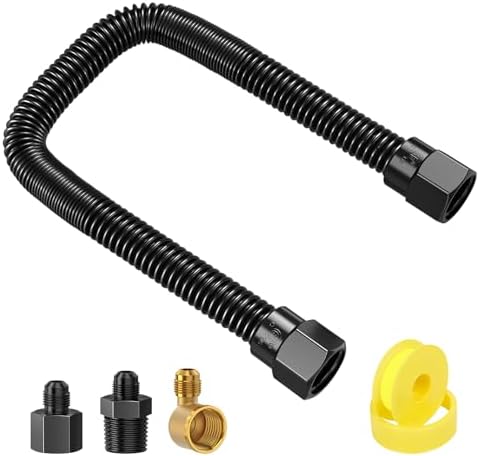
The Alloxity kit is a compact 12-inch connector for compatible natural gas or propane fire pit and fireplace burners under 90,000 BTU. Its 3/8-inch outside-diameter coated stainless steel line is designed for indoor and outdoor use. The company describes its staggered corrugation as a way to reduce whistling.
The kit includes a 1/2-inch male NPT fitting, a 1/2-inch female NPT fitting, a 90-degree adapter, and gas Teflon tape. Those pieces may help with certain connection layouts, but the included fittings do not guarantee compatibility with your appliance. Check the required thread type, size, and burner rating before purchase.
Compared with the 36-inch Stanbroil connector, this is a shorter choice for a setup where the gas source and burner are close together. The listing states that it is CSA certified. Its short length is also a limitation if you need to route around an obstacle or bridge a greater distance.
Pros:
- Compact 12-inch length suits close connections.
- Includes several fittings and a 90-degree adapter.
- Coated stainless steel line is listed for indoor and outdoor use.
- CSA certification is stated in the product description.
Cons:
- Compatibility is specified for burners under 90,000 BTU, so check your burner rating.
- The short length may not work for setups that need more reach.
Verdict: This is a useful option for a close, compatible connection when its 3/8-inch line and included fittings match your fire pit’s specifications.
Dreffco 24-Inch Flex Line: Best for a Flexible Mid-Length Run

Dreffco’s line is 24 inches long, with a 1/2-inch size listed in its title. It uses corrugated stainless steel tubing with a black finish and is described for NG or LP connections, including fire pits. The flexible design can help route a line around corners or through a tight space when a rigid connection would be difficult.
The non-whistle design aims to lessen airflow noise. The listing also says the line includes fittings, but it does not detail their sizes in the supplied product description. Confirm the included ends and their compatibility with your burner and gas supply before ordering.
This middle length sits between the 12-inch Alloxity and the 36-inch options. It may suit a layout that needs more reach than a short connector without the full length of a 36-inch line. The product description advises using the shortest suitable line to maintain proper gas flow and having it installed or serviced by an accredited professional.
Pros:
- 24-inch length offers a middle ground between short and long connectors.
- Flexible corrugated stainless steel tubing can route around corners.
- Black finish and non-whistle design are specified.
- Listed for natural gas and propane applications.
Cons:
- The supplied description does not specify the fitting sizes.
- Professional installation or service is advised.
Verdict: Consider the Dreffco when you need a flexible 24-inch line, but verify the fittings and exact size requirements with your fire pit documentation first.
Midwest Hearth 18-Inch Line: Best for Compatible Flare Fittings

This 18-inch Midwest Hearth connector has a 3/8-inch inside diameter and 1/2-inch flare nuts. It is made from stainless steel and is described for indoor and outdoor fire features, including fire pits. Its multi-pattern corrugation is designed to disrupt vibrations associated with whistling.
The main reason to consider this model is its specific flare connection and shorter reach. Those details make it distinct from the brand’s 36-inch line, which uses 3/4-inch MIP and FIP fittings. The two are not interchangeable just because they share a brand name, so match the line to your appliance’s actual connection requirements.
The supplied product data marks this listing as unavailable. If you are considering it, check the listing for availability and confirm that its 3/8-inch ID and 1/2-inch flare nuts match your setup before making a decision.
Pros:
- 18-inch length suits installations that need a shorter connector.
- 3/8-inch ID and 1/2-inch flare nuts are clearly stated.
- Stainless steel construction is intended for durability.
- Designed for NG or LP appliances and to help reduce whistling.
Cons:
- The supplied product data marks the listing as unavailable.
- Its flare nuts will not suit connections that require a different fitting type.
Verdict: This line is worth considering only if your fire pit requires these exact flare fittings and the listing is available when you check.
Stanbroil 36-Inch Kit: Best for Extra Reach on Compatible Burners

The Stanbroil kit combines a 36-inch coated stainless steel line with fittings for compatible connections. The product description lists a 3/8-inch outside diameter and 1/4-inch inside diameter, along with 3/8-inch male flare ends and 1/2-inch male and female NPT fittings. It is described for NG or LP fire pit and fireplace burners under 90,000 BTU.
The kit also includes a brass 90-degree fitting, and the company describes its staggered corrugation as a way to help eliminate whistling. Its extra length may help when the burner and supply connection are farther apart, but a longer line is not automatically better. The listing advises choosing a suitable line length, and your appliance’s specifications should guide that choice.
Compared with the Alloxity kit, Stanbroil offers more length but has a smaller stated inside diameter. Both are listed for compatible burners under 90,000 BTU and include additional fittings. The Stanbroil line is CSA certified according to the supplied description.
Pros:
- 36-inch length can provide extra reach for a compatible layout.
- Includes male and female NPT fittings and a brass 90-degree fitting.
- Listed for NG or LP burners under 90,000 BTU.
- CSA certification is stated in the product description.
Cons:
- The 1/4-inch inside diameter and listed burner limit make compatibility checks essential.
- Its 36-inch length may be more than a close installation needs.
Verdict: Choose the Stanbroil kit when you need a longer connector and your burner rating and connection types match the listed specifications.
How to Choose a Gas Line for an Outdoor Fire Pit
Match the Fittings to Your Fire Pit
Start with the connection details in your fire pit manual or burner documentation. Check the fitting size and type, such as MIP, FIP, NPT, or flare. A connector that looks close may still have the wrong thread or fitting style. Do not assume that fittings included in a kit will work with your specific setup.
Check the Line Diameter and Burner Requirements
Compare the line’s stated inside or outside diameter with the requirements for your burner and gas supply. The products in this guide list different measurements, so do not compare them as if they refer to the same dimension. Your appliance documentation or a qualified gas professional can help confirm the correct size and required gas flow.
Confirm the Fuel Type
Some listings specify use with both natural gas and propane, but your fire pit must be designed and set up for the fuel you use. Check the appliance instructions and gas supply requirements. A line’s NG/LP compatibility by itself does not confirm that the burner or the rest of the system is suitable for both fuels.
Choose a Suitable Length
Measure the path between the connection points and account for the route the line needs to follow. A shorter line may suit a close connection, while a longer one can provide more routing room. Avoid choosing extra length without a reason; the Dreffco product description specifically advises choosing the shortest suitable line to maintain proper gas flow.
Consider Outdoor Construction and Noise
For an outdoor installation, look for a product described for outdoor use and note its construction and finish. Several options here use stainless steel, and some have a coating or black finish. If noise is a concern, the Midwest Hearth, Alloxity, Dreffco, and Stanbroil descriptions include features intended to reduce whistling. These designs do not replace proper sizing and installation.
Check Burner Limits and Certifications
Some connectors list a burner limit of under 90,000 BTU, while others do not provide a limit in the supplied details. Compare any stated limit with your burner’s rating. Where a product description states a certification, such as CSA certification, treat that as a product detail—not a substitute for checking local requirements and the appliance manual.
Plan for Qualified Installation
Gas connections need to be compatible and secure. Follow the fire pit maker’s instructions and applicable local requirements, and use a qualified professional to install or inspect the connection. Do not rely on a product’s “easy to install” wording as proof that a gas-line project is appropriate for a DIY installation.
Frequently Asked Questions
Can I use any flexible gas line with an outdoor fire pit?
No. The line must match the fire pit’s fuel type, burner requirements, connection size, fitting type, and installation instructions. Check all of those details before buying.
Can the same gas line work with natural gas and propane?
Some products in this guide are listed for both NG and LP appliances. However, the fire pit and the rest of the gas setup must also be suitable for the fuel you use. Confirm compatibility with the appliance documentation or a qualified professional.
How do I know what length to buy?
Measure the route between the connection points and select a line long enough for that path. Avoid excess length when it is not needed. The Dreffco product description recommends the shortest suitable length to maintain proper gas flow.
What does “whistle-free” mean?
It describes a design intended to reduce whistling associated with gas flow. Several products here use corrugation patterns to address that noise. It does not guarantee silent operation or confirm that the line is correctly sized for your fire pit.
Does a kit with extra fittings fit every fire pit?
No. Included adapters can help with certain layouts, but your appliance must still have compatible connection sizes and fitting types. Check the full list of included fittings against your fire pit’s specifications.
Should I install the gas line myself?
Gas-line installation involves safety and code concerns. Follow the appliance maker’s instructions and use a qualified professional to install or check the connection, especially if you are unsure about sizing, fuel type, or fittings.
Final Recommendation
The Midwest Hearth 36-inch line is the clearest choice if your fire pit specifically calls for 3/4-inch MIP-to-FIP connections. For a shorter compatible connection, the Alloxity kit includes several fittings and is listed for burners under 90,000 BTU. If you need more reach and your burner matches its stated limits, consider the Stanbroil kit. In every case, verify the exact size, fuel, and fitting requirements before buying, and have the gas connection installed or checked by a qualified professional.