
Choosing the best gasket sealer for an oil pan starts with your vehicle’s repair instructions: some pans use a formed-in-place sealant, while others require a pre-cut gasket or a specific sealant type. The options below include black and gray RTV formulas and a Toyota-branded formed-in-place gasket product. Compare their stated fluid resistance, temperature range, and cure information, then confirm the right approach for your engine before applying anything.
Quick Comparison
| Product | Type | Notable Details | Best Fit |
|---|---|---|---|
| A-Premium Black RTV Silicone Sealant | Black RTV silicone | States a temperature range of -54°C to 340°C; sensor-safe and oil-resistant | Shoppers wanting a wide stated temperature range |
| NASCA Black RTV Silicone Gasket Maker | Black RTV silicone | Up to 600°F; states oil resistance and sensor-safe use | Oil-pan jobs where a black RTV is specified |
| Toyota Genuine Fluid Formed-in-Place Oil Pan Gasket | Formed-in-place gasket material | States oil and coolant resistance and a -76°F to 482°F operating range | Repairs that call for this Toyota product |
| NASCA Grey RTV Silicone Gasket Maker | Gray RTV silicone | States intermittent heat resistance up to 600°F; skins over in one hour and fully cures in 18–24 hours | Those who prefer a gray sealant or need stated cure guidance |
| Stnkeno RTV Gasket Sealant | Black RTV silicone | States oil resistance; dries in one hour and fully cures in 18–24 hours | DIY users seeking a stated cure window |
Our Picks: Best Gasket Sealer For Oil Pan reviews
A-Premium Black RTV: A Flexible, Broad-Use Sealant

A-Premium’s black RTV silicone is a 3-ounce room-temperature-curing sealant intended for automotive joints. Its listed temperature range is -54°C to 340°C, and the product description says the cured material remains flexible through heat cycles. It is also described as resistant to engine oil, transmission fluid, coolant, and brake fluid.
For an oil pan, the main draw is the stated combination of oil resistance and flexibility. The description also identifies the formula as sensor-safe and says it bonds to metal, plastic, and painted surfaces. Those are broad claims, so follow your vehicle’s service instructions and the sealant’s package directions rather than treating it as a universal replacement for every pan gasket.
Compared with the other black RTV options here, A-Premium provides a temperature range in Celsius rather than a maximum Fahrenheit figure. It does not provide a specific full-cure time in the supplied product details, so plan the repair around the package instructions and do not assume a short wait is enough.
Pros:
- States resistance to engine oil and several other automotive fluids.
- Lists a broad operating temperature range.
- Described as flexible and sensor-safe.
Cons:
- Specific skin and full-cure times are not provided in the supplied details.
- RTV may not be appropriate where the vehicle calls for a pre-cut gasket or another sealant.
Verdict: Consider A-Premium if your repair calls for black RTV and you value its stated oil resistance and wide temperature range, but verify cure instructions before starting the job.
NASCA Black RTV: A Straightforward Choice for Oil-Resistant Sealing
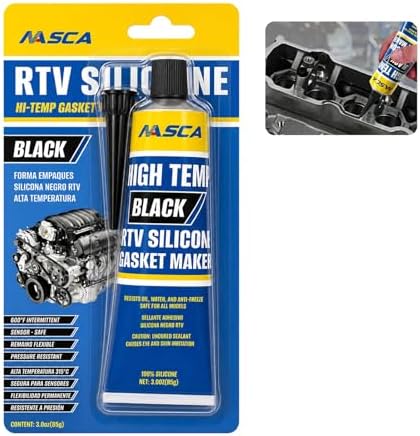
This 3-ounce black RTV gasket maker is presented for automotive sealing, including oil pans, gearboxes, timing covers, and water pumps. Its title states heat resistance up to 600°F, while the description calls the formula oil- and fluid-resistant, sensor-safe, flexible, and quick-setting.
The product is described as suitable either as a stand-alone gasket or as a gasket dressing. That flexibility can be useful, but it does not mean the two methods are interchangeable on every engine. Check whether your oil pan uses RTV alone, a formed-in-place bead, or a separate gasket, and apply only the method specified for that joint.
Unlike the NASCA gray option below, the black version does not give a precise full-cure window in the supplied details. Its “quick-setting” description is not a substitute for the package instructions. If you need a stated cure schedule before refilling the engine, the gray NASCA and Stnkeno listings provide more specific timing.
Pros:
- States heat resistance up to 600°F.
- Described as oil-resistant and sensor-safe.
- Listed for oil pans and several other automotive joints.
Cons:
- Does not provide a specific full-cure time in the supplied details.
- Black may be less visually discreet than gray on some exposed joints.
Verdict: This is a reasonable black RTV candidate when your vehicle’s instructions call for that type of sealant and its stated temperature rating suits the application.
Toyota Genuine Fluid: Formed-in-Place Material for Specified Repairs

Toyota Genuine Fluid 00295-00103 is described as a formed-in-place oil pan gasket in a 3-ounce tube. The product details state that it forms an elastic body that resists vibration and impact, tolerates engine oil and coolant, and operates from -76°F to 482°F. They also list a five-minute tack-free time.
Its strongest reason to consider it is the Toyota-branded, formed-in-place format—not a claim that it fits every Toyota or every oil pan. Confirm the part and sealant specification for your exact vehicle before ordering. The supplied listing information marks this product as unavailable, so shoppers may need to check whether it can be purchased or choose a compatible alternative.
Compared with general-purpose RTV products, this option is more clearly framed as an oil-pan formed-in-place gasket product. However, the tack-free time is not the same as a stated full-cure time. Follow the package and vehicle-specific instructions for assembly, oil refill, and return to service.
Pros:
- Specifically described as a formed-in-place oil pan gasket.
- States resistance to engine oil, chemicals, and coolant.
- Lists an operating temperature range and tack-free time.
Cons:
- The supplied listing data marks it unavailable.
- Vehicle and part-number compatibility should be confirmed before use.
Verdict: Choose this product only when it matches the sealant specification for your repair and you can confirm the correct application and availability.
NASCA Grey RTV: A Gray Finish with a Stated Cure Window

NASCA’s gray RTV is a 3-ounce silicone sealant described as oil-resistant and sensor-safe. Its listed temperature range runs from -80°F to 600°F intermittent heat. The product description also says it skins over in one hour and fully cures in 18–24 hours.
Gray can be a practical color choice when you want a less noticeable bead against aluminum, cast iron, or unpainted steel. The maker also describes the material as flexible and gap-filling, though a sealant’s ability to fill small irregularities does not make it a fix for damaged or badly uneven surfaces.
The stated cure window makes this option easier to plan around than products whose supplied details only say “quick-setting.” Allow the full time specified on the package, and check whether the repair instructions call for a different assembly or cure process. Its intermittent heat rating should also be read as stated, not assumed to mean constant exposure at the maximum temperature.
Pros:
- States oil resistance and sensor-safe use.
- Provides a stated intermittent temperature range up to 600°F.
- Lists a skin time and full-cure window.
- Gray color may blend with common metal engine surfaces.
Cons:
- Full cure takes 18–24 hours according to the supplied details.
- Its temperature rating is specified as intermittent at the upper end.
Verdict: Pick the NASCA gray RTV if your repair calls for RTV, you prefer a gray bead, and its stated cure schedule works for your project.
Stnkeno Black RTV: A Basic Option with a Listed Cure Time

Stnkeno’s black RTV sealant comes in a 3.53-ounce tube. The supplied description says it resists oil and water, stays flexible under temperature changes and vibration, and can be used for oil pans and other automotive joints. It lists a one-hour drying time and a full cure time of 18–24 hours.
The listed cure window is useful for planning, while the flexible formula is intended to accommodate movement at a joint. The description does not give a specific temperature range, however, so it is harder to compare its heat limit directly with the products that state one. That missing detail matters if your vehicle’s instructions specify a temperature threshold.
Compared with the other black RTV choices, Stnkeno provides more precise cure timing than the supplied details for A-Premium and NASCA black, but less temperature information. Treat the product description as a starting point and confirm that the package instructions and vehicle requirements match your application.
Pros:
- States resistance to oil and water.
- Lists a one-hour drying time and 18–24-hour full cure.
- Described as flexible and suitable for oil pan applications.
Cons:
- No specific temperature range is provided in the supplied details.
- It should not replace a gasket type required by the vehicle maker.
Verdict: Stnkeno is worth considering if your repair calls for black RTV and its stated cure window helps with scheduling, but look elsewhere if you need a clearly listed temperature range.
How to Choose an Oil Pan Gasket Sealer
Check the Vehicle’s Required Seal Type
Start with the service manual or repair instructions for your exact engine. An oil pan may use a pre-cut gasket, a formed-in-place sealant, or a specified combination. RTV is not a universal replacement for a gasket, and using the wrong type can lead to leaks or problems during assembly. Confirm the required product type before comparing color or temperature claims.
Match the Sealant to the Fluid and Heat Exposure
Look for a product that explicitly states compatibility with engine oil. Then compare the stated temperature range with the requirements for your application. Pay attention to qualifiers such as “intermittent” heat, and do not compare a product with no listed range as if it had the same rating as one that does.
Consider Sensor-Safe Claims Where Relevant
Some formulas in this comparison are described as sensor-safe. That may matter when your engine has emissions sensors, but the claim does not remove the need to follow the vehicle maker’s instructions. Use only a sealant intended for the application, and avoid letting excess material enter the engine or oil passages.
Compare the Cure Information
Skin time, tack-free time, drying time, and full cure are different descriptions. A surface that has skinned over may not be ready for oil exposure or engine operation. Follow the package’s directions for assembly and cure, and allow enough time before refilling or starting the vehicle. If the product information does not state a full-cure window, do not guess based on another brand’s instructions.
Plan for Careful Surface Preparation and Application
A reliable seal depends on clean, dry mating surfaces and the bead or gasket placement specified for the engine. Remove old material without damaging the pan or engine surface, and apply only the amount and pattern directed. Too much sealant can squeeze inward, so careful application matters as much as the product choice.
Choose Color and Tube Size for the Job
Black and gray are both represented here. Color can affect how visible the bead looks, but it does not establish that one formula is better for your engine. The listed tubes range from 3 to 3.53 ounces; choose a size that suits the job while checking the product’s instructions and compatibility first.
Frequently Asked Questions
Can I use any RTV silicone on an oil pan?
No. Use the sealant type specified for your vehicle and confirm that the product is intended for engine-oil exposure. Some oil pans require a pre-cut gasket or a particular formed-in-place material rather than a general-purpose RTV.
Is black or gray RTV better for an oil pan?
Color alone does not determine suitability. Compare the product’s stated fluid resistance, temperature information, cure directions, and compatibility with your vehicle. Gray may blend with some metal surfaces, while black may be less noticeable on darker components.
How long should oil pan RTV cure before adding oil?
Use the cure instructions on the product package and the vehicle repair procedure. The products listed here give different cure details, and a skin or tack-free time is not necessarily the same as a full cure. Do not assume one product’s timing applies to another.
Can I apply RTV over an old oil pan gasket?
Do not assume that adding sealant over an old gasket will stop a leak. Follow the repair instructions for your engine, remove old material as directed, and install the specified gasket or sealant on properly prepared surfaces.
Does a higher temperature rating mean a better oil pan sealer?
Not by itself. The sealant also needs to be compatible with engine oil, suitable for the joint, and used according to its instructions. A rating marked intermittent should not be treated as a continuous operating limit.
Can excess RTV cause problems inside the engine?
Excess material can squeeze out of the joint, so apply the bead size and pattern specified for your engine. Keep sealant away from openings and oil passages, and avoid using more than the instructions call for.
Which product is the best choice for most oil pan repairs?
There is no universal best choice because the correct material depends on the vehicle’s design. Of these options, A-Premium and NASCA black state oil resistance, while NASCA gray and Stnkeno provide specific full-cure timing in the supplied details. Toyota Genuine Fluid is a more specific formed-in-place option, but its listing is marked unavailable. Confirm the required product type for your engine before choosing.
Final Recommendation
For an oil pan repair, the vehicle’s specified gasket or sealant should guide your purchase. If your instructions call for black RTV, A-Premium and NASCA black both state oil resistance; if you want a stated full-cure window, NASCA gray and Stnkeno provide one. Toyota Genuine Fluid may suit a repair that specifically calls for that formed-in-place product, but its listed availability is limited. Whichever option you choose, prepare the surfaces carefully and follow the product and vehicle instructions for application and curing.