
Porcelain-coated grill grates need gentler care than bare metal: a stiff wire brush or aggressive scraping can damage the finish. The best tools for them clean effectively without relying on metal bristles, and they suit the way you prefer to clean—whether that means brushing, wiping with steam, or using a bristle-free scraper. These five options include nylon brushes and steam-cleaning tools, plus a wooden scraper designed for specific Traeger models.
Quick Comparison: Best Grill Tools For Porcelain Grates
| Product | Cleaning style | Best for |
|---|---|---|
| XUDAKAIXIN Nylon Grill Brush | Nylon bristles and scraper | Routine brushing with a separate scraper for stubborn buildup |
| Grillaholics Nylon Grill Brush | Three-in-one nylon brush head | Brushing porcelain or chrome grates without metal bristles |
| Traeger BAC454 Wooden Grill Scraper | Groove-matched hardwood scraper | Bristle-free cleaning on compatible Traeger grates |
| Grill Rescue Bristle-Free Grill Brush | Water-activated steam-cleaning head and scraper | Wiping away grease and loosening baked-on residue |
| Grill Rescue Deep Grate Cleaner | Deep cleaning face, steam pad, and scraper | Cleaning down the sides and gaps between grate bars |
Our Picks: Best Grill Tools For Porcelain Grates reviews
1. XUDAKAIXIN Nylon Grill Brush for Everyday Cleaning

The XUDAKAIXIN combines a nylon-bristle brush with a stainless steel scraper. Its nylon bristles are described as heatproof and suitable for porcelain, ceramic, and cast-iron grates, while the scraper is intended for tougher, baked-on residue. That pairing gives you two cleaning approaches in one tool.
The brush has an ergonomic handle and a stainless steel hanging ring for storage. The brand also describes the bristle head as having more bristles than a traditional brush, with a flexible design for reaching corners and grooves. Those details may help with regular upkeep, though results will still depend on how much residue has built up and how you use the tool.
The metal scraper is the main trade-off for porcelain grates. A scraper can help with stubborn grime, but metal edges may damage a coated surface if used with too much force or at the wrong angle. Use the nylon side for routine cleaning, and check your grill’s care instructions before bringing the scraper into contact with the grate.
Pros:
- Nylon bristles are designed for porcelain and other listed grate materials.
- Combines a brush and scraper in one tool.
- Includes an ergonomic handle and hanging ring.
Cons:
- The metal scraper calls for extra care on coated grates.
- The product description does not specify a safe temperature for using the nylon bristles.
Verdict: Choose this brush if you want nylon bristles for routine porcelain-grate cleaning and value having a scraper available for tougher spots, but use the metal edge cautiously.
2. Grillaholics Nylon Brush for Porcelain and Chrome Grates

This Grillaholics brush is a straightforward option for cooks who want to avoid metal bristles. Its nylon construction is designed for porcelain and chrome grates, making it a focused pick for coated cooking surfaces rather than an all-metal scrubbing tool.
The brush has a three-in-one head intended to cover more grate area than a single-head brush. The manufacturer claims it can clean up to five times faster than a traditional single-head brush. Treat that as a product claim, not a guaranteed result: cleaning speed depends on the grate layout, the amount of buildup, and the pressure you apply.
Its main advantage over the XUDAKAIXIN is a simpler design without a metal scraper edge. That can be appealing when protecting a coating is your priority. The trade-off is that the supplied description does not mention a scraper for hardened residue, so you may need another method for especially stubborn buildup. Follow the grill maker’s directions on whether and when to brush the grates.
Pros:
- Non-metal design intended for porcelain and chrome grates.
- Three-in-one head is designed to cover more area while brushing.
- Avoids a metal scraper edge against the grate.
Cons:
- No separate scraper is listed for baked-on residue.
- The speed claim is not a guarantee for every grate or cleaning job.
Verdict: Pick the Grillaholics if you want a dedicated nylon brush with a broad cleaning head and prefer not to use a metal scraper on your porcelain grates.
3. Traeger BAC454 Wooden Scraper for Compatible Grills

The Traeger BAC454 is a solid-hardwood, bristle-free scraper. Its grooves are designed to fit certain Traeger grill grates, so it is a more specialized choice than a general-purpose brush. The wooden design avoids loose wire bristles and does not use a metal brush head against the grate.
A built-in hanging loop makes it easy to store near the grill. Traeger lists it as compatible with Pro, Gen 1 Ironwood, Timberline, and Portable Series grills. Compatibility is model-specific: the product description says it does not fit newer Timberline, Timberline XL, Ironwood, or Ironwood XL models. Check your grill model and grate shape before buying.
This scraper is best for someone who wants a simple, bristle-free tool and owns a compatible grill. Unlike the nylon brushes, it does not have a flexible bristle head, and it is not described as a universal fit. The listing is also marked unavailable in the supplied product information, so availability may need to be confirmed before you plan around it.
Pros:
- Solid hardwood construction with no bristles.
- Groove-matched design for listed Traeger grill series.
- Built-in hanging loop for storage.
Cons:
- Compatibility is limited to specific Traeger models and grate designs.
- Not described as a universal scraper for other grills.
Verdict: Consider the BAC454 if you own a compatible Traeger and want a bristle-free scraper; skip it if your grill model is not on the compatibility list.
4. Grill Rescue Bristle-Free Brush for Steam Cleaning

Instead of bristles, this Grill Rescue tool uses a solid aramid-fiber cleaning head and a built-in stainless scraper. Its cleaning method relies on steam: heat the grill, dip the head in water, and wipe the grate. The manufacturer says the steam helps lift grease without sprays or cleaning chemicals.
The head is listed for use on porcelain, ceramic, cast iron, and stainless steel grates, as well as gas, charcoal, and pellet grills and smokers. It is also replaceable and dishwasher safe, which may be useful if you want to replace the cleaning head rather than the entire tool. The scraper is designed to help with hardened residue that the cleaning face may not lift on its own.
This approach avoids wire bristles, but it adds a step: you need to heat the grill and wet the head before cleaning. Follow the product and grill instructions, and handle the hot grate and steam with care. Compared with a nylon brush, it may suit cooks who prefer wiping with moisture over dry brushing.
Pros:
- Bristle-free cleaning head avoids loose wire bristles.
- Designed for porcelain and several other grate materials.
- Replaceable, dishwasher-safe head and built-in scraper.
Cons:
- Steam cleaning requires a heated grill and a dip in water.
- The stainless scraper still requires care around a coated surface.
Verdict: Choose this model if you want a bristle-free, steam-based cleaner for multiple grate types and are comfortable cleaning a hot grill carefully.
5. Grill Rescue Deep Grate Cleaner for Bar Gaps
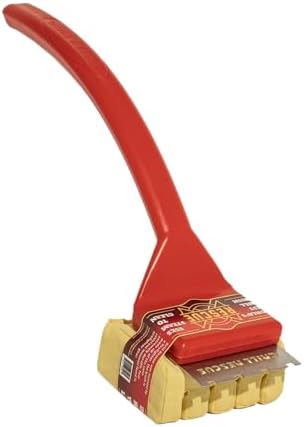
This Grill Rescue model pairs a steam-cleaning pad with a stainless scraper, but its defining feature is a deeper cleaning face. The head is designed to reach farther down the sides of grate bars and into the gaps where grease can collect—an area a flatter pad may not reach as well.
Like the other Grill Rescue tool here, it uses water and steam rather than sprays or cleaning chemicals. The product description lists it for porcelain, ceramic, cast iron, and stainless steel, and says the head is replaceable and dishwasher safe. The scraper can help break up baked-on carbon before the pad wipes the surface.
The deeper face is a useful distinction if your grate design has noticeable gaps or residue that collects along the sides of the bars. It may be more tool than you need for light, frequent cleanup, and its stainless scraper deserves the same caution on porcelain as any metal edge. Use the steam-cleaning method and scraper only as directed.
Pros:
- Deeper cleaning face is designed to reach between and down the sides of grate bars.
- Combines a steam-cleaning pad and scraper.
- Replaceable, dishwasher-safe head.
Cons:
- Requires heating the grill and wetting the head for steam cleaning.
- The stainless scraper may be too aggressive if pressed against porcelain coating.
Verdict: Choose the deep-grate version if residue tends to collect down the sides of your grate bars; for simpler surface cleaning, a basic nylon brush may be enough.
How to Choose Grill Tools for Porcelain Grates
Choose a cleaning surface that suits the coating
For regular care, look for a tool specifically described as safe for porcelain or designed without metal bristles. Nylon brushes offer familiar brushing action, while bristle-free pads and wooden scrapers take a different approach. Avoid assuming that a tool safe for one grate material is automatically safe for yours; check both the product directions and your grill maker’s care guide.
Match the tool to the kind of residue
Light residue after cooking may need only a brush or wipe. Hardened buildup may call for a separate scraper or a steam-cleaning tool with a scraper edge. A scraper can be helpful, but on porcelain it is important to use the least force needed and avoid dragging a metal edge across the coating unless the manufacturer says that is appropriate.
Consider how you prefer to clean
A nylon brush is a simple choice if you prefer brushing. A steam cleaner requires you to heat the grill, dip the cleaning head in water, and wipe the grate. A wooden scraper offers a bristle-free method but may fit only specific grate shapes. Think about which routine you are likely to use consistently, and follow the product’s instructions for the grill’s temperature during cleaning.
Check the grate layout and tool fit
Grates vary in bar spacing, shape, and groove depth. A wider brush head may cover more area, while a deeper cleaning face is designed to reach farther between bars. A groove-matched scraper can work well on the grill it was made for but may not suit another design. Check compatibility details before choosing a model-specific tool.
Think about maintenance and replacement parts
Some tools include a hanging loop or ring for storage. The Grill Rescue options have replaceable, dishwasher-safe heads, according to their product descriptions. A replaceable head can be convenient when the cleaning surface wears out, while a simpler brush may suit someone who wants fewer parts. In either case, inspect the tool regularly and replace it if it becomes damaged or no longer cleans effectively.
Frequently Asked Questions
Are nylon grill brushes safe for porcelain grates?
Nylon brushes in this guide are described as suitable for porcelain grates. Use them according to their instructions and your grill maker’s care guidance. Do not assume every nylon brush has the same temperature limits or is intended for use on a hot grate.
Should I use a metal scraper on porcelain grates?
Use caution. A metal scraper can help loosen stubborn residue, but pressing or dragging a metal edge against a coated grate may damage the surface. Use a gentler cleaning method first, and follow the instructions for both the grill and the tool.
Do bristle-free tools clean as well as brushes?
They use different methods. Nylon brushes scrub the grate, wooden scrapers scrape residue, and steam-cleaning heads use a wet pad with heat. The right choice depends on your grate, the amount of buildup, and the cleaning method you prefer.
Can I use a steam-cleaning brush on a cold grill?
The Grill Rescue products described here rely on steam and are intended to be used with a heated grill. Follow the product directions, and take care around hot grates, water, and steam.
Is the Traeger wooden scraper compatible with every Traeger grill?
No. The product description lists specific compatible series and says it does not fit newer Timberline, Timberline XL, Ironwood, or Ironwood XL models. Check your exact grill model and grate design before buying.
Which tool is best for cleaning between grate bars?
The Grill Rescue Deep Grate Cleaner is specifically described as having a deeper face that reaches down into the gaps and along the sides of grate bars. The best fit still depends on your grate spacing and the type of residue you need to remove.
Final Recommendation
For most people with porcelain grates, the Grillaholics Nylon Grill Brush is the most direct choice: it is designed for porcelain and chrome, uses non-metal bristles, and avoids a metal scraper edge. Choose the XUDAKAIXIN if you want a scraper included and are prepared to use it carefully. For a bristle-free approach, consider a Grill Rescue tool; pick the deep-grate version if residue collects along the sides and gaps of your bars. The Traeger wooden scraper makes the most sense when you own a compatible Traeger model.