
If you want brighter low-beam or fog-style light from an H1 socket, an LED conversion can be a practical upgrade. Projector headlights add a challenge, though. A projector lens focuses light based on where the filament sits, so an LED bulb that doesn’t match the original light source can scatter light, create dark spots, or cause glare. This guide looks at five H1 LED bulbs from the current listings and explains what each one offers, where it fits best, and what to check before you buy. It also covers how to judge brightness claims, which vary widely across this category, so you can pick the right bulb for your vehicle and your driving needs.
Quick Comparison Table
| Product | Brand | Color Temperature | Listed Lifespan | Pack Size Listed | Standout Feature |
|---|---|---|---|---|---|
| OXILAM H1 LED Light Bulb, 10X Brighter 6500K White | OXILAM | 6500K | 60,000 hours | Not specified in listing | Built-in IC driver for flicker and error code control |
| Torchbeam H1 LED Light Bulbs, 80000LM Super Bright | Torchbeam | 6500K | 80,000 hours | Not specified in listing | 360° light output with temperature-control chip |
| AUXITO H1 LED Light Bulbs 84,000LM 6500K White | AUXITO | 6500K | 60,000 hours | 2 bulbs | Non-polarity connector with EMC protection |
| AUXITO H1 Bulb, 6500K Ultra White, Pack of 2 | AUXITO | 6500K | 60,000 hours | 2 bulbs | Simple plug-and-play fit with exact OEM dimensions |
| AUXITO H1 LED Bulbs 6500K White 84,000LM Mini Size | AUXITO | 6500K | 60,000 hours | 2 bulbs | Full aluminum body with copper base board and IP68 rating |
Our Picks: Best H1 Led Bulb For Projector Headlight reviews
OXILAM H1 LED Bulb With Built-In Flicker Control

The OXILAM H1 is one of the more electronics-focused options in this group. It is built around a 12-chip LED array and an integrated IC driver, which the listing says is designed to reduce flicker and help prevent dashboard error codes on many vehicles. That focus matters if your car is sensitive to changes in electrical load, since LED bulbs draw power differently than halogen bulbs and some systems notice the difference. The bulb is listed as 1:1 in size, so it is meant to sit where the original halogen bulb sat. It also carries an IP68 rating and a 60,000-hour lifespan claim, both of which point to a sealed and well-cooled design.
In day-to-day use, the appeal is mostly about peace of mind. Many owners appreciate that the bulb is described as plug and play, because it removes the need for separate decoders in many cases. The listing also mentions aerospace-grade aluminum and a thermal management system, which are sensible features for a sealed LED bulb that has to shed heat inside a headlamp housing. Still, the brightness claim of “1000%” compared with halogen is a manufacturer comparison, not an independent measurement, so treat it as a general sense of direction rather than a precise number. Your real-world result will depend on your housing, your aim, and the quality of your existing lens.
Compared with the other choices here, the OXILAM bulb is the most focused on electrical behavior rather than raw output. If your top concern is avoiding flicker and warning messages, it is a strong candidate. If you want the widest beam spread or the most aggressive light output, the Torchbeam or the AUXITO options may appeal more. Keep in mind that the listing asks you to verify vehicle compatibility before buying, and that advice is worth taking seriously for any LED conversion.
Pros:
- Built-in IC driver is designed to limit flicker and dashboard error codes on many vehicles
- True 1:1 sizing is intended to fit existing sockets and factory dust covers
- IP68 rating supports protection against dust, moisture, and vibration
- Plug-and-play setup is meant to avoid extra components in most cases
Cons:
- The brightness comparison is a manufacturer claim and is not independently verified
- Electronic compatibility still depends on your specific vehicle, so checking fitment first is essential
Verdict: The OXILAM H1 is a smart pick if you care most about clean electrical behavior and a sealed, plug-and-play installation. It is less about maximum output and more about keeping your vehicle’s electronics happy.
Torchbeam H1 Bulbs With 360-Degree Light Output

The Torchbeam H1 is designed around a bare-substrate layout that the listing describes as emitting light in a full 360-degree pattern. In a projector headlight, beam pattern is often the make-or-break factor, because the lens expects light to come from a specific point. A bulb that spreads light more evenly can reduce the dark gaps that some LED conversions create, but it can also scatter light in ways that the projector was not built to handle. That tradeoff is worth understanding before you install. The bulb is listed as a compact 1:1 design, and the title says it fits nearly all H1 applications, which is a broad claim that still requires you to check your own bulb size.
Heat management is a major part of this product’s story. The description mentions a large copper substrate, a 6063 aluminum housing, and a temperature-control chip, along with an 80,000-hour lifespan claim. Those details suggest the designers focused on keeping the LED chips cool over time, which is one of the main reasons LED bulbs fail early. The 6500K color temperature gives a crisp white light that many drivers prefer, though some people find it a little cool in foggy or wet conditions. The listing also calls the product an H1 LED fog light bulb, so think about where you plan to install it before assuming it suits your headlamp.
Compared with the OXILAM option, the Torchbeam bulb puts more emphasis on light spread and thermal design, and less on electrical features. It is a reasonable choice if you want a broad, even pattern and a strong heat-management story. The main caution is the lumen figure. The 80,000LM number is a listing claim, and lumen ratings are not always measured the same way across brands, so the number alone does not tell you how the bulb will perform in your housing.
Pros:
- 360-degree light output aims to reduce dark spots in the beam
- Copper substrate, aluminum housing, and temperature-control chip support heat management
- Compact 1:1 design is intended to match the original bulb’s size and position
- 6500K white light gives a clean, bright appearance
Cons:
- The lumen rating is a manufacturer claim that may not match your housing’s real output
Verdict: The Torchbeam H1 suits drivers who want an even beam pattern and a strong focus on heat control. Confirm that your housing and beam style can handle a 360-degree light source before you commit.
AUXITO H1 LED Bulbs With Non-Polarity Plug Design

This two-bulb AUXITO set focuses on fit and beam accuracy. The listing says the dual-board design places the LED chips 1.2mm apart to mimic the position of a halogen filament, which is the kind of detail that matters in a projector. When the light source sits where the lens expects it, the beam is more likely to look natural rather than patchy. The bulbs are described as true 1:1 halogen size, with the stated goal of fitting tight housings without interfering with dust covers. For anyone who has struggled with bulbs that almost fit, this is a meaningful selling point.
The non-polarity connector is a practical convenience. Because the bulb works in either orientation, you avoid a common installation mistake and the time spent rotating a bulb until it seats correctly. The listing also mentions EMC protection, which is intended to reduce electromagnetic interference that can cause static on radios. The bulb carries an IP68 rating and a 60,000-hour lifespan claim, which suggest a sealed and durable build. The 6500K color gives a bright white look that matches many modern headlamps.
Where this set has to be careful is in its numbers. The title lists 84,000 lumens, while the description refers to 96,000 lumens, and the brightness comparisons also differ. That kind of inconsistency is a reason to read specs with skepticism, not a sign that the bulb is poor. Compared with the other AUXITO option below, this two-bulb set has a similar feature list, so the choice often comes down to which listing details you find most convincing and whether you prefer the slightly different wording of each page.
Pros:
- Dual-board design with 1.2mm spacing is intended to match the halogen filament position
- Non-polarity connector makes installation easier and reduces orientation mistakes
- EMC protection is designed to reduce radio interference
- IP68 rating and 60,000-hour lifespan claim support long-term durability
Cons:
- Lumen and brightness figures differ between the title and description, so precise comparisons are difficult
Verdict: This two-bulb AUXITO set is a strong choice if beam accuracy and easy installation matter most to you. Verify the output expectations and fitment for your vehicle before buying.
AUXITO H1 Pack of 2 for Simple OEM Replacement
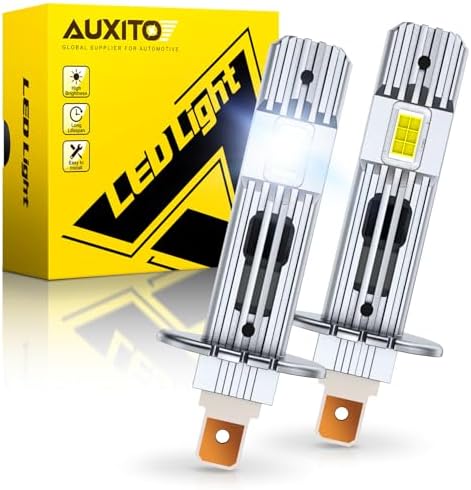
This AUXITO pack is built for simplicity. The listing emphasizes exact OEM dimensions, plug-and-play installation, and a focused beam pattern, which together describe a bulb meant to swap in with minimal fuss. For many drivers, that is the most important part of an LED upgrade. You do not want to spend your weekend modifying housings or hunting for adapters. The 6500K color gives a bright white appearance, and the 60,000-hour lifespan claim suggests the bulb is designed for long service.
The listing says the bulb works with 99 percent of vehicle computers and mentions decoder solutions for sensitive systems. That is useful information, but it also tells you that not every vehicle is guaranteed to behave perfectly with an LED conversion. If your dashboard is sensitive to electrical changes, you may need an additional decoder, which adds cost and complexity. Think about that before you assume the bulb will work without any extra parts on your car.
Compared with the other choices, this pack offers a clean and simple story, but its listing provides fewer specific details about electronic features such as EMC protection and ingress rating. If you want a straightforward swap and you are comfortable with the possibility of a decoder, it is a solid option. If you need documented electronic and weather-sealing details, one of the other listings may give you more to work with.
Pros:
- Exact OEM dimensions are intended to fit standard housings without adapters
- Plug-and-play installation keeps the upgrade process simple
- Pack of 2 supports matched replacement on both sides of the vehicle
- 6500K color and 60,000-hour lifespan claim suit everyday use
Cons:
- The listing does not highlight an ingress rating or EMC protection, so weather and interference details are less clear
Verdict: The AUXITO H1 pack of 2 is a practical choice for drivers who want a simple OEM-style replacement. It is best if you are ready to check compatibility and add a decoder if your vehicle needs one.
AUXITO H1 Mini Bulbs With Full Aluminum Body

This two-bulb AUXITO set brings together several features from the brand’s lineup into one clear package. It uses dual-sided chips spaced to match the halogen filament, a non-polarity plug-and-play connector, and EMC protection to limit interference. The description places emphasis on a full aluminum body and copper base board, which the listing says help prevent overheating and support a 60,000-hour lifespan. Those are the kinds of details that matter most when an LED bulb has to survive heat, road vibration, and moisture in a sealed housing.
The IP68 rating is a notable strength because the listing specifically mentions rain, snow, and dust. Sealing is important for headlamps and auxiliary lights because moisture is one of the most common causes of premature failure. The mini profile is meant to fit in the same space as the original halogen bulb, which helps when housings are tight. The 6500K color gives a bright, cool white look, which some drivers like for visibility in dark conditions but others find a little harsh in fog.
Compared with the other AUXITO listings, this set is the most consistent in its descriptions. The title and body agree on the 84,000-lumen figure and the 10X brightness framing, which makes it easier to understand what you are buying. That said, brightness claims across this entire category are still marketing figures. The best way to judge whether this bulb meets your needs is to confirm fitment, check your beam pattern after installation, and make sure the output suits your local lighting rules.
Pros:
- Full aluminum body and copper base board are designed to limit overheating
- IP68 rating supports protection in rain, snow, and dusty conditions
- Non-polarity connector simplifies installation
- Listing details are more consistent across the title and description
Cons:
- Brightness and lumen claims are manufacturer figures that depend on housing design and aim
Verdict: This AUXITO two-bulb set is a strong all-around pick for drivers who want sealed construction, a consistent spec sheet, and easy installation. It is especially suited to cold, wet, or dusty driving.
How to Choose the Right H1 LED Bulb for Your Projector Headlight
Confirm Your Socket and Bulb Size First
Before you look at brightness or lifespan, confirm that your vehicle uses an H1 socket and that the bulb you want is the correct base type. Many H1 listings describe the same base, but some vehicles use similar-looking sockets for other bulb families. Check your owner’s manual or the old bulb’s markings. Next, compare the physical size of the LED bulb with the original halogen. A true 1:1 design is more likely to sit correctly behind the dust cover and in the right position in the reflector or projector. If the bulb sits too high or too low, the beam can scatter or the cutoff line can shift, which affects both your visibility and other drivers’ comfort.
Understand How Projector Housings Handle Light
Projector headlights are designed around a specific light source position. A projector lens collects light from a small point and focuses it through a lens to create a sharp cutoff. When you install an LED bulb, the chips should sit as close as possible to where the original filament was. This is why listings that mention filament-matching chip spacing or a focused beam pattern are useful. A bulb that spreads light widely may look bright on the bench but can create glare or unclear edges inside a projector. After installation, park your vehicle on level ground facing a wall and check the beam pattern. Adjust your headlight aim if needed, and stop using the bulb if you see unusual scatter or hot spots.
Read Lumen and Brightness Claims With Caution
Lumen and brightness figures are some of the most eye-catching numbers in this category, but they are also the least standardized. One listing may say 10 times brighter than halogen, while another says 600 percent, and a third uses lumen totals that differ from the same brand’s description. These figures can be useful for comparing general output, but they do not tell you how a bulb will look inside your specific housing. Focus on the features that affect real performance, such as beam pattern, heat management, and fitment. If the brightness numbers conflict across the listing, rely on the details that are consistent and verify the rest after installation.
Choose a Color Temperature That Fits Your Driving
Most listings in this group use 6500K color temperature, which produces a cool white light. This tone looks crisp and bright, and many drivers find it easy to see by at night. However, very cool light can appear bluish in fog, rain, or snow, and it may reduce contrast for some drivers. If you drive mainly in clear conditions, 6500K is a common and practical choice. If you drive often in poor weather, consider how the light will look in those conditions before committing. Also remember that bright white light is only useful when the bulb is aimed correctly and suitable for your local rules.
Look at Heat Management and Build Quality
LED bulbs rely on heat management to last. The LED chips and driver electronics generate heat, and if that heat cannot escape, the bulb can dim, flicker, or fail early. Look for designs that mention aluminum housings, copper components, or built-in temperature control. These details suggest the designer thought about cooling, though a listing cannot prove how a bulb performs over time. Sealing also matters. An IP68 rating indicates strong protection against dust and water, which is valuable for headlamps that face weather and road spray. A long lifespan claim is encouraging, but treat it as an estimate rather than a guarantee.
Check Electrical Compatibility and Decoder Needs
Some vehicles monitor bulb current and display warnings when an LED bulb draws less power than halogen. Others may flicker or show error messages. Bulbs with integrated driver circuitry or those described as flicker-free are designed to reduce these problems, but compatibility still depends on your vehicle’s electrical system. If your car has sensitive monitoring, check whether the seller recommends a decoder. A decoder adds cost and installation effort, so factor it into your decision. If you are unsure, consult a qualified technician who can confirm whether your vehicle needs extra parts.
Consider Legal and Road Safety Rules
Lighting rules vary by state, province, and country, and many aftermarket LED bulbs are sold for auxiliary, off-road, or general lighting use. Some listings in this group describe use for driving lamps or off-road situations. Before you install any LED bulb in a headlight, check your local regulations, and make sure the bulb meets the requirements for the lamp position where you plan to use it. Road safety also depends on proper aim. A bulb that is too bright or badly aimed can blind oncoming drivers, which is one more reason to check your beam pattern after installation.
Plan Your Installation for Long-Term Results
Even a strong bulb can underperform if it is installed poorly. Let the bulb cool before handling it, and avoid touching the LED surface or glass with bare fingers. Keep the rubber seal and dust cover in good condition, because a loose cover can allow moisture into the housing. If you upgrade one side, consider replacing both bulbs at the same time so the light output and color match. Matching pairs also make the beam pattern more balanced. Finally, check the bulb after the first few drives to confirm there is no flicker, overheating, or warning message.
Frequently Asked Questions
Will an H1 LED bulb fit any projector headlight?
Not every projector headlight uses an H1 bulb, and not every H1 socket is set up the same way. Confirm your vehicle’s bulb type and size first. Then check the bulb’s physical dimensions and how the chips are positioned. A bulb that matches the halogen filament position is more likely to work well in a projector.
Can LED H1 bulbs cause flicker or dashboard warnings?
They can, depending on your vehicle. Some cars detect the lower power draw of LED bulbs and display warnings. Bulbs with built-in driver circuitry are designed to reduce these issues, but compatibility is not guaranteed for every model. If your vehicle has sensitive electronics, check whether a decoder is needed before buying.
Is 6500K too blue for night driving?
6500K is a cool white color that many drivers find bright and easy to see with. It can look bluish in fog, rain, or snow, and some drivers prefer a warmer tone. If you drive in poor weather often, think about how cool white light will look in those conditions before you buy.
Do I need to replace both bulbs at the same time?
It is a good idea. Replacing both bulbs together helps keep the color and brightness matched on each side of the vehicle. Matched output also makes the beam pattern more even, which can improve how the road looks to you as you drive.
Are aftermarket LED H1 bulbs legal for headlights?
Legal status depends on where you live and how the bulb is used. Many aftermarket LED bulbs are sold for auxiliary, off-road, or general lighting purposes. Check your local vehicle lighting rules before installing any LED bulb in a headlight, and confirm that the bulb meets the requirements for that lamp position.
How do I check the beam pattern after installing an LED bulb?
Park your vehicle on level ground facing a flat wall, and measure the height of the headlight beam. Turn on the low beam and look for a clear cutoff line with no unusual scatter or dark spots. If the pattern looks wrong, check the bulb seating, the dust cover, and the headlight aim. If you still see problems, remove the bulb and stop using it.
Which H1 LED bulb should I choose overall?
The AUXITO two-bulb set with 84,000 lumens and an IP68 rating is a strong overall pick because its listing details are more consistent and it combines sealed construction, EMC protection, and easy installation. If your priority is flicker control, the OXILAM option is a good alternative.
Final Recommendation
After comparing all five options, the AUXITO H1 LED Bulbs 6500K White 84,000LM set stands out as the best overall choice for most drivers. It offers a consistent set of features, including a filament-matched dual-board design, a non-polarity connector, EMC protection, a full aluminum body, and an IP68 rating. Those details suit drivers who want a sealed, well-built bulb for cold, wet, or dusty conditions.
If electrical stability is your top concern, the OXILAM H1 is a smart alternative because of its built-in IC driver and flicker-control focus. If you want a broad, even beam pattern, the Torchbeam H1 with its 360-degree output and heat-management design is worth a look. For a simple OEM-style swap with a pack of two, the AUXITO H1 pack of 2 is an easy option, as long as you are prepared to check compatibility and possibly add a decoder.
No matter which bulb you choose, check your vehicle’s fitment, confirm local lighting rules, and verify your beam pattern after installation. A good LED upgrade should make the road clearer for you without creating glare for everyone else.