
For packaging cookies neatly at home or for a small baking business, a heat sealer with a cutter can help close bags and trim excess material. The best fit depends on what you’re sealing: a countertop impulse sealer suits batch packaging, while a handheld model is more convenient for closing snack bags. Before choosing, check that your bags are compatible with the sealer and consider whether you need a cutting blade, a hot cutting wire, or simply a compact way to reseal opened bags.
Quick Comparison
| Product | Type | Standout feature | Best suited for |
|---|---|---|---|
| R-PACK 8-Inch Impulse Heat Sealer | Countertop impulse sealer | Wide sealing bar and extra cutting blade | Cookie batches and small-business packaging |
| R-PACK Hot-Wire Impulse Sealer | Countertop seal-and-cut machine | Hot wire and adjustable heat settings | Shrink-wrap packaging and finished product packs |
| FEPPO Mini Bag Sealer with Cutter | Handheld bag sealer | Separate sealing and cutting heads | Resealing opened snack and cookie bags |
| WOSERLD Rechargeable Mini Bag Sealer | Rechargeable handheld sealer | Three heat settings and LED display | Everyday snack-bag resealing |
| R-PACK Blue Impulse Heat Sealer | Countertop impulse sealer | Adjustable heat and replaceable cutting wire | Home or small-business packaging, when available |
Our Picks: Best Heat Sealer With Cutter For Cookies reviews
Best Overall for Cookie Batches: R-PACK 8-Inch Impulse Heat Sealer
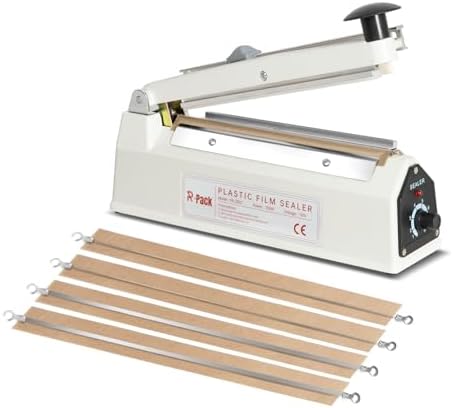
The R-PACK is a countertop impulse sealer with an 8-inch sealing bar and an extra cutting blade. Its wider bar gives you room to close many common cookie bags in one press, while the blade can trim excess packaging material for a tidier edge. Two extra replacement parts are included, which may be helpful if you use the machine regularly.
This style of sealer is a practical choice when you’re packing several bags at a time and want a stable work surface. It’s less portable than the mini sealers, but the bar-and-handle design is better suited to repeated packaging than a small handheld tool. The product description does not specify timer settings, so check the instructions and test your bag material on a spare piece before sealing a full batch.
One distinction to keep in mind: the listing describes an extra cutting blade, but does not say that cutting and sealing happen together in one action. If you specifically want a single-press seal-and-cut process, the hot-wire R-PACK model below is a closer match. For ordinary cookie packaging, this 8-inch model offers a useful balance of sealing width and a separate trimming option.
Pros:
- 8-inch sealing bar accommodates a range of bag widths.
- Extra blade can trim excess packaging material.
- Includes two replacement parts.
- Countertop format suits repeated batch packaging.
Cons:
- Less convenient to store or carry than a handheld sealer.
- The product description does not specify adjustable heat settings.
Verdict: Choose this R-PACK if you want a countertop sealer for cookie batches and value a wide bar plus a separate cutting blade.
Best for Shrink-Wrap Finishing: R-PACK Hot-Wire Impulse Sealer

This R-PACK model uses a hot cutting wire to seal and cut shrink wrap in one press. It has eight heat-timer settings for adjusting the process to different film thicknesses, and the listing says it is ready to use without a warm-up period. It also comes with two extra replacement kits.
For cookies, this machine makes the most sense when you’re using compatible shrink-wrap packaging and want a finished, close-fitting wrap around a product or gift pack. It’s a more specialized option than a basic bag sealer, so it may be more machine than you need for closing ordinary cookie bags. The description mentions baked goods as a possible use, but it does not specify the exact film types that work for every cookie-packing setup.
Unlike the R-PACK with a separate blade, the hot wire is designed to cut and seal in the same press. That can make it a better match for packaging that needs both operations at once. You’ll still need to choose suitable film, follow the instructions, and test the heat setting before working through a batch.
Pros:
- Hot wire is designed to seal and cut shrink wrap in one press.
- Eight heat-timer settings offer adjustment for different film thicknesses.
- No warm-up period is required according to the product description.
- Includes two extra replacement kits.
Cons:
- Designed for shrink wrap, so it may not be the simplest choice for standard cookie bags.
- Requires a suitable film and some testing to find the right setting.
Verdict: Pick this model if you’re packaging cookies in compatible shrink wrap and want a combined seal-and-cut action.
Best Compact Option for Resealing: FEPPO Mini Bag Sealer

The FEPPO is a small, battery-powered tool with a sealing head and a separate cutting head. It is designed for resealing bags rather than sealing long, fresh bags in batches. The product includes two AA batteries, a manual, a magnetic strip, and a lanyard, giving you a few storage options in the kitchen.
For cookies, its main use is closing a compatible bag after you’ve opened it. The compact design is easier to keep near the pantry than a countertop impulse sealer, but the sealing process calls for slowly sliding the tool along the bag opening. That means it may take more care to make a straight, continuous seal than a press-down bar sealer.
The listing says no preheating is needed, but bag material still matters. A handheld sealer is not a direct substitute for a wider countertop machine if you’re making individual cookie packages from rolls or larger sheets of packaging. It is better suited to occasional resealing and convenient storage.
Pros:
- Combines a sealing function and a separate cutting head.
- Compact design with a magnetic strip and lanyard.
- Includes two AA batteries.
- Useful for resealing opened snack and cookie bags.
Cons:
- Requires a slow sliding motion rather than a single press along the opening.
- Less suited to preparing many new cookie packages in a batch.
Verdict: Choose the FEPPO for occasional, portable resealing—not as your main tool for producing a large run of individually sealed cookie bags.
Best Rechargeable Handheld Pick: WOSERLD Mini Bag Sealer
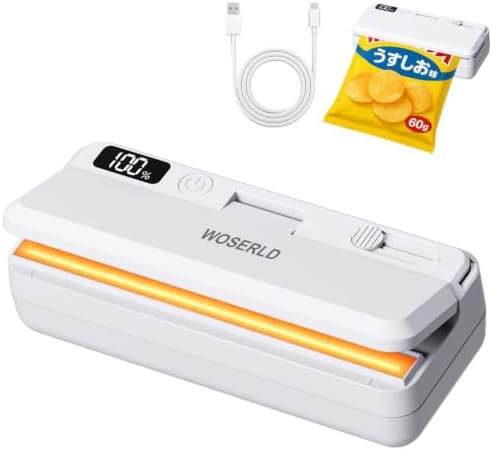
The WOSERLD combines a handheld sealer with a built-in cutter and a 3.94-inch sealing length. It offers three heat settings, an LED display, and a rechargeable battery with USB-C charging. Its magnetic design is intended to make storage convenient on a compatible metal surface.
This model is aimed at everyday resealing of compatible plastic bags, including snack and food-storage bags. Its press-down operation may feel more straightforward than a tool that must be slid along the bag opening, and the display helps you check the selected setting. The listing gives an estimated range of sealing cycles per charge, but actual results depend on bag thickness and use.
Compared with the R-PACK countertop models, the WOSERLD takes up less space and is easier to move around, but its short sealing length is less appropriate for wide bags or steady production work. The product description says it works with many heat-sealable plastic bags; that does not mean every cookie bag is compatible. Check the packaging material and test a spare bag before sealing your cookies.
Pros:
- Rechargeable with USB-C charging.
- Three heat settings and an LED display.
- Includes a built-in cutter and a 3.94-inch sealing length.
- Compact, magnetic design for convenient storage.
Cons:
- Shorter sealing length than the countertop options.
- Battery performance varies with material thickness and how often you use it.
Verdict: The WOSERLD is a good fit if your priority is a rechargeable, space-saving tool for resealing compatible cookie and snack bags.
Best Adjustable-Heat Alternative: R-PACK Blue Impulse Heat Sealer

This blue R-PACK is a countertop impulse sealer with eight heat settings and a replaceable fine heating wire that can be used to cut certain PP and PE bags. The listing says it needs no warm-up time and recommends holding the handle down for three to five seconds. It is described for uses that include cookies and other baked goods, along with soaps and bath products.
The adjustable settings are useful when you’re working with different compatible bag thicknesses, but you’ll need to find an appropriate setting for your material. The description frames cutting as a function achieved by replacing the fine heating wire, so this is not necessarily the same as having a separate blade ready for trimming. For cookies, the countertop format may suit repeated packaging better than a mini sealer, provided your bags are compatible.
The supplied product information marks this model as unavailable. Availability can change, so you can check the listing, but it may be more practical to consider the other R-PACK countertop option if you need a sealer now. The listing also describes a satisfaction guarantee, but check the seller’s current terms before purchasing.
Pros:
- Eight heat settings provide adjustment for different bag materials.
- Described for cookies and other baked goods.
- Can seal and, with the specified wire, cut certain PP and PE bags.
- Countertop design suits home or small-business use.
Cons:
- Supplied product data indicates that it is unavailable.
- Cutting requires replacing the fine heating wire rather than using a separate blade.
Verdict: Consider this R-PACK if it becomes available and you want adjustable heat for compatible bags, but compare it with the 8-inch model before deciding.
How to Choose a Heat Sealer With Cutter for Cookies
Match the sealer to how you package cookies
If you’re making individual packages for a bake sale or small business, a countertop impulse sealer is generally the more practical format. It gives you a stable surface and a sealing bar across the bag opening. If you mainly want to close an opened bag of cookies, a compact handheld sealer may be easier to store and use. Think about whether you need to create new sealed packages or simply reseal bags you already have.
Check bag material compatibility
Heat sealers work with compatible packaging, not every type of plastic or paper bag. Check the bag maker’s guidance and the sealer’s instructions to confirm that the materials match. If you’re unsure, test a spare bag before filling it with cookies. A clean, even seal depends on using the right material and following the instructions for the sealer.
Choose the right kind of cutter
“With cutter” can mean different things. Some models have a separate blade for trimming extra material; others use a hot wire to seal and cut in one press, or require a wire change to cut. A separate blade may be useful when you want to trim bag edges after sealing. A hot wire is more relevant if you want a combined seal-and-cut process, particularly with shrink wrap.
Consider sealing width and workflow
A wider sealing bar can handle a broader range of bag openings and may make batch work more convenient. A handheld model with a shorter sealing area is easier to tuck away, but it may not be as efficient for many packages or wide bags. If you package cookies often, consider how the sealer will fit into your work surface and how you’ll move filled bags through the process.
Look for useful heat controls
Adjustable settings can help you work with different compatible film thicknesses. More settings don’t guarantee a better seal on every bag, though; you still need to follow the instructions and test the material. Models without listed heat controls may be simpler to operate, but offer fewer stated options for adjusting the process.
Think about cookie protection and package size
A heat sealer closes a bag, but it does not keep delicate cookies from being crushed. Choose packaging that gives your cookies enough room and protection, especially if you plan to transport or gift them. Let cookies cool completely before bagging them, and avoid putting too many in a package if they are fragile.
Plan for power and replacement parts
Countertop impulse sealers are better suited to a dedicated packaging area, while handheld models may use disposable batteries or a rechargeable battery. Check what is included and whether replacement parts are available for the model you choose. Extra parts can be useful if you expect to seal bags regularly, but you should still follow the manufacturer’s care and replacement instructions.
Frequently Asked Questions
Can I use a heat sealer to package homemade cookies?
Yes, if your packaging is compatible with the sealer. Check the bag material and product instructions before sealing. Let cookies cool fully first, and use packaging that helps prevent fragile cookies from being crushed.
What is the difference between a sealing blade and a hot cutting wire?
A separate blade can trim excess material, while a hot wire can cut and seal certain films through heat. The exact process depends on the model. Check whether the sealer cuts in the same press or requires a separate step or wire change.
Are handheld bag sealers suitable for a cookie business?
They can be handy for occasional resealing, but a countertop model is usually more practical when you need to prepare many individual packages. Consider your bag size, packaging volume, and workspace before choosing.
Will these sealers work with every cookie bag?
No. Heat sealers require compatible materials, and a bag that looks like plastic may not be suitable for a particular machine. Check the bag and sealer instructions, then test a spare piece before packaging cookies.
Do I need a sealer that cuts and seals in one press?
Not necessarily. A separate cutter may be enough if you only want to trim the bag after sealing. A combined hot-wire action may be more useful when you’re using compatible shrink wrap and want both steps together.
Which model is best for resealing an opened cookie bag?
The FEPPO and WOSERLD are compact options intended for resealing compatible bags. The FEPPO uses a sliding motion, while the WOSERLD has a press-down sealing area and rechargeable power. Choose based on your preferred operation and storage needs.
Which model is the best fit for packaging cookie batches?
The R-PACK 8-inch impulse sealer is the strongest fit in this group for batch packaging because it has a countertop design and a wide sealing bar. If you use shrink wrap and want a combined seal-and-cut action, consider the R-PACK hot-wire model instead.
Final Recommendation
For most people packaging cookie batches, the R-PACK 8-inch impulse sealer is the most balanced choice: it has a wide sealing bar, an extra cutting blade, and replacement parts. Choose the R-PACK hot-wire model if your packaging is compatible shrink wrap and you want to seal and cut in one press. For occasional resealing at home, the WOSERLD or FEPPO handheld sealer is easier to store. Whatever you choose, confirm bag compatibility and test the seal before packaging a full batch.